
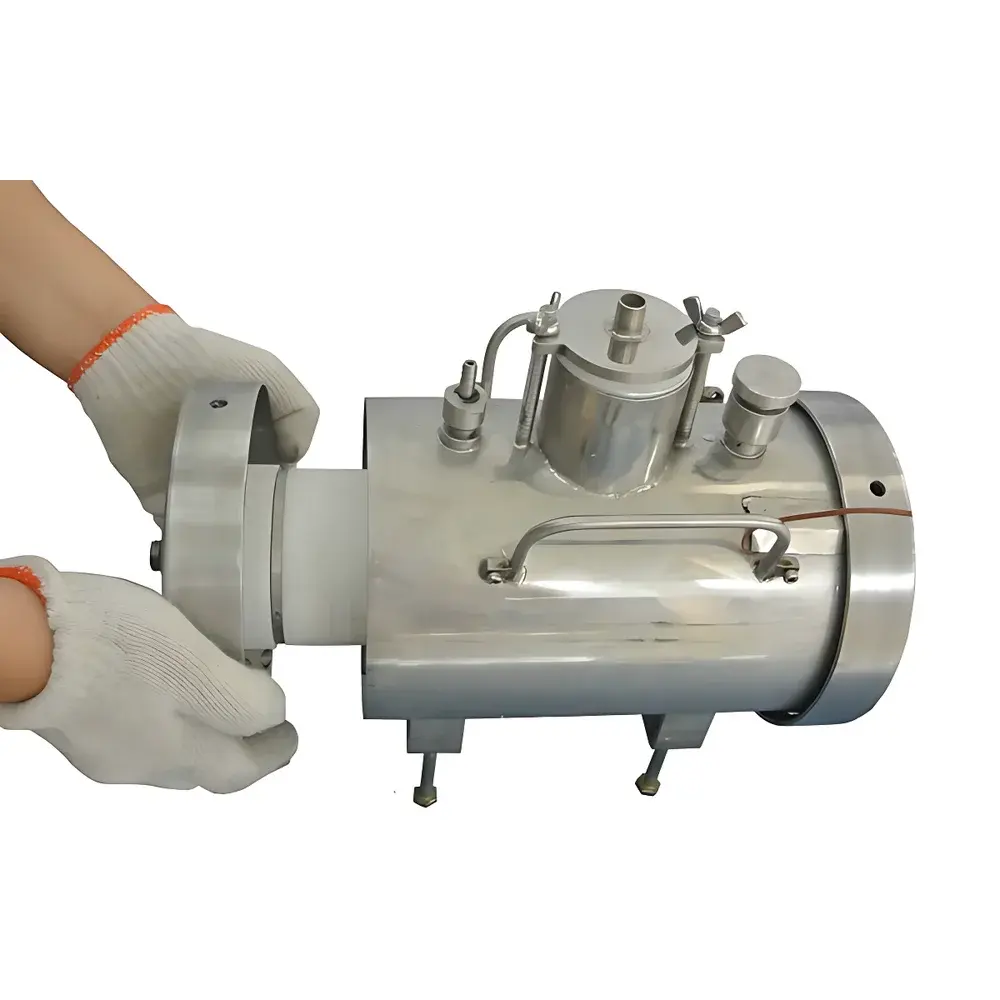
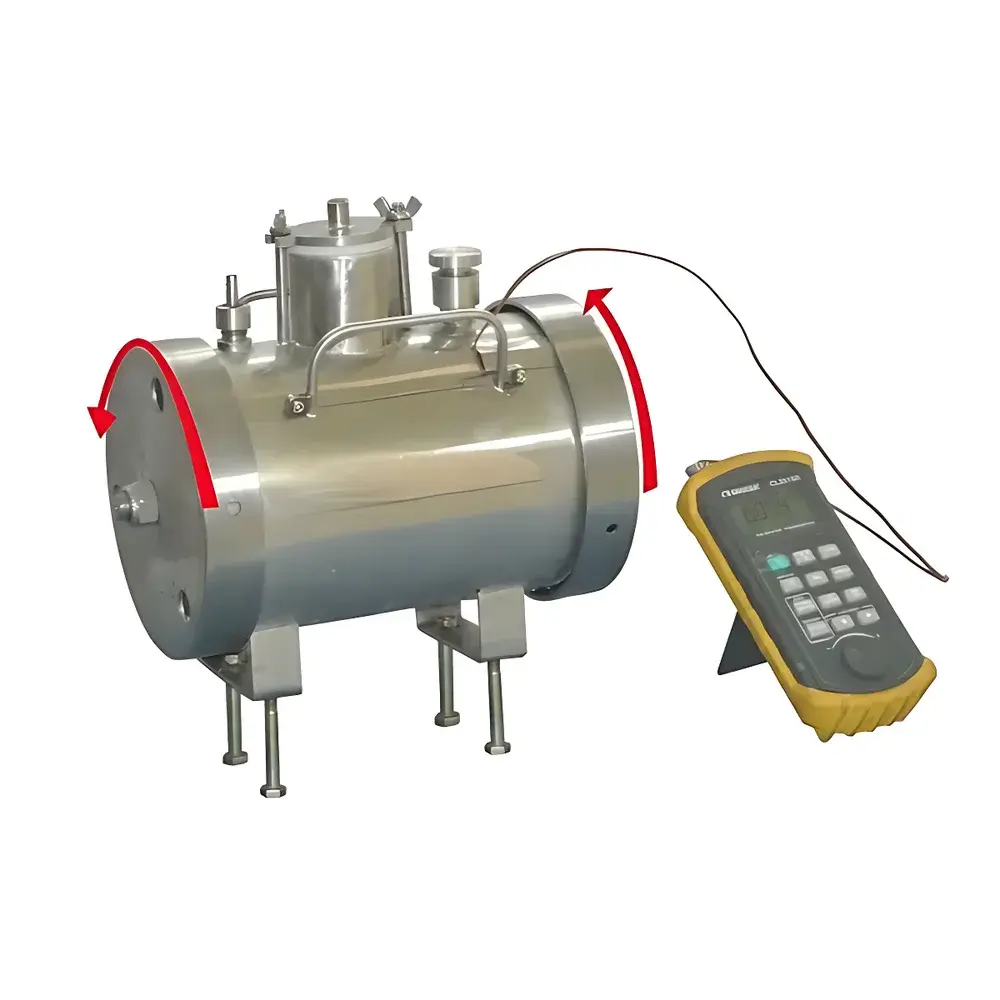
KJ GROUP LN-600 Cryogenic PTFE Ball Milling Jar with Liquid Nitrogen Cooling Jacket
| Brand | KJ GROUP |
|---|---|
| Origin | Liaoning, China |
| Manufacturer Type | Authorized Distributor |
| Country of Origin | China |
| Model | LN-600 |
| Pricing | Upon Request |
| Jar Material | PTFE inner liner |
| Outer Structure | Stainless steel liquid nitrogen jacket + vacuum insulation layer |
| Max. Working Temp (w/ heater gun) | −150 °C |
| Min. Working Temp (standard) | <−130 °C |
| PTFE Jar Dimensions | Ø79 mm ID × 127 mm L |
| Effective Volume | 600 mL |
| LN₂ Jacket Volume | 1.5 L |
| Safety Burst Disc Pressure | 3.7 atm |
| Compatible Roller Distance | 150–185 mm |
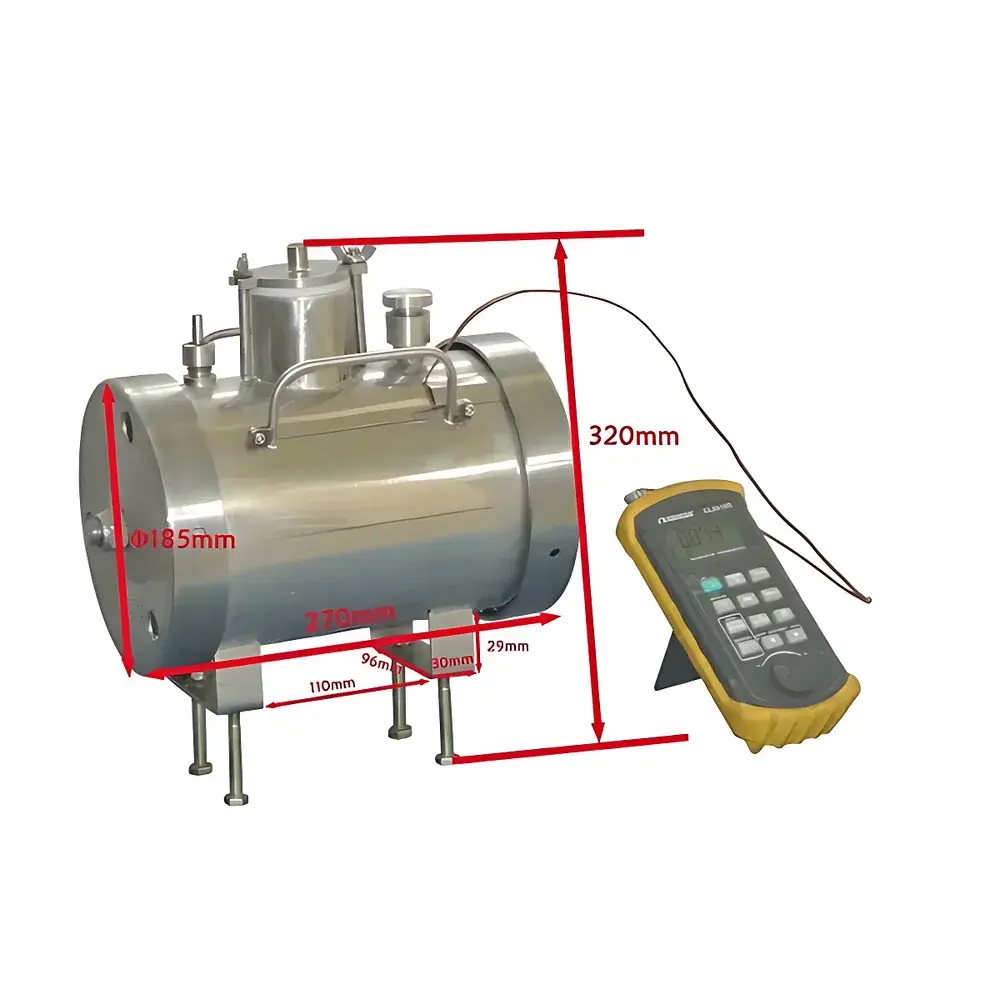
| External Dimensions | 270 × 185 × 320 mm |
| Weight | 10 kg |
| Ambient Humidity Limit | <48% RH |
| Optional Accessories | ZrO₂ grinding media, thermocouple display unit, vacuum pump, roller mill systems |
Overview
The KJ GROUP LN-600 Cryogenic PTFE Ball Milling Jar is an engineered solution for low-temperature mechanical alloying, cryo-milling, and reactive material processing under controlled inert or vacuum conditions. Designed around the principle of cryogenic attrition—where thermal embrittlement at sub-130 °C significantly enhances fracture efficiency—the LN-600 integrates a triple-layer architecture: an inner PTFE grinding chamber, a middle stainless steel liquid nitrogen (LN₂) cooling jacket, and an outer high-vacuum thermal insulation layer. This configuration enables sustained operation below −130 °C without external cryostat integration, minimizing heat influx via conduction, convection, and radiation. The system is intended for use with horizontal roller mills (e.g., planetary or dual-axis rotating platforms), where rotational shear forces induce particle impact and cold-welding dynamics essential for amorphization, intermetallic synthesis, or metastable phase stabilization. Its geometry and mounting interface comply with standard roller spacing requirements (150–185 mm), ensuring compatibility across widely deployed laboratory-scale milling platforms.
Key Features
- PTFE-lined internal chamber (Ø79 mm ID × 127 mm L; 600 mL effective volume) provides chemical inertness, low surface energy, and resistance to cold-induced cracking during repeated thermal cycling.
- Integrated stainless steel LN₂ jacket (1.5 L capacity) positioned between the PTFE liner and vacuum layer enables rapid thermal equilibration and stable sub-130 °C operation when charged with liquid nitrogen.
- High-vacuum insulation layer (≤10⁻² mbar recommended) minimizes convective heat transfer from ambient air, extending LN₂ hold time and improving temperature uniformity across the grinding zone.
- Pressure-relief burst disc calibrated to 3.7 atm safeguards against over-pressurization in the LN₂ jacket due to boil-off gas accumulation—critical for operator safety and regulatory compliance in ISO 14001 and OHSAS 18001 environments.
- T-type thermocouple port (standard M6 thread) allows real-time temperature monitoring using externally connected digital displays (optional accessory); data logging supports GLP-compliant experimental records.
- Heater gun interface enables localized warming of drive shafts to prevent frost lock under high-humidity conditions (<48% RH operational limit), ensuring mechanical reliability during extended runs.
Sample Compatibility & Compliance
The LN-600 is validated for processing materials exhibiting high ductility (e.g., pure metals like Al, Cu, Ni), pyrophoric compounds (e.g., Mg-based alloys, Li-metal composites), oxygen-sensitive precursors (e.g., transition metal borides, nitrides), and thermally labile organometallics. Its PTFE interior meets USP Class VI biocompatibility criteria, while the stainless steel jacket conforms to ASTM A240/A240M for corrosion-resistant austenitic alloys. Vacuum integrity supports ASTM E595 outgassing testing protocols. When operated with certified roller mills and documented LN₂ charging procedures, the system satisfies traceability requirements under ISO/IEC 17025 for accredited materials testing laboratories.
Software & Data Management
While the LN-600 jar itself is a passive mechanical component, its integration into automated milling workflows supports full digital traceability. Temperature readings from the T-type thermocouple can be interfaced with third-party DAQ systems (e.g., National Instruments LabVIEW, Keysight PathWave) for time-stamped acquisition, alarm thresholds, and export to CSV or SQL databases. When used alongside KJ GROUP’s optional vacuum pump controllers or roller mill timing modules, audit trails—including LN₂ refill timestamps, vacuum level logs, and rotation duration—can be archived per FDA 21 CFR Part 11 Annex 11 guidelines for electronic records and signatures.
Applications
- Cryo-milling of ductile metals and alloys to produce nanostructured powders for additive manufacturing feedstock.
- Safe mechanochemical synthesis of air-sensitive battery cathode precursors (e.g., Li-rich layered oxides, solid-state electrolytes).
- Amorphization of pharmaceutical APIs to enhance solubility and bioavailability—per USP & ICH Q5A guidelines.
- Preparation of cryo-ground polymer blends for TEM sample thinning without thermal degradation.
- Low-temperature homogenization of biological tissue matrices prior to proteomic extraction (−140 °C preserves enzyme activity profiles).
FAQ
What is the lowest achievable temperature inside the PTFE chamber?
Under optimal pre-cooling and continuous LN₂ replenishment, the internal chamber stabilizes below −130 °C. With integrated heater gun activation on drive interfaces, system-level stability down to −150 °C has been verified using calibrated Pt100 sensors.
Is vacuum pumping mandatory for operation?
Vacuum evacuation of the outer insulation layer is strongly recommended to achieve design-specification thermal performance; operation without vacuum results in >40% increase in LN₂ consumption and reduced temperature stability.
Can the LN-600 be used with vertical planetary ball mills?
No—it is mechanically optimized for horizontal roller-driven motion with center-to-center axle spacing of 150–185 mm; vertical configurations induce unbalanced torque and risk thermocouple port deformation.
Are replacement burst discs available as spare parts?
Yes—KJ GROUP supplies certified 3.7 atm rupture discs (stainless steel diaphragm type) with batch-specific calibration certificates compliant with PED 2014/68/EU.
Does the PTFE liner require periodic replacement?
PTFE wear depends on abrasive load and rotation speed; typical service life exceeds 200 h under 300 rpm with ZrO₂ media; visual inspection for microcracking or dimensional deviation (>0.1 mm wall thinning) is advised before each high-value experiment.



