
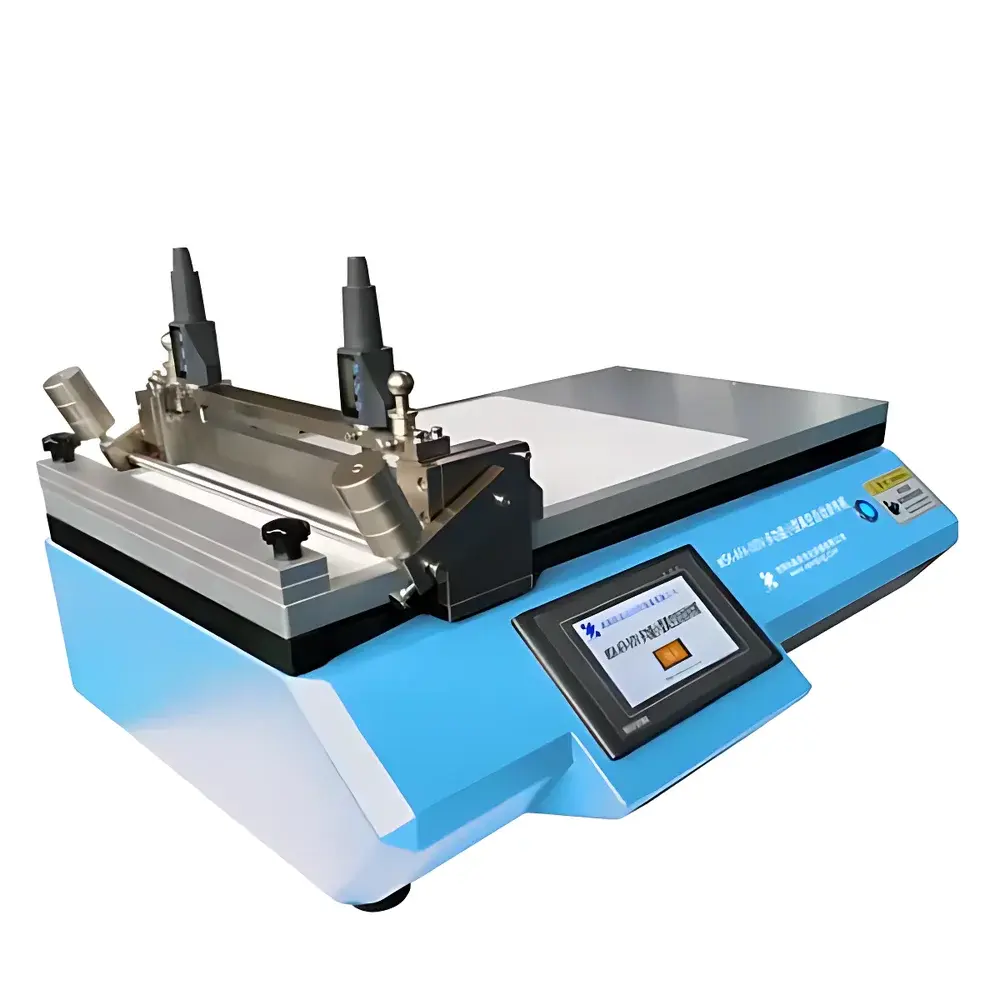
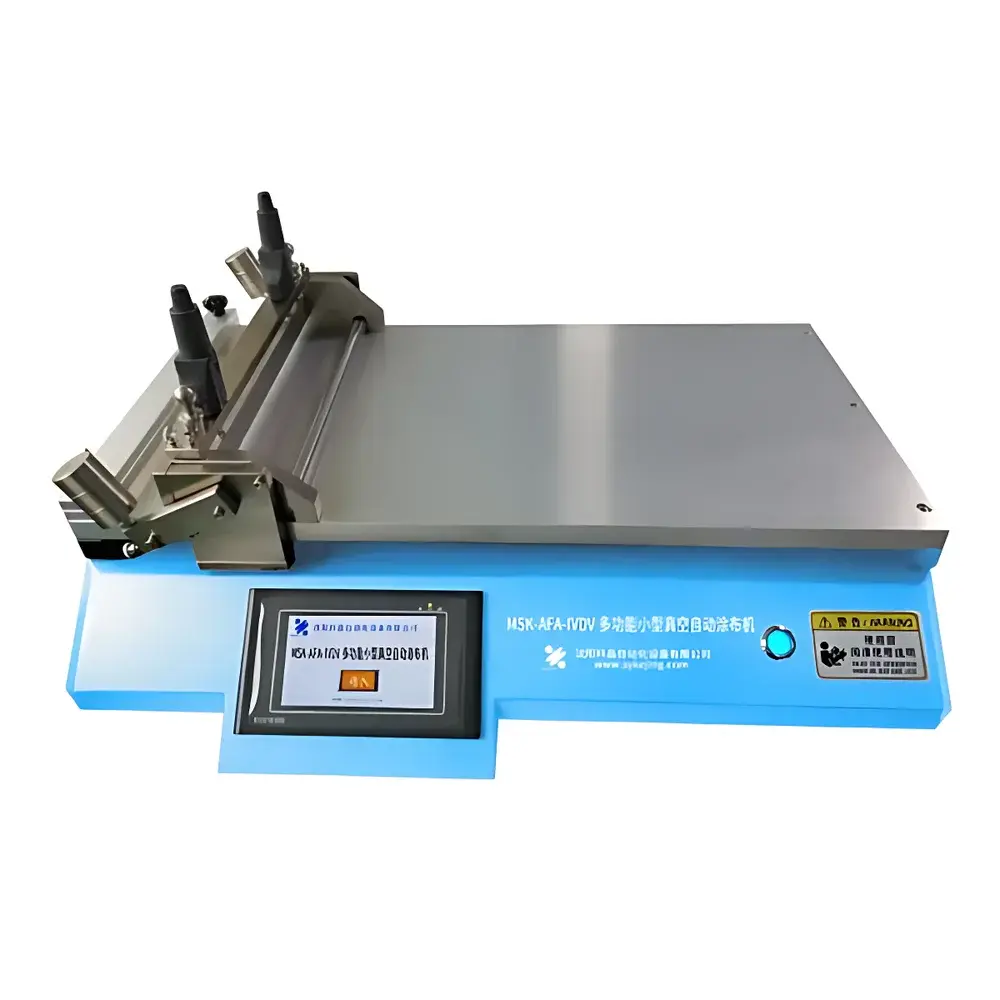
KJ GROUP MSK-AFA-IVDV Multi-Function Benchtop Vacuum-Assisted Automatic Coating System
| Brand | KJ GROUP |
|---|---|
| Origin | Liaoning, China |
| Manufacturer | KJ GROUP |
| Model | MSK-AFA-IVDV |
| Power Supply | 220 V, 50 Hz |
| Standby Power | 48 W |
| Heating Power | 2000 W |
| Coating Uniformity | ±5% |
| Effective Coating Area | 300 × 450 mm (vacuum-secured substrate) |
| Wet Film Thickness Range | 5 µm – 5 mm (dependent on fluid rheology and substrate wettability) |
| Doctor Blade Material | Alloy Steel (optional heated blade: RT–180 °C) |
| Coating Speed | 1–10 m/min (digitally displayed) |
| Heating Plate Temperature Range | Ambient to 200 °C |
| Dimensions (L×W×H) | 680 × 480 × 380 mm |
| Weight | 38 kg |
| Optional Accessories | Precision Adjustable Film Applicators (5–200 µm, 1 µm resolution), Fixed-Thickness Metering Rollers (5, 10, 15, 20, 25, 30, 40, 50, 60, 80, 100, 120, 150, 200 µm) |
Overview
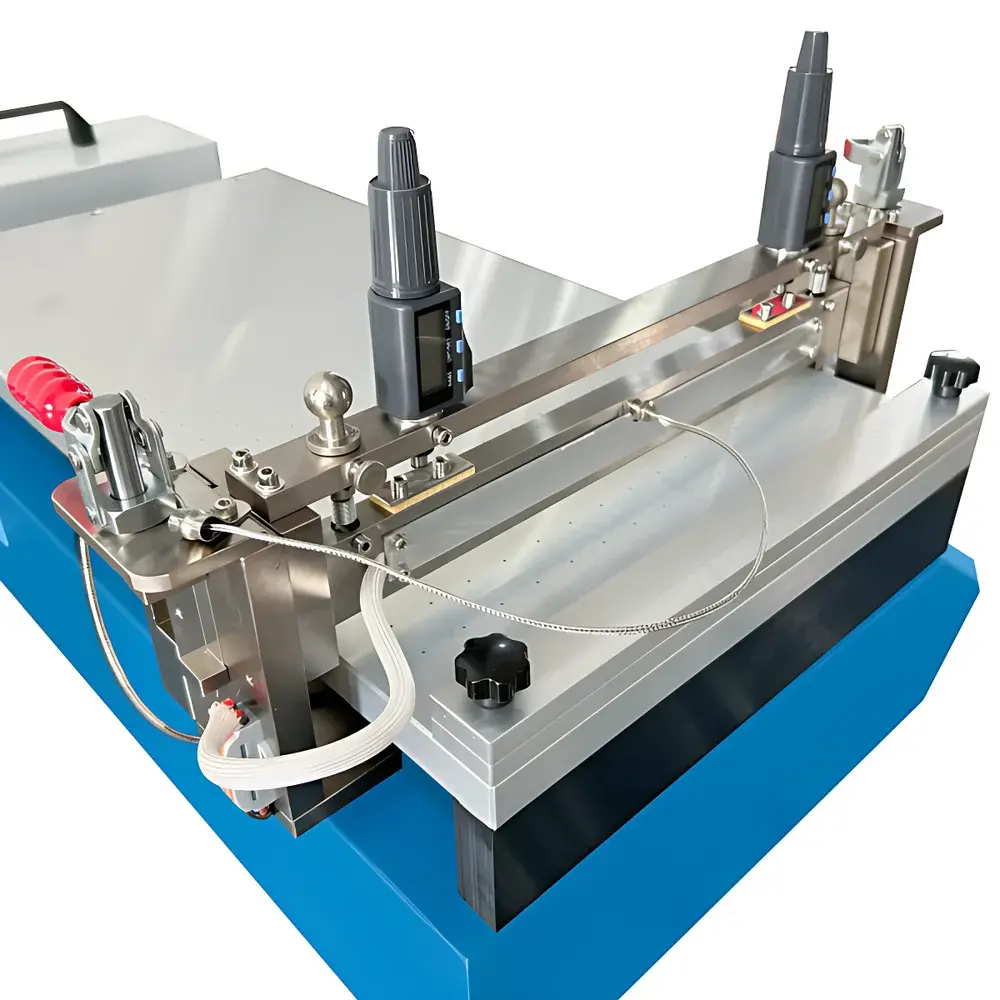
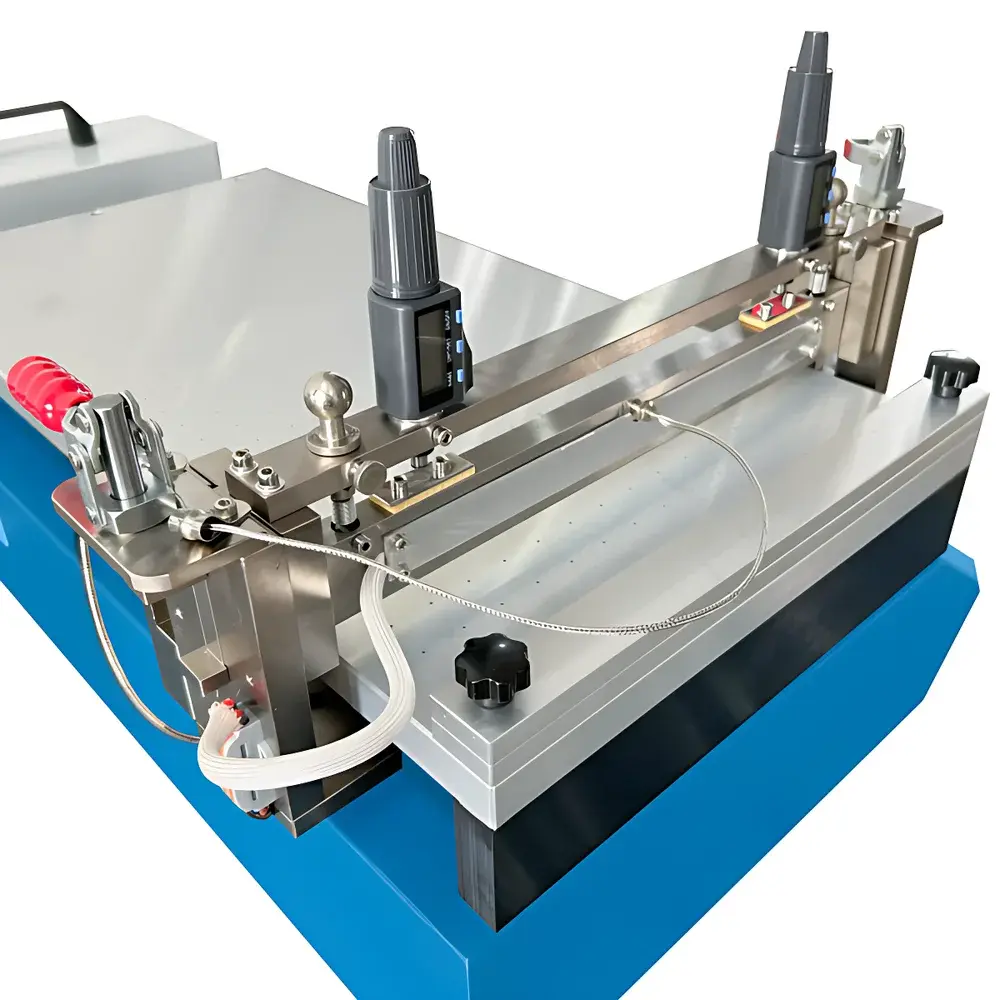
The KJ GROUP MSK-AFA-IVDV Multi-Function Benchtop Vacuum-Assisted Automatic Coating System is an engineered solution for reproducible, parameter-controlled thin-film deposition in R&D and quality assurance laboratories. Designed around the principle of precision doctor-blade coating under vacuum substrate fixation, it enables consistent wet-film formation across diverse planar substrates—including paper, PET, PVC, aluminum alloy sheets, textiles, and polymer films—without mechanical slippage or edge lift. Unlike manual applicators or gravity-fed systems, the MSK-AFA-IVDV integrates synchronized speed regulation, programmable thermal control, and vacuum-based substrate immobilization to eliminate variability from operator technique, ambient vibration, or substrate warpage. Its architecture reflects industrial-scale coating logic—particularly in the U-shaped stainless-steel doctor blade geometry and kinematic coupling between drive motor and roller assembly—ensuring that lab-scale results correlate directly with pilot-line or production-grade processes.
Key Features
- Vacuum substrate holding system (300 × 450 mm active area) ensures flat, wrinkle-free positioning for high-precision coating on flexible and rigid materials.
- Digitally controlled coating speed (1–10 m/min), adjustable via calibrated rotary knob with real-time LED display for traceable process documentation.
- Modular doctor blade assembly with quick-release 90° hinge mechanism for rapid cleaning and tool-free blade replacement—minimizing downtime between formulations.
- Heated coating platform (ambient to 200 °C) and optional heated alloy-steel blade (RT–180 °C) enable solvent evaporation control, viscosity management, and temperature-sensitive formulation processing.
- Interchangeable metering rollers (5–200 µm nominal wet thickness, ±1 µm adjustment resolution) and precision-adjustable film applicators support method development across coating thickness regimes.
- Low-power standby mode (48 W) and thermally insulated housing reduce energy consumption while maintaining thermal stability during extended operation cycles.
Sample Compatibility & Compliance
The MSK-AFA-IVDV accommodates a broad spectrum of substrate geometries and surface energies—validated on cellulose-based papers, biaxially oriented polyethylene terephthalate (BOPET), polyvinyl chloride (PVC), anodized aluminum, woven polyester fabrics, and coated metal foils. Its vacuum chuck design conforms to ISO 2556 (plastic film permeability testing) and ASTM D1720 (coating uniformity assessment) sample preparation requirements. All electrical components comply with IEC 61000-6-3 (EMC emission limits) and IEC 61000-6-2 (immunity standards). The system supports GLP-compliant workflows through manual logbook integration and can be validated per IQ/OQ protocols for regulated environments (e.g., battery electrode R&D under UN GTR 20 or photovoltaic layer development aligned with IEC 61215-2 MQT 17).
Software & Data Management
While the base configuration operates via analog controls and digital readouts, optional RS-485/Modbus RTU interface enables integration with external PLCs or SCADA systems for centralized parameter logging. All speed, temperature, and vacuum pressure settings are manually recorded—supporting audit-ready documentation when paired with laboratory notebook practices compliant with 21 CFR Part 11 Annex 11 principles. Firmware updates (delivered via USB) include enhanced thermal ramp profiling and multi-step coating sequences for gradient film studies. No proprietary cloud platform is embedded; data sovereignty remains fully under user control.
Applications
- Battery R&D: Slurry coating of cathode/anode slurries (NMC, LFP, silicon-carbon composites) onto Cu/Al foil for electrochemical performance benchmarking.
- Functional coatings: Deposition of anti-reflective, hydrophobic, or conductive layers (e.g., PEDOT:PSS, Ag nanowire dispersions) on flexible electronics substrates.
- Pharmaceutical film coating: Development of immediate-release or sustained-release polymer films on tablet cores using ethanol/water-based suspensions.
- Printed electronics: Patterning of conductive inks (Ag nanoparticle, carbon nanotube dispersions) for sensor prototypes and RFID antenna validation.
- Adhesive & sealant testing: Quantitative evaluation of open time, tack development, and bond strength across varying coat weights and drying conditions.
FAQ
What vacuum level does the MSK-AFA-IVDV achieve, and how is it maintained?
The system utilizes a built-in diaphragm vacuum pump capable of sustaining ≥−80 kPa (gauge) on standard substrates; vacuum integrity is monitored via analog gauge and confirmed by audible seal engagement.
Can the MSK-AFA-IVDV accommodate non-planar or curved substrates?
No—it is strictly designed for flat, rigid, or semi-flexible planar samples up to 3 mm thickness. Curved or three-dimensional parts require custom fixturing not supplied with the standard unit.
Is the heating plate temperature uniformly distributed across the entire 300 × 450 mm area?
Yes—thermal mapping confirms ±2.5 °C uniformity at 120 °C steady state, verified per ASTM E220 for temperature calibration of laboratory equipment.
Does the system meet CE or UL certification requirements?
The unit complies with CE marking directives (2014/30/EU EMC, 2014/35/EU LVD) and carries a CE Declaration of Conformity; UL listing is available upon request for North American deployment.
How frequently must the vacuum pump oil be changed?
The diaphragm pump is oil-free and maintenance-free for ≥5,000 hours of intermittent operation; no scheduled lubrication is required.
Related Products



