
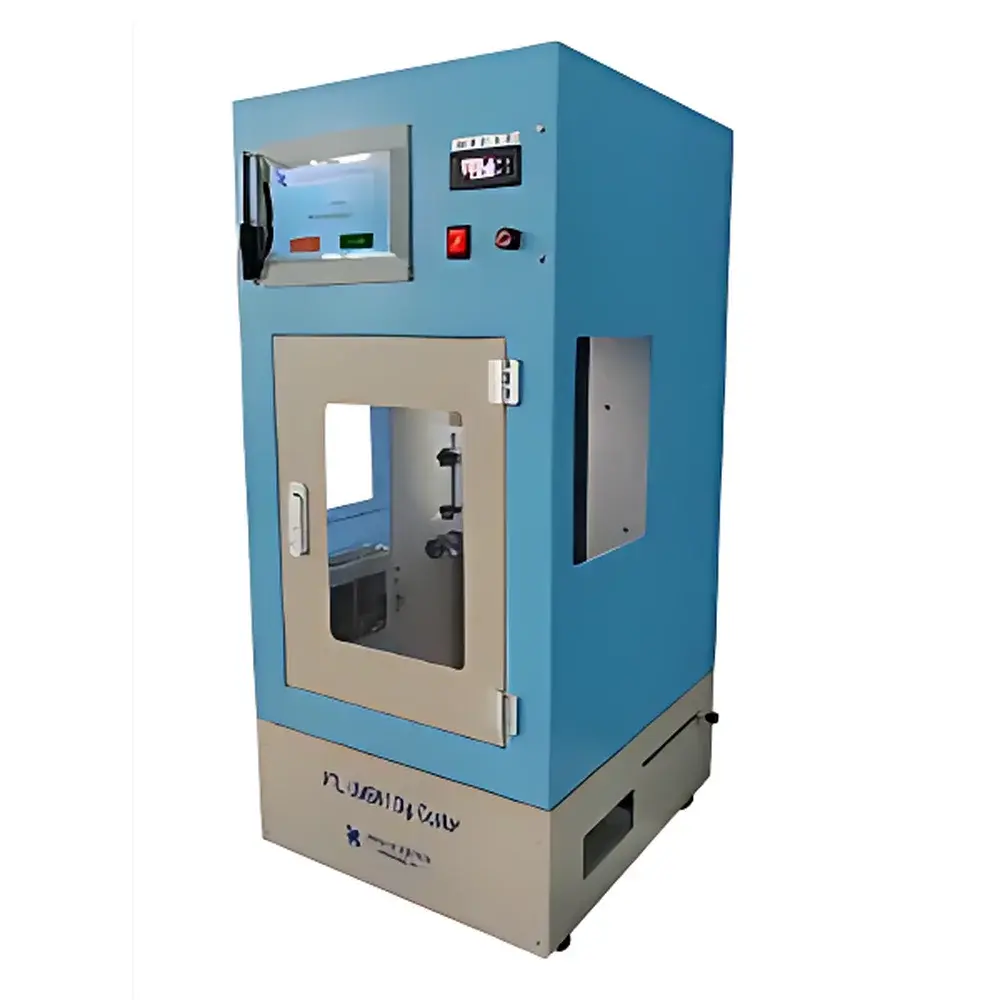
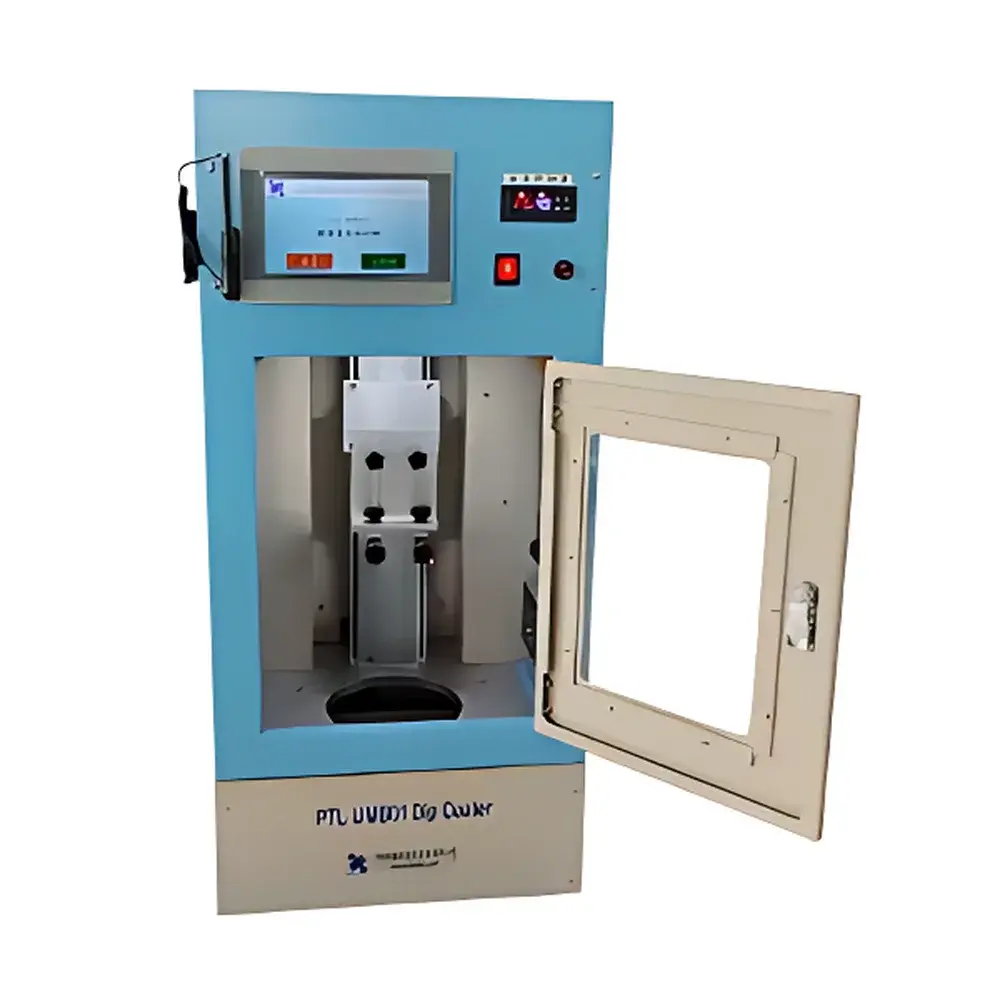
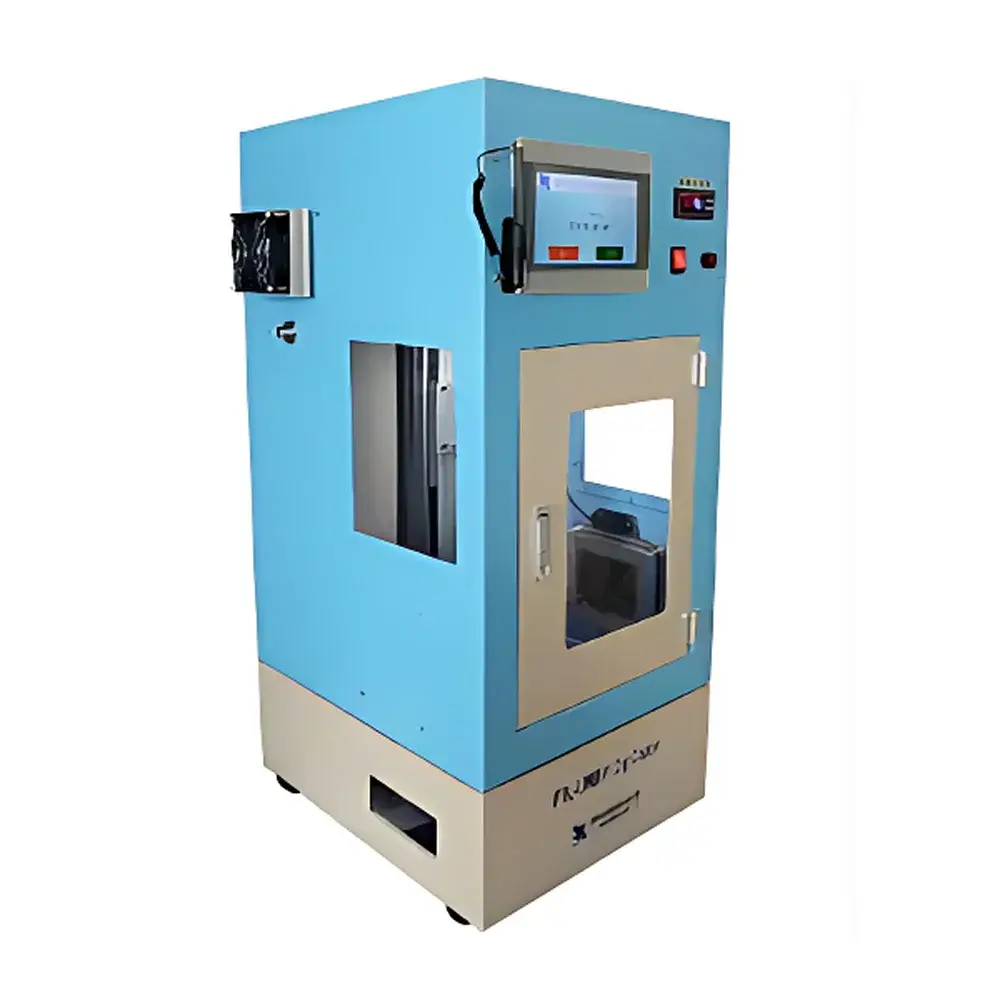
KJ GROUP PTL-UMB01 Servo-Controlled Micrometer Dip Coater
| Brand | KJ GROUP |
|---|---|
| Origin | Liaoning, China |
| Manufacturer Type | Direct Manufacturer |
| Country of Origin | China |
| Model | PTL-UMB01 |
| Pricing | Upon Request |
| Power Supply | AC 220 V, 50 Hz |
| Max. Sample Size | 200 × 150 × 5 mm |
| Travel Range | 220 mm |
| Dip Speed Range | 1–8000 µm/s (Resolution: 1 µm) |
| Temperature Control | RT–50 °C |
| Immersion/Drying Time | 1–999 s |
| Cycles | 1–20 |
| Load Capacity | ≤1000 g |
| Dimensions (W×D×H) | 480 × 480 × 880 mm |
| Weight | 60 kg |
Overview
The KJ GROUP PTL-UMB01 Servo-Controlled Micrometer Dip Coater is an engineered laboratory instrument designed for precision-controlled vertical dip coating—a widely adopted thin-film deposition technique based on controlled withdrawal of substrates from liquid precursor solutions. Operating on the principle of capillary-driven meniscus formation and solvent evaporation kinetics, the system enables reproducible fabrication of uniform films with thicknesses tunable at the micrometer scale (1 µm resolution). Its core architecture integrates a high-accuracy servo motor coupled to a precision-ground ball screw drive, ensuring minimal velocity fluctuation (<±0.5% over full speed range) and exceptional positional repeatability. The fully enclosed chamber design isolates the coating process from ambient airflow, temperature gradients, and particulate contamination—critical for minimizing film defects such as coffee-ring effects, streaking, or non-uniform drying. Integrated thermostatic control (RT–50 °C) and optional dehumidification support consistent solvent evaporation rates, thereby enhancing inter-batch reproducibility in sol-gel, polymer, nanoparticle, and perovskite thin-film synthesis.
Key Features
- Servo-driven vertical translation system with 1 µm positional resolution and programmable speed range from 1 to 8000 µm/s—enabling both ultra-slow monolayer assembly and rapid multi-layer stacking.
- Enclosed process chamber with tempered glass viewport and sealed stainless-steel solution reservoir (304 grade), preventing cross-contamination and facilitating safe handling of corrosive or volatile precursors.
- Adjustable sample holder with vertical positioning capability (±30 mm travel), accommodating substrates up to 200 × 150 × 5 mm while maintaining orthogonal alignment relative to the meniscus plane.
- PLC-based control system with 7-inch color touchscreen HMI—supporting intuitive configuration of immersion time, dwell time, withdrawal speed profile, drying duration, and cycle count (1–20 repeats).
- Integrated thermostatic drying module (RT–50 °C, ±0.5 °C stability) and optional humidity regulation—ensuring environmental consistency during post-dip solvent removal and gelation.
- Compact footprint (480 × 480 × 880 mm) and modular construction—designed for benchtop deployment in ISO Class 5–7 cleanrooms or standard analytical laboratories without requiring external ventilation or utility hookups.
Sample Compatibility & Compliance
The PTL-UMB01 supports rigid and semi-rigid planar substrates including silicon wafers, glass slides, ITO/PET electrodes, metal foils, and ceramic tiles. Its stainless-steel liquid reservoir and removable sample fixtures are compatible with aqueous, alcoholic, and moderately aggressive organic solvents (e.g., ethanol, isopropanol, DMF, chloroform). All electrical components comply with IEC 61000-6-3 (EMI emission) and IEC 61000-6-2 (immunity) standards. Mechanical design adheres to ISO 12100:2010 (safety of machinery) and includes dual-channel emergency stop circuitry, overtravel limit switches, and grounded chassis protection. While not certified for GMP manufacturing environments, the system’s parameter logging, non-volatile memory retention, and audit-ready operation history align with GLP documentation requirements for academic and preclinical R&D labs.
Software & Data Management
The embedded PLC firmware records all process parameters—including timestamped speed profiles, temperature logs, cycle counters, and user ID tags—in non-volatile internal memory (retention >10 years). Data export is supported via USB 2.0 interface in CSV format for traceability and integration into LIMS or statistical process control platforms. No proprietary software installation is required; raw logs are human-readable and compatible with MATLAB, Python (pandas), and JMP for regression analysis of film thickness vs. withdrawal speed (Landau–Levich–Derjaguin modeling). Optional RS-485 Modbus RTU output allows remote monitoring and synchronization with environmental chambers or spectrophotometers in automated workflows.
Applications
- Sol-gel derived oxide films (SiO₂, TiO₂, ZrO₂) for optical coatings, gas sensors, and photocatalytic layers.
- Perovskite precursor films in photovoltaic device prototyping (e.g., MAPbI₃, FAPbBr₃).
- Polymer electrolyte membranes (Nafion®, PVDF-HFP) for fuel cell and battery research.
- Self-assembled monolayers (SAMs) and Langmuir–Blodgett transfer validation studies.
- Antireflective, hydrophobic, and biofunctionalized surface engineering in biomaterials and microfluidics.
- Calibration substrate preparation for AFM, ellipsometry, and XRD thickness validation.
FAQ
What is the minimum achievable film thickness using this dip coater?
Film thickness depends on solution rheology, withdrawal speed, and solvent volatility—not instrument limits. With optimized low-viscosity precursors and speeds ≥1 µm/s, sub-100 nm films have been reported in literature using comparable systems.
Can the system be integrated with external environmental controls (e.g., glovebox)?
Yes—the unit operates independently of atmosphere and features front-access ports (Φ60 mm) with silicone gasket seals, enabling direct mounting into inert-gas gloveboxes or low-humidity dry rooms.
Is firmware update capability available?
Firmware updates are provided free-of-charge via USB stick and require no service technician; version history and release notes are published on KJ GROUP’s technical support portal.
Does the system support variable-speed ramping during withdrawal?
No—the current firmware implements constant-speed withdrawal per cycle; multi-stage speed profiles require external PLC coordination via Modbus interface.
What maintenance intervals are recommended?
Ball screw lubrication every 6 months under continuous use; visual inspection of stainless-steel reservoir integrity and touchscreen calibration annually. No consumables are specified.
Related Products



