
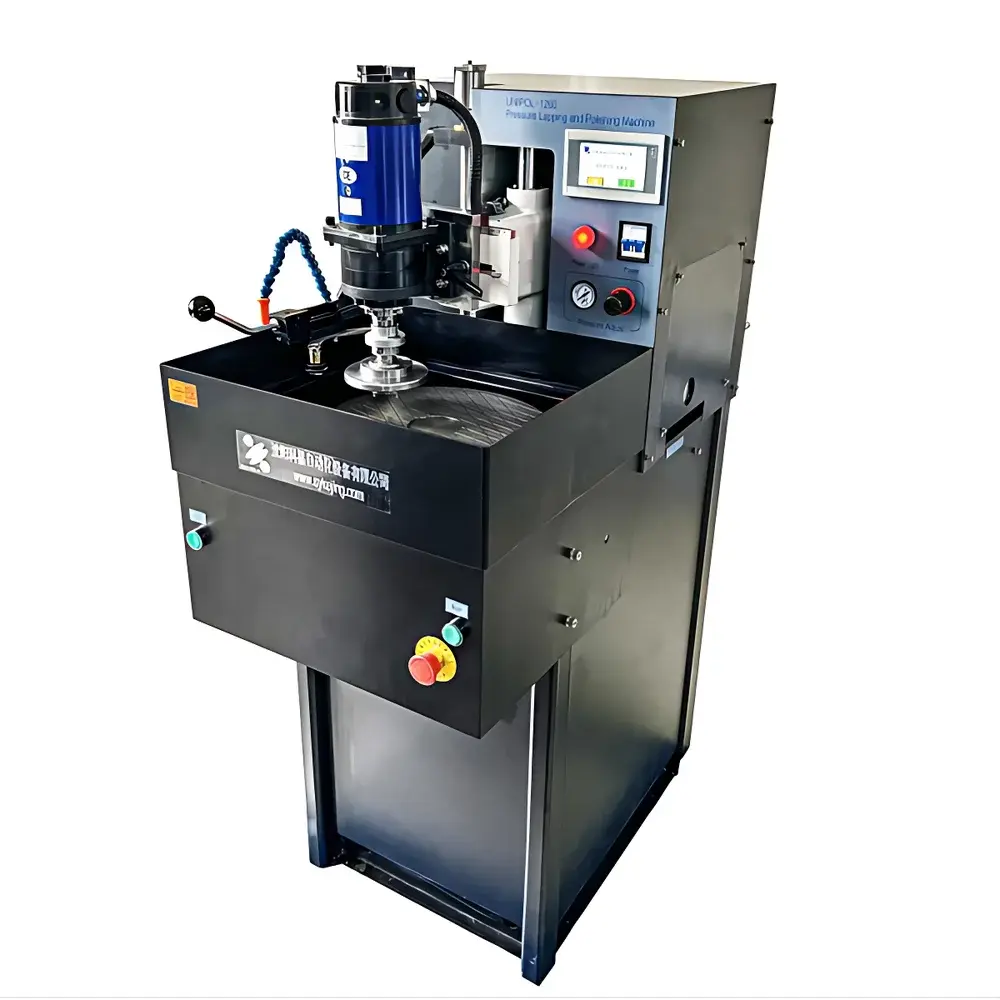
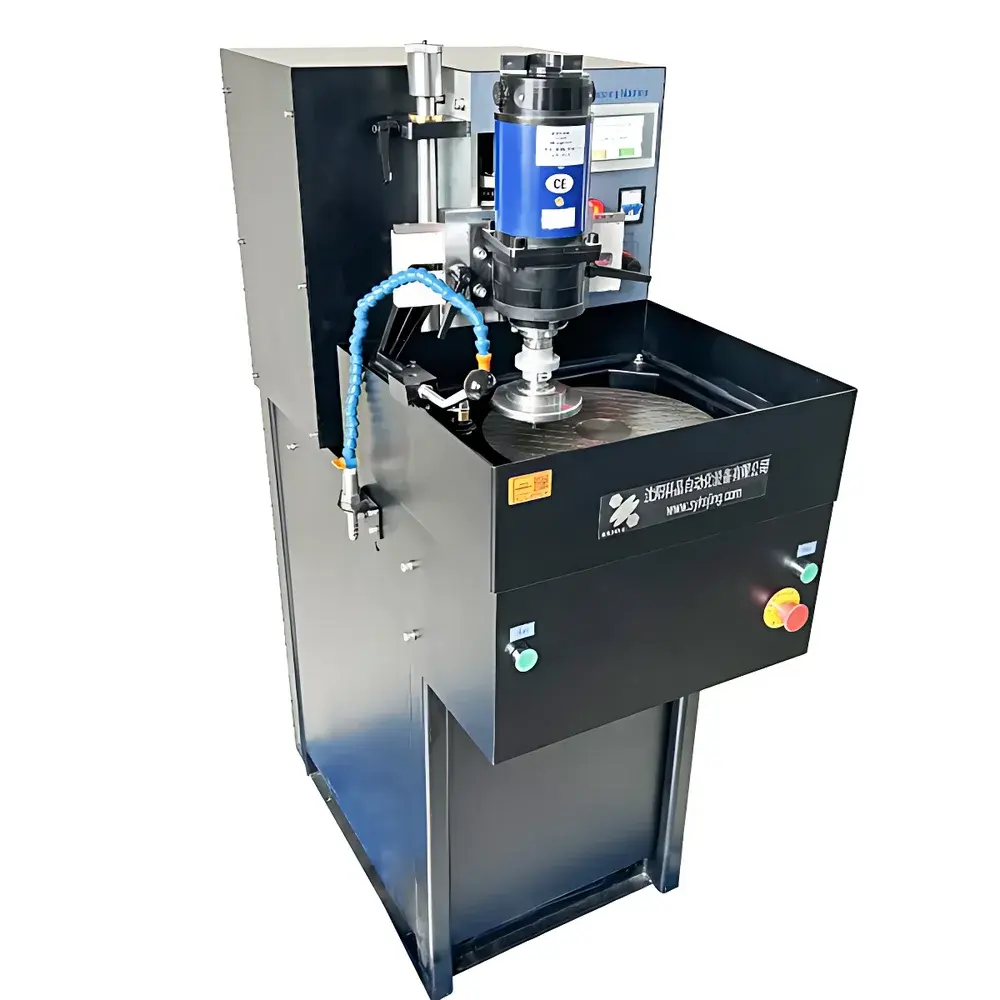
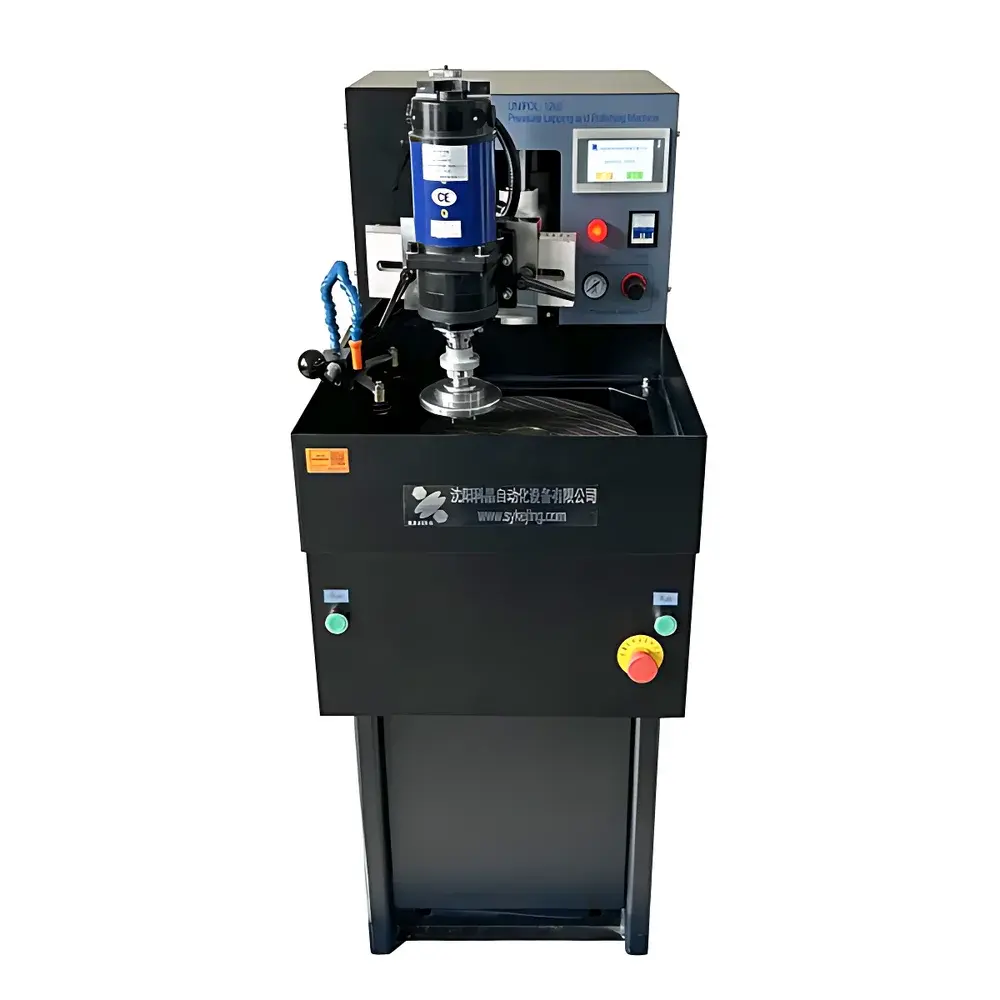
KJ GROUP UNIPOL-1260 Precision Variable-Speed, Pneumatically Controlled Grinding and Polishing System
| Brand | KJ GROUP |
|---|---|
| Origin | Liaoning, China |
| Manufacturer Type | Authorized Distributor |
| Country of Origin | China |
| Model | UNIPOL-1260 |
| Dimensions (L×W×H) | 938 × 551 × 1441 mm |
| Number of Platen | 1 |
| Platen Diameter | 320 mm (12.6 in) |
| Platen Speed | 0–300 rpm (infinitely variable) |
| Specimen Holder Diameter | 160 mm |
| Specimen Holder Speed | 0–250 rpm (infinitely variable) |
| Applied Pressure Range | 0–0.6 MPa (pneumatically regulated, continuously adjustable during operation) |
| Grinding/Polishing Time Setting | 0–24 h (programmable, auto-stop) |
| Platen Flatness | ≤0.015 mm |
| Upper DC Motor Power | 185 W |
| Lower Main Shaft Motor Power | 1.1–1.5 kW |
| Operating Environment | Altitude ≤1000 m |
| Power Supply | AC 220 V, 50 Hz, Grounded |
| Air Supply Required | Clean, dry compressed air (0.4–0.7 MPa) |
| Water Supply & Drainage | Required (integrated inlet/outlet ports) |
| Weight | 250 kg |
Overview
The KJ GROUP UNIPOL-1260 is a high-precision, pneumatically actuated grinding and polishing system engineered for reproducible, automated sample preparation in metallurgical, geological, ceramic, and advanced optical material laboratories. It operates on the principle of controlled dual-rotation—where both the specimen holder (carrier disk) and the platen rotate independently at infinitely adjustable speeds—enabling precise optimization of material removal rate, surface finish, and subsurface damage control. The system integrates pneumatic pressure regulation with real-time adjustability, allowing operators to dynamically modulate applied load (0–0.6 MPa) during active grinding or polishing cycles—a critical capability when transitioning between coarse grinding, fine lapping, and final polishing stages. Designed for rigorous daily use in industrial QA/QC labs and academic research facilities, the UNIPOL-1260 delivers consistent planarity (platen flatness ≤0.015 mm) and mechanical stability through its welded structural steel frame and stainless-steel core components.
Key Features
- Dual independent speed control: Platen (0–300 rpm) and specimen holder (0–250 rpm) each feature stepless electronic regulation, supporting optimized kinematic trajectories for diverse material classes—from soft aluminum alloys to ultra-hard sapphire (Mohs 9) and silicon carbide.
- Pneumatic pressure delivery with in-process adjustment: A precision-regulated air cylinder applies axial load via a balanced cross-arm mechanism; pressure is set pre-run but may be modified at any stage without interrupting operation—essential for adaptive protocols involving multi-step abrasives.
- Elastic coupling between specimen holder and drive shaft: Mitigates transient impact forces upon initial contact with the platen, protecting brittle specimens (e.g., ZnSe, Ge wafers, quartz crystals) from chipping or fracture.
- Programmable timer (0–24 h) with automatic shutdown: Ensures process repeatability and unattended operation; integrated safety logic halts motion if water flow interruption or abnormal motor current is detected.
- Modular platen and holder configuration: Includes cast iron grinding platen, aluminum polishing platen, flat and “peach-shaped” specimen holders, dressing ring, and application-specific polishing pads (microfiber suede, synthetic leather, polyurethane).
- Robust mechanical architecture: Heavy-duty welded steel chassis (250 kg total mass), stainless-steel fluid pathways, and IP54-rated electrical enclosures ensure long-term dimensional stability and resistance to coolant-induced corrosion.
Sample Compatibility & Compliance
The UNIPOL-1260 accommodates specimens up to Ø160 mm and is routinely deployed for preparing metallographic sections of ferrous and non-ferrous alloys, geological thin sections (granite, basalt, shale), infrared optical substrates (ZnS, ZnSe, Si, Ge), fused silica, sapphire, and technical ceramics (Al₂O₃, Si₃N₄). Its pressure and speed flexibility supports ASTM E3, ISO 14487, and GB/T 13298–2015 standards for microstructural specimen preparation. While not certified to GLP or GMP out-of-the-box, the system’s programmable parameters, audit-ready timer logs, and deterministic mechanical behavior enable full traceability when integrated into validated laboratory workflows compliant with ISO/IEC 17025 requirements.
Software & Data Management
The UNIPOL-1260 operates via an embedded industrial-grade controller with tactile membrane keypad and LED status display. All operational parameters—including platen speed, holder speed, applied pressure, elapsed time, and cycle count—are stored in non-volatile memory and accessible via front-panel navigation. Optional integration with KJ GROUP’s LabControl Suite (via RS-232 or optional USB-to-serial adapter) enables remote parameter upload/download, batch protocol management, and CSV-formatted run log export for quality documentation. No cloud connectivity or proprietary software subscription is required; local data retention meets FDA 21 CFR Part 11 principles for electronic records when paired with institutional IT governance policies.
Applications
- Routine metallography in steel mills and foundries: Prepares ASTM E3-compliant cross-sections of rolled steel, cast iron, and weld joints in ≤20 minutes per specimen.
- Optical component finishing: Enables low-damage lapping of IR-transmitting crystals prior to final magnetorheological finishing (MRF) or ion-beam figuring.
- Geological petrography: Produces strain-free thin sections of metamorphic and igneous rocks for polarized light microscopy and electron backscatter diffraction (EBSD).
- Advanced ceramics R&D: Supports controlled removal of surface layers from AlN, SiC, and ZTA composites for interfacial analysis via SEM-EDS or TEM lamella preparation.
- Failure analysis laboratories: Delivers repeatable, artifact-minimized surfaces for fractography and inclusion mapping in high-value aerospace or power-generation components.
FAQ
What types of consumables are included with the base UNIPOL-1260 system?
The standard configuration includes one cast iron grinding platen, one aluminum polishing platen, one flat specimen holder, one peach-shaped specimen holder, one platen dressing ring, one microfiber suede pad, one synthetic leather pad, one polyurethane pad, 0.5 kg of alumina micron powder, and four wax mounting sticks.
Is compressed air supply mandatory—and what specifications are required?
Yes. A clean, oil-free, desiccated air source delivering 0.4–0.7 MPa at ≥100 L/min is required for pneumatic pressure actuation and emergency brake functionality.
Can the UNIPOL-1260 be integrated into automated lab workflows?
Yes—via optional RS-232 or analog I/O modules, it supports external PLC-triggered start/stop commands and real-time status feedback (e.g., “cycle running”, “pressure fault”, “water low”) for integration into centralized lab automation systems.
Does the system support ASTM E3-compliant metallographic preparation?
Yes—the independently adjustable speeds, programmable dwell times, and stable pressure control meet the kinematic and procedural requirements defined in ASTM E3-22 for plane grinding and mechanical polishing of metallic specimens.
What maintenance intervals are recommended for long-term reliability?
Lubrication of pneumatic cylinder guides every 500 operating hours; inspection of platen flatness and holder concentricity annually; replacement of polishing pads based on abrasive wear (typically 50–200 cycles depending on load and slurry chemistry).
Related Products



