
KJ GROUP VTC-600-3HD Triple-Target Magnetron Sputtering System
| Brand | KJ GROUP |
|---|---|
| Origin | Liaoning, China |
| Model | VTC-600-3HD |
| Target Configuration | 3 independent magnetron cathodes (2 × DC + 1 × RF) |
| Base Pressure | ≤5.0×10⁻³ Pa |
| Ultimate Vacuum | ≤5.0×10⁻⁴ Pa |
| Operating Pressure Range | 0.1–5 Pa |
| DC Power Supply | 2 units, 0–500 W each |
| RF Power Supply | 1 unit, 0–300 W, 13.56 MHz |
| Substrate Heater | RT to 500 °C, ±1 °C stability |
| Rotating Sample Stage | Ø132 mm, 1–20 rpm |
| Adjustable Target-to-Substrate Distance | 85–115 mm |
| Film Uniformity | ±5% over Ø100 mm substrate |
| Cooling | Integrated recirculating chiller (deionized water) |
| Gas Control | Dual-channel mass flow controllers (1–100 sccm & 1–200 sccm, Ar ≥99.999%) |
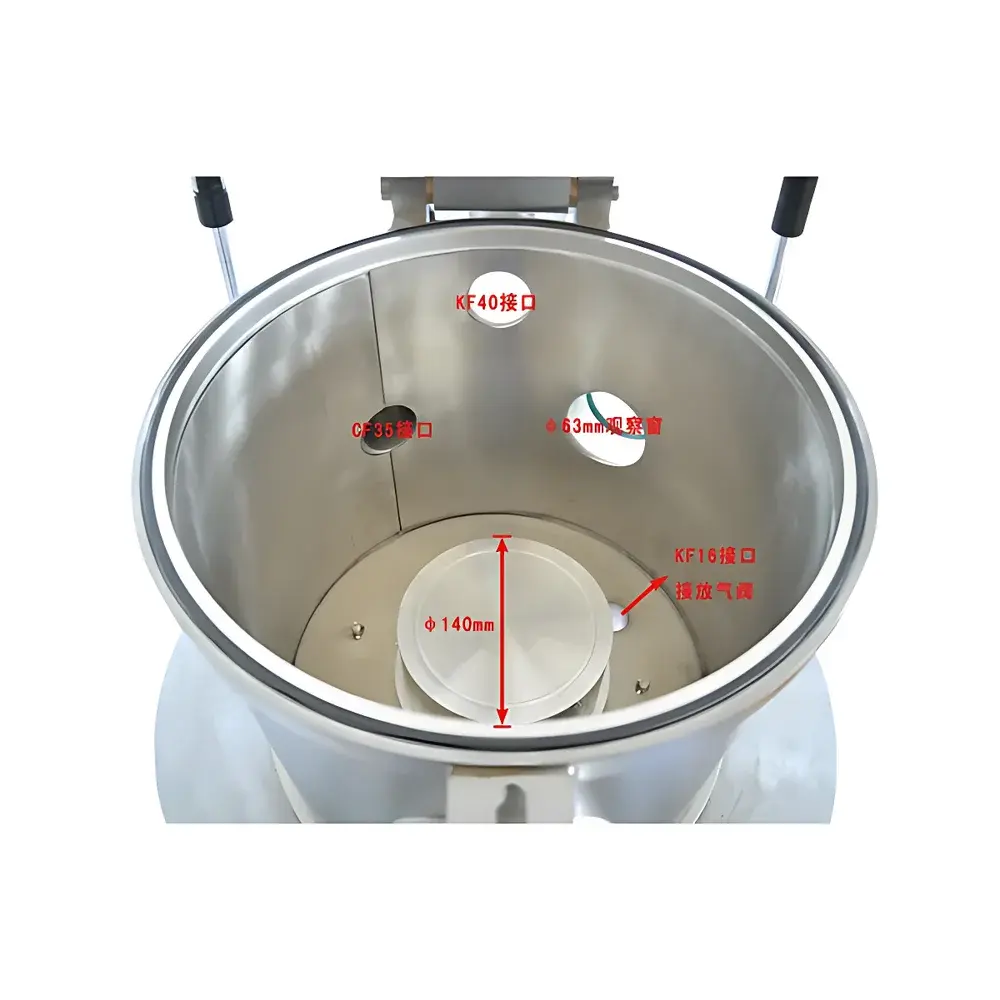
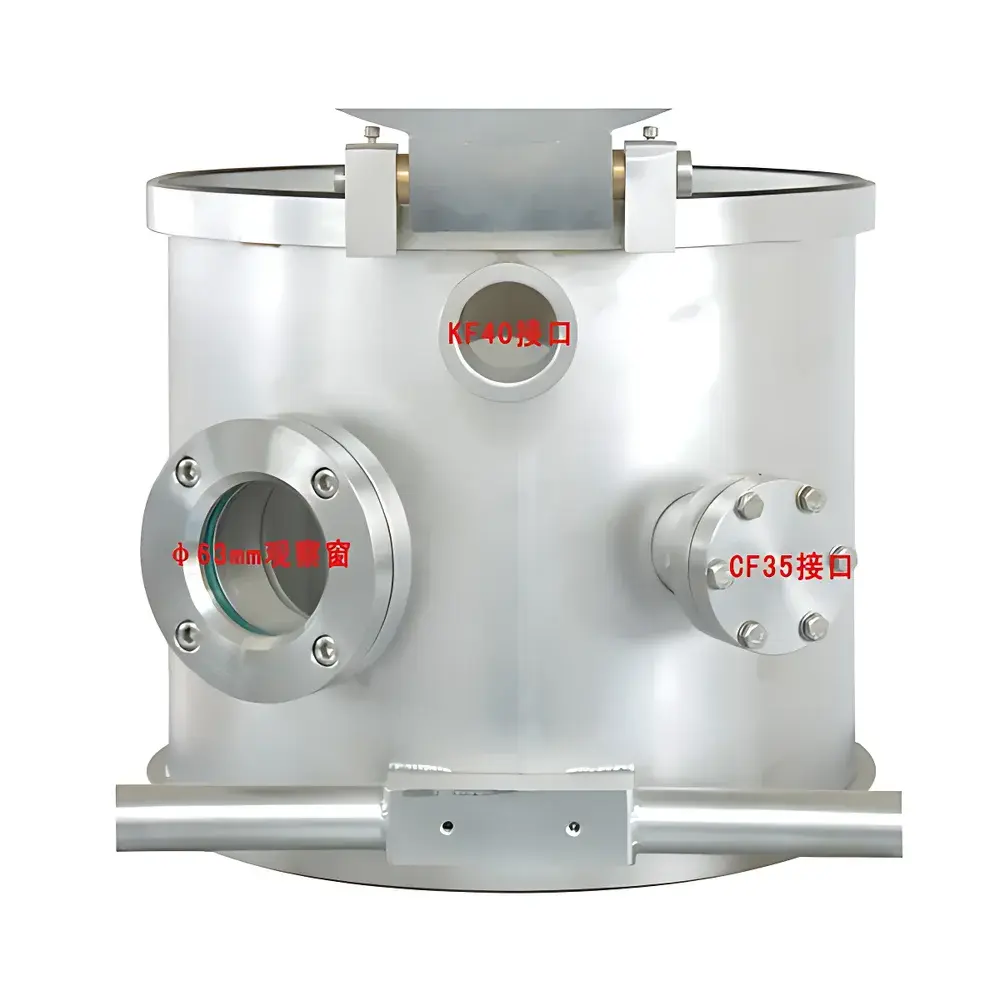
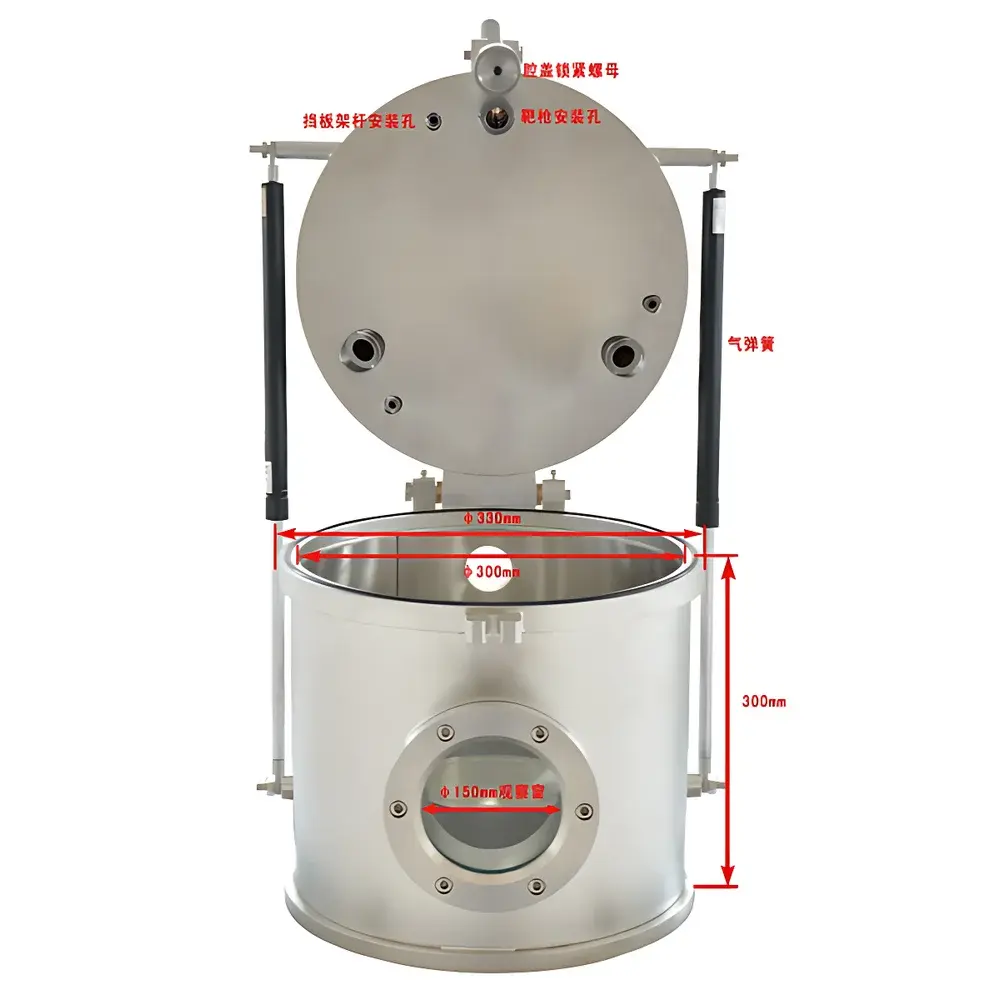
| Vacuum Chamber | Ø295 mm × 265 mm height |
| Pumping System | Pfeiffer Hipace 80 turbo-molecular pump (67 L/s) + MVP015-2DC diaphragm backing pump (1 m³/h) |
| Total Weight | 160 kg (excl. chiller) |
Overview
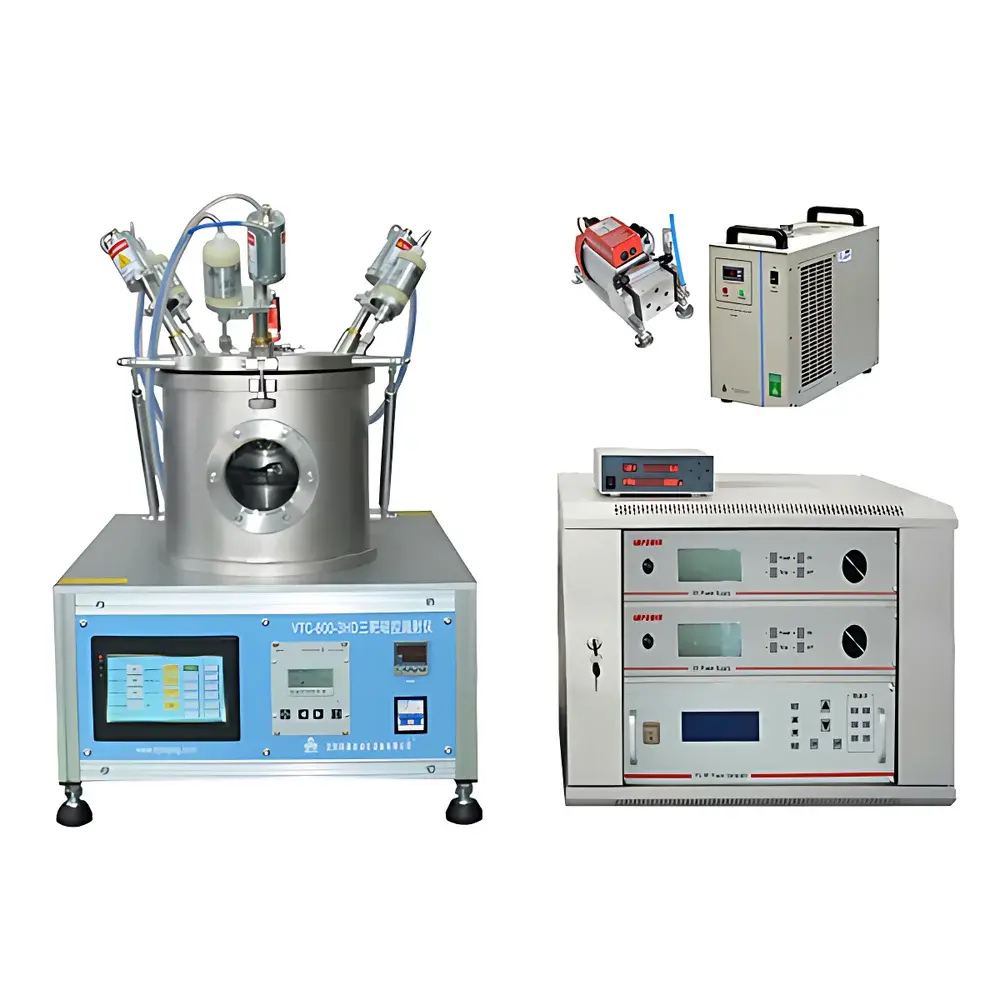
The KJ GROUP VTC-600-3HD Triple-Target Magnetron Sputtering System is a compact, modular thin-film deposition platform engineered for high-reproducibility physical vapor deposition (PVD) in academic and industrial R&D laboratories. It operates on the principle of magnetron-enhanced sputtering, where plasma generated in low-pressure argon gas accelerates inert-gas ions toward conductive or insulating target materials, ejecting atoms that subsequently condense onto a heated, rotating substrate. The system integrates three independently controllable magnetron cathodes—two DC-powered for metals and conductive oxides, and one RF-powered (13.56 MHz) for dielectric, ceramic, and ferroelectric targets—enabling sequential, co-sputtered, or gradient multilayer film synthesis without breaking vacuum. Designed for solid-state electrolyte development, OLED stack prototyping, and functional oxide research, the VTC-600-3HD delivers precise stoichiometric control, sub-nanometer thickness resolution (when paired with optional in-situ quartz crystal microbalance), and repeatable layer architecture across substrates up to Ø132 mm.
Key Features
- Triple-cathode configuration with full electrical isolation: two 500 W DC power supplies (for metallic, semiconductor, and conductive oxide targets) and one 300 W RF generator (for Al2O3, SiO2, LiNbO3, PZT, and other insulating materials)
- Modular vacuum architecture: detachable chamber, pumping station, and power cabinet allow flexible lab integration and future scalability (e.g., addition of load-lock or plasma etch module)
- Precision thermal management: resistively heated sample stage (RT–500 °C) with ±1 °C closed-loop PID control and active water cooling via integrated KJ-5000 recirculating chiller (deionized water compatible)
- Optimized uniformity engineering: motorized 1–20 rpm rotation stage combined with adjustable 85–115 mm target-to-substrate spacing enables ±5% thickness uniformity over Ø100 mm wafers or slides
- Gas delivery with dual MFCs: two independently calibrated channels (1–100 sccm and 1–200 sccm) support Ar-only sputtering or reactive co-sputtering with O2, N2, or H2 (customizable)
- High-integrity vacuum environment: Pfeiffer Hipace 80 turbomolecular pump (67 L/s) backed by MVP015-2DC diaphragm pump achieves ≤5.0×10⁻⁴ Pa base pressure, meeting ASTM F1470-21 requirements for clean PVD process qualification
Sample Compatibility & Compliance
The VTC-600-3HD accommodates rigid planar substrates including silicon wafers (up to 4″), fused silica, ITO/glass, stainless steel coupons, and ceramic pellets (Al2O3, YSZ). Its Ø132 mm stage accepts standard mask holders and custom jigs for patterned deposition. All wetted components—including gas lines (Ø6 mm PU tubing), chamber seals (fluoroelastomer), and internal shielding—are compatible with ISO Class 5 cleanroom handling protocols. The system meets CE safety directives (2014/35/EU Low Voltage Directive and 2014/30/EU EMC Directive) and supports GLP-compliant operation through optional audit-trail-enabled software (see Software & Data Management). For regulated applications involving battery material coating or medical device coatings, the vacuum integrity, temperature calibration traceability (NIST-traceable thermocouple), and pressure sensor linearity (±1% FS) align with foundational elements of ISO 14644-1 and USP particulate matter control frameworks.
Software & Data Management
The system is controlled via a dedicated Windows-based HMI with real-time parameter logging (pressure, power, temperature, gas flow, rotation speed) at user-defined intervals (100 ms–10 s). All operational data—including recipe execution history, fault logs, and interlock events—are stored in encrypted SQLite databases with timestamped UTC metadata. Optional software modules enable 21 CFR Part 11 compliance: electronic signatures, role-based access control (admin/operator/technician profiles), and immutable audit trails for all parameter changes and system startups. Export formats include CSV, MATLAB .mat, and HDF5 for direct integration with Python-based analysis pipelines (e.g., PySPM, SciPy). Remote monitoring via Ethernet (TCP/IP) supports integration into centralized lab infrastructure management systems.
Applications
- Solid-state battery research: deposition of LiPON, LATP, LLZO, and doped garnet-type electrolytes with controlled oxygen stoichiometry
- OLED and perovskite optoelectronics: co-sputtered hole/electron transport layers (e.g., NiOx/ZnO), transparent electrodes (ITO, AZO), and encapsulation barriers
- Ferroelectric and piezoelectric thin films: PZT, BaTiO3, and Sc-doped AlN for MEMS actuators and energy harvesters
- Hard coating development: TiN, CrN, and nanolaminated TiAlN/SiNx for tribological testing
- Functional oxide heterostructures: La0.7Sr0.3MnO3/SrTiO3 interfaces for emergent interfacial conductivity studies
- Calibration standards: certified reference films (e.g., Au, Cr, SiO2) for XRD, XPS, and ellipsometry instrument validation
FAQ
What vacuum level is required before initiating sputtering?
A base pressure ≤5.0×10⁻⁴ Pa is recommended prior to gas introduction. This ensures minimal residual hydrocarbon and water vapor contamination, critical for oxide film stoichiometry and adhesion.
Can the system deposit magnetic materials such as Fe, Co, or Ni?
Yes—standard magnetron heads support ferromagnetic targets. For enhanced plasma confinement with high-permeability materials, optional high-field “strong-magnet” cathodes are available (order code: VTC-SM-3HD).
Is reactive sputtering supported for nitride or oxide film growth?
Yes. The dual-MFC gas manifold allows precise mixing of Ar with N2 or O2. RF power mode is recommended for reactive deposition of AlN or TiO2 to avoid arcing on insulating targets.
How is film thickness monitored during deposition?
The standard configuration includes a quartz crystal microbalance (QCM) with ±0.1 nm resolution. Optional in-situ spectroscopic ellipsometry or laser interferometry can be integrated via flanged optical ports.
What maintenance intervals are recommended for the vacuum pumps?
The MVP015-2DC backing pump oil should be replaced every 2,000 hours of operation; the Hipace 80 turbomolecular pump requires annual bearing inspection and cleaning per Pfeiffer Service Bulletin TB-HP80-2023.



