
KJ GROUP ZJ-27 Bayard-Alpert Hot Cathode Ionization Gauge
| Brand | KJ GROUP (Shenyang Kejing) |
|---|---|
| Origin | Liaoning, China |
| Manufacturer Type | Authorized Distributor |
| Country of Origin | China |
| Model | ZJ-27 |
| Pricing | Available Upon Request |
| Measurement Principle | Hot Cathode Ionization (Bayard-Alpert Configuration) |
| Operating Range | 4×10¹ Pa to 1×10⁻⁵ Pa |
| X-Ray Limit | <1×10⁻⁶ Pa |
| Sensitivity | 0.15 ±15% Pa⁻¹ |
| Accelerator Voltage (vs. ground) | +225 V |
| Cathode Voltage (vs. ground) | +25 V |
| Collector Voltage (vs. ground) | 0 V |
| Emission Current | 100 µA (4×10¹–1×10⁻¹ Pa), 1 mA (1×10⁻¹–1×10⁻⁵ Pa) |
| Valid Measurement Ranges | 4×10¹–1×10⁻¹ Pa (primary) |
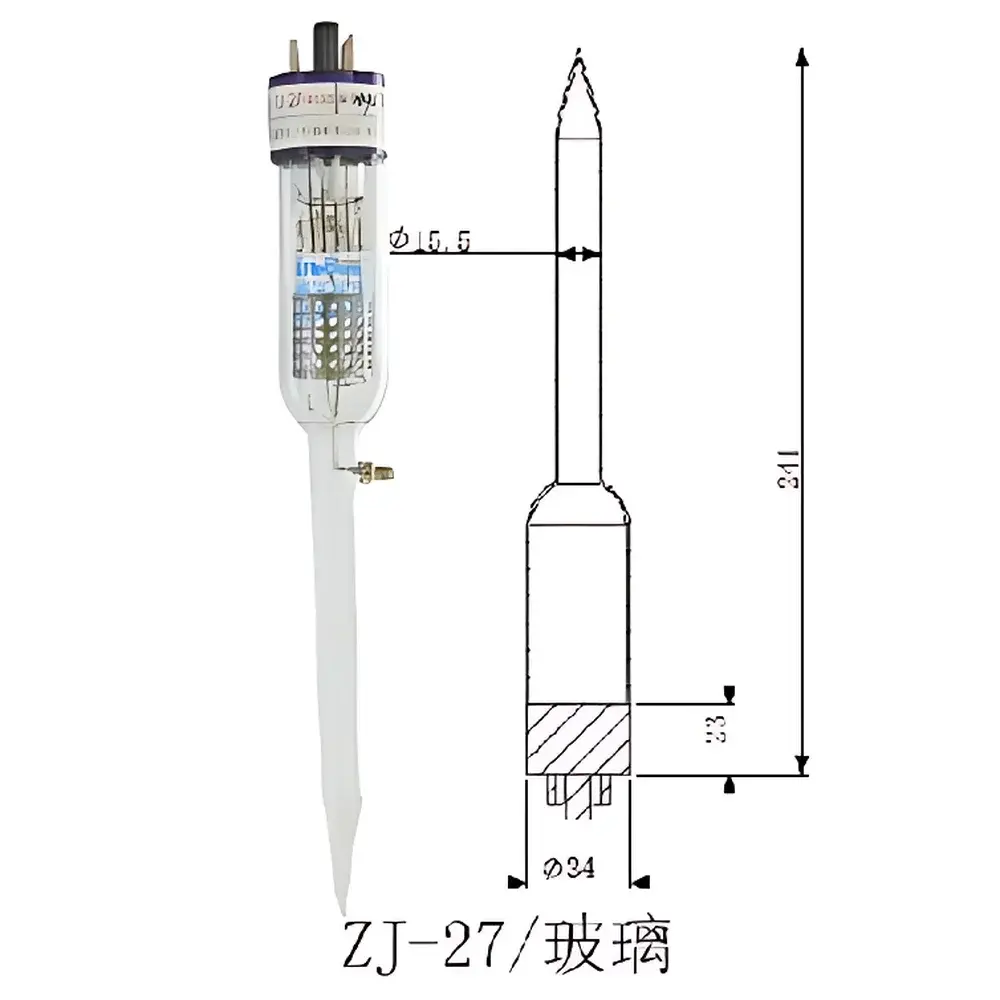
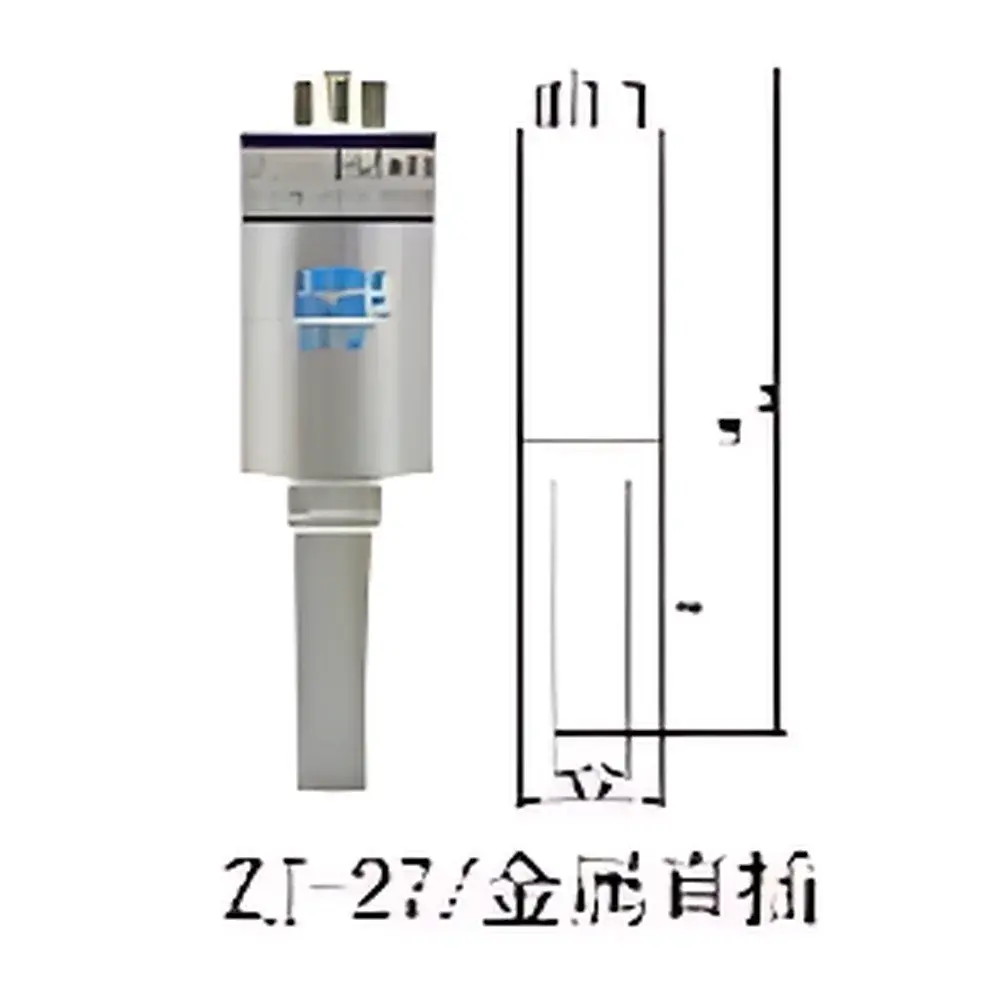
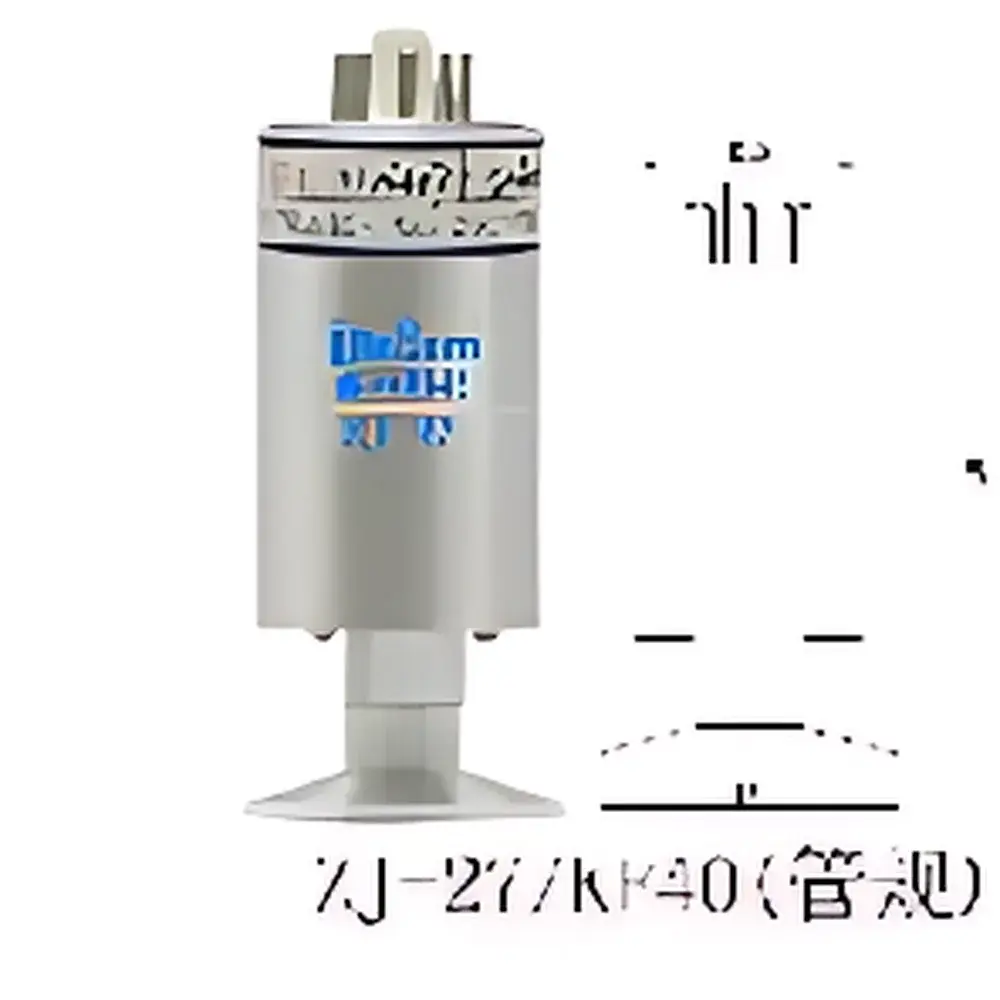
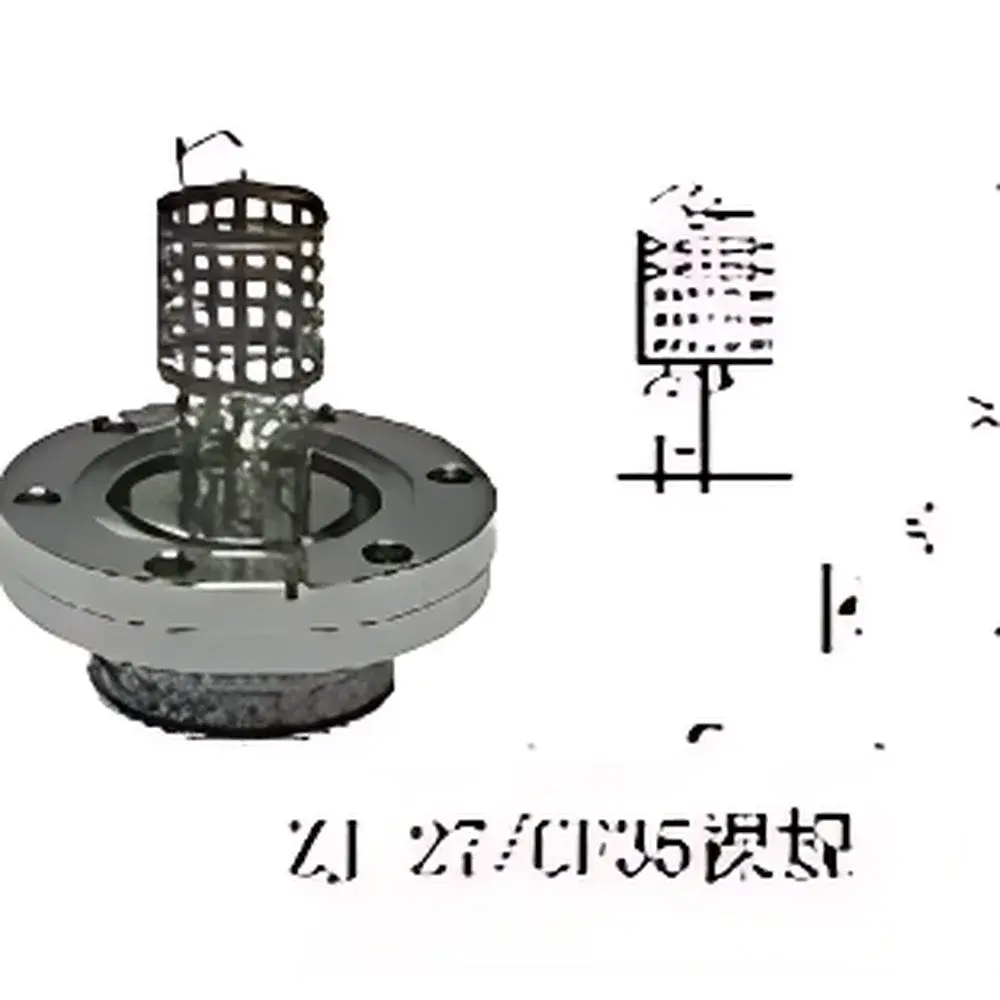
| Feedthrough Types & Max Bakeout Temp | Φ15.5±0.5 mm glass envelope (80 °C), Φ15.5±0.1 mm metal envelope (80 °C), KF10/KF16/KF25/KF40 (all ≤80 °C), CF16/CF25/CF35 (all ≤450 °C) |
Overview
The KJ GROUP ZJ-27 Bayard-Alpert Hot Cathode Ionization Gauge is a rigorously engineered vacuum measurement sensor designed for reliable, long-term operation in medium and high vacuum environments—ranging from 4×10¹ Pa down to 1×10⁻⁵ Pa. Based on the classical Bayard-Alpert (B-A) triode configuration, the gauge employs a thoriated iridium or yttria-coated tungsten filament cathode—engineered as a noble-metal oxide emitter—to deliver exceptional resistance to oxidation and transient atmospheric exposure during system venting or accidental air inrush. This structural and material choice directly contributes to stable emission characteristics, minimized electron-stimulated desorption, and extended operational lifetime under repeated thermal cycling. Unlike cold cathode or capacitance manometer technologies, the ZJ-27 operates on ion current detection: electrons emitted from the heated cathode are accelerated toward the positively biased grid (accelerator electrode), where they ionize residual gas molecules; the resulting positive ions are collected at the central wire anode (grounded collector), generating a current linearly proportional to gas density—and thus pressure—within its calibrated range.
Key Features
- Bayard-Alpert triode architecture with ultra-thin (<0.15 mm diameter) grounded collector wire to suppress X-ray photoelectron background, enabling effective suppression of the X-ray limit to <1×10⁻⁶ Pa
- Noble-metal oxide cathode formulation ensuring low work function, high emissivity stability, and resilience against carbon deposition and oxygen poisoning during extended bakeout or hydrocarbon-rich pumping cycles
- Dual-range emission current design: 100 µA for pressures ≥1×10⁻¹ Pa and 1 mA for pressures ≤1×10⁻¹ Pa—optimizing signal-to-noise ratio across the full dynamic range
- Multi-interface compatibility: standard glass (Φ15.5±0.5 mm), metal-sealed (Φ15.5±0.1 mm), KF-series quick-release flanges (KF10 through KF40), and CF-series conflat flanges (CF16, CF25, CF35) with differential bakeout tolerance up to 450 °C
- Fixed, factory-calibrated sensitivity of 0.15 ±15% Pa⁻¹ traceable to NIM (National Institute of Metrology, China) reference standards under nitrogen-equivalent conditions
Sample Compatibility & Compliance
The ZJ-27 is intended for use with non-corrosive, non-condensable gases—including N₂, Ar, He, and dry air—under clean vacuum conditions. It is not suitable for reactive gases (e.g., Cl₂, NH₃, O₃), vapors, or high-humidity environments without upstream cold traps or getter protection. The gauge complies with GB/T 3163–2022 (Chinese national standard for vacuum gauges) and aligns with ISO 3567:2019 guidelines for hot cathode ionization gauge performance verification. When integrated into systems requiring regulatory validation—such as semiconductor process chambers or research-grade UHV surface science apparatus—the ZJ-27 supports audit-ready documentation including calibration certificates, material traceability reports (per EN 10204 3.1), and conformity declarations for electromagnetic compatibility (EMC) per GB/T 18268.21–2010.
Software & Data Management
The ZJ-27 operates as a standalone analog sensor requiring external controller electronics (e.g., KJ GROUP VG-27 series or third-party compatible controllers such as INFICON Transpector or Pfeiffer TPG300). Its analog output (0–10 V or 4–20 mA) is fully scalable and linearized per IEC 61000-4-30 Class A requirements. When paired with compliant controllers supporting digital communication protocols (RS-485 Modbus RTU or optional Ethernet/IP), real-time pressure logging, timestamped event tagging, and configurable alarm thresholds become available. All controller firmware versions maintain GLP-compliant audit trails—including user login history, parameter modification logs, and calibration date tracking—meeting foundational requirements for FDA 21 CFR Part 11 Annex 11 readiness in regulated R&D and pilot-scale manufacturing environments.
Applications
- High-vacuum coating systems (e-beam evaporation, sputtering, and ion plating) where real-time pressure feedback ensures stoichiometric film growth
- UHV surface analysis tools—including XPS, AES, and LEED—requiring stable, low-noise ion current readout below 1×10⁻⁴ Pa
- Accelerator beamline vacuum monitoring, particularly in sections where differential pumping stages demand robustness against occasional pressure excursions
- Research-grade vacuum furnaces and cryogenic test chambers operating under controlled bakeout protocols up to 450 °C with CF-flanged integration
- Calibration laboratories performing intercomparison of ionization gauges against primary standards (e.g., spinning rotor gauges or ultrasonic interferometers)
FAQ
What gases can the ZJ-27 accurately measure?
The ZJ-27 provides calibrated readings for nitrogen and argon. For other gases—including helium, hydrogen, or oxygen—pressure values must be corrected using published relative sensitivity factors (RSFs) per ISO 27893:2017.
Is the ZJ-27 suitable for bakeout at 450 °C?
Only models equipped with CF16, CF25, or CF35 conflat flanges and metal-ceramic feedthroughs are rated for sustained bakeout at 450 °C. Glass- or standard KF-mounted variants are limited to 80 °C.
Why does the specification state that measurements below 2×10⁻⁵ Pa are reference-only?
At pressures approaching the X-ray limit (<1×10⁻⁶ Pa), ion current becomes indistinguishable from background photoelectron current. Hence, readings between 2×10⁻⁵ Pa and 1×10⁻⁵ Pa lack metrological traceability and should be used only for trend monitoring—not quantitative control.
Can the ZJ-27 be operated continuously at 1 mA emission current?
Yes—however, continuous 1 mA operation above 1×10⁻¹ Pa accelerates filament aging and increases outgassing. It is recommended to operate at 100 µA whenever possible and switch to 1 mA only when required for optimal signal fidelity below 1×10⁻³ Pa.
Does the ZJ-27 require periodic recalibration?
Per ISO 27893:2017, recalibration is recommended every 12 months—or after any event involving filament burnout, severe contamination, or mechanical shock—to maintain stated uncertainty (±15% of reading) across its specified range.



