
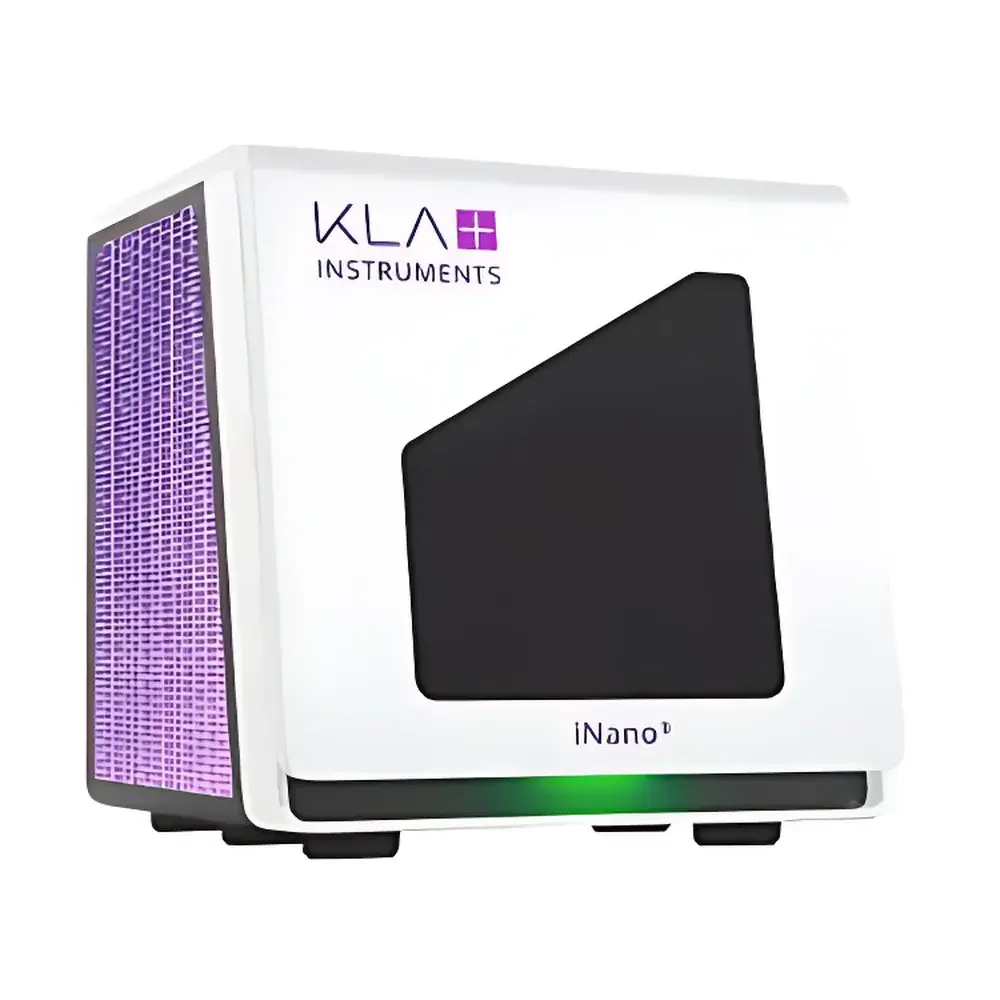
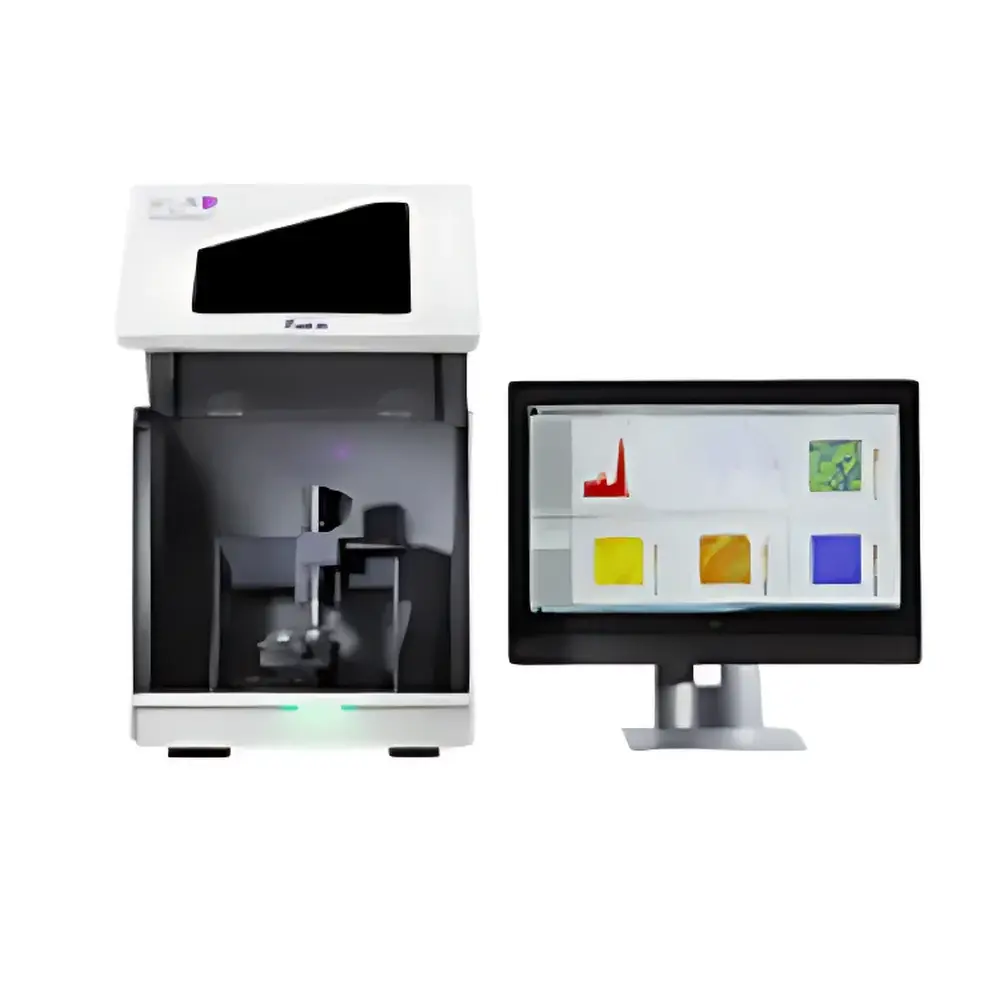
KLA iNano Bio-Nanoindenter
| Brand | KLA |
|---|---|
| Origin | USA |
| Manufacturer Type | Authorized Distributor |
| Import Status | Imported |
| Model | iNano |
| Instrument Type | Bio-Nanoindenter |
| Effective Load Range | 1 N |
| Load Resolution | < 10 nN |
| Displacement Range | 50 µm |
| Displacement Resolution | < 0.05 nm |
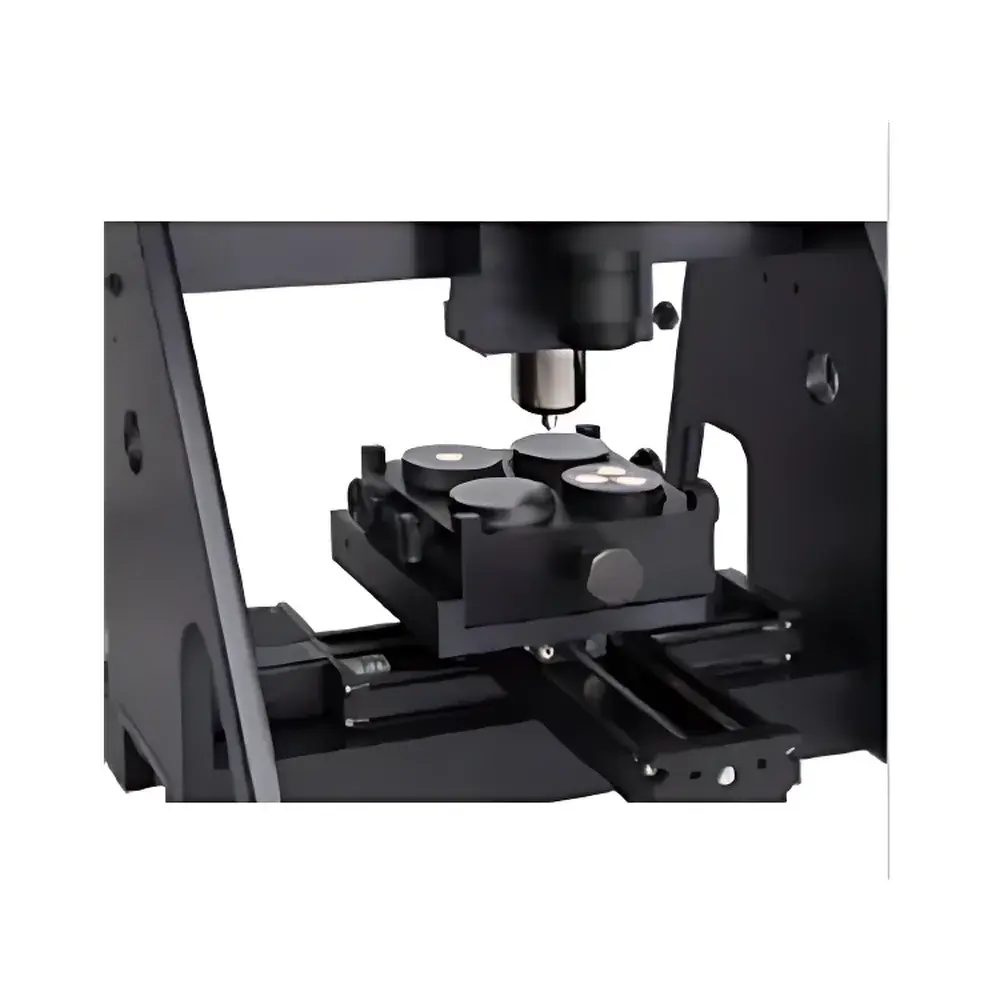
| Indenter Types | Dozens of interchangeable geometries (Berkovich, cube corner, Vickers, spherical, flat, etc.) |
Overview
The KLA iNano Bio-Nanoindenter is a high-precision, modular nanomechanical testing platform engineered for quantitative characterization of mechanical properties at the nanoscale. Based on quasi-static and dynamic depth-sensing indentation principles—rooted in the Oliver–Pharr method—the system delivers traceable, ISO 14577-compliant measurements of hardness, elastic modulus, contact stiffness, creep, stress relaxation, and viscoelastic parameters. Its core actuation architecture employs the InForce 50 electromagnetic transducer, integrating capacitive displacement sensing with closed-loop force control to ensure sub-nanometer positional fidelity and sub-10 nN force resolution. Designed specifically for biological materials, soft polymers, thin films, coatings, and heterogeneous microstructures, the iNano bridges the gap between macro-scale mechanical testing standards and localized nanoscale property mapping—enabling rigorous correlation between process parameters and functional performance across semiconductor, biomedical, energy, and advanced materials R&D.
Key Features
- InForce 50 electromagnetic actuator with 50 mN maximum load capacity and 50 µm displacement range, enabling high-fidelity testing from ultra-soft hydrogels (E ≈ 1 kPa) to hard ceramic coatings (E > 300 GPa)
- Integrated high-resolution optical microscope with digital zoom and software-controlled focus, supporting precise indenter positioning and real-time indentation monitoring
- InQuest high-speed controller with 100 kHz data acquisition rate and 20 µs time constant, optimized for transient event capture (e.g., pop-in, phase transformation, yield onset)
- Motorized XY stage (100 mm × 100 mm travel) and Z-axis (25 mm), accommodating large-area mapping and multi-height sample configurations
- Automated indenter calibration system embedded in InView software, eliminating manual tip geometry verification and reducing setup variability
- Compact, vibration-isolated benchtop design with integrated environmental enclosure options (dry box, glovebox, inert gas purge)
Sample Compatibility & Compliance
The iNano supports a broad spectrum of material classes—including biological tissues, hydrogels, pharmaceutical coatings, polymer blends, battery electrode layers, MEMS structures, semiconductor dielectrics, and metallurgical interfacial zones—without requiring bulk specimen preparation. All standard test protocols align with ISO 14577 Parts 1–4 for instrumented indentation testing, and optional modules support ASTM E2546 (nanoindentation of thin films) and USP (mechanical characterization of pharmaceutical dosage forms). Data integrity meets FDA 21 CFR Part 11 requirements via audit-trail-enabled InView software, including electronic signatures, user access controls, and immutable raw-data archiving. GLP/GMP-compliant reporting templates are available for regulated environments.
Software & Data Management
InView software serves as the unified interface for experiment design, execution, analysis, and reporting. It comprises five core modules: RunTest (graphical method builder with drag-and-drop logic), ReviewData (multi-dimensional curve overlay and statistical filtering), InFocus Report (customizable PDF/Excel export with metadata tagging), InView University (on-demand video training library), and InView Mobile (remote status monitoring and alerting). Advanced scripting via the User Method Development option enables fully customized test sequences—including hybrid indentation-scratch cycles, temperature-ramped loading, or synchronized electrical-mechanical I-V probing. DataBurst mode captures displacement transients at >1 kHz sampling rates, critical for identifying nucleation events or viscoelastic recovery kinetics. All modules support batch processing, cross-sample normalization, and export to MATLAB, Python (via HDF5), or commercial FE simulation platforms.
Applications
- Film & Coating Metrology: Quantification of substrate-independent modulus/hardness using AccuFilm™ CSM modeling; assessment of adhesion failure thresholds via scratch testing per ISO 20502
- Biomedical Materials: Shear modulus mapping of soft tissues (≥1 kPa) using Biomaterials Method Pack; time-resolved creep compliance of collagen scaffolds under physiological hydration
- Energy Materials: Mechanical degradation tracking of solid electrolytes during electrochemical cycling; lithiation-induced modulus gradients in Si anodes
- Polymers & Composites: Frequency-dependent storage/loss moduli via ProbeDMA™; spatially resolved viscoelastic heterogeneity in fiber-reinforced thermoplastics using NanoBlitz 3D/4D
- Semiconductor Process Control: Elastic anisotropy mapping of low-k dielectrics; fracture toughness estimation of Cu/Ta diffusion barriers; thermal expansion mismatch quantification via in situ 300°C nanoindentation
FAQ
What distinguishes the iNano from conventional nanoindenters for biological applications?
Its combination of sub-10 nN load resolution, active drift compensation, and Biomaterials Method Pack—validated for shear moduli down to 1 kPa—enables stable, reproducible testing of hydrated, temperature-sensitive specimens without dehydration artifacts.
Can the iNano perform ISO 14577-compliant hardness testing out-of-the-box?
Yes. Preconfigured ISO 14577 test methods are included in InView software, automatically calculating and reporting reduced modulus, indentation hardness, Vickers hardness equivalent, and normalized indentation work with uncertainty propagation.
Is high-temperature testing supported, and what is the maximum operational temperature?
The optional 300°C heating stage provides uniform, inert-atmosphere thermal control with integrated cooling and closed-loop PID regulation; all CSM, NanoBlitz, and AccuFilm functionalities remain fully operational at elevated temperatures.
How does NanoBlitz 3D differ from NanoBlitz 4D in terms of application scope?
NanoBlitz 3D targets high-modulus materials (>3 GPa) with rapid single-depth mapping (≤1 s/point); NanoBlitz 4D applies constant-strain-rate loading to resolve depth-dependent property gradients in both soft and hard materials, ideal for graded interfaces and multilayer stacks.
Are third-party data analysis tools compatible with iNano output formats?
Raw data exports as ASCII or HDF5 files include full metadata (time stamps, environmental conditions, calibration coefficients), ensuring seamless integration with Python (SciPy/Pandas), MATLAB, or commercial finite element preprocessors.



