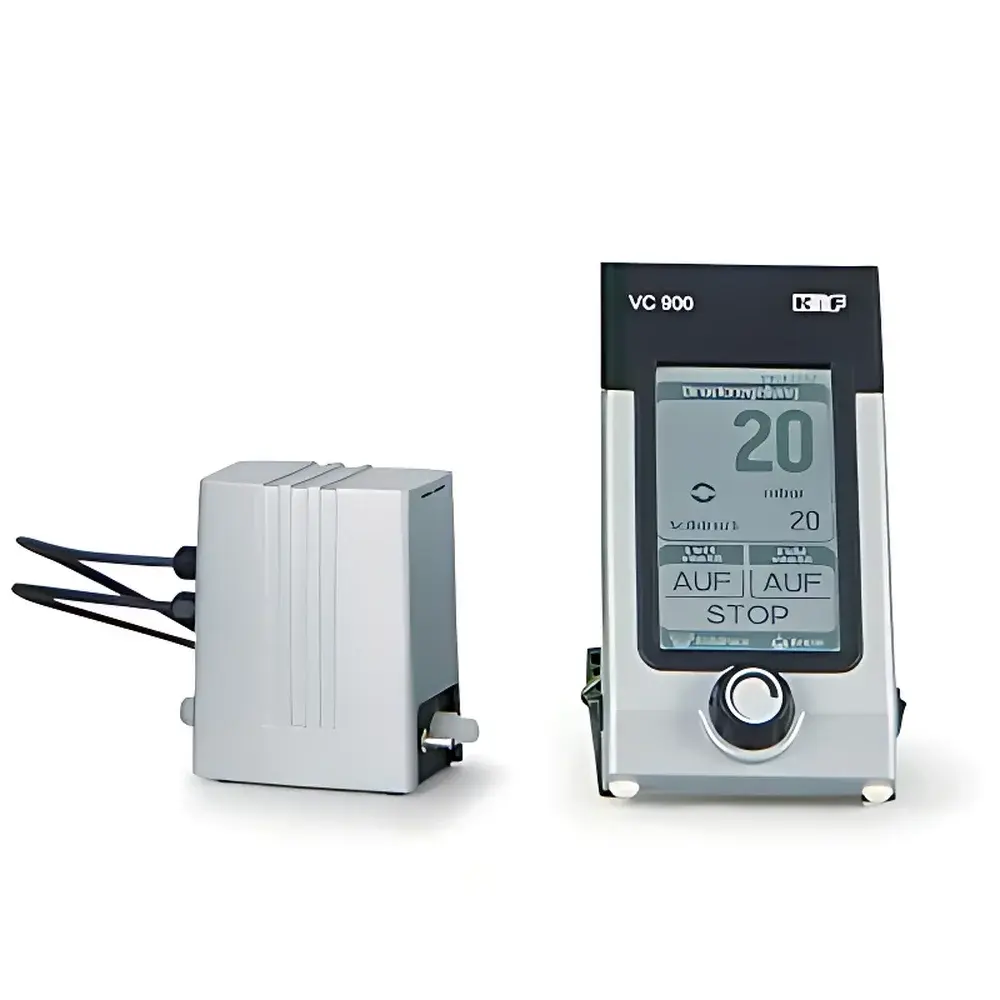
KNF VC900 Vacuum Controller
| Brand | KNF |
|---|---|
| Origin | Germany |
| Model | VC900 |
| Measurement Principle | Piezoresistive Pressure Sensor |
| Range | 0–1100 mbar abs. |
| Vacuum Port | ID 10 mm, PVDF |
| Accuracy | ±1 mbar |
| Power Supply | 100–240 V AC, 50/60 Hz |
| Max. Current | 1.0 A |
| IP Rating | IP30 |
| Operating Temperature | +10 to +40 °C |
| Dimensions (W×D×H) | 181 × 101 × 67 mm |
| Weight | 1.2 kg |
| Interface | Mini-USB |
| Control Ports | Inlet (ID 10 mm, PVDF), Outlet (ID 10 mm, PVDF), Vent (ID 4 mm, nickel-plated brass) |
Overview
The KNF VC900 Vacuum Controller is a precision-engineered, microprocessor-based vacuum regulation system designed for laboratory and pilot-scale applications requiring stable, repeatable, and programmable pressure control. Unlike passive vacuum gauges, the VC900 integrates real-time pressure sensing—via a calibrated piezoresistive sensor—with active pneumatic actuation to dynamically modulate vacuum level in closed-loop operation. Its core architecture enables direct interfacing with diverse vacuum sources (e.g., diaphragm pumps, scroll pumps, or vacuum manifolds) and downstream process equipment such as rotary evaporators, freeze dryers, distillation units, and reaction vessels. The device operates across the full absolute pressure range of 0–1100 mbar, covering rough vacuum through atmospheric conditions, making it suitable for both solvent evaporation under reduced pressure and controlled inert gas purging. Engineered in Germany to stringent industrial quality standards, the VC900 complies with IEC 61000-6-3 (EMC emission) and IEC 61000-6-2 (immunity), ensuring reliable performance in shared lab environments.
Key Features
- Four configurable operational modes: Evacuation Mode (adjustable pump speed for controlled solvent removal), Pressure Control Mode (setpoint maintenance with PID-regulated feedback), Auto Boiling Point Detection Mode (intelligent algorithm identifies solvent boiling point without prior temperature input), and Function Mode (user-defined pressure–time profiles via USB upload)
- Piezoresistive pressure sensor with ±1 mbar absolute accuracy over the full 0–1100 mbar abs. range; factory-calibrated traceable to national standards
- Robust fluidic interface: dual ID 10 mm PVDF inlet/outlet ports rated for chemical compatibility with common organic solvents, acids, and bases; vent port with ID 4 mm nickel-plated brass fitting for inert gas or ambient air admission
- Mini-USB port supporting data logging at user-selectable intervals (1–60 s); raw pressure values, timestamps, and mode status exported in CSV format for post-processing in Excel or LabVIEW
- Compact, low-profile housing (181 × 101 × 67 mm) constructed from UL94-V0 flame-retardant polycarbonate; IP30-rated enclosure suitable for dry, non-condensing indoor laboratory use
- Universal power input (100–240 V AC, 50/60 Hz) with internal switching-mode supply; no external transformer required
Sample Compatibility & Compliance
The VC900 is compatible with vapors and gases commonly encountered in analytical and preparative chemistry workflows—including acetone, ethanol, ethyl acetate, dichloromethane, water, nitrogen, argon, and compressed air—provided operating temperatures remain within +10 to +40 °C and condensable vapor loads are managed externally (e.g., via cold traps). It is not intended for use with corrosive gases (e.g., Cl₂, NH₃, HF), explosive atmospheres, or particulate-laden streams. From a regulatory standpoint, the controller supports GLP-compliant documentation when used with validated software workflows; its timestamped USB logs meet basic ALCOA+ data integrity principles. While not certified to FDA 21 CFR Part 11 out-of-the-box, audit trails generated via third-party SCADA or LIMS integration can be configured to satisfy electronic record requirements in regulated QC/QA labs.
Software & Data Management
The VC900 does not require proprietary software for basic operation—its front-panel membrane keypad and OLED display provide intuitive local control. However, the Mini-USB interface enables full configuration and monitoring using KNF’s free VC Control Utility (Windows/macOS), which allows users to define multi-step pressure ramps, export live graphs, and save up to 10 custom function curves. All logged data include ISO 8601 timestamps, pressure values in mbar abs., active mode ID, and pump state (ON/OFF). Exported CSV files are structured for direct import into statistical analysis tools (e.g., JMP, Minitab) or compliance reporting templates. Firmware updates are delivered via USB and preserve all user settings; version history is accessible via the device menu.
Applications
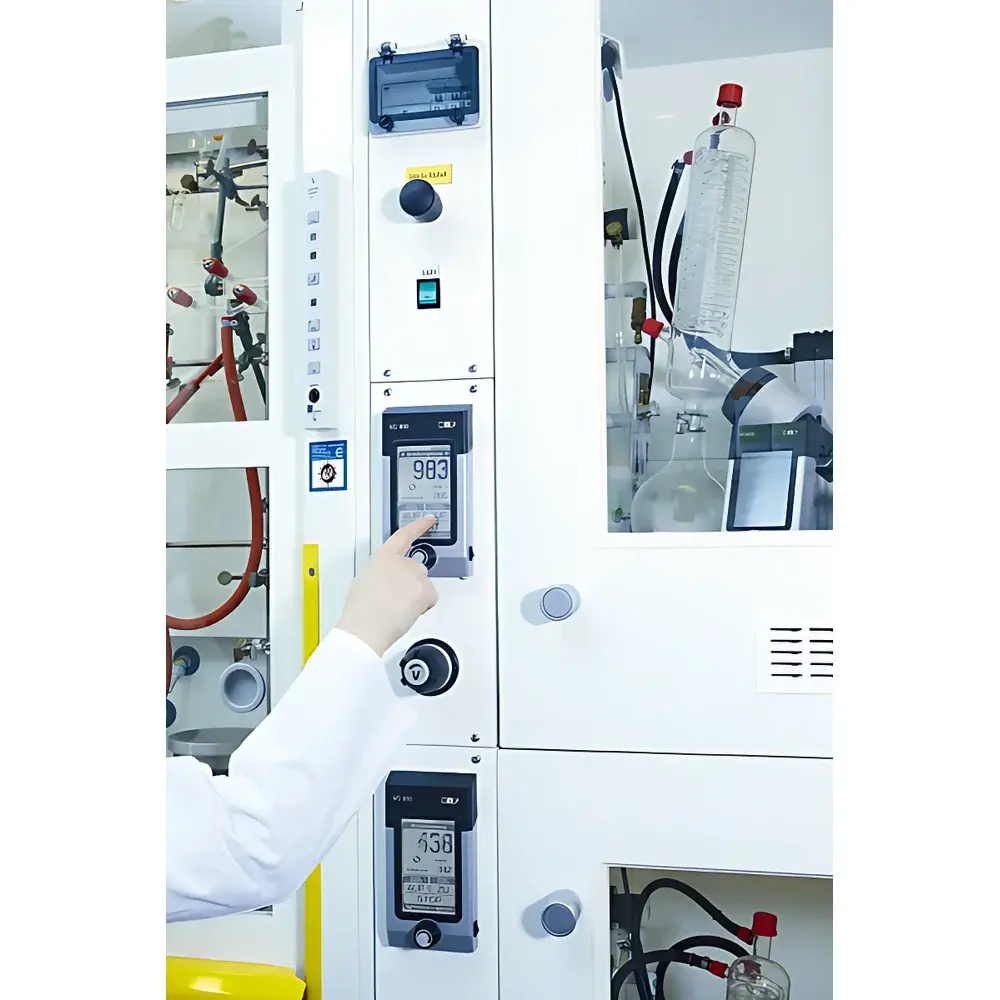
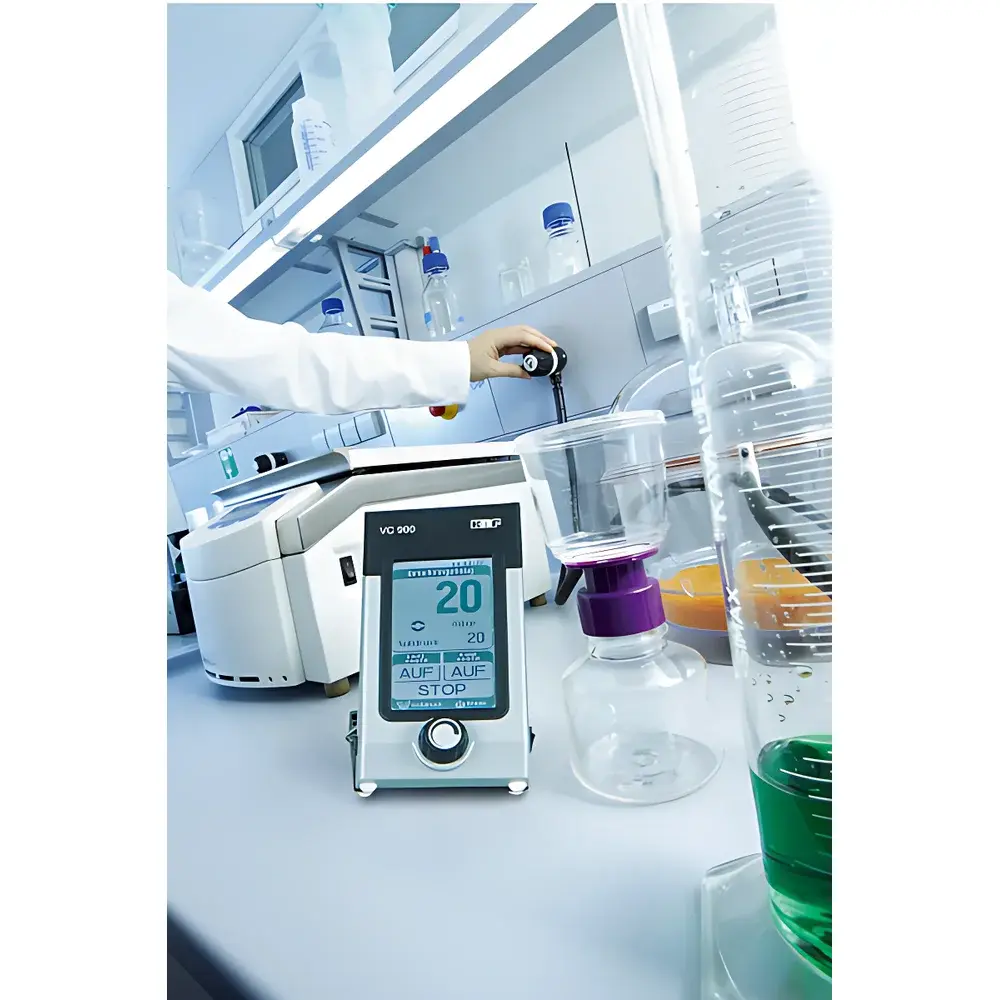
- Rotary evaporation optimization: precise matching of bath temperature and vacuum level to maximize yield while minimizing thermal degradation or bumping
- Short-path and fractional distillation: dynamic pressure adjustment during multi-component separation to maintain optimal boiling point differentials
- Lyophilization cycle development: reproducible primary drying pressure setpoints across batches
- Reaction monitoring under inert atmosphere: coordinated venting and vacuum-purge sequences to exclude moisture/oxygen
- Method transfer and scale-up: documenting vacuum profiles ensures consistent process parameters between R&D and manufacturing environments
- Educational laboratories: hands-on demonstration of gas laws, phase diagrams, and closed-loop control theory
FAQ
Does the VC900 include a built-in vacuum pump?
No—the VC900 is a controller only and must be connected to an external vacuum source.
Can it regulate pressure in positive-pressure applications?
No—it is designed exclusively for vacuum and atmospheric pressure control (0–1100 mbar abs.), not pressurization.
Is calibration certificate included with delivery?
A factory calibration report (traceable to PTB standards) is provided; optional UKAS-accredited calibration is available upon request.
What is the maximum allowable ambient humidity for operation?
Relative humidity must not exceed 80% non-condensing, per IEC 60664-1 insulation coordination guidelines.
How frequently should recalibration be performed?
KNF recommends annual verification under routine use; more frequent checks are advised if exposed to aggressive vapors or mechanical shock.