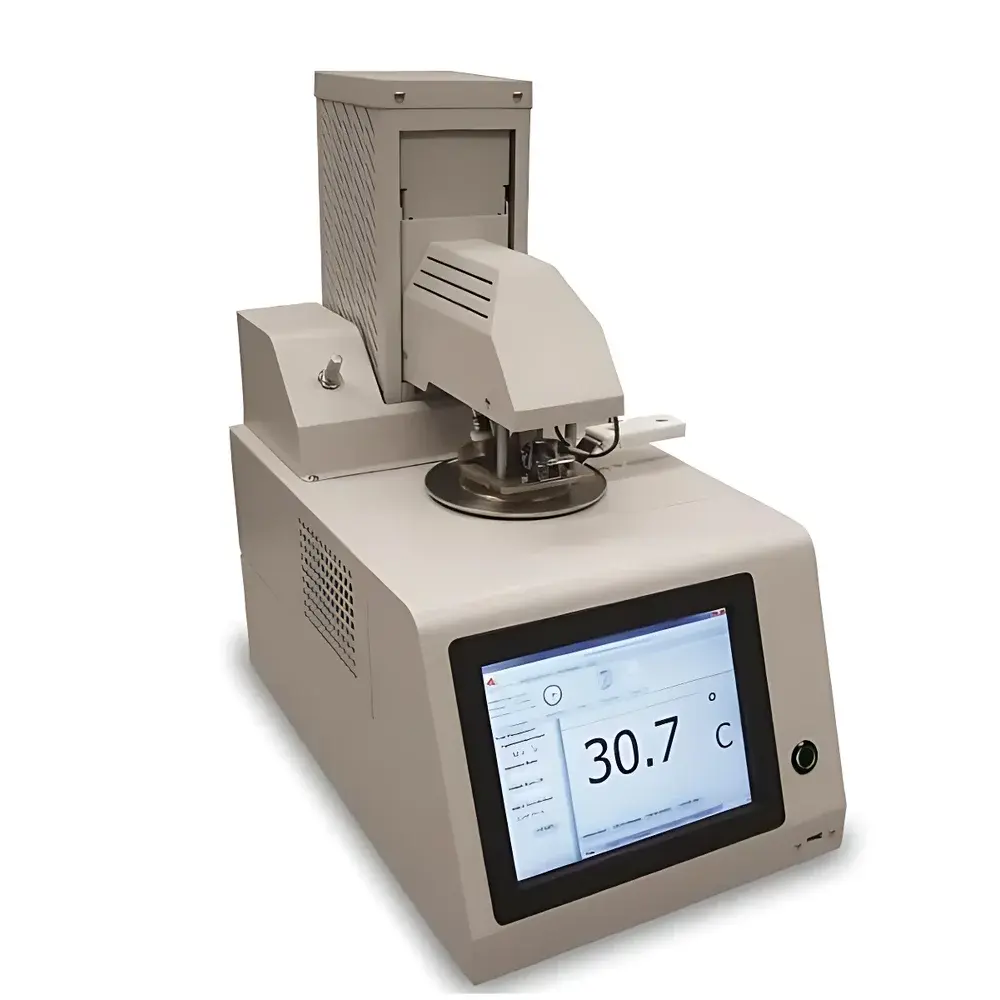
Koehler K71000 Automatic Pensky-Martens Closed-Cup Flash Point Tester
| Brand | Koehler |
|---|---|
| Origin | USA |
| Manufacturer Status | Authorized Distributor |
| Origin Category | Imported |
| Model | K71000 |
| Detection Method | Closed-Cup |
| Operation Mode | Fully Automatic |
| Temperature Range | Ambient to 405°C |
| Ignition Source | Switchable Gas or Electric Ignition |
| Applicable Standards | ASTM D93 Methods A, B & C, IP 34, ISO 2719, DIN EN 22719, JIS K2265, NF M 07-019 |
Overview
The Koehler K71000 Automatic Pensky-Martens Closed-Cup Flash Point Tester is a precision-engineered instrument designed for the accurate and repeatable determination of flash point in petroleum-based liquids and related materials according to internationally recognized closed-cup test protocols. Based on the fundamental principle of controlled heating under sealed conditions followed by periodic ignition source application, the K71000 implements the standardized Pensky-Martens geometry—featuring a precisely machined brass test cup, hinged lid with integrated stirrer and ignition assembly—to ensure strict compliance with thermodynamic and kinetic requirements of ASTM D93, ISO 2719, and equivalent methods. Its measurement domain encompasses a broad spectrum of samples including biodiesel, distillate fuels, new and used lubricating oils, residual fuel oils, concentrated residues, and heterogeneous petroleum liquids prone to surface film formation during testing. The system operates under rigorously defined heating rates, stirring profiles, and ignition timing sequences per selected method (A, B, or C), delivering traceable, auditable results suitable for regulatory submission, quality control release, and process safety evaluation.
Key Features
- Fully automated operation with programmable method selection (ASTM D93 A/B/C, IP 34, ISO 2719) and real-time parameter monitoring via an 8.4-inch high-resolution capacitive touchscreen interface
- Dual detection system: simultaneous thermal sensing via calibrated platinum resistance thermometer (PRT) and flame confirmation via ionization ring circuitry—ensuring unambiguous flash event identification
- Switchable ignition source: user-selectable electric spark or propane gas ignition, configurable per test method and laboratory safety policy
- Triple-position mechanical lift mechanism for precise, repeatable positioning of the test cup lid, stirrer, and ignition assembly—eliminating manual alignment errors
- Integrated dual-fan active cooling system: primary fan cools the test cup directly; secondary fan dissipates ambient heat from the chamber—reducing cycle time without compromising thermal stability
- Onboard inert gas suppression system: automatically dispenses nitrogen or argon upon flame detection to extinguish ignition and prevent sustained combustion
- Automatic barometric pressure compensation: built-in digital barometer adjusts flash point calculation in real time per ASTM D93 Annex A1 requirements
- Three-tier password protection (operator, supervisor, administrator) and full audit trail logging compliant with FDA 21 CFR Part 11 and GLP/GMP data integrity expectations
Sample Compatibility & Compliance
The K71000 is validated for use with volatile and semi-volatile petroleum liquids exhibiting viscosities up to 150 mm²/s at 40°C and pour points above −20°C. It accommodates samples that form surface films (e.g., oxidized lubricants, biofuel blends) through optimized lid sealing and controlled stirrer dynamics. All operational parameters—including ramp rate, dwell time, ignition frequency, and stir speed (0–300 ±5 RPM)—are programmatically locked to match the exact procedural constraints of ASTM D93 Methods A (manual ignition timing), B (automated ignition timing), and C (low-temperature variant). The instrument’s firmware and calibration routines are fully traceable to NIST-traceable reference materials (CRMs), and its temperature measurement subsystem is certified to meet ASTM E77 and ISO/IEC 17025 metrological requirements. Full conformance documentation—including Declaration of Conformity, calibration certificates, and method verification reports—is supplied with each unit.
Software & Data Management
The K71000 runs Koehler’s proprietary Windows-based PC software, supporting Windows 10/11 (64-bit) with native LIMS integration via Ethernet (TCP/IP) or RS-232 serial interface. Data storage capacity exceeds 65,000 test records on internal solid-state drive, each containing timestamped raw temperature curves, ignition events, atmospheric pressure logs, operator ID, and method metadata. Software features include customizable report templates (PDF/CSV/XLSX), electronic signature capture, automatic EFP (Environmental Fate and Effects Program) data export, and scheduled calibration reminders. Audit trail functionality records all user actions—including method edits, result overrides, and calibration interventions—with immutable timestamps and user attribution. Remote diagnostics and firmware updates are supported over secure HTTPS connection, ensuring long-term regulatory readiness and cybersecurity compliance.
Applications
- Quality assurance of refinery streams and finished fuels prior to shipment or blending
- Stability assessment of biodiesel and renewable diesel blends under accelerated aging conditions
- Used oil analysis for oxidation state and contamination screening in predictive maintenance programs
- Regulatory compliance testing for OSHA, EPA, DOT, and international transport authorities (IMDG Code, ADR/RID)
- Research and development of low-flash specialty fluids, including synthetic esters and bio-based solvents
- Third-party certification laboratories performing accredited flash point testing per ISO/IEC 17025 scope
FAQ
What standards does the K71000 support out-of-the-box?
ASTM D93 Methods A, B, and C; IP 34; ISO 2719; DIN EN 22719; JIS K2265; and NF M 07-019—all implemented with method-specific heating profiles, ignition logic, and pass/fail criteria.
How is temperature accuracy maintained across the full range (ambient to 405°C)?
Through factory-calibrated PRT sensors, optional multi-point temperature validation using certified reference materials (CRMs), and software-driven 2-point or >2-point field calibration routines traceable to NIST standards.
Can the instrument operate safely in environments where flammable vapors may be present?
Yes—the K71000 incorporates Class I, Division 2 hazardous location design elements, including explosion-proof enclosure rating (optional), inert gas suppression, and continuous flame detection with immediate shutdown protocol.
Is remote software update and diagnostic support available?
Yes—secure over-the-air firmware updates and remote troubleshooting are enabled via encrypted HTTPS channel, with full version control and rollback capability.
What data security measures are embedded for regulated industries?
Role-based access control (three password tiers), electronic signatures, tamper-evident audit trails, and 21 CFR Part 11-compliant electronic record management—including time-stamped, user-attributed event logging and immutable data archiving.