
KOMYO RIKAGAKU Kitagawa 770 Hydrogen Fluoride (HF) Low-Concentration Detection Tube
| Brand | KOMYO RIKAGAKU |
|---|---|
| Origin | Japan |
| Model | 770 |
| Detection Range | 0.05–1 ppm HF |
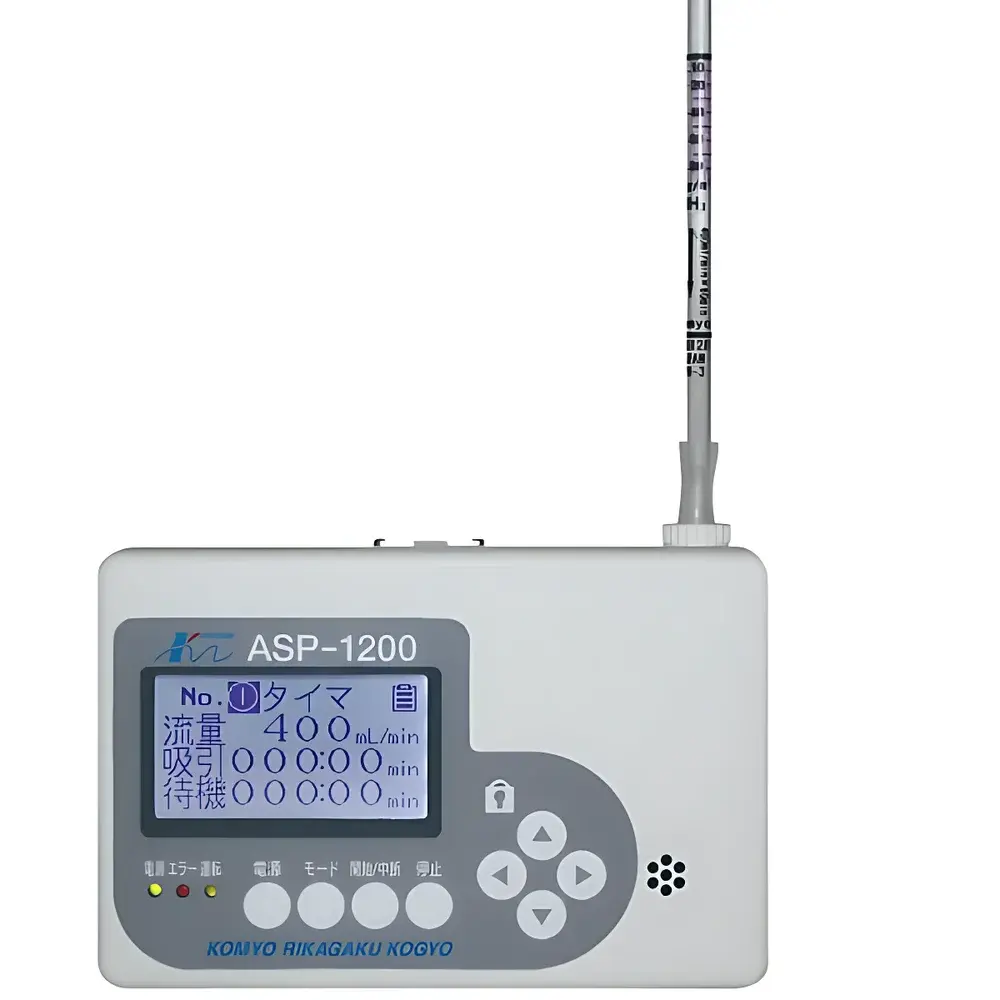
| Sampling Method | Manual or Motorized Pump (e.g., ASP-1200 @ 250 mL/min, 10 min) |
| Principle | Colorimetric Reaction with Pre-impregnated Reagent |
| Compliance | Designed per JIS K 0311 and ISO 8573-6 for qualitative/semi-quantitative gas analysis |
| Tube Dimensions | Ø6 mm × 120 mm |
| Shelf Life | 24 months from manufacture (unopened, stored at 10–30°C) |
| Calibration Traceability | NIST-traceable reference standards used in factory validation |
Overview
The KOMYO RIKAGAKU Kitagawa 770 Hydrogen Fluoride (HF) Detection Tube is a precision-engineered, single-use colorimetric indicator tube designed for rapid, on-site quantification of low-concentration hydrogen fluoride gas in ambient air, industrial exhaust streams, and emergency response scenarios. Developed under the legacy “Kitagawa” methodology—pioneered by Dr. Kitagawa in Japan since 1947—the tube employs a chemically selective reagent layer immobilized inside a calibrated glass capillary. Upon controlled aspiration of sample air through the tube, gaseous HF reacts stoichiometrically with a proprietary chromogenic complex (based on zirconium-xylenol orange chemistry), generating a sharp, linear color front proportional to concentration. The resulting stain length is read directly against the pre-etched scale (0.05–1 ppm), enabling field-deployable measurement without power, software, or calibration gases. This principle adheres to the fundamental ASTM D4433 and ISO 8573-6 frameworks for passive, diffusion-limited colorimetric gas analysis.
Key Features
- Ultra-low-range detection optimized for occupational hygiene thresholds: 0.05–1 ppm HF—covering both OSHA PEL (3 ppm ceiling) and ACGIH TLV-TWA (0.5 ppm) with high visual resolution at sub-ppm levels.
- Pre-calibrated linear scale with ±15% analytical uncertainty (k=2) across full range, validated using certified HF gas standards traceable to NMIJ (National Metrology Institute of Japan).
- Compatible with universal hand pump AP-20 (100 mL stroke) or motorized ASP-1200 (250 mL/min, fixed-flow mode), ensuring reproducible draw volume and minimizing operator-induced variability.
- Robust borosilicate glass construction (Ø6 mm × 120 mm) with hermetically sealed ends; stable for 24 months when stored at 10–30°C and protected from light and humidity.
- No cross-sensitivity to common interferents including HCl, HBr, Cl₂, SO₂, and NO₂ under standard sampling conditions (tested per JIS K 0311 Annex B).
- CE-marked for professional use in EU workplaces; compliant with Japanese Industrial Standard JIS K 0311 for detector tube performance verification.
Sample Compatibility & Compliance
The 770 tube is validated for use in clean, dry air matrices with relative humidity 1 mg/m³ may impede reagent accessibility and require pre-filtration (PTFE membrane, 0.3 µm). It is not intended for continuous monitoring or corrosive process streams containing fluorosilicic acid or anhydrous HF vapor. All batches undergo lot-specific verification per JIS K 0311 Section 6 (accuracy, linearity, shelf-life stability) and are supplied with Certificate of Analysis including batch number, manufacturing date, and expiration date. Documentation supports GLP-aligned recordkeeping for industrial hygiene audits.
Software & Data Management
As a passive, analog measurement device, the 770 tube requires no firmware, drivers, or connectivity. Quantitative results are manually recorded into paper-based exposure logs or digital platforms (e.g., EHS incident reporting systems, LIMS) via structured entry fields. For regulatory traceability, users are advised to retain used tubes for minimum 3 years alongside annotated sampling records (date/time, location, pump type/setting, observer ID)—consistent with OSHA 1910.120 and EU Directive 2004/37/EC requirements for carcinogen monitoring documentation.
Applications
- Occupational exposure assessment near etching baths, semiconductor wafer cleaning lines, and fluoropolymer synthesis reactors.
- Routine leak screening of HF storage cylinders, piping flanges, and scrubber outlet ducts in chemical plants.
- First-responder triage during HF release incidents—enabling immediate go/no-go decisions prior to deploying ion-selective electrode (ISE) or FTIR analyzers.
- Verification of local exhaust ventilation (LEV) effectiveness during maintenance of fume hoods handling hydrofluoric acid solutions.
- Educational laboratory demonstrations of gas-phase acid-base reactions and stoichiometric color development kinetics.
FAQ
What is the minimum detectable concentration for HF using the 770 tube?
The lower limit of quantitation (LLOQ) is 0.05 ppm, defined as the lowest concentration yielding a measurable, reproducible color front ≥2 mm in length under standardized pumping conditions.
Can this tube be reused after sampling?
No—each tube is a single-use consumable. Reuse compromises reagent integrity, introduces carryover risk, and invalidates calibration traceability.
Is correction required for temperature or pressure deviations during sampling?
No correction factor is applied per JIS K 0311; the scale is empirically derived across 5–40°C and 80–106 kPa. Significant altitude (>2,000 m) or extreme cold (<5°C) may reduce reaction kinetics and require method validation.
How does this compare to electrochemical HF sensors?
Unlike electronic sensors, the 770 tube provides absolute, calibration-free measurement independent of drift, poisoning, or battery life—but lacks real-time output or data logging capability.
Where can I obtain metrological validation reports for this product?
Batch-specific validation data and CoA are provided with each carton; full JIS K 0311 test reports are available upon request from KOMYO RIKAGAKU’s Technical Support Office in Tokyo.







