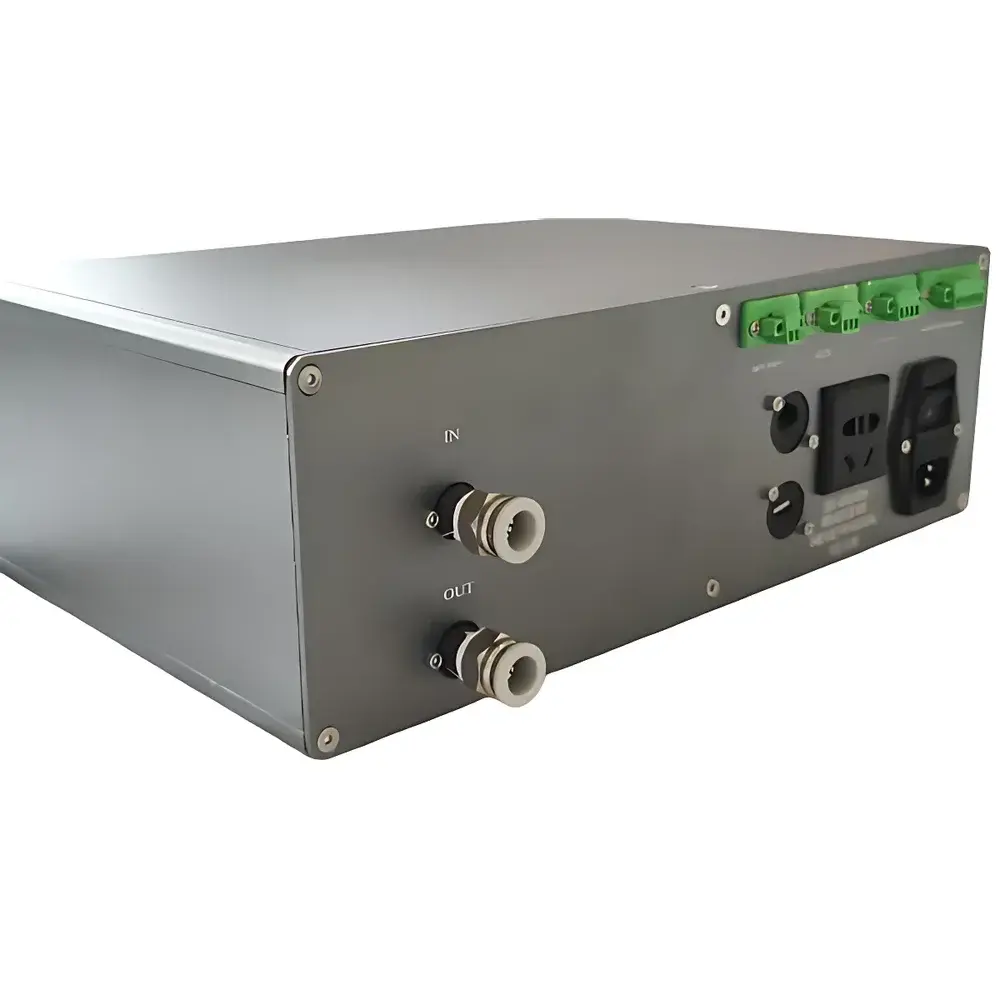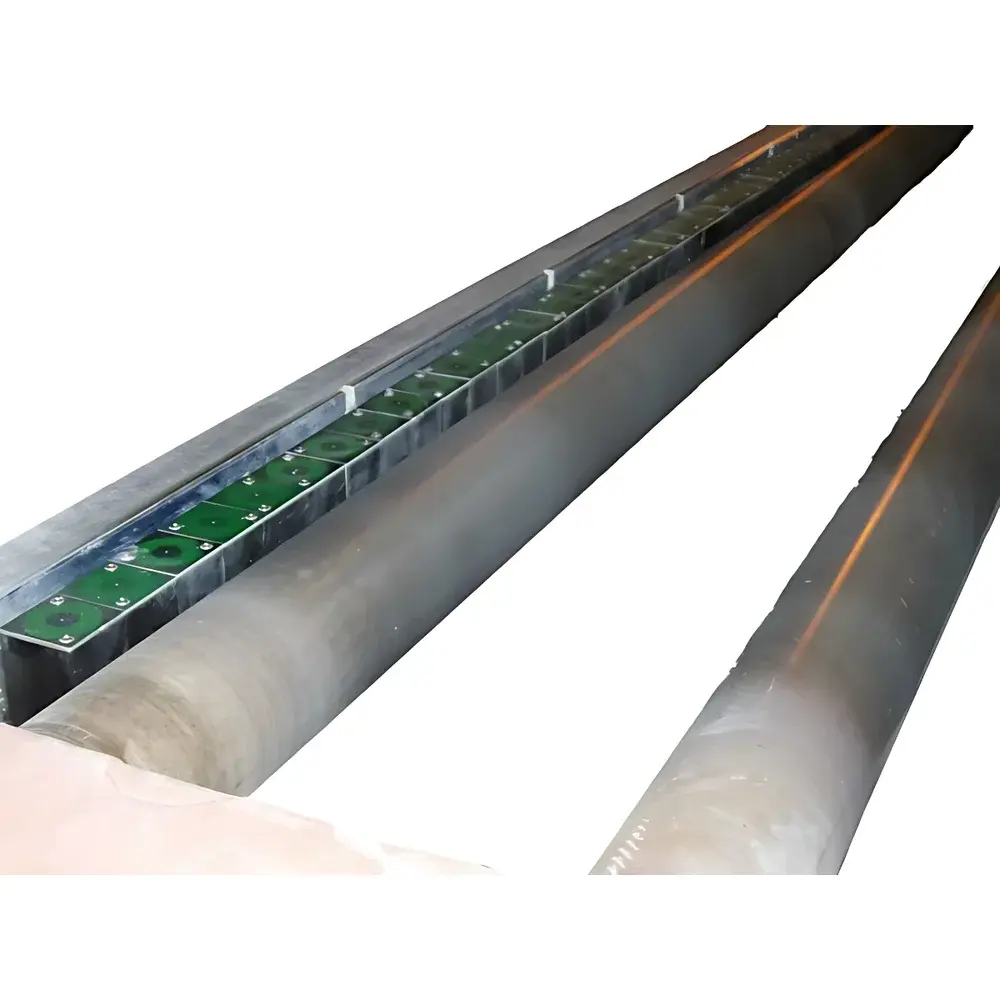
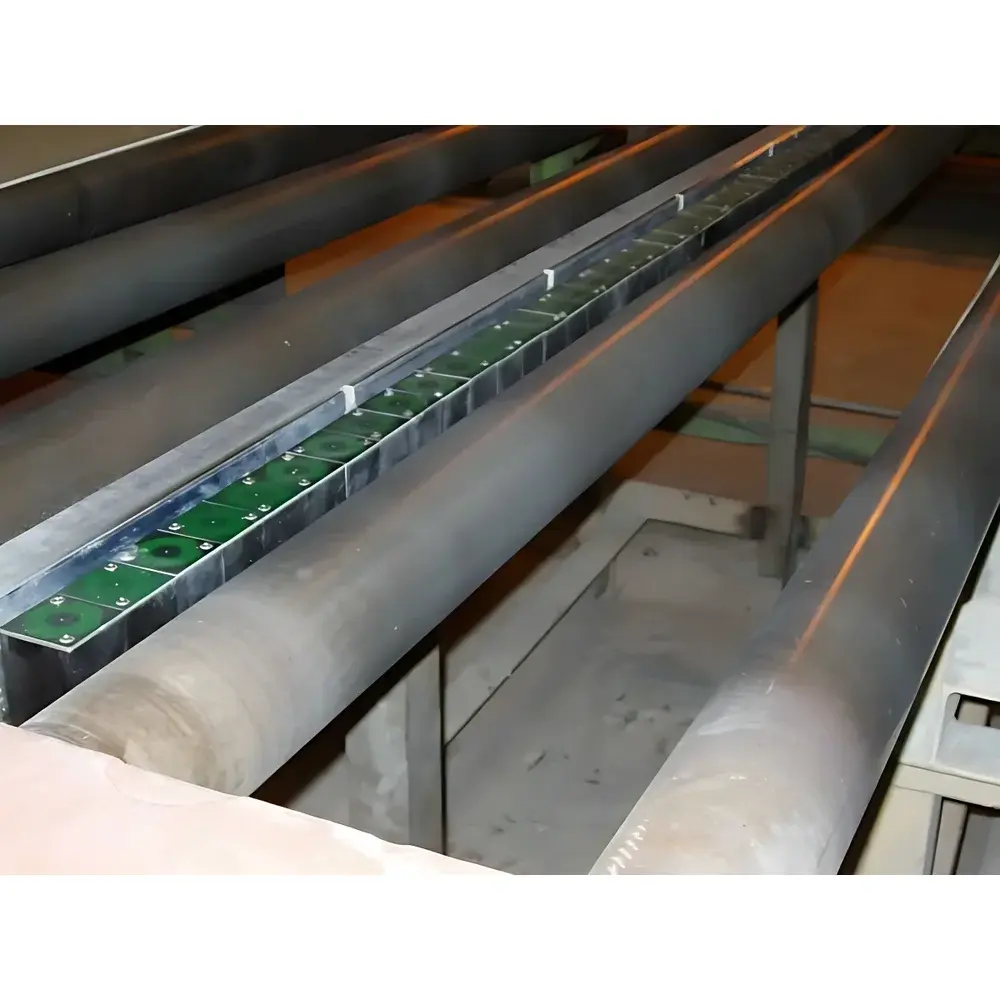
KPM Sensortech IMPS-4400 Non-Contact RF Moisture Distribution Scanner for Building Materials, Wood Products & Paper Industry
| Brand | KPM Sensortech |
|---|---|
| Origin | USA |
| Model | IMPS-4400 |
| Sensor Resolution | 2 in (50 mm) per element |
| Array Width Capacity | up to 256 in (6.5 m) |
| Data Sampling Rate | 33 Hz (30 ms interval) |
| Output Interfaces | 4–20 mA, 0–10 VDC, 0–5 VDC |
| Compliance | Designed for industrial process integration per ISA-88/ISA-95 architecture |
| Software | Proprietary real-time moisture visualization and statistical analytics suite |
Overview
The KPM Sensortech IMPS-4400 is a non-contact, multi-sensor radiofrequency (RF) dielectric moisture distribution scanner engineered for continuous, real-time monitoring of moisture profiles across wide-format sheet-based materials. Unlike single-point moisture meters, the IMPS-4400 operates on the principle of RF dielectric spectroscopy—measuring the complex permittivity of materials as a function of water content—enabling high-resolution spatial mapping without physical contact or surface disruption. Its core application lies in industrial process control environments where uniform moisture distribution directly impacts dimensional stability, bonding integrity, energy efficiency, and final product compliance (e.g., ASTM D4442 for wood moisture, TAPPI T402 for paper conditioning, ISO 4126-1 for gypsum board). The system is deployed in-line—typically mounted above conveyors or dryer exits—and integrates seamlessly into existing plant automation infrastructures via standardized analog and digital I/O.
Key Features
- Modular RF sensor array with 2-inch (50 mm) spatial resolution per sensing element, scalable to cover widths up to 6.5 meters (256 inches)
- Real-time data acquisition at 33 Hz (30 ms sampling interval), enabling dynamic tracking of moisture transients during speed changes or material transitions
- Fully solid-state architecture with no moving parts—designed for continuous operation in high-dust, high-temperature industrial environments (up to 60 °C ambient, IP65-rated enclosures)
- Dedicated data concentrator unit performing hardware-level multiplexing and time-synchronized timestamping of all sensor channels
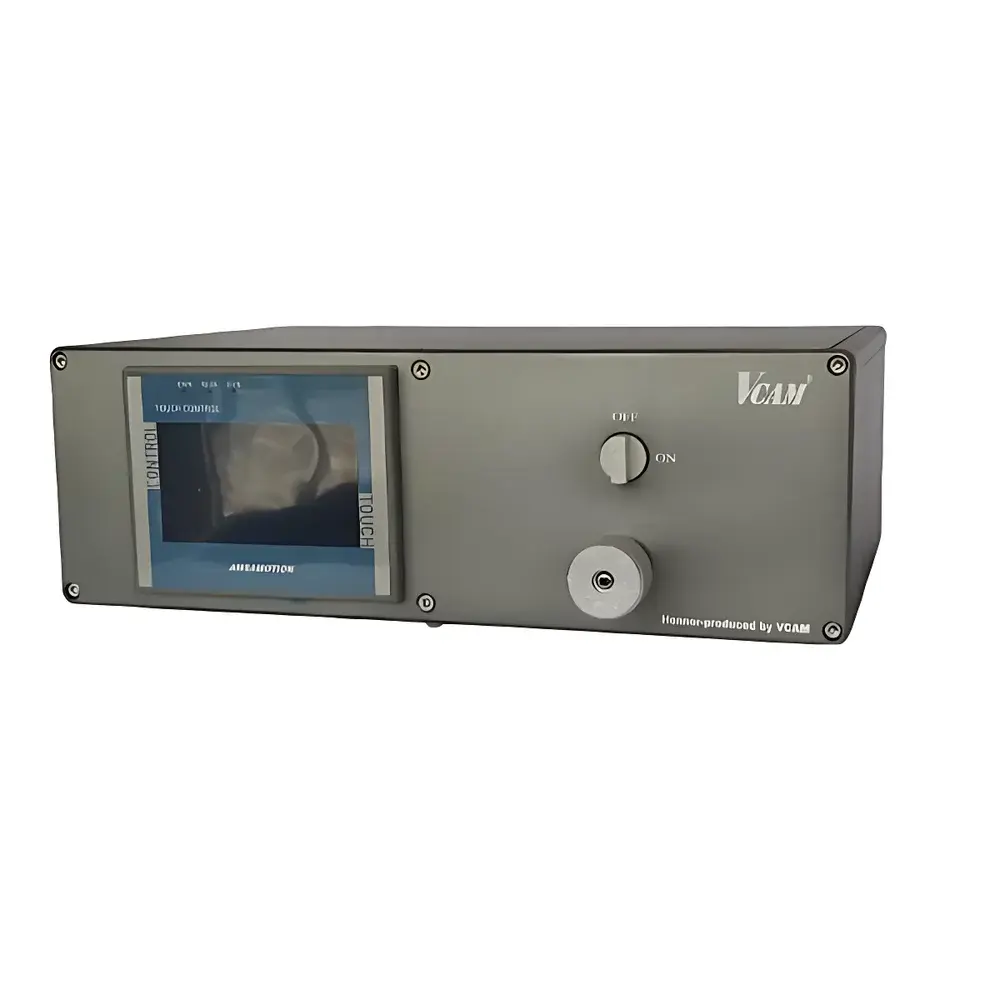
- Integrated HMI with customizable graphical interface for immediate visual interpretation of lateral, longitudinal, and multi-layer moisture distributions
- Proprietary software engine supporting statistical process control (SPC) functions including Cp/Cpk calculation, trend analysis, deviation heatmaps, and alarm thresholding with configurable hysteresis
Sample Compatibility & Compliance
The IMPS-4400 is validated for use across heterogeneous, hygroscopic sheet materials including gypsum board, fiber-cement panels, particleboard, MDF, plywood, laminated veneer lumber (LVL), corrugated board, kraft linerboard, recycled paperboard, pulp bales, and composite resin sheets. It accommodates variable basis weights (40–1200 g/m²), thicknesses (0.5–30 mm), and surface textures—including embossed, coated, or textured finishes—without recalibration. System design adheres to electromagnetic compatibility (EMC) requirements per IEC 61326-1 and functional safety considerations aligned with IEC 61508 SIL 2 for process-critical feedback loops. While not a certified metrological instrument per ISO/IEC 17025, the IMPS-4400 meets traceable calibration protocols defined in ASTM E1545 and supports GLP/GMP-aligned audit trails when integrated with validated SCADA or MES platforms.
Software & Data Management
The IMPS-4400 proprietary software suite provides native support for time-series database logging (SQLite/ODBC export), CSV/Excel-compatible reporting, and OPC UA connectivity for enterprise-level data federation. All moisture profiles are stored with embedded metadata—including line speed, timestamp, sensor ID, and operator-defined batch tags—ensuring full data lineage. Statistical modules include rolling-window standard deviation mapping, cross-correlation analysis between layers, and automated detection of asymmetrical drying patterns (e.g., edge vs. center bias). The software supports FDA 21 CFR Part 11-compliant user authentication, electronic signatures, and immutable audit logs when deployed on validated Windows Server environments. Custom scripting (via Python API) enables integration with predictive drying models or machine learning pipelines trained on historical moisture–energy consumption correlations.
Applications
- Real-time correction of dryer zone temperatures and air velocities based on measured moisture gradients
- Early detection of glue-line dry-out in multilayer composites prior to press entry
- Quantification of rewet events caused by condensation in cooling sections or stacker zones
- Validation of blending consistency in fiber furnish preparation lines (paper/pulp)
- Root-cause analysis of warping, curling, or delamination defects through retrospective moisture profile reconstruction
- Energy optimization audits by correlating localized over-drying with thermal input metrics
FAQ
Does the IMPS-4400 require periodic recalibration against reference oven-dry methods?
Yes—initial commissioning includes correlation against ASTM D4442 oven-dry samples; thereafter, field verification is recommended every 90 days or after major process changes affecting material density or composition.
Can the system distinguish between free water and bound water in cellulose-based substrates?
No—the RF dielectric response reflects total polarizable mass; differentiation requires complementary techniques such as NIR or TD-NMR.
Is the IMPS-4400 compatible with legacy PLC systems using Modbus RTU?
Yes—via optional protocol gateway module supporting Modbus RTU/TCP, Profibus DP, and EtherNet/IP.
What is the minimum detectable moisture gradient across a 6-meter-wide panel?
At nominal operating speed (15 m/min), the system resolves gradients ≥0.3% w/w over 100 mm intervals with ≤±0.5% w/w repeatability (k=2, n≥20).
How does RF interference from nearby variable-frequency drives affect measurement stability?
The sensor array employs narrowband RF excitation (1–30 MHz) with synchronous demodulation and adaptive notch filtering; typical VFD harmonics fall outside this band, but site-specific EMI surveys are advised during installation.
Related Products