
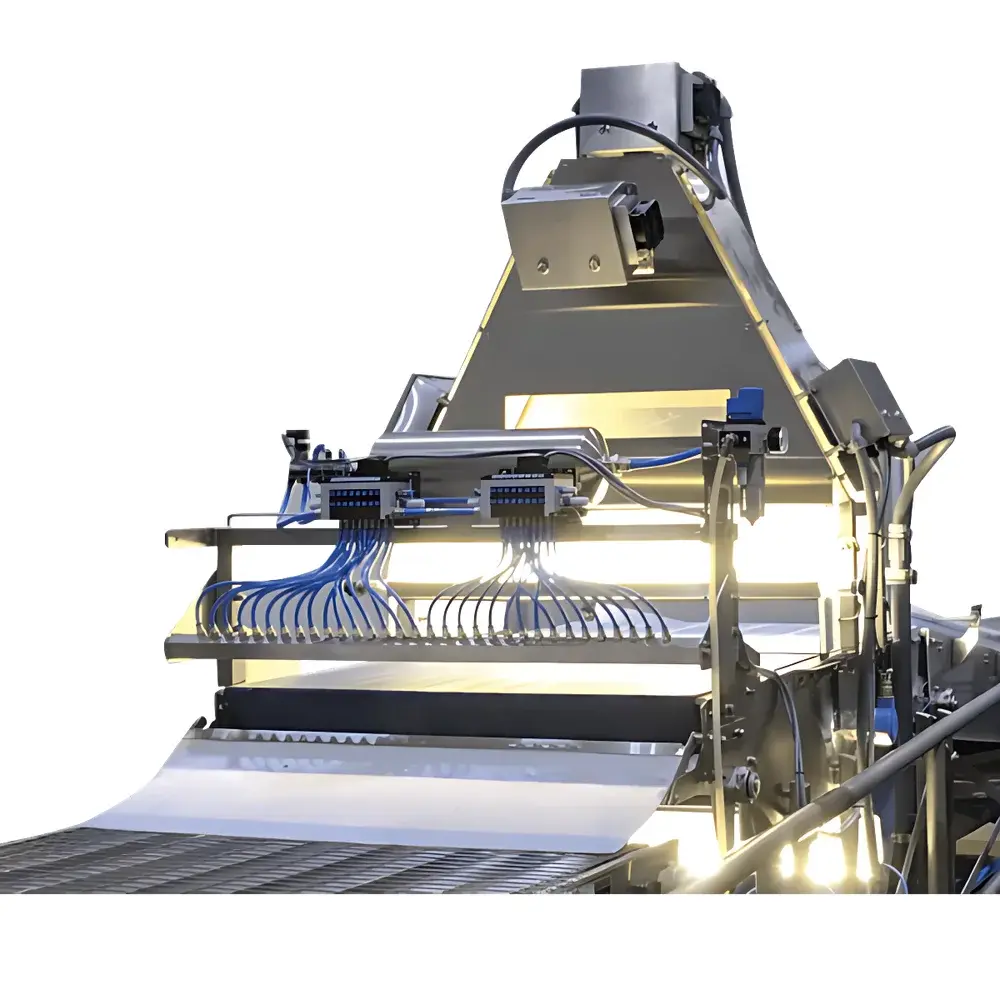
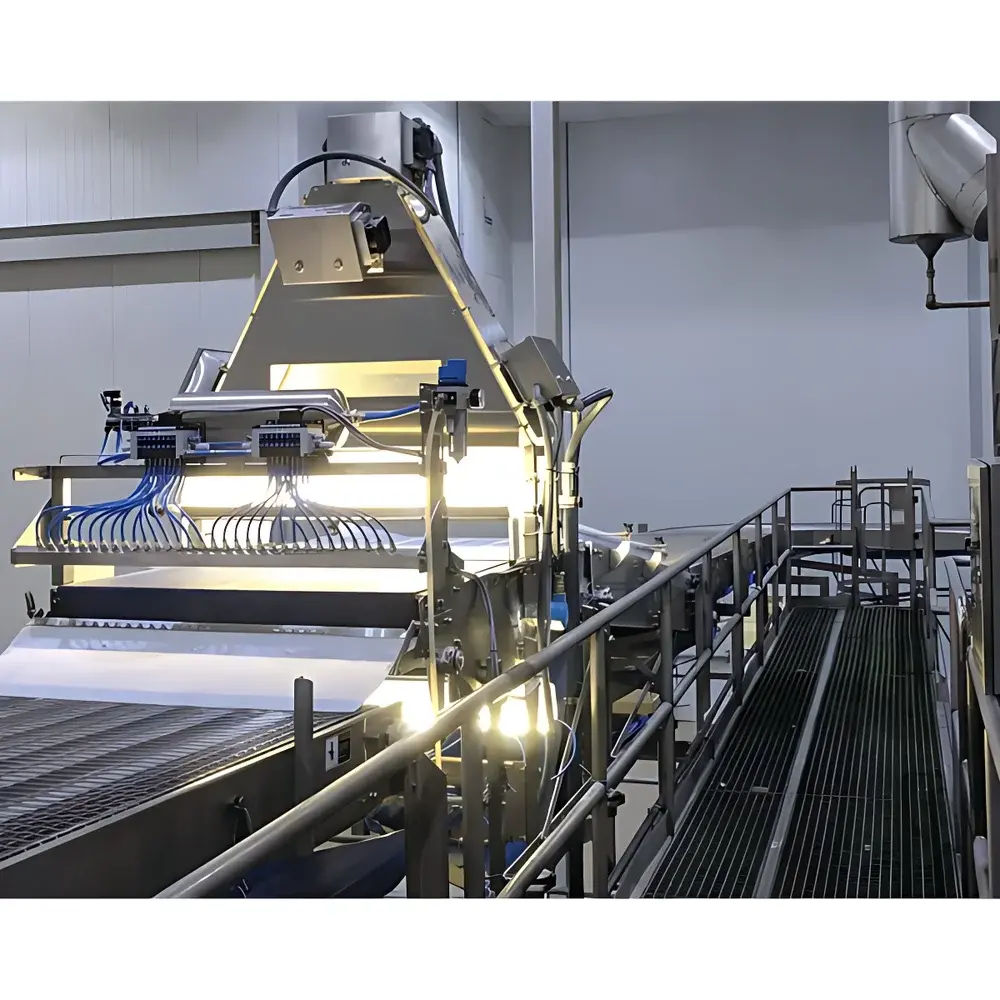
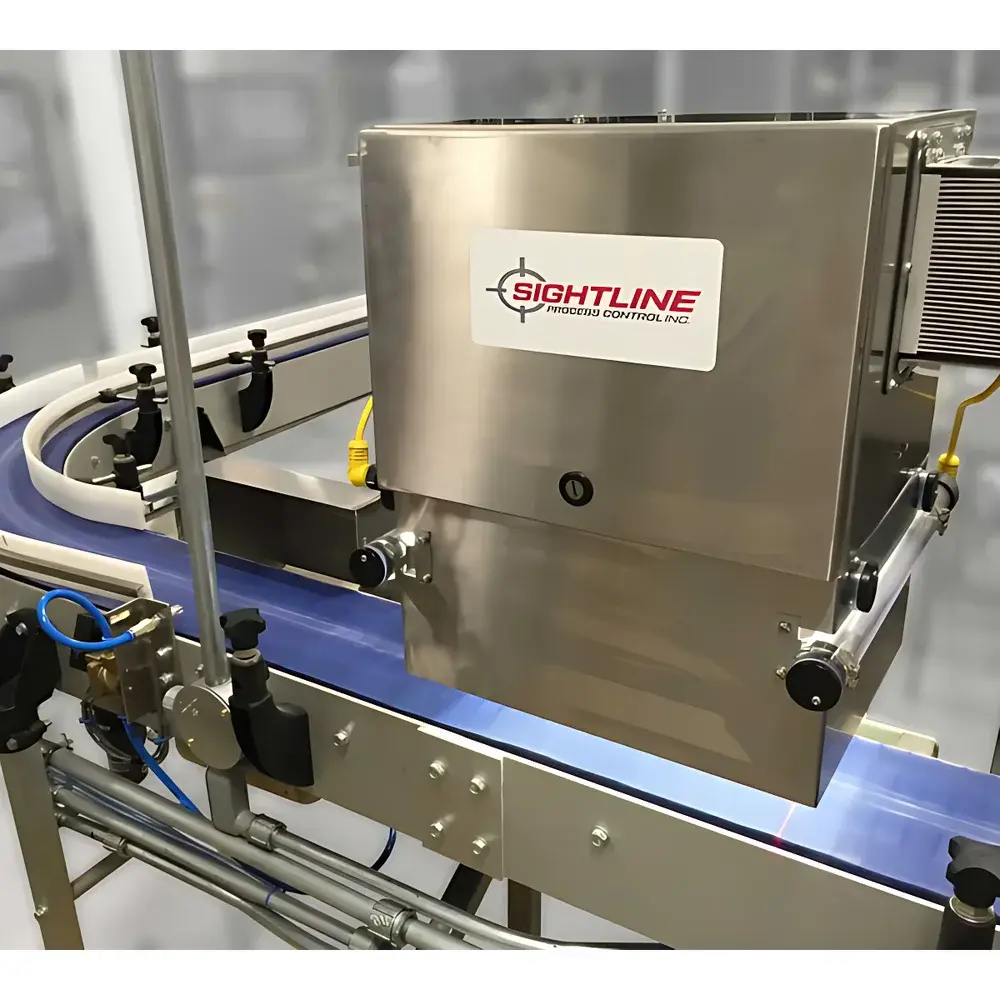
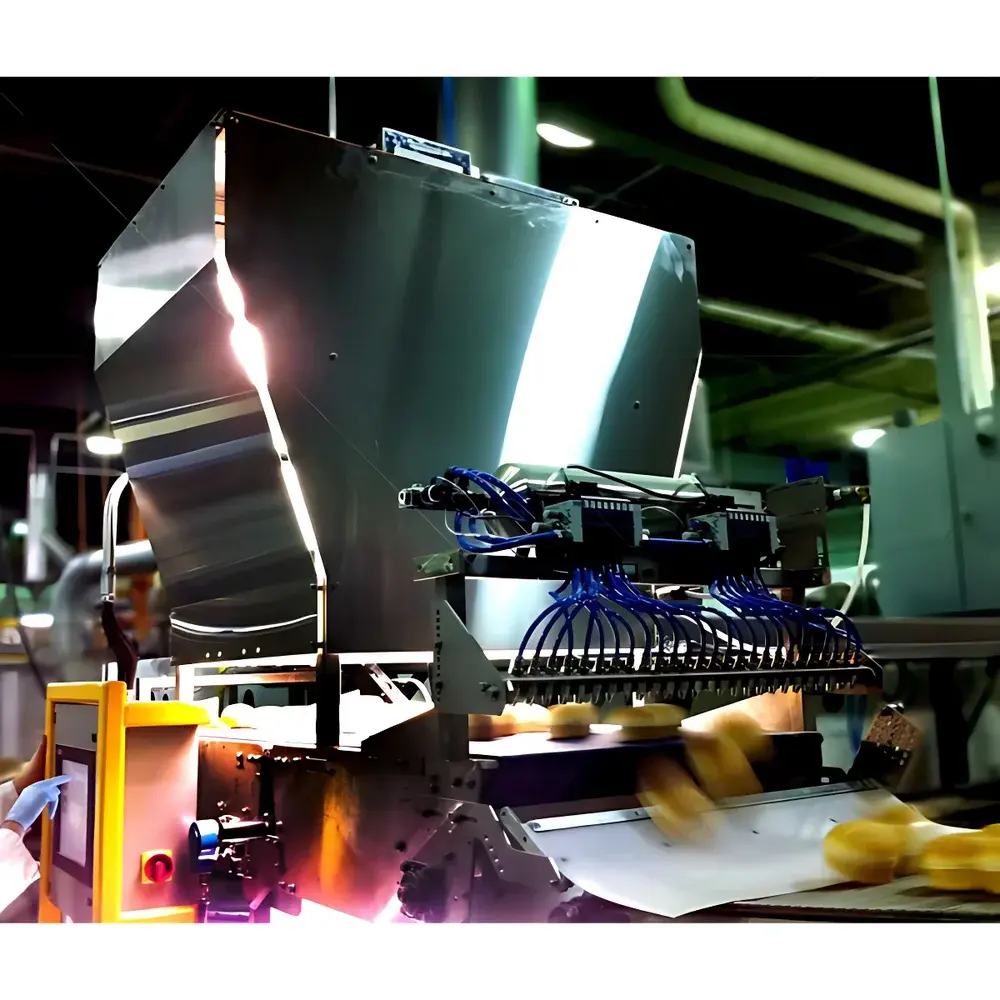
KPM Sightline IL Series In-Line Vision Inspection System for Bakery, Meat, Poultry, Cheese, Eggs, Fruits, Vegetables & Prepared Foods
| Brand | KPM Sightline |
|---|---|
| Origin | Canada |
| Model | IL Series |
| Type | In-line, 360°, Full-Color 3D Vision Inspection System |
| Throughput | Up to 100 objects/sec |
| Software | measura® Inspection Suite |
| Compliance | Designed for FDA, USDA, CFIA, and EU food safety regulatory alignment (HACCP, GMP, ISO 22000) |
| Integration | PLC-compatible, Ethernet/IP & Modbus TCP ready |
| Camera Options | Top, side, and bottom-mounted configurations |
| Lighting | Multi-spectral (visible, LED, structured light) |
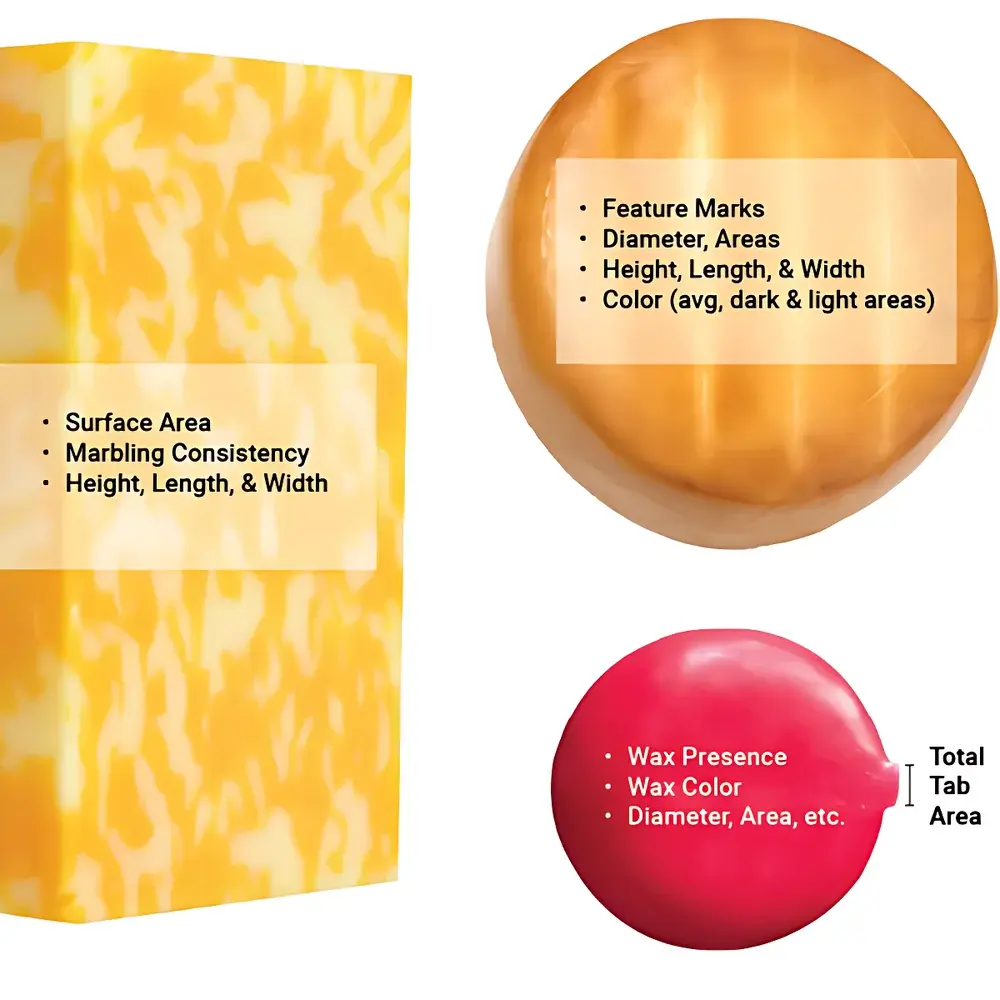
| Measurement Library | 150+ built-in geometric, chromatic, and morphological parameters (expandable) |
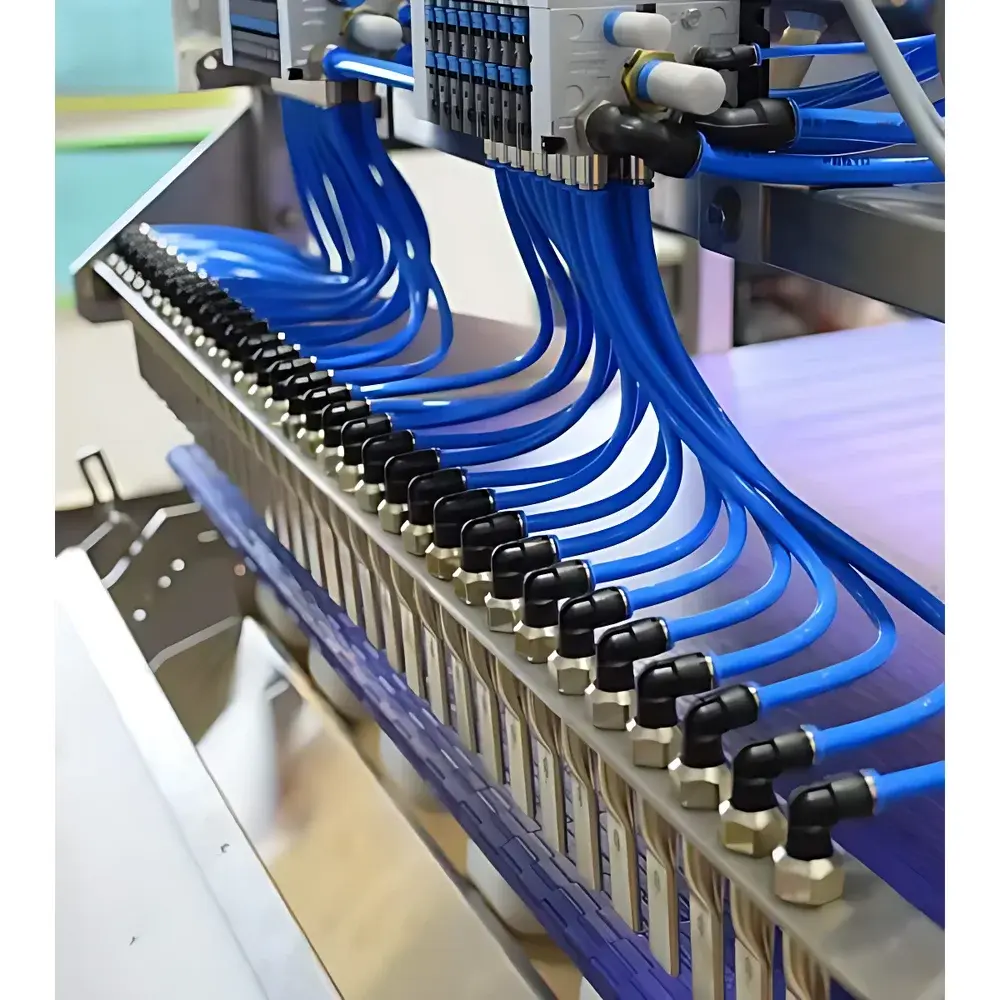
| Reject Mechanisms | Air jet, pusher arm, diverter gate (field-selectable) |
| Data Output | Real-time OEE metrics, defect classification logs, batch-level SPC charts, audit-ready CSV/SQL export |
Overview
The KPM Sightline IL Series is an industrial-grade, in-line vision inspection system engineered specifically for high-speed, 100% automated quality assurance in food manufacturing environments. Operating on the principle of multi-angle, full-spectrum image acquisition combined with deterministic computer vision algorithms, the IL Series captures synchronized top, side, and optional bottom-view imagery under precisely controlled illumination conditions—enabling robust 2D and 3D morphometric analysis without physical contact. Unlike manual sampling or offline lab-based inspection, this system delivers real-time, continuous measurement of geometric, chromatic, and structural attributes across heterogeneous product streams—including irregularly shaped bakery goods, deformable proteins (beef, pork, poultry), fragile dairy matrices (cheese blocks, sliced mozzarella), whole eggs, fresh produce, and complex prepared meals. Its architecture conforms to the functional safety and data integrity expectations of regulated food production: all image processing, decision logic, and rejection actuation occur within a deterministic, traceable pipeline compliant with foundational principles of HACCP critical control point monitoring and ISO 22000 Clause 8.5.2 (validation of monitoring procedures).
Key Features
- True 360° inspection geometry via configurable camera topology—top-down, lateral oblique, and underside imaging—ensuring complete surface coverage even for asymmetric or stacked products.
- Real-time throughput of up to 100 discrete items per second, scalable across conveyor widths from 300 mm (IL-300) to 2000 mm (IL-2000), with variable-speed belt synchronization and encoder-based positional triggering.
- measura® Inspection software platform: a deterministic, non-AI-dependent vision engine delivering repeatable pass/fail decisions based on user-defined tolerance bands—not probabilistic scoring—ensuring auditability and regulatory defensibility.
- Integrated OEE dashboard: computes uptime, cycle time, reject rate by defect class (e.g., size deviation >±2.5 mm, color delta E >8.0, foreign material presence), and shift-level yield trends—all timestamped and exportable in CSV or SQL format.
- Modular reject interface: supports pneumatic air jets, servo-driven pushers, and programmable diverter gates—all calibrated to synchronize with object position at ±15 ms latency.
- Hardware-validated lighting subsystem: tunable LED arrays (450–650 nm), structured light projectors, and polarization filters optimized per substrate—minimizing specular reflection on glossy cheese rinds or diffusing glare on wet poultry surfaces.
Sample Compatibility & Compliance
The IL Series accommodates diverse food matrices without modification to core optics or software architecture. Tested validation protocols confirm reliable performance on: baked goods (breads, croissants, muffins), raw and cooked meats (ground patties, sliced deli cuts, whole chicken breasts), soft and hard cheeses (cheddar blocks, brie wheels, processed slices), intact shell eggs, whole fruits (apples, citrus), cut vegetables (carrot sticks, broccoli florets), frozen pizza bases, and multi-component prepared meals (folded omelets, grain bowls). All systems are supplied with documentation supporting alignment with USDA FSIS Appendix A (inspection system validation), Canadian Food Inspection Agency (CFIA) Directive D-11-01, and EU Regulation (EC) No 852/2004 Annex II (food hygiene requirements). Data logging meets GLP-aligned traceability standards—each inspection event records timestamp, camera ID, pixel coordinates, measured values, and final disposition (accept/reject), retained for ≥24 months per internal storage or external NAS integration.
Software & Data Management
measura® Inspection operates as a deterministic rule-based engine—not a black-box neural network—ensuring full transparency in decision logic. Users define inspection criteria using geometric primitives (minimum bounding rectangle, convex hull area), color spaces (CIELAB ΔE, HSV saturation thresholds), and texture descriptors (co-occurrence matrix contrast, entropy). Every parameter is editable without code, with version-controlled configuration files (.mcf) supporting factory reset and cross-site replication. Audit trails log all user actions—including parameter edits, calibration events, and reject threshold adjustments—with operator ID and timestamp. Raw image archives (lossless TIFF) and metadata exports comply with FDA 21 CFR Part 11 requirements when deployed with optional digital signature and role-based access modules. Integration with MES/SCADA platforms occurs via standard OPC UA, Modbus TCP, or RESTful API endpoints—enabling automatic escalation of recurring defect patterns to maintenance work orders or recipe adjustment triggers.
Applications
- Detection of dimensional nonconformity: length/width/height deviations exceeding ±1.2 mm in baked goods; thickness variation >±0.8 mm in sliced cheese; eggshell crack detection at <0.1 mm resolution.
- Chromatic consistency verification: L*a*b* drift monitoring across production shifts to prevent batch-to-batch hue variation in roasted poultry or caramelized snack bars.
- Foreign material identification: metallic, plastic, glass, and organic contaminants (bone fragments, insect parts) via multispectral reflectance anomaly detection—not reliant on X-ray or metal detection alone.
- Packaging integrity assessment: label misalignment >±3°, seal width variance >±0.5 mm, vacuum pack blister detection, and tamper-evident band continuity verification.
- Process capability reporting: Cp/Cpk calculation per defect type using SPC-compliant moving range control charts updated every 60 seconds.
- Yield optimization: correlation of upstream process variables (oven temperature ramp rate, marination dwell time) with downstream visual defect clusters—enabling root cause analysis without destructive testing.
FAQ
Does the IL Series require custom machine vision programming for each product type?
No. measura® Inspection includes over 150 pre-validated measurement templates—such as “whole-egg ovality,” “cheese block corner radius,” and “vegetable slice thickness uniformity”—which users configure via GUI sliders and numeric input fields. Custom templates can be authored without coding using drag-and-drop geometric operators.
How is system accuracy validated prior to commissioning?
KPM Sightline performs on-site validation using NIST-traceable reference artifacts (dimensional gauges, color tiles, defect simulants) and statistically representative production samples. A formal IQ/OQ protocol documents repeatability (≤±0.3% RSD across 100 consecutive measurements) and reproducibility (≤±0.5% inter-operator variance).
Can the system integrate with existing PLCs and ERP systems?
Yes. Standard communication protocols include EtherNet/IP, Modbus TCP, and OPC UA. Pre-built drivers are available for Rockwell Automation, Siemens SIMATIC, and Schneider Electric platforms. ERP integration (SAP, Oracle) is supported via middleware or direct SQL write access.
Is lighting calibration required after installation?
Initial lighting setup is performed during commissioning using KPM’s calibrated photometric targets. Subsequent recalibration is semi-automated: the system runs a 90-second self-diagnostic sequence weekly, adjusting LED intensity and exposure timing to compensate for ambient drift or lens soiling.
What data retention and cybersecurity features are included?
Local storage retains 90 days of full-resolution images and metadata. Optional encrypted NAS backup extends retention to 24 months. Role-based access control (RBAC), TLS 1.2 encryption for remote sessions, and firmware signing ensure compliance with IEC 62443-3-3 SL2 requirements.



