
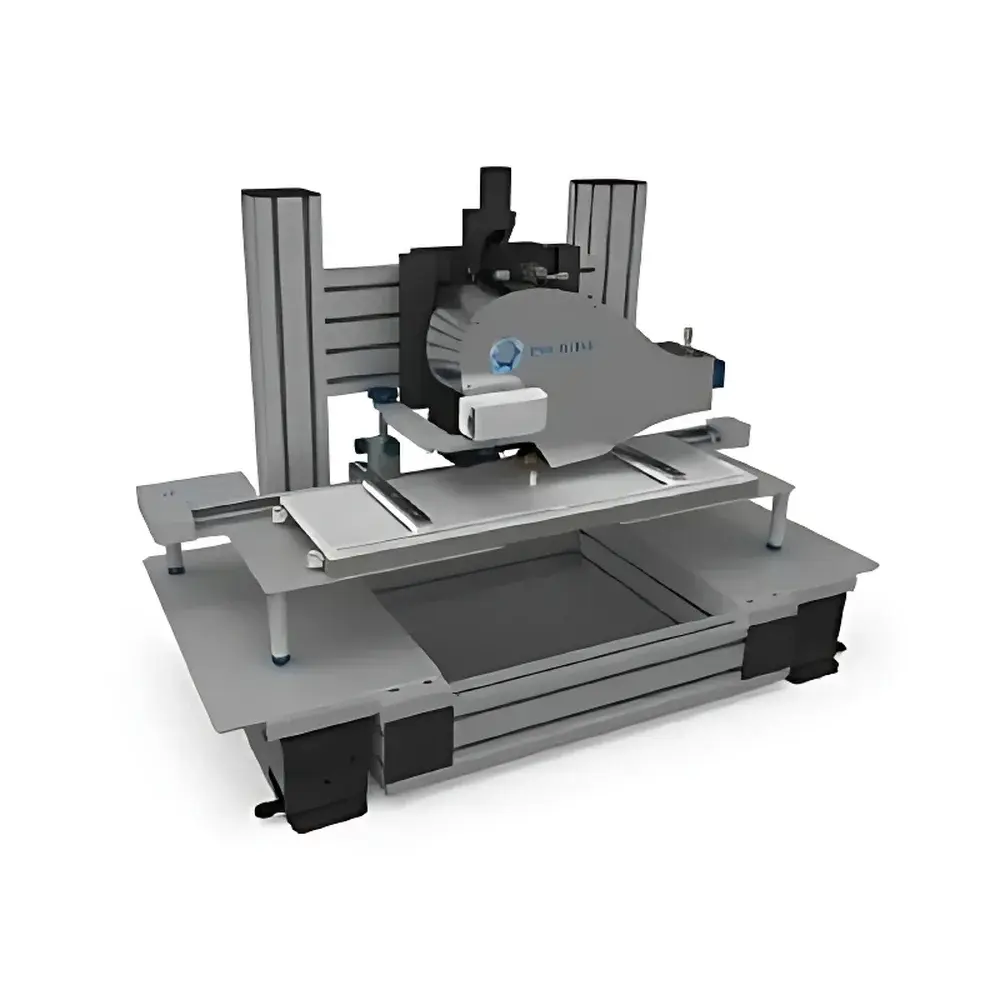
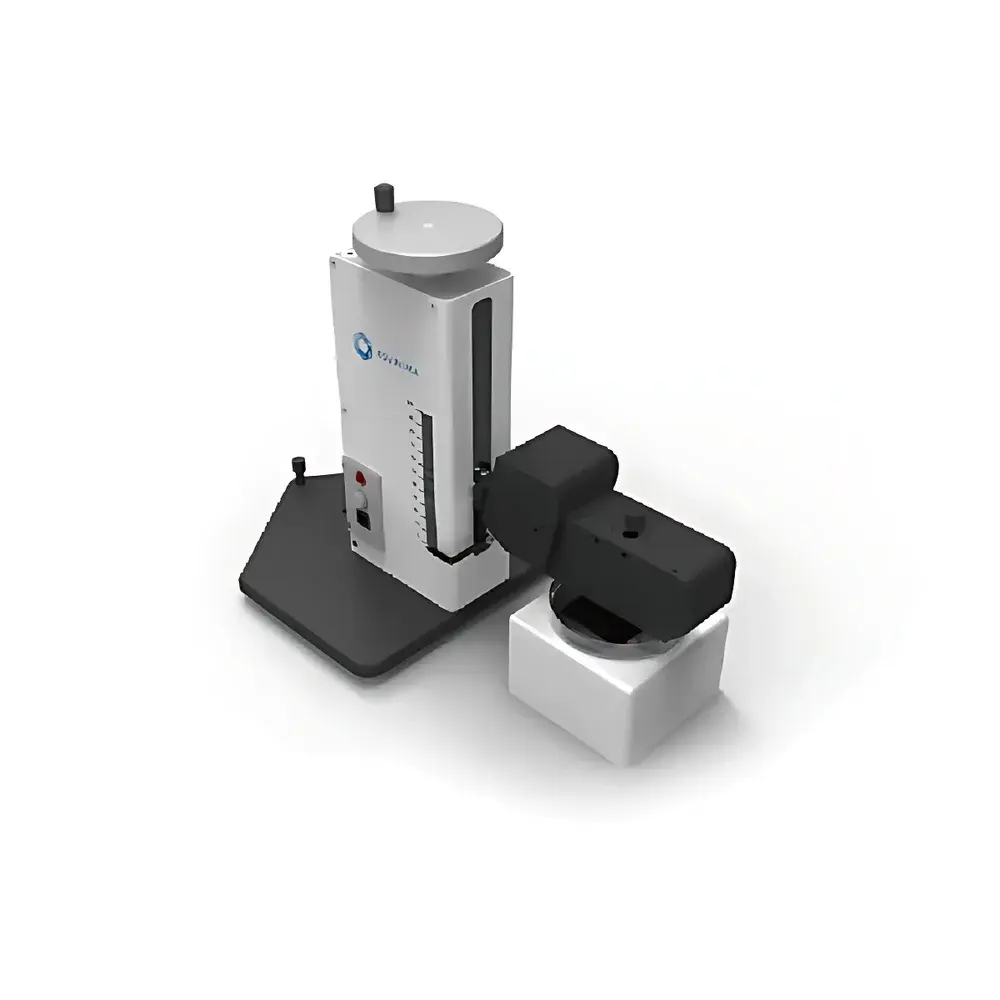
KSV NIMA Brewster Angle Microscope (BAM) for Langmuir Trough Integration
| Brand | KSV NIMA |
|---|---|
| Origin | Finland |
| Manufacturer Type | Original Equipment Manufacturer (OEM) |
| Category | Imported Instrument |
| Model Variant | Compact and Standard Configurations |
| Price Range | USD 6,800 – 13,600 (FOB Helsinki) |
Overview
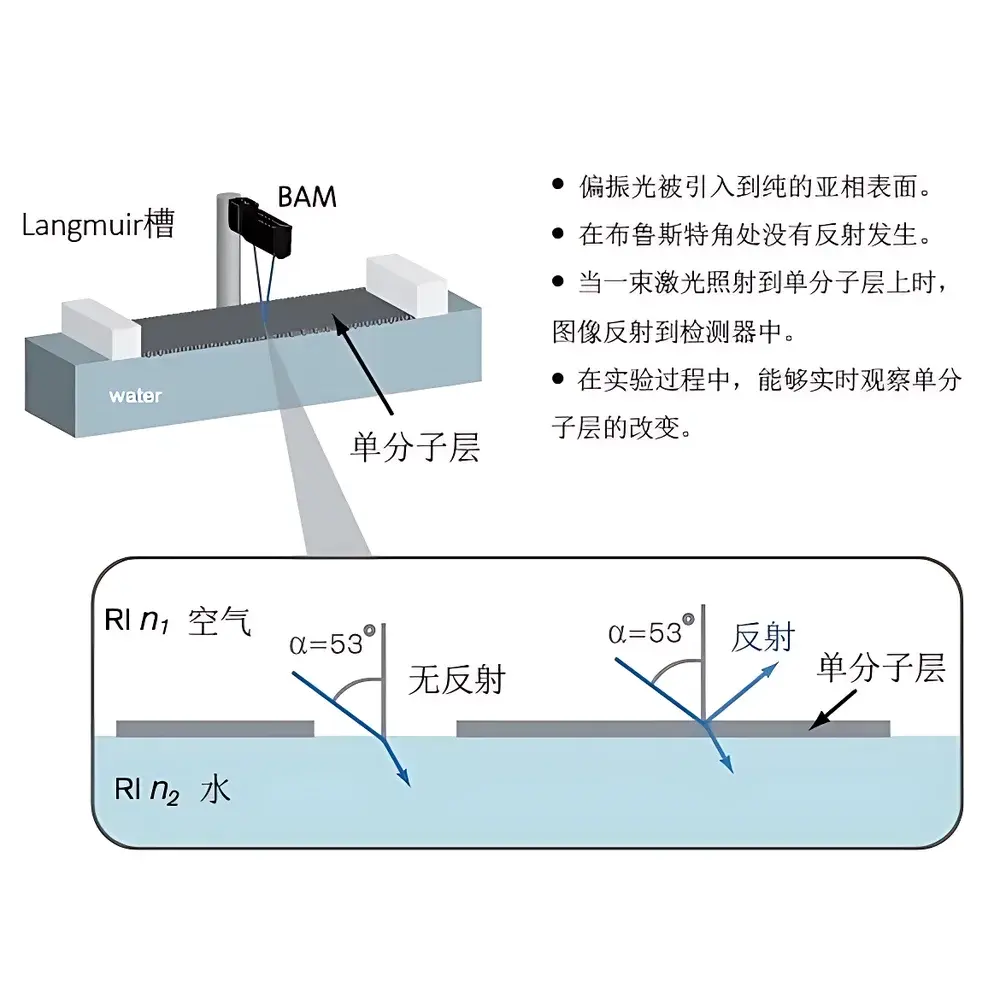
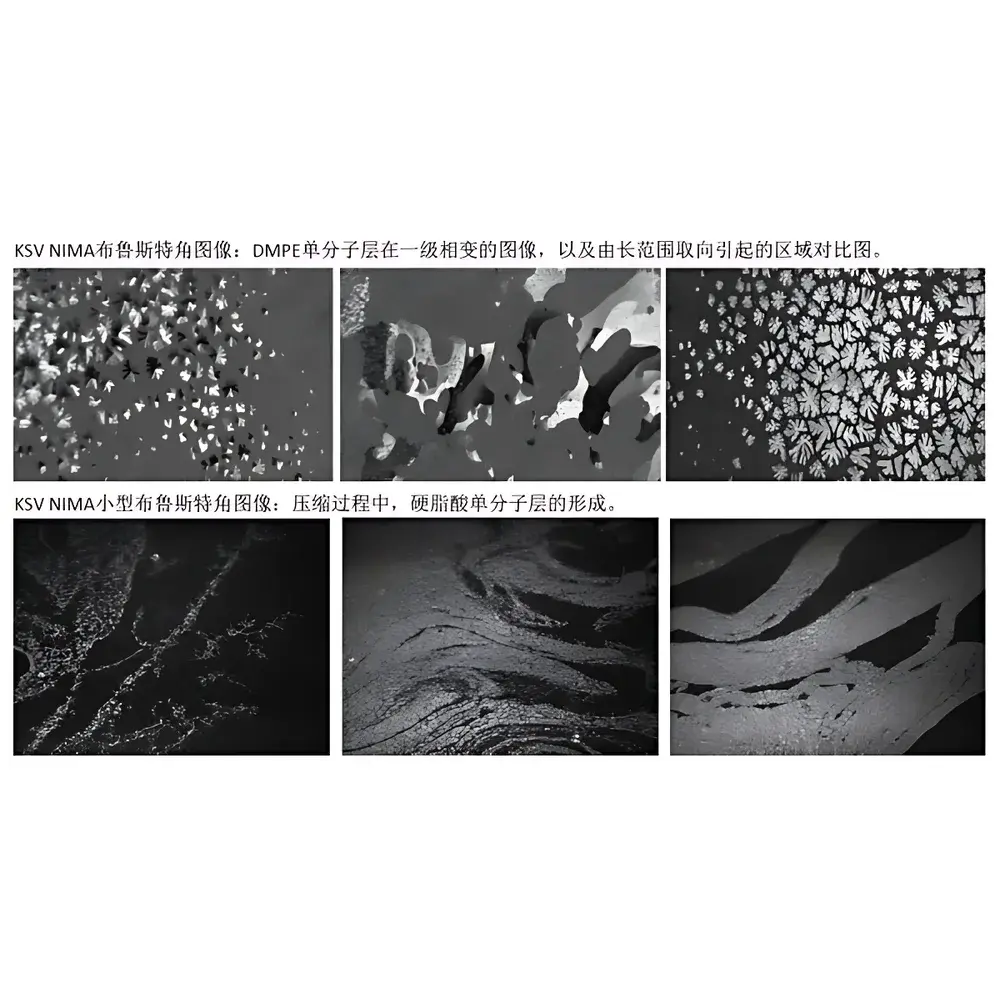
The KSV NIMA Brewster Angle Microscope (BAM) is a non-invasive, label-free optical imaging system engineered for real-time, in situ visualization of monolayers at air–liquid interfaces—primarily during Langmuir trough experiments. It operates on the fundamental principle of Brewster angle reflection: when p-polarized light strikes an interface between two dielectric media (e.g., air and aqueous subphase) at the Brewster angle (≈53° for air/water), reflectance from the pure interface vanishes. Any molecular film adsorbed or compressed at the interface alters local refractive index and surface density, inducing measurable reflectivity contrast. This enables quantitative mapping of domain morphology, phase coexistence, lateral packing heterogeneity, and dynamic structural evolution—without perturbing thermodynamic equilibrium or requiring fluorescent tags. The instrument is purpose-built for interfacial science applications aligned with ISO 14729, ASTM D3924, and IUPAC-recommended protocols for monolayer characterization.
Key Features
- Two configurable platforms: Standard KSV NIMA BAM (motorized focus, active vibration damping, 2 µm lateral resolution) and Compact KSV NIMA Mini-BAM (12 µm resolution, USB-powered, manual or motorized height adjustment)
- Precisely tunable incident angle (52–57°), enabling compatibility with solid substrates (e.g., silica, quartz) for hybrid air–solid or liquid–solid interface studies
- Motor-driven vertical positioning with real-time meniscus tracking—maintains optimal focus during compression/expansion cycles up to 0.5 mm/min
- Integrated active anti-vibration platform mitigates low-frequency disturbances (<5 Hz) from HVAC systems or footfall, ensuring stable imaging over extended acquisition periods
- High-sensitivity CMOS camera (20–35 fps, 12-bit dynamic range) coupled with proprietary reflectance calibration algorithms for semi-quantitative thickness estimation and adsorption kinetics analysis
- Motorized analyzer rotation stage for polarization-resolved imaging—enables orientation mapping of anisotropic films (e.g., rod-like amphiphiles, chiral monolayers)
- Real-time background subtraction and auto-exposure control—eliminates drift-induced intensity artifacts during long-term monitoring (≥24 h)
Sample Compatibility & Compliance
The KSV NIMA BAM supports direct integration with all KSV NIMA Langmuir and Langmuir–Blodgett troughs (standard, large, high-compression ratio), as well as third-party troughs via mechanical alignment fixtures. It accommodates subphases ranging from ultrapure water to buffered saline (pH 2–12), electrolyte solutions (up to 1 M NaCl), and temperature-controlled environments (via external thermostatted troughs). The system complies with GLP documentation requirements through timestamped image metadata, audit-trail-enabled software logs, and exportable raw TIFF/AVI sequences compatible with FDA 21 CFR Part 11–compliant data management workflows. All optical components meet ISO 10110 surface quality standards; laser safety conforms to IEC 60825-1 Class 1 (interlocked key switch included).
Software & Data Management
Control and analysis are performed via KSV NIMA BAM Studio—a Windows-based application (Windows 10/11 native, backward-compatible with Win 7) supporting synchronized acquisition with trough surface pressure (π–A) isotherms. Core functionalities include region-of-interest (ROI) selection with automated area/perimeter/aspect-ratio quantification, time-lapse intensity profiling, domain boundary detection using gradient-threshold segmentation, and export of calibrated reflectance values (R/R₀) for kinetic modeling. Data files embed EXIF-style metadata (timestamp, angle, magnification, subphase composition, trough ID), facilitating traceability in multi-user lab environments. Batch processing scripts (Python API available) enable high-throughput analysis across hundreds of frames.
Applications
- Phase behavior mapping of lipid monolayers (DPPC, POPC), polymer surfactants, and peptide films under controlled π–A conditions
- Monitoring photochemical crosslinking, enzymatic hydrolysis, or oxidative degradation at interfaces in real time
- Characterizing protein adsorption hysteresis, nanoparticle monolayer formation, and colloidal raft assembly
- Validating theoretical models (e.g., mean-field lattice gas, Ising-type transitions) via direct comparison of domain size distribution vs. compression rate
- Quality control of LB-deposited films prior to transfer—assessing homogeneity, defect density, and domain continuity
- Teaching laboratories: visual demonstration of Gibbs monolayer theory, critical micelle concentration (CMC) thresholds, and Marangoni effects
FAQ
Can the KSV NIMA BAM be used with non-KSV Langmuir troughs?
Yes—the Compact Mini-BAM includes universal mounting brackets and alignment guides compatible with most commercial troughs (e.g., Nima, Kibron, AppliFlex). Mechanical interfacing requires ≤±0.1 mm level tolerance.
Is quantitative thickness measurement possible?
While absolute thickness requires complementary techniques (e.g., X-ray reflectivity), relative thickness changes (±0.1 nm sensitivity) are derivable from calibrated reflectance intensity trends under fixed optical geometry and subphase RI.
Does the system support temperature-controlled imaging?
The BAM head itself is not thermostatted, but it is fully compatible with externally temperature-regulated troughs (e.g., Julabo-coupled KSV NIMA Large Trough) operating from 5 °C to 60 °C.
What is the minimum detectable domain size?
At optimal focus and signal-to-noise ratio, domains ≥2 µm (Standard BAM) or ≥12 µm (Mini-BAM) can be resolved with unambiguous boundary delineation.
How is laser safety ensured during operation?
All models incorporate a physical key-interlock circuit: removal of the safety key immediately disables the HeNe laser source and halts image acquisition—meeting EN 60825-1:2014 requirements for Class 1 enclosed systems.
Related Products



