
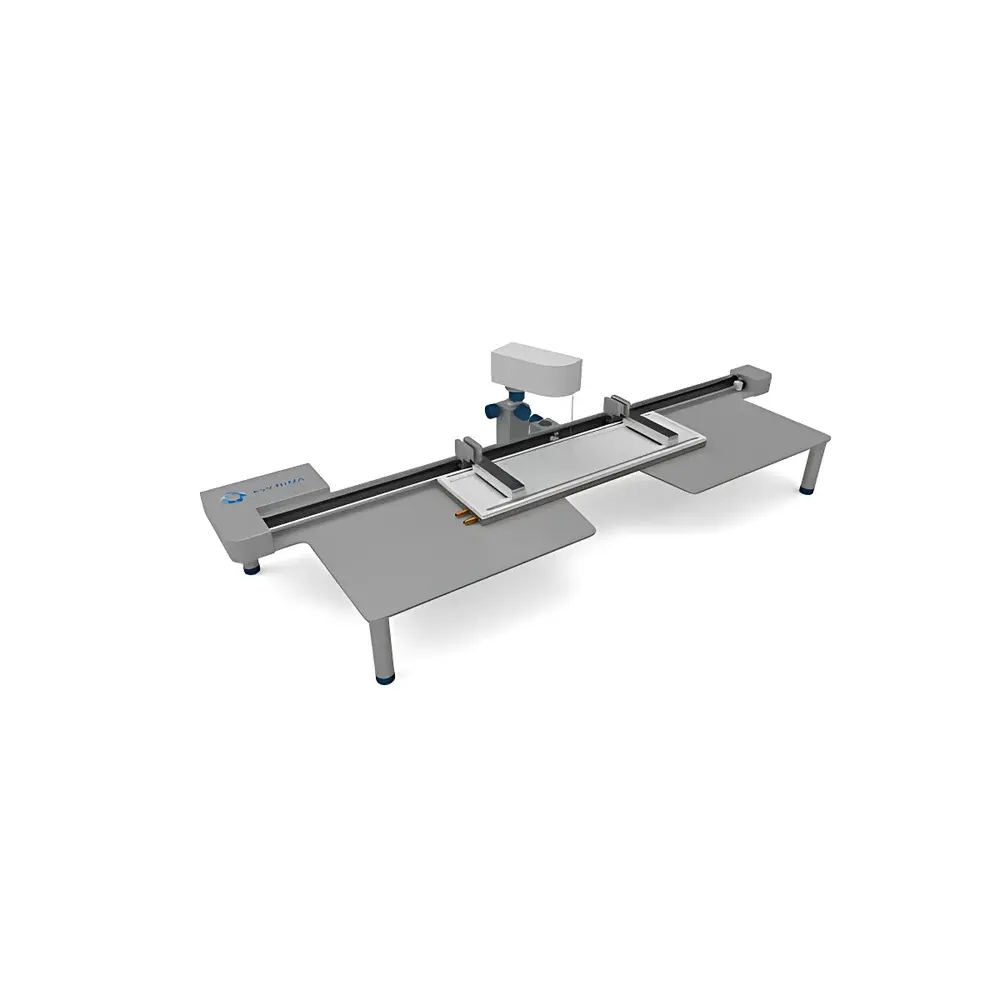
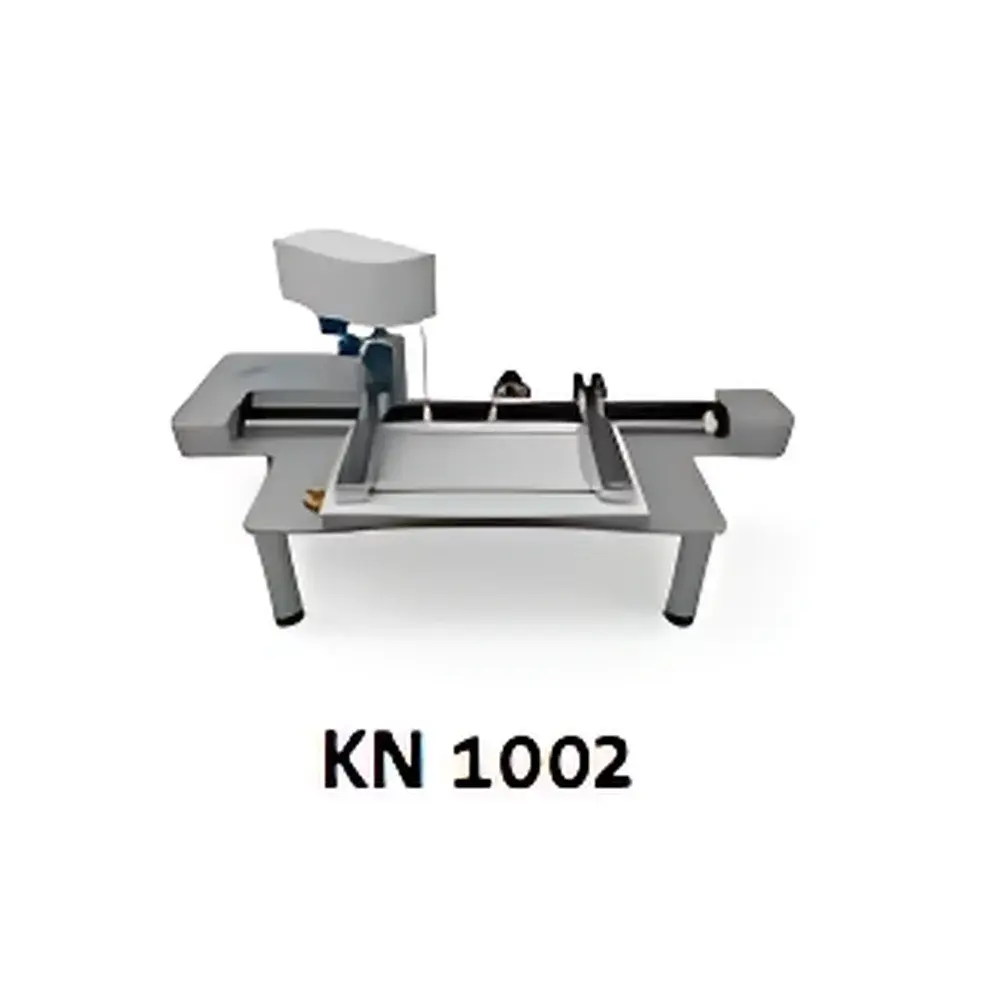
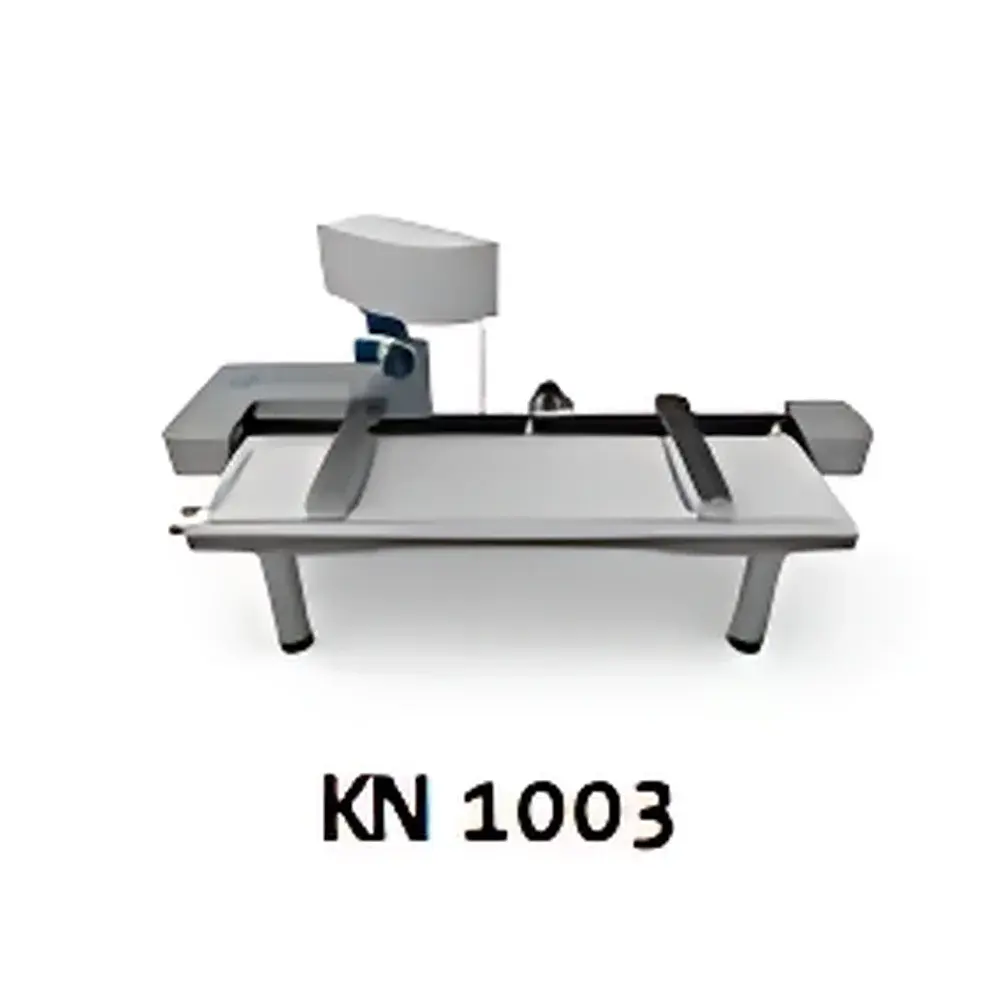
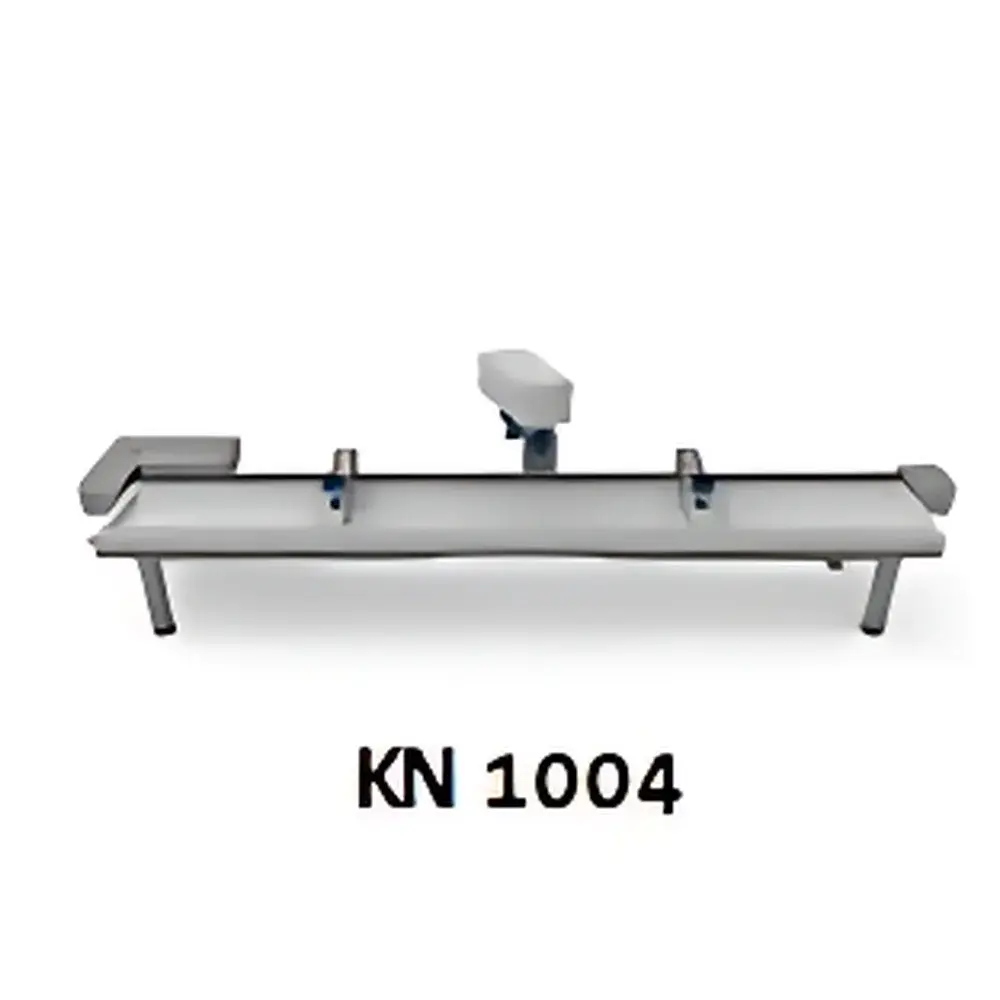
KSV NIMA Langmuir Trough All-Size Surface Pressure Analyzer
| Brand | KSV NIMA |
|---|---|
| Origin | Finland |
| Manufacturer Type | Original Equipment Manufacturer (OEM) |
| Import Category | Imported Instrument |
| Model | Langmuir Trough All-Size |
| Price Range | USD 2,700 – 6,800 (FOB Helsinki) |
Overview
The KSV NIMA Langmuir Trough All-Size Surface Pressure Analyzer is a precision-engineered platform for the formation, thermodynamic characterization, and controlled transfer of monolayers at fluid interfaces. Based on the classical Langmuir trough principle—measuring surface pressure (π) as a function of molecular area (A) via a Wilhelmy plate or platinum wire sensor—the system enables quantitative analysis of interfacial phase behavior, compressibility, collapse pressure, hysteresis, and two-dimensional equation-of-state relationships. Designed for operation at air–water, oil–water, and other immiscible liquid–liquid interfaces, it supports fundamental studies of amphiphilic molecules (e.g., phospholipids, surfactants, polymers), nanomaterials (graphene oxide, nanotubes, quantum dots), and biomimetic systems (lipid bilayer models, peptide assemblies). Its modular architecture allows seamless integration with complementary surface-sensitive techniques including Brewster Angle Microscopy (BAM), Polarization-Modulated Infrared Reflection–Absorption Spectroscopy (PM-IRRAS), Surface Potential (SPOT), and Interfacial Shear Rheometry (ISR), enabling correlative structural, optical, electrochemical, and mechanical interrogation of monolayers under controlled thermodynamic conditions.
Key Features
- Modular, frame-based design accommodating interchangeable troughs: ultra-micro, small, medium, large, liquid–liquid, high-compression (ISR-compatible), and microscope-compatible variants—all sharing standardized mounting interfaces and drive mechanisms.
- Ultra-low-noise, temperature-compensated surface pressure transducer with <1 mN/m resolution and ±0.1 mN/m accuracy, compatible with Wilhelmy platinum plates, platinum wires, or filter paper sensors for optimized sensitivity across diverse monolayer systems.
- Motorized, symmetrical barrier system with programmable speed (0.01–500 mm/min) and position feedback; barriers fabricated from hydrophilic Delrin® or optional hydrophobic PTFE-coated fiberglass ribbons for high-density compression of rigid films (e.g., DPPC at π > 70 mN/m).
- Monolithic, seamless PTFE trough body resistant to chemical degradation, eliminating adhesive seams and minimizing contamination risk—critical for reproducible biophysical and pharmaceutical measurements.
- Aluminum baseplate with integrated channels for external thermostatic circulation (±0.1 °C stability); adjustable leveling feet enable rapid, tool-free horizontal alignment—essential for uniform compression and reliable LB transfer.
- Thin-profile mechanical frame optimized for optical access: compatible with inverted microscopes, BAM, PM-IRRAS, fluorescence, and synchrotron X-ray reflectivity setups without signal obstruction.
Sample Compatibility & Compliance
The system accommodates insoluble monolayers formed from synthetic surfactants, lipids (DPPC, POPC), peptides, polymers, colloidal nanoparticles, graphene derivatives, and hybrid organic–inorganic assemblies at air–aqueous or oil–aqueous interfaces. It supports ASTM D1331 (surface tension of surfactant solutions), ISO 4311 (determination of critical micelle concentration), and USP (surface tension measurement in pharmaceutical excipient characterization). Data acquisition and instrument control comply with GLP and GMP principles; audit trail functionality, electronic signatures, and user-access-level management are available through optional 21 CFR Part 11–compliant software modules. All PTFE components meet USP Class VI biocompatibility requirements, and sub-ppb metal leaching profiles ensure suitability for sensitive biological and electrochemical assays.
Software & Data Management
KSV NIMA LB Software is a Windows-based, real-time control and analysis suite supporting fully automated Langmuir isotherm acquisition, LB/Langmuir–Schaefer deposition protocols, and multi-parameter kinetic monitoring. It records surface pressure, barrier position/velocity, trough area, molecular area, substrate immersion depth/speed, transfer ratio, cumulative layer count, temperature, pH (via optional probe), and surface potential (via SPOT interface). Predefined methods include compression–relaxation cycles, constant-pressure/constant-area modes, enzyme hydrolysis kinetics, permeability assays, and shear rheology (via ISR synchronization). Raw data export is supported in CSV, TXT, and HDF5 formats; built-in tools compute compressibility modulus (Cs⁻¹ = −A·dπ/dA), phase transition thresholds, collapse pressure, and hysteresis area. Post-acquisition analysis permits overlay of multiple isotherms, derivative plotting (dπ/dA), fitting to 2D virial or condensation models, and batch processing of time-series datasets.
Applications
- Biomembrane modeling: quantification of lipid–protein interactions, ion channel insertion thermodynamics, and antimicrobial peptide membrane disruption mechanisms.
- Nanomaterial assembly: controlled Langmuir–Blodgett transfer of graphene oxide, MoS₂ monolayers, and plasmonic nanoparticle arrays for optoelectronic device fabrication.
- Drug delivery research: evaluation of pulmonary surfactant analogs, liposomal formulation stability, and polymer–drug conjugate interfacial packing.
- Functional coatings: development of stimuli-responsive monolayers for corrosion inhibition, anti-fouling surfaces, and gas-sensing membranes.
- Colloidal science: assessment of Pickering emulsion stability, interfacial yield stress, and nanoparticle jamming transitions at fluid interfaces.
- Catalysis & sensing: immobilization of enzymes, antibodies, or molecularly imprinted polymers onto solid substrates with defined orientation and density.
FAQ
What trough sizes are supported by the All-Size platform?
The system accepts four standard trough categories: Ultra-Micro (12 cm²), Small (60 cm²), Medium (180 cm²), and Large (360 cm²), plus specialized variants—Liquid–Liquid, High-Compression (ISR), and Microscope-compatible—using the same motorized frame and controller.
Can the system perform both Langmuir and Langmuir–Blodgett experiments?
Yes. All trough configurations support Langmuir monolayer formation and characterization; LB deposition capability is enabled by adding vertical dipping hardware (including motorized Z-stage, substrate clamps, and meniscus-level detection) and selecting the LB module in software.
Is temperature and pH control integrated?
Temperature is regulated via external recirculating bath connected to the aluminum baseplate; pH monitoring requires an optional calibrated micro-pH electrode and analog input module—both parameters are logged synchronously with surface pressure.
How does the system ensure long-term calibration stability?
The Wilhelmy plate sensor undergoes automatic zero-point compensation before each experiment; mechanical alignment is verified using built-in bubble level indicators and adjustable leveling feet—no recalibration is required between trough swaps.
What third-party characterization tools can be coupled?
Standard interfaces exist for KSV NIMA BAM, MicroBAM, PM-IRRAS, SPOT, and ISR units; custom optical or electrical feedthroughs (e.g., for quartz crystal microbalance or impedance spectroscopy) can be engineered upon request.



