Kylin-Bell QB-9001 Microplate Shaker Incubator
| Brand | Kylin-Bell |
|---|---|
| Origin | Jiangsu, China |
| Manufacturer Type | Authorized Distributor |
| Product Category | Domestic |
| Model | QB-9001 |
| Display Type | Digital Control Panel |
| Function | Variable-Speed Oscillation |
| Speed Range | 0–1350 rpm |
| Sample Capacity | Up to Four 96-Well Microplates |
| Timer Range | 0–120 min or Continuous Mode |
| Temperature Range | Ambient to 70 °C |
| Power Supply | 220 V AC |
| Power Consumption | 30 W |
| Dimensions (L×W×H) | 350 × 250 × 150 mm |
| Drive Mechanism | Brushless DC Motor |
| Shaft Material | Nylon 1010 |
| Eccentric Sleeve | Copper Alloy |
| Platform Surface | Molded Natural Rubber |
Overview
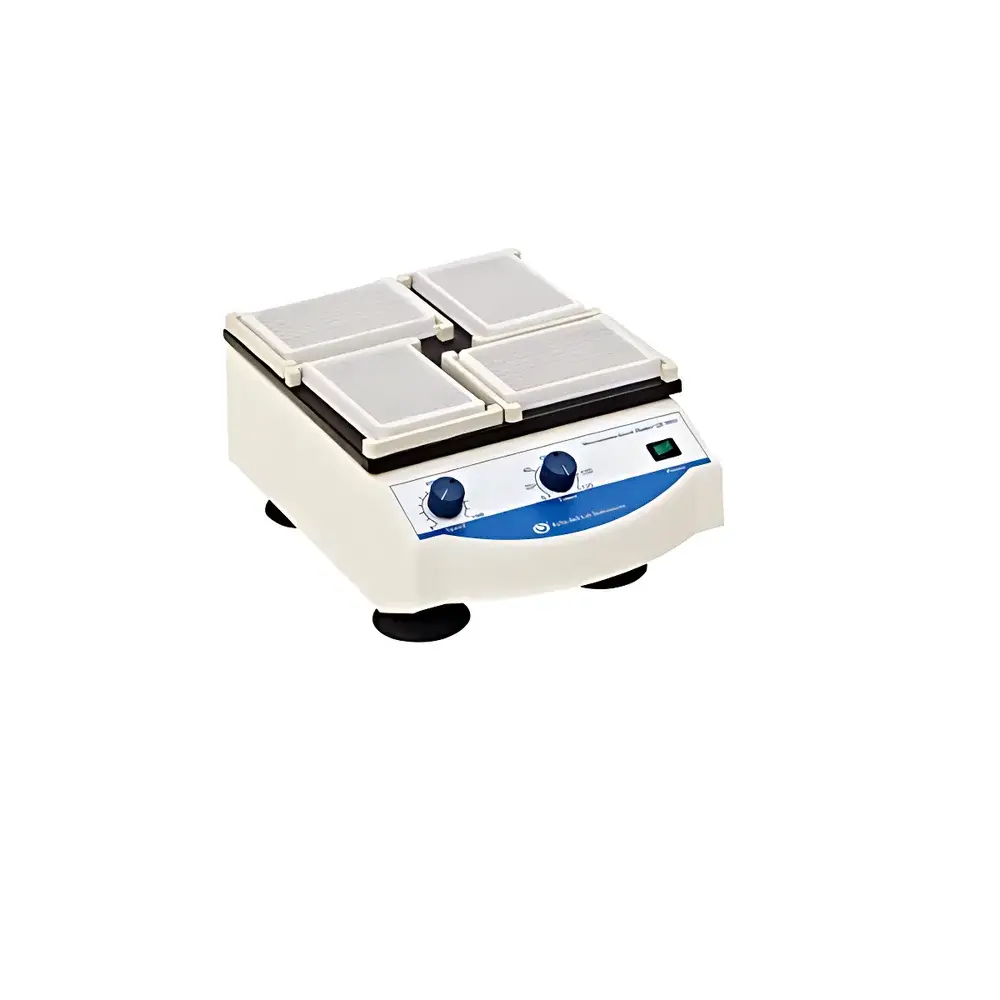
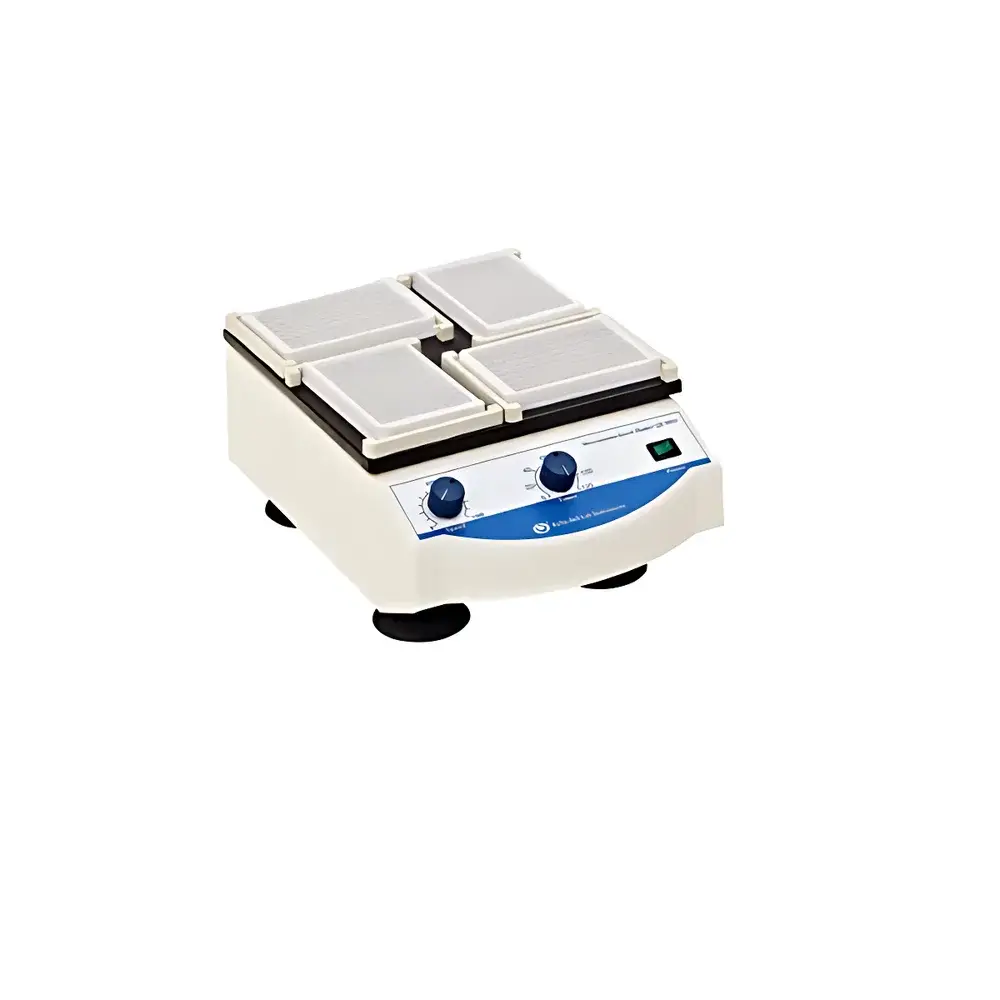
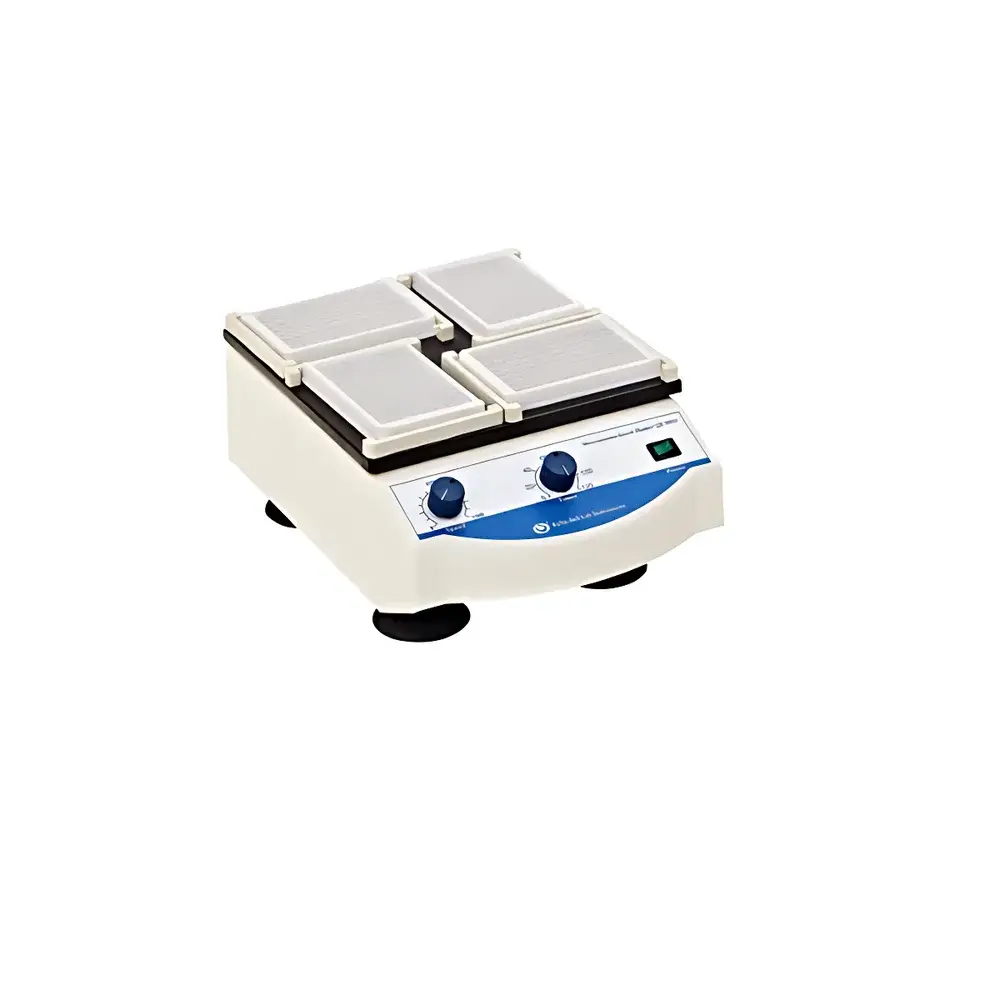
The Kylin-Bell QB-9001 Microplate Shaker Incubator is an integrated benchtop instrument engineered for precise, temperature-controlled orbital shaking of standard microplate formats in life science laboratories. It operates on a robust eccentric drive mechanism, delivering consistent orbital motion with low vibration transmission—critical for maintaining sample integrity during sensitive biochemical assays. Unlike basic shakers, the QB-9001 integrates uniform heating capability up to 70 °C, enabling simultaneous incubation and agitation without requiring external heating blocks or environmental chambers. Its design adheres to fundamental principles of convective heat transfer and controlled mechanical excitation, ensuring reproducible mixing kinetics across multi-well plates. This dual-function architecture supports time-resolved kinetic assays, cell-based screening, and thermal stabilization protocols where both temperature homogeneity and fluidic mixing must be tightly coordinated.
Key Features
- Brushless DC motor with nylon 1010 shaft and copper eccentric sleeve—ensures long-term mechanical stability, minimal wear, and silent operation under continuous duty cycles.
- Digital control panel with real-time rpm display and independent timer/temperature setting—supports programmable ramping and hold modes for method-driven workflows.
- Molded natural rubber platform—chemically resistant to common laboratory acids, bases, and organic solvents; non-slip surface prevents plate displacement during high-speed oscillation.
- Orbital motion profile optimized for 96-well microplates—uniform amplitude distribution across all wells minimizes edge effects and improves inter-well reproducibility.
- Compact footprint (350 × 250 × 150 mm) with front-access ventilation—designed for integration into biosafety cabinets, cold rooms, or automated lab benches without compromising airflow or thermal dissipation.
- Compliance-ready design—meets IEC 61010-1 safety standards for laboratory electrical equipment; compatible with GLP documentation practices through manual protocol logging.
Sample Compatibility & Compliance
The QB-9001 accommodates up to four standard ANSI/SLAS-compliant 96-well microplates (flat-bottom, U-bottom, V-bottom, and PCR-compatible formats), including plates with adhesive seals or optical films. It supports common assay volumes ranging from 50 µL to 300 µL per well. While not certified for sterile operation, its smooth, non-porous surfaces and solvent-resistant platform allow effective decontamination using 70% ethanol or 0.5% sodium hypochlorite solutions—supporting routine cleaning between runs in regulated environments. The unit does not carry FDA 21 CFR Part 11 certification, but its deterministic timer and fixed temperature setpoints enable traceable parameter recording when used with external loggers or LIMS-integrated notebooks. It aligns with general requirements of ISO/IEC 17025 for equipment verification in testing laboratories when paired with annual calibration of speed and temperature sensors.
Software & Data Management
The QB-9001 operates as a standalone hardware platform with no embedded firmware or network interface. All operational parameters—including speed (0–1350 rpm), temperature (ambient to 70 °C), and timer duration (0–120 min or continuous)—are configured via tactile push-button controls and displayed on a high-contrast LED screen. No proprietary software or driver installation is required. Users maintain full auditability by documenting settings manually or integrating the device into electronic lab notebooks (ELNs) such as LabArchives or Benchling. For automated workflow environments, optional external relay modules can be triggered via dry-contact outputs (available on custom configurations) to synchronize shaking cycles with liquid handlers or readers—facilitating semi-automated ELISA or cell-based assay pipelines.
Applications
- Enzyme-Linked Immunosorbent Assay (ELISA): Accelerates antigen-antibody binding kinetics and reduces non-specific background through uniform agitation during incubation steps—particularly beneficial in sandwich and competitive ELISA formats.
- PCR & Molecular Biology: Enhances reagent homogenization prior to thermal cycling; used for pre-amplification mixing of master mixes, templates, and primers to minimize pipetting error-induced variability.
- Cell Culture & Viability Studies: Supports suspension culture of hybridomas or stem cells in 96-well plates; gentle orbital shaking promotes nutrient exchange and prevents sedimentation without shear-induced damage.
- Drug Solubility & Release Testing: Facilitates dissolution profiling of solid dosage forms in simulated gastric/intestinal fluids under controlled thermal conditions per USP guidelines.
- Food Safety & Environmental Analysis: Used in immunoassay-based detection of mycotoxins, pesticides, or heavy metals in extracted food or water samples—improving extraction efficiency and assay precision.
FAQ
Does the QB-9001 support 384-well microplates?
No—the platform geometry and orbital radius are specifically engineered for 96-well format stability. Using smaller-format plates may result in insufficient contact pressure or lateral slippage.
Is temperature uniformity validated across the plate surface?
Yes—typical spatial variation is ≤ ±1.2 °C at 37 °C across a loaded 96-well plate, measured per ASTM E2251-20 Annex A1 methodology.
Can the unit operate inside a CO₂ incubator?
Not recommended—external condensation and elevated humidity may compromise internal electronics and rubber platform adhesion.
What maintenance is required for long-term reliability?
Annual inspection of motor coupling integrity and calibration of temperature sensor against NIST-traceable reference probes is advised.
Is there a CE or UL mark on this model?
The QB-9001 complies with IEC 61010-1 and carries the CE marking for use within the European Economic Area; UL listing is not applicable for this configuration.