
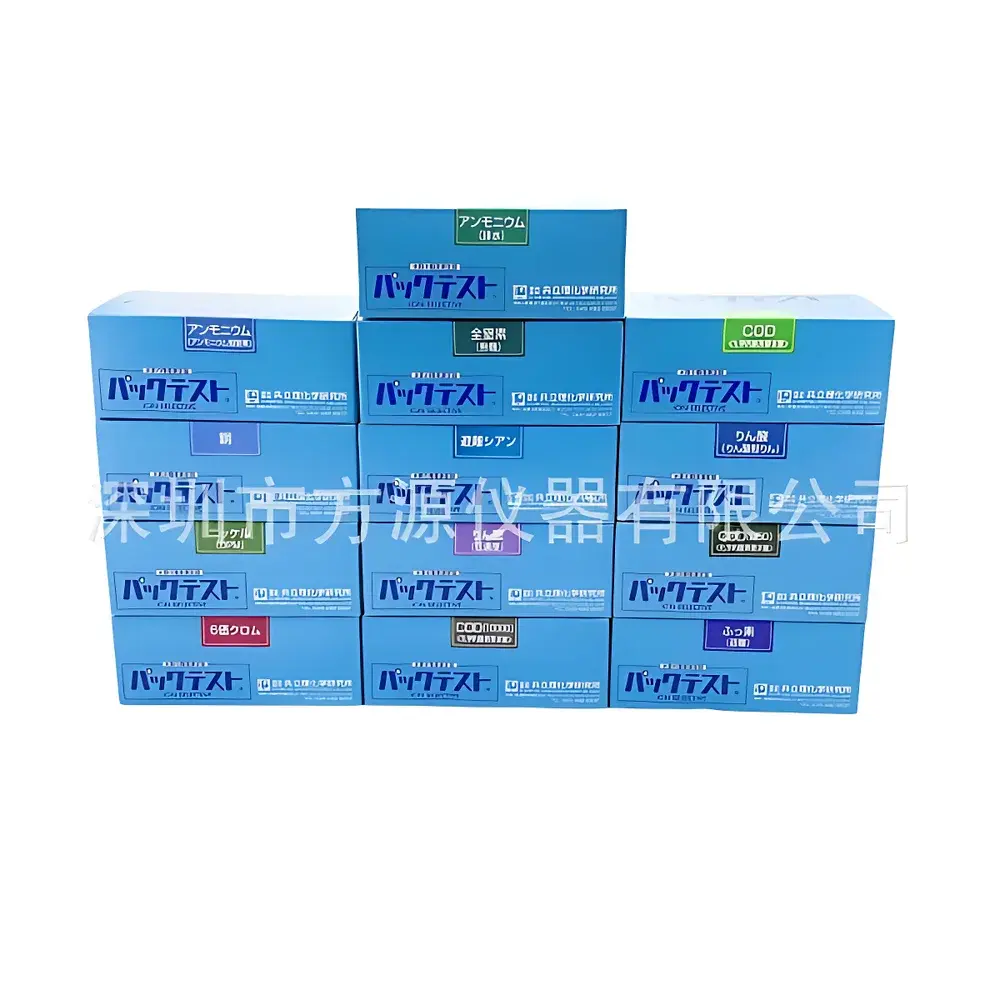
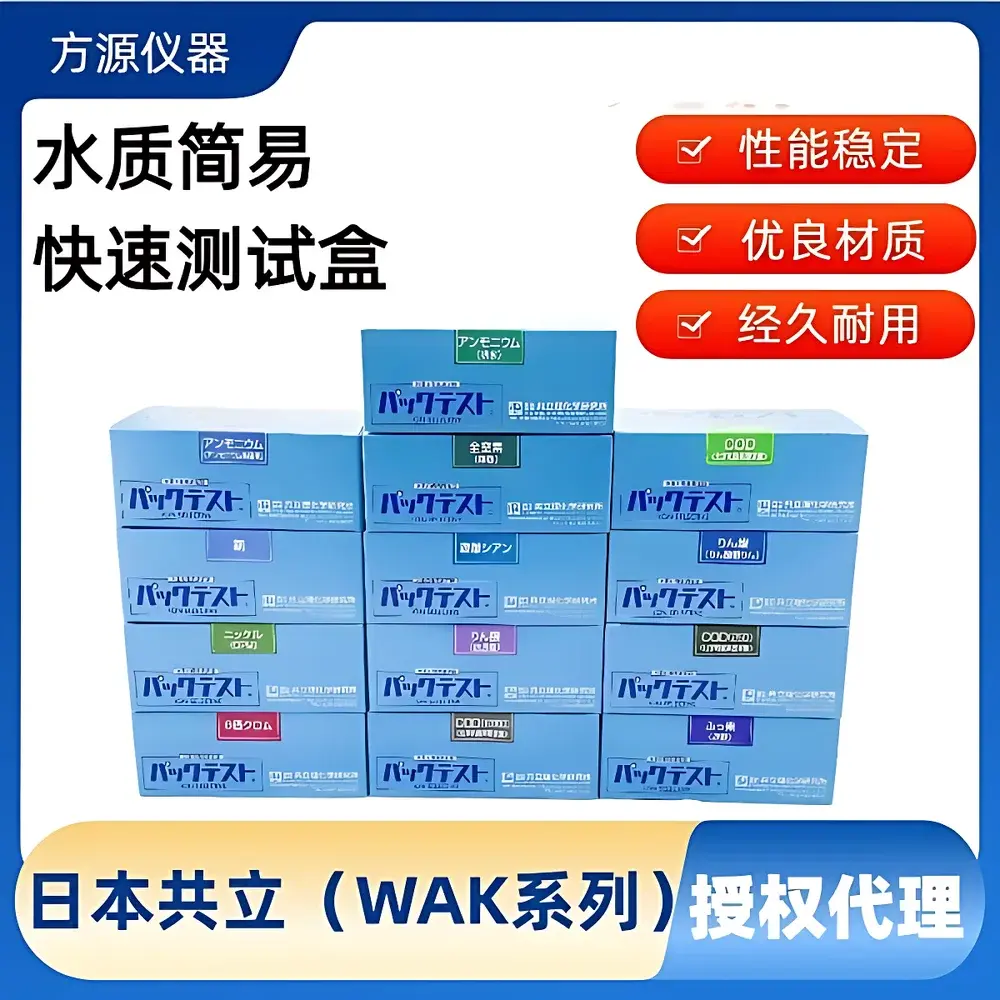
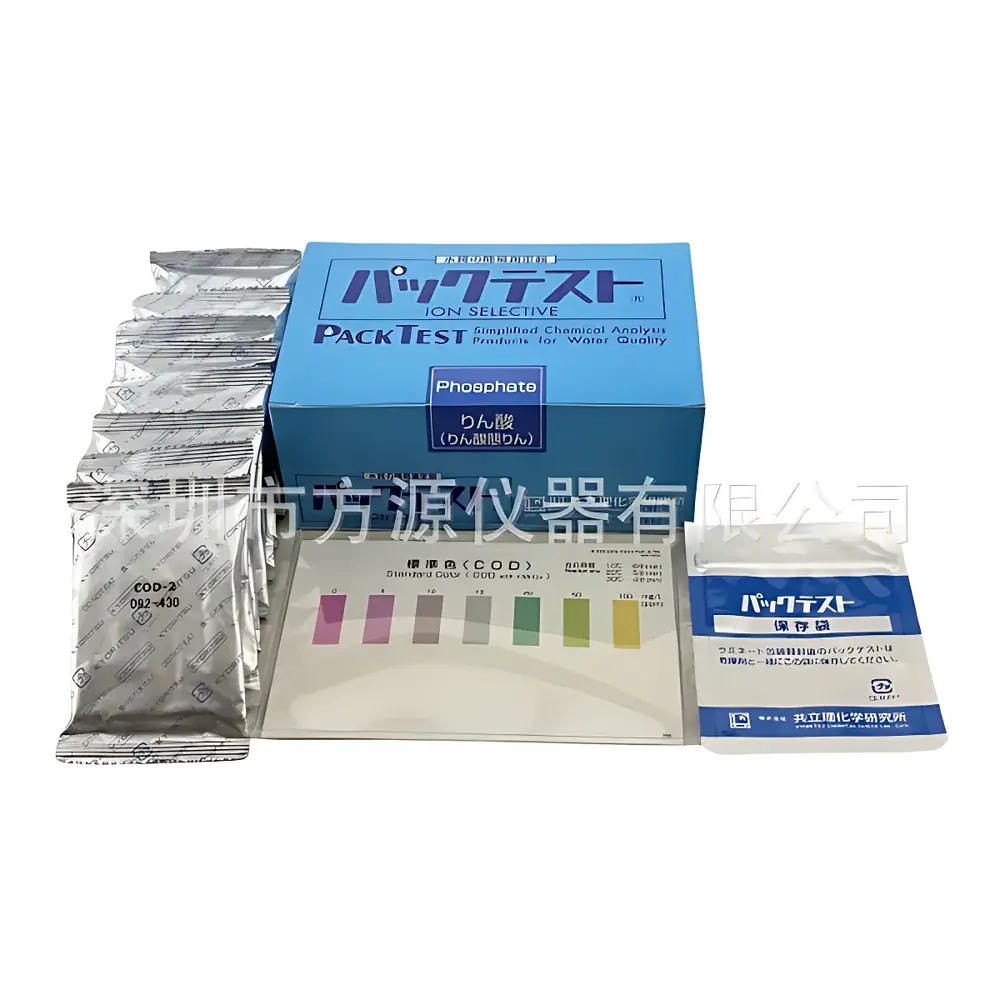
Kyoritsu WAK Series Ammonia Nitrogen and Total Nitrogen Test Reagents for Portable Water Quality Analysis
| Brand | Kyoritsu |
|---|---|
| Origin | Japan |
| Manufacturer Type | Authorized Distributor |
| Product Origin | Imported |
| Model | WAK Series (e.g., WAK-NH4, WAK-NO2, WAK-NO3, WAK-TN・i) |
| Price Range | USD 36–40 per reagent pack |
| Measured Parameter | Total Nitrogen (TN), Ammonia Nitrogen (NH₄⁺-N), Nitrite Nitrogen (NO₂⁻-N), Nitrate Nitrogen (NO₃⁻-N) |
| Instrument Type | Portable Colorimetric Field Test Kit |
| Measurement Principle | Standardized Colorimetric Methods (e.g., Indophenol Blue for NH₄⁺, Diazotization for NO₂⁻, Cadmium Reduction + Diazotization for NO₃⁻, Persulfate Digestion + UV Absorption or Hydrazine Reduction for TN) |
Overview
The Kyoritsu WAK Series is a comprehensive line of single-use, pre-formulated colorimetric test reagents designed for rapid, on-site determination of nitrogen species in water samples. Developed by Rikagaku Kenkyusho (The Institute of Physical and Chemical Research, Japan) and distributed globally by Kyoritsu Keisoku Co., Ltd., the WAK system enables field-based quantification of ammonia nitrogen (NH₄⁺-N), nitrite nitrogen (NO₂⁻-N), nitrate nitrogen (NO₃⁻-N), and total nitrogen (TN) without requiring laboratory instrumentation. Each WAK reagent vial contains precisely dosed, stabilized chemical reagents optimized for use with Kyoritsu’s portable photometers (e.g., WAK-PM series) or compatible spectrophotometers operating at defined wavelengths (e.g., 655 nm for NH₄⁺, 540 nm for NO₂⁻, 520 nm for NO₃⁻ post-reduction). The methodology adheres to internationally recognized principles: the indophenol blue reaction for ammonium, Griess diazotization for nitrite, and high-temperature alkaline persulfate digestion followed by cadmium column reduction or hydrazine-based conversion for total nitrogen—ensuring alignment with core elements of ISO 11908, ISO 7890-3, and EPA Method 353.2.
Key Features
- Pre-calibrated, ready-to-use reagent vials—no weighing, dilution, or buffer preparation required.
- Stable lyophilized or solid-phase formulations with shelf life exceeding 24 months when stored at 2–8 °C (unopened).
- Optimized for low-volume (1–10 mL) sample handling, minimizing reagent consumption and waste generation.
- Batch-specific calibration curves supplied with each kit, traceable to NIST-traceable reference standards.
- Integrated interference suppression: EDTA for metal masking, sulfamic acid for nitrite removal during TN digestion, and ascorbic acid for residual chlorine quenching.
- Compatible with Kyoritsu’s WAK-PM handheld photometers and third-party visible-range spectrophotometers (380–780 nm) meeting ±1 nm wavelength accuracy.
Sample Compatibility & Compliance
The WAK Series supports analysis across diverse aqueous matrices including surface water, groundwater, wastewater effluent, drinking water, and aquaculture systems. Sample turbidity up to 50 NTU is accommodated via built-in filtration steps (WAK-FIL filter discs included in select kits); suspended solids >100 mg/L require centrifugation prior to testing. All WAK protocols comply with fundamental requirements of ISO/IEC 17025 for method validation, and support GLP documentation workflows through optional audit-ready digital logbooks. While not individually certified under FDA 21 CFR Part 11, the reagents are validated for use in laboratories operating under GMP-aligned environmental monitoring programs where data integrity is enforced via instrument-level electronic signatures and secure data export (CSV/Excel).
Software & Data Management
When used with Kyoritsu WAK-PM photometers, measurement data—including date/time stamp, sample ID, operator code, calibration status, and raw absorbance values—is stored internally (up to 500 records) and exportable via USB or Bluetooth to Kyoritsu’s WAK-DataLink software. This desktop application supports automated concentration calculation using embedded NIST-traceable calibration equations, QC flagging (e.g., out-of-range blank absorbance, nonlinear response), and report generation compliant with ISO 17025 clause 7.8. Raw spectral data can be exported for secondary review in third-party platforms such as OriginLab or R. No cloud storage or SaaS subscription is required; all processing occurs locally to meet data sovereignty requirements common in EU and APAC regulatory environments.
Applications
- Regulatory compliance monitoring for municipal wastewater discharge (e.g., NPDES permits requiring TN ≤ 10 mg/L).
- Process control in biological nutrient removal (BNR) plants—tracking NH₄⁺ depletion in nitrification tanks and NO₃⁻ accumulation in denitrification zones.
- Source water assessment for drinking water utilities evaluating seasonal nitrate intrusion risks.
- Research-grade field surveys of eutrophication indicators in lakes and estuaries (TN:TP ratio analysis).
- Educational laboratory exercises demonstrating nitrogen cycle transformations and standard method intercomparisons.
- Emergency response screening following agricultural runoff or septic system failures.
FAQ
What is the detection range for total nitrogen using WAK-TN・i reagents?
Typical linear range is 0.1–10.0 mg/L TN as N, with LOD ≈ 0.03 mg/L (based on 3σ of reagent blank, n=10). Range may vary slightly depending on digestion efficiency and photometer sensitivity.
Can WAK reagents be used with non-Kyoritsu instruments?
Yes—provided the instrument offers stable light source output, fixed-pathlength cuvettes (10 mm standard), and wavelength selection matching the assay’s absorption maximum. Users must validate performance per ISO 17025 clause 7.2.2.
Is digestion required for total nitrogen analysis?
Yes. WAK-TN・i requires high-temperature (120 °C), high-pressure alkaline persulfate digestion (using WAK-DIG digesters) to convert organic nitrogen and refractory forms into nitrate prior to colorimetric quantification.
How are interferences from chloride or heavy metals managed?
WAK-TN・i includes sodium thiosulfate to neutralize residual chlorine and EDTA to chelate Cu²⁺, Fe³⁺, and Ni²⁺—common catalysts of persulfate decomposition. High chloride (>1,000 mg/L) may require dilution or matrix-matched calibration.
Are certificates of analysis (CoA) provided with each batch?
Yes. Each production lot includes a CoA listing purity, moisture content, stability test results, and verification against primary reference materials (e.g., NIST SRM 2783).
Related Products







