
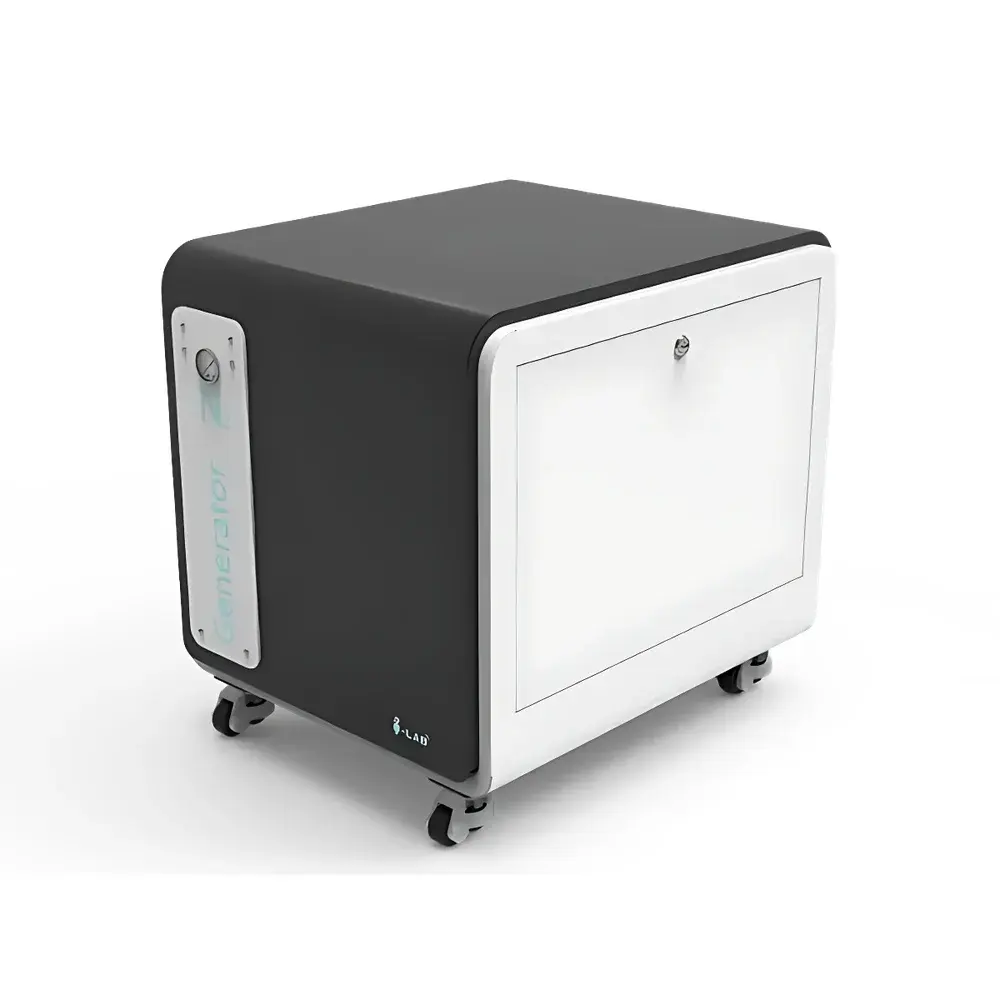
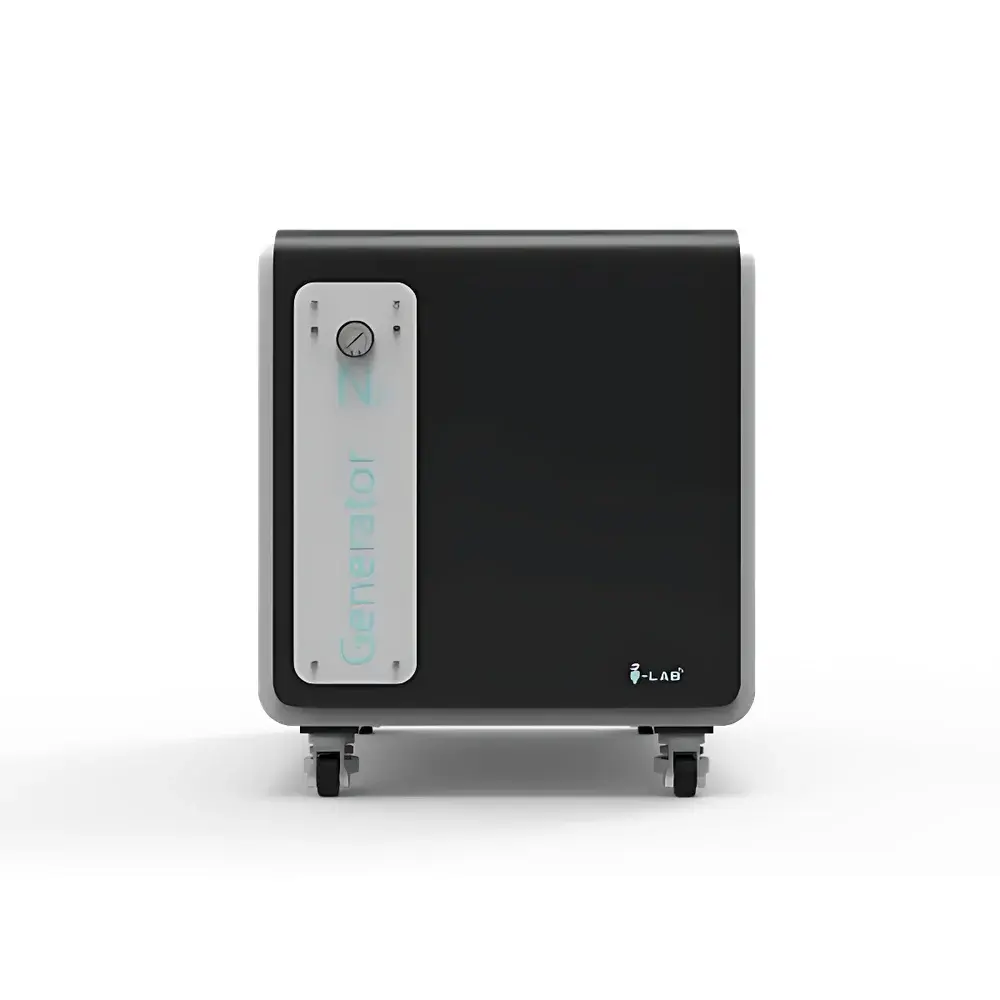
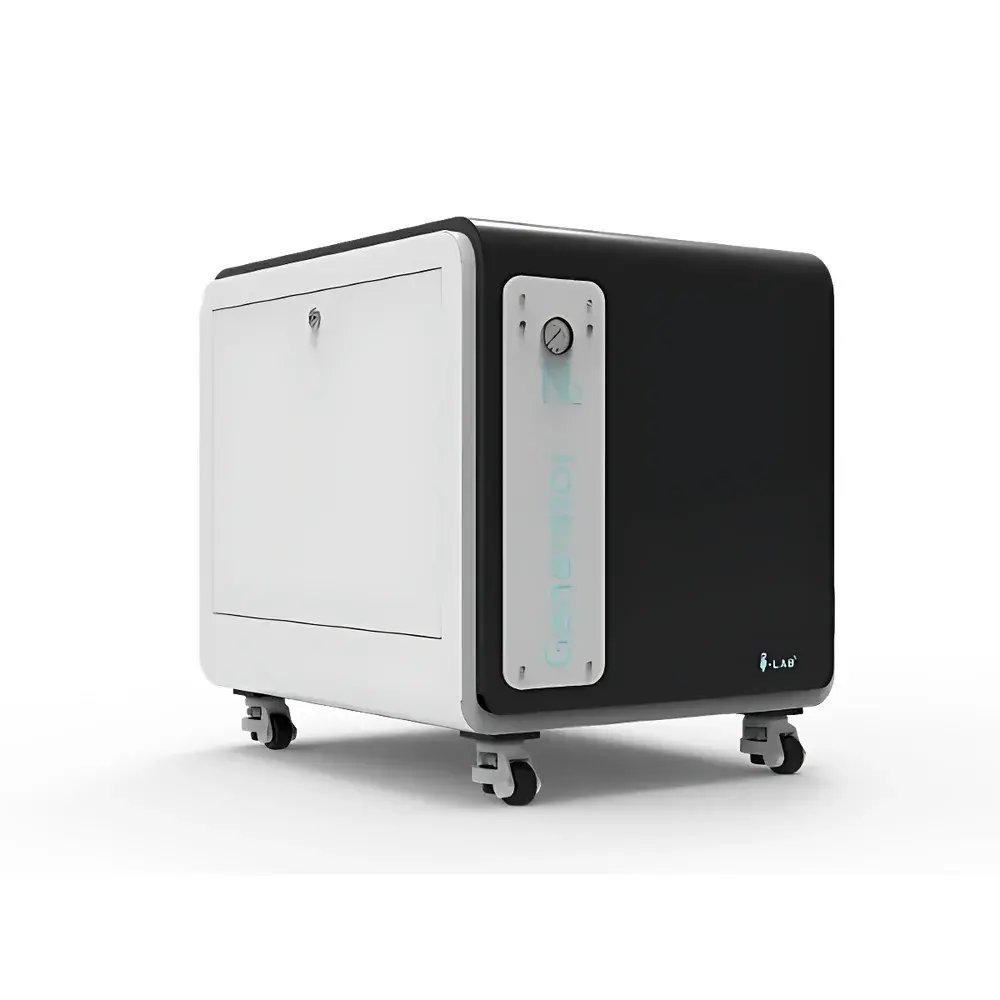
i-Lab KLDC50-1 Nitrogen Generator
| Brand | i-Lab |
|---|---|
| Origin | Shanghai, China |
| Manufacturer Type | Direct Manufacturer |
| Region of Origin | Domestic (China) |
| Model | KLDC50-1 |
| Instrument Type | Nitrogen Generator |
| Nitrogen Generation Principle | Hollow Fiber Membrane Separation |
| Output Flow Rate | 50 L/min |
| Output Pressure Range | 0–5 bar |
| Nitrogen Purity | 99.9% |
| Noise Level | <55 dB(A) |
| Filtration Stages | 3-stage (water, oil, particulates) |
| Particulate Removal Efficiency | ≥99.999% at 0.01 µm |
| Hydrocarbon Content | <0.1 ppm |
| Dew Point | ≤−40 °C |
| Power Supply | 220 V AC, 50 Hz |
| Dimensions (W×D×H) | 560 × 520 × 820 mm |
| Weight | ~72 kg |
| Compressor Type | Oil-free scroll air compressor |
| Integrated Buffer Tank Capacity | 12 L |
| Auto-standby Function | Yes |
| Energy Savings Mode | Yes (up to 30% reduction in power consumption vs. conventional continuous-run systems) |
Overview
The i-Lab KLDC50-1 Nitrogen Generator is an engineered solution for laboratories requiring a reliable, on-demand source of high-purity nitrogen gas at sustained flow rates up to 50 L/min. It employs hollow fiber membrane separation technology—a well-established, pressure-driven gas separation method—to selectively permeate oxygen, carbon dioxide, water vapor, and other trace gases while retaining nitrogen within the non-permeate stream. This principle enables stable, continuous output of nitrogen with consistent purity (≥99.9%) across variable demand conditions—critical for applications where gas interruption or compositional drift compromises analytical integrity or process repeatability. Designed specifically for integration into nitrogen blow-down stations, LC-MS guard gas supply lines, inert atmosphere sample preparation workflows, and industrial-grade laboratory support systems, the KLDC50-1 eliminates dependency on high-pressure cylinders or liquid nitrogen dewars, reducing logistical overhead, safety risks, and long-term operational costs.
Key Features
- Hollow fiber membrane module sourced from a Tier-1 European supplier, ensuring long-term flux stability and resistance to plasticization under continuous operation
- Integrated oil-free scroll air compressor delivering quiet operation (<55 dB[A]) and eliminating risk of hydrocarbon contamination
- Four-stage purification architecture: pre-filtration (coalescing), desiccant-based drying (dew point ≤−40 °C), activated carbon adsorption (hydrocarbons <0.1 ppm), and sub-micron final filtration (0.01 µm absolute rating)
- 12-liter integrated buffer tank with pressure stabilization control, minimizing compressor cycling frequency and extending service life by >40% versus non-buffered designs
- Intelligent AutoSave mode automatically transitions the system to low-power standby when outlet pressure reaches setpoint, resuming full output within <3 seconds upon demand—reducing energy consumption by up to 30%
- Front-panel digital interface with real-time display of outlet pressure, flow rate, purity status, and maintenance alerts; RS-485 communication port supports remote monitoring via LabView or SCADA systems
Sample Compatibility & Compliance
The KLDC50-1 delivers nitrogen meeting ISO 8573-1 Class 2:2:2 specifications for compressed air quality (adapted for nitrogen output), including particle count ≤10⁴/m³ at ≥0.1 µm, dew point ≤−40 °C, and oil content <0.1 mg/m³. Its ultra-low hydrocarbon residual supports compliance with ASTM D4052 and USP requirements for LC-MS carrier and purge gas. The system adheres to IEC 61000-6-3 (EMC emissions) and IEC 61000-6-2 (immunity) standards. All electrical components are rated IP20 and conform to CE marking directives. For GLP/GMP environments, optional audit-trail-enabled firmware (v2.3+) provides timestamped event logging compliant with FDA 21 CFR Part 11 Annex 11 requirements.
Software & Data Management
The KLDC50-1 operates without proprietary software dependencies. Its embedded controller stores 30 days of operational history—including runtime hours, pressure/flow excursions, filter saturation warnings, and standby cycles—in non-volatile memory. Data export is supported via USB-C dump or Modbus RTU over RS-485 for integration into centralized lab infrastructure management platforms. Optional i-Lab LabLink™ gateway (sold separately) enables TLS-encrypted cloud telemetry, predictive maintenance scheduling, and automated calibration interval tracking aligned with ISO/IEC 17025 clause 6.4.2.
Applications
- Nitrogen blow-down concentration of biological extracts, pesticide residues, and pharmaceutical intermediates (e.g., EPA Method 525.3, AOAC 2007.01)
- LC-MS mobile phase sparging, ion source curtain gas, and collision cell purge gas supply
- Inert atmosphere control during solid-phase extraction (SPE), lyophilization, and DNA/RNA precipitation
- Blanketing and purging in food packaging validation studies and polymer synthesis reactors
- Assist gas for CO₂ laser cutting systems in materials research labs requiring stable, dry N₂
- Calibration gas dilution systems requiring traceable, low-moisture background gas
FAQ
What is the expected service life of the hollow fiber membrane module?
Under typical laboratory usage (8 h/day, 5 days/week), the membrane module maintains ≥95% of initial nitrogen recovery efficiency for ≥15,000 operating hours, equivalent to approximately 7 years. Replacement is recommended based on purity verification testing—not fixed calendar intervals.
Does the KLDC50-1 require external cooling or ventilation?
No. The unit is self-contained and designed for ambient laboratory environments (15–30 °C, ≤80% RH). Rear exhaust grilles provide passive convection; no dedicated HVAC ducting is required.
Can it be connected to multiple instruments simultaneously?
Yes—provided total demand does not exceed 50 L/min at ≥3 bar. A manifold with individual pressure regulators and particulate traps is recommended for multi-port distribution.
Is third-party certification available for purity verification?
Upon request, i-Lab provides factory-issued Certificate of Conformance (CoC) with traceable calibration data. Optional UKAS-accredited purity validation (per ISO 8573-7) is available through authorized metrology partners.
How often must filters be replaced?
Pre-filter and coalescer elements: every 2,000 hours or 12 months (whichever occurs first). Desiccant and carbon beds: every 4,000 hours or 24 months. Final 0.01 µm filter: every 6,000 hours or 36 months. All intervals assume inlet air quality per ISO 8573-1 Class 4.



