
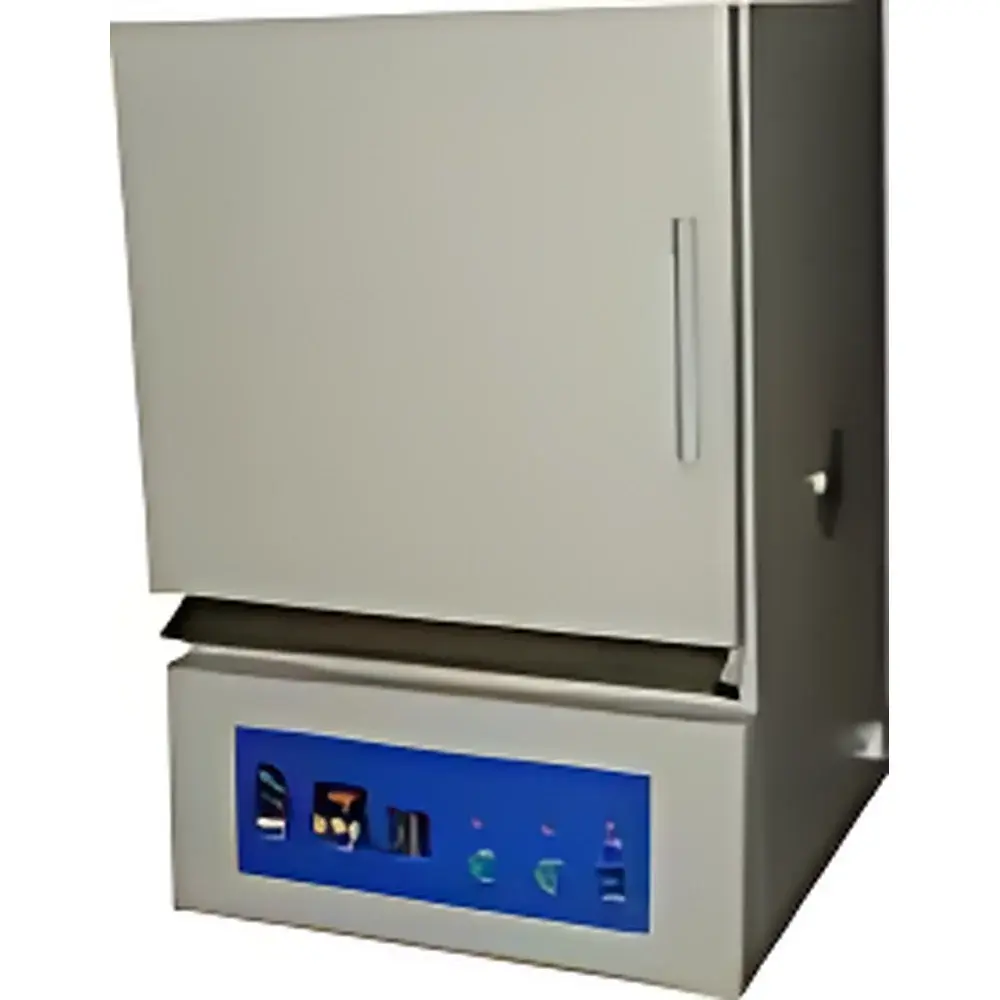
LabCompanion HH-4 Vertical High-Temperature Aging Oven
| Brand | LabCompanion |
|---|---|
| Model | HH-4 |
| Type | Vertical Forced-Air Circulating Oven |
| Temperature Range | R.T.+10°C to 300°C (standard) |
| Interior Dimensions (W×D×H) | 50×60×75 cm / 70×70×80 cm / 80×80×100 cm |
| Exterior Dimensions (W×D×H) | 67×106×96 cm / 87×116×102 cm / 97×126×129 cm |
| Temperature Uniformity | ±2.5% |
| Temperature Fluctuation | ±0.5°C |
| Heating Rate | ≤70 min (R.T.+10°C → 300°C) |
| Air Exchange Rate | 5–200 cycles/hour |
| Power Supply | AC 220 V ±10%, 50 Hz ±0.5 Hz |
| Rated Power | 3.0 kW / 4.0 kW / 6.0 kW |
| Control System | Imported Intelligent PID Controller with Self-Tuning |
| Temperature Sensor | Industrial Platinum RTD (PT100) |
| Display | LED Digital, Simultaneous Setpoint & Actual Temperature |
| Timer Range | 0–999 minutes |
| Insulation | High-Density Polyurethane Foam + Glass Fiber |
| Door Seal | Eco-Friendly Silicone Rubber Gasket |
| Heating Element | Nickel-Chromium Alloy Sheathed Heater |
| Safety Features | Independent Over-Temperature Protection, Thermal Cut-Out, Over-Current Circuit Breaker |
| Standard Compliance | JB/T 5520–1991 Technical Specification for Drying Ovens |
| Accessories (Standard) | Two Adjustable Stainless Steel Shelves (or Rotating Rack), User Manual |
| Optional | Programmable Temperature Controller, RS232/RS485 Communication Port, Chart Recorder, Additional Shelves, Observation Window, Φ50 mm Cable Feedthrough |
Overview
The LabCompanion HH-4 Vertical High-Temperature Aging Oven is an engineered-for-precision thermal processing system designed for controlled drying, baking, sterilization, curing, and accelerated aging of non-flammable, non-explosive materials. Built upon forced-air convection architecture, it ensures uniform heat distribution through a high-efficiency axial fan and optimized internal airflow ducting—critical for applications demanding strict thermal consistency across the entire chamber volume. Its operational range spans from ambient +10°C to 300°C (standard configuration) or ambient +20°C to 450°C (high-temperature variant), supporting both routine laboratory conditioning and industrial process validation. The oven complies with JB/T 5520–1991, the Chinese national standard governing drying oven performance, and its structural and control design aligns with foundational requirements for GLP-compliant thermal stability testing in pharmaceutical, electronic component, and advanced material development workflows.
Key Features
- Robust dual-layer construction: exterior cold-rolled steel with epoxy powder coating; interior chamber available in either SUS304 stainless steel (BN variant) or high-grade cold-rolled steel with high-temperature silver paint (N variant)
- High-density polyurethane foam combined with glass fiber insulation delivers low thermal leakage and energy-efficient operation
- Microprocessor-based PID temperature controller with auto-tuning capability ensures stable setpoint maintenance under variable load conditions
- Real-time dual-display LED interface shows both setpoint and actual chamber temperature simultaneously, with intuitive up/down key parameter entry
- Independent over-temperature safety cutoff circuit—mechanically isolated from the main controller—provides fail-safe thermal protection per IEC 61000-4-5 surge immunity guidelines
- Four-locking casters enable secure repositioning and stable stationary operation without floor anchoring
- Adjustable shelf system (standard configuration includes two stainless steel trays or one rotating rack) supports flexible sample loading for heterogeneous part geometries
Sample Compatibility & Compliance
The HH-4 accommodates a broad spectrum of non-hazardous solid and semi-solid samples—including printed circuit boards (PCBs), passive electronic components (capacitors, resistors, quartz crystals), polymer films, pharmaceutical excipients, food-grade packaging substrates, and ceramic precursors. Its R.T.+10°C to 300°C range meets typical aging protocols defined in JEDEC JESD22-A108 (accelerated moisture resistance), IPC-TM-650 2.6.25 (thermal shock), and ASTM D570 (water absorption). For higher-temperature processes such as binder burnout or pre-sintering, the 450°C option satisfies requirements in ISO 11357-3 (DSC calibration verification) and MIL-STD-883 Method 1008 (life testing). All models are constructed to minimize outgassing and particulate shedding—validated via cleanroom-compatible surface finish specifications—making them suitable for Class 10,000 (ISO 7) environments when operated with filtered intake air.
Software & Data Management
While the base HH-4 operates via standalone hardware control, optional RS232 or RS485 serial interfaces enable integration into centralized lab monitoring systems using Modbus RTU protocol. When paired with the programmable controller upgrade, users gain access to multi-segment ramp-soak profiles, event-triggered logging, and timestamped data export (CSV format) compatible with LIMS platforms. Audit trail functionality—including operator ID tagging, parameter change history, and alarm event timestamps—supports compliance with FDA 21 CFR Part 11 when deployed with validated third-party software. Temperature calibration records may be archived alongside chamber usage logs to fulfill traceability requirements under ISO/IEC 17025 Clause 7.7.
Applications
- Electronics manufacturing: Burn-in testing of LEDs, LCD modules, and semiconductor packages under controlled thermal stress
- Materials science: Pre-drying of ceramic green bodies, solvent removal from composite laminates, and thermal stabilization of nanomaterial dispersions
- Pharmaceutical R&D: Moisture content reduction in active pharmaceutical ingredients (APIs), excipient compatibility studies, and stability-indicating assay preconditioning
- Quality assurance labs: Accelerated aging per ISO 11607-1 for medical device packaging validation
- Academic research: Kinetic modeling of polymer degradation, catalyst deactivation studies, and thermal desorption characterization
FAQ
What is the maximum recommended operating temperature for continuous use?
For long-term reliability, continuous operation at 300°C is rated for the standard model; the high-temperature variant supports sustained operation up to 450°C, provided chamber loading does not exceed 70% of internal volume.
Can the HH-4 be validated for IQ/OQ/PQ protocols?
Yes—the unit’s mechanical design, sensor placement (PT100 calibrated per ISO/IEC 17025), and documented thermal performance parameters support full qualification when executed with NIST-traceable thermocouples and a certified validation service provider.
Is the observation window an integrated option or field-installable?
The tempered glass observation window is factory-installed as a configurable option; it is not retrofittable due to structural reinforcement requirements around the viewport aperture.
Does the oven meet electromagnetic compatibility (EMC) standards for laboratory deployment?
All HH-4 units comply with EN 61326-1:2013 for laboratory equipment EMC emissions and immunity, verified during type testing prior to CE marking.
How frequently should the PT100 sensor be recalibrated?
Annual recalibration is recommended under routine use; however, calibration intervals must be risk-assessed per ISO/IEC 17025 Section 7.7.2 and adjusted based on usage frequency, thermal cycling severity, and criticality of measurement outcomes.
Related Products



