
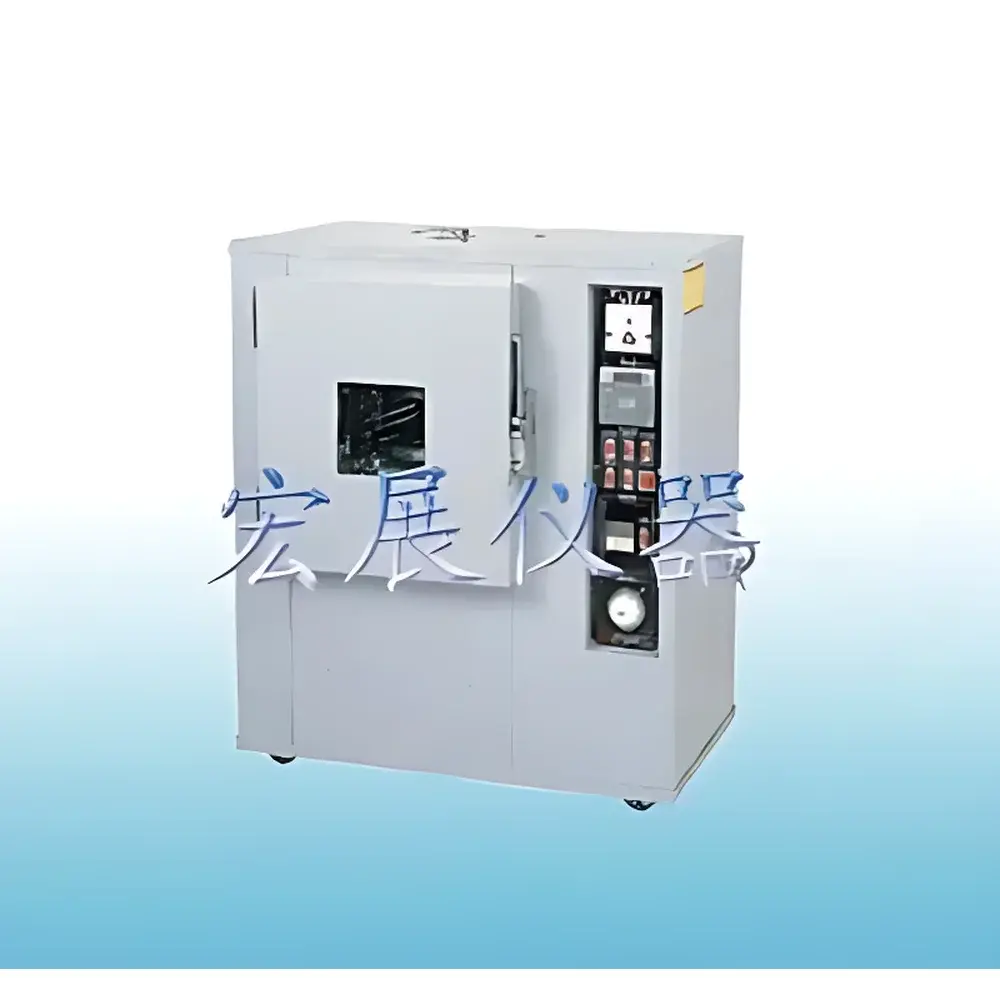
LabCompanion RC-1000 High-Low Temperature Alternating Environmental Test Chamber
| Brand | LabCompanion |
|---|---|
| Model | RC-1000 |
| Internal Chamber Dimensions | 1000 × 1000 × 1000 mm |
| Temperature Range | −70 °C to +150 °C |
| Temperature Uniformity | ±2 °C |
| Temperature Fluctuation | ±0.5 °C |
| Temperature Deviation | ±2 °C |
| Cooling Rate | 1.0–1.2 °C/min |
| Power Consumption | 12 kW |
| Supply Voltage | AC 380 V, 50 Hz |
| Construction | Stainless Steel Interior, Powder-Coated Cold-Rolled Steel Exterior |
| Safety Protections | Over-Temperature, Over-Pressure, and Phase-Failure Monitoring |
| Compliance | GB/T 10589–2008, GB/T 2423.1–2012, GB/T 2423.2–2012 |
Overview
The LabCompanion RC-1000 is a precision-engineered high-low temperature alternating environmental test chamber designed for rigorous thermal stress evaluation of electronic components, automotive parts, aerospace materials, and industrial instrumentation under controlled, repeatable climatic conditions. Operating on forced-air convection with dual-stage cascade refrigeration and PID-controlled electric heating, the RC-1000 delivers stable, programmable thermal profiles across a wide operational range—from −70 °C to +150 °C. Its robust architecture supports both steady-state exposure and dynamic cycling protocols (e.g., ramp-hold-soak sequences), enabling accelerated aging studies, qualification testing per MIL-STD-810H Method 502.7, and reliability validation in accordance with IEC 60068-2-1 (cold), IEC 60068-2-2 (dry heat), and IEC 60068-2-14 (change of temperature). The chamber’s thermally insulated double-wall construction—featuring high-density polyurethane foam and low-conductivity door seals—minimizes thermal leakage and ensures long-term stability during extended test durations.
Key Features
- Spacious internal workspace: 1000 × 1000 × 1000 mm (1 m³ volume), accommodating large assemblies or multi-unit test configurations.
- Cascade refrigeration system with imported compressors and environmentally compliant R404A/R23 refrigerant blend, achieving consistent cooling rates of 1.0–1.2 °C/min from ambient to −70 °C.
- High-accuracy temperature control via 0.1 °C resolution digital PID controller with real-time deviation compensation and auto-tuning capability.
- Uniform airflow distribution through adjustable rear-mounted centrifugal fans and optimized baffle design, ensuring ≤ ±2 °C spatial uniformity per IEC 60068-3-5.
- Dual-layer safety architecture: independent mechanical over-temperature cut-off, pressure switch monitoring for refrigerant circuit integrity, and three-phase power loss detection with audible/visual alarm output.
- Corrosion-resistant 304 stainless steel interior chamber and powder-coated cold-rolled steel exterior housing for durability in laboratory and production environments.
Sample Compatibility & Compliance
The RC-1000 accommodates diverse sample types—including PCBs, lithium-ion battery modules, optical sensors, polymer enclosures, and sealed electronic housings—without requiring modification to specimen mounting fixtures. Its chamber geometry and airflow profile are validated for compliance with national and international standards governing environmental testing: GB/T 10589–2008 (low-temperature test chambers), GB/T 2423.1–2012 (cold testing), GB/T 2423.2–2012 (dry heat), and GB/T 2423.22–2012 (temperature change). While not certified to UL or CE as a standalone appliance, the unit meets electromagnetic compatibility (EMC) requirements per GB/T 17626 series and is suitable for integration into GLP-compliant quality systems when operated with documented SOPs and calibration records traceable to NIM (National Institute of Metrology, China).
Software & Data Management
The RC-1000 integrates with LabCompanion’s optional TC-Link™ PC-based control software (Windows 10/11 compatible), supporting full-cycle programming, remote monitoring, and automated data logging at user-defined intervals (1 s to 60 min). Logged parameters include chamber setpoint, actual temperature, compressor status, fan speed, and alarm event timestamps. All data exports to CSV or Excel format with embedded metadata (operator ID, test ID, calibration certificate number). Audit trails comply with basic 21 CFR Part 11 principles—user authentication, electronic signature prompts, and immutable log files—making the system suitable for regulated QC laboratories conducting ASTM D3418 or ISO 11357 thermal transition analysis where environmental conditioning precedes DSC or TMA measurement.
Applications
- Thermal shock pre-conditioning of automotive ECUs prior to vibration testing (per ISO 16750-4).
- Storage stability assessment of medical device packaging under accelerated temperature cycling (ISO 11607-1 Annex B).
- Qualification of avionics hardware per RTCA DO-160G Section 4 (temperature variation).
- Material coefficient of thermal expansion (CTE) screening via dimensional metrology after controlled thermal soak.
- Validation of solder joint integrity in surface-mount assemblies using JEDEC JESD22-A104 temperature cycling profiles.
FAQ
What is the minimum achievable temperature and how long does it take to reach −70 °C from 25 °C?
The RC-1000 achieves −70 °C nominal; typical stabilization time from ambient (25 °C) is approximately 90–110 minutes, depending on chamber load and ambient room conditions.
Does the chamber support humidity control?
No—the RC-1000 is a dry-temperature-only chamber. For combined temperature/humidity testing, refer to the LabCompanion RH-1000 series.
Is external calibration documentation provided with shipment?
Each unit ships with a factory calibration report (traceable to NIM standards) covering temperature uniformity and controller accuracy at three points (−40 °C, 25 °C, +85 °C); on-site verification services are available upon request.
Can the RC-1000 be integrated into a centralized lab automation network?
Yes—RS485 Modbus RTU and optional Ethernet/IP interfaces enable integration with SCADA or MES platforms for centralized test orchestration and data aggregation.
What maintenance is required to sustain performance over 5+ years of continuous operation?
Recommended quarterly tasks include condenser coil cleaning, refrigerant pressure verification, door gasket inspection, and controller firmware updates; annual compressor oil analysis and sensor recalibration are advised for GMP-aligned operations.



