
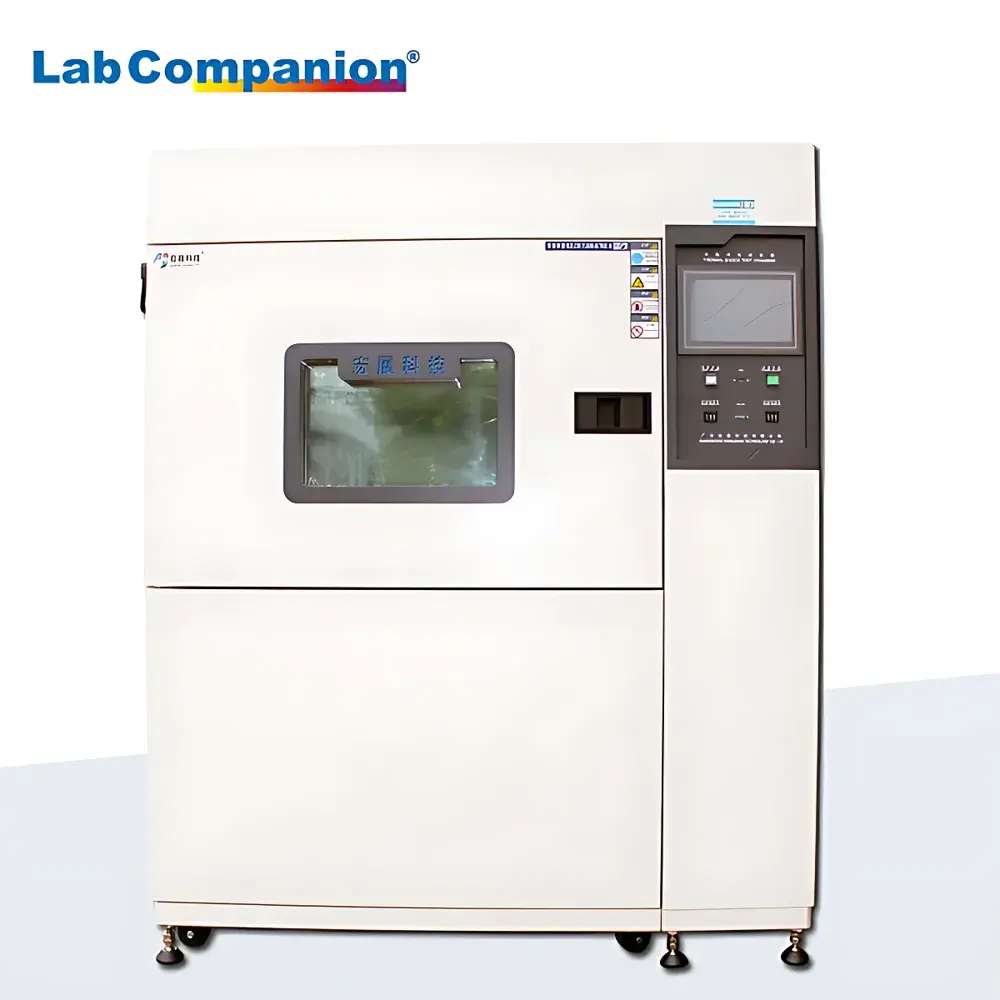
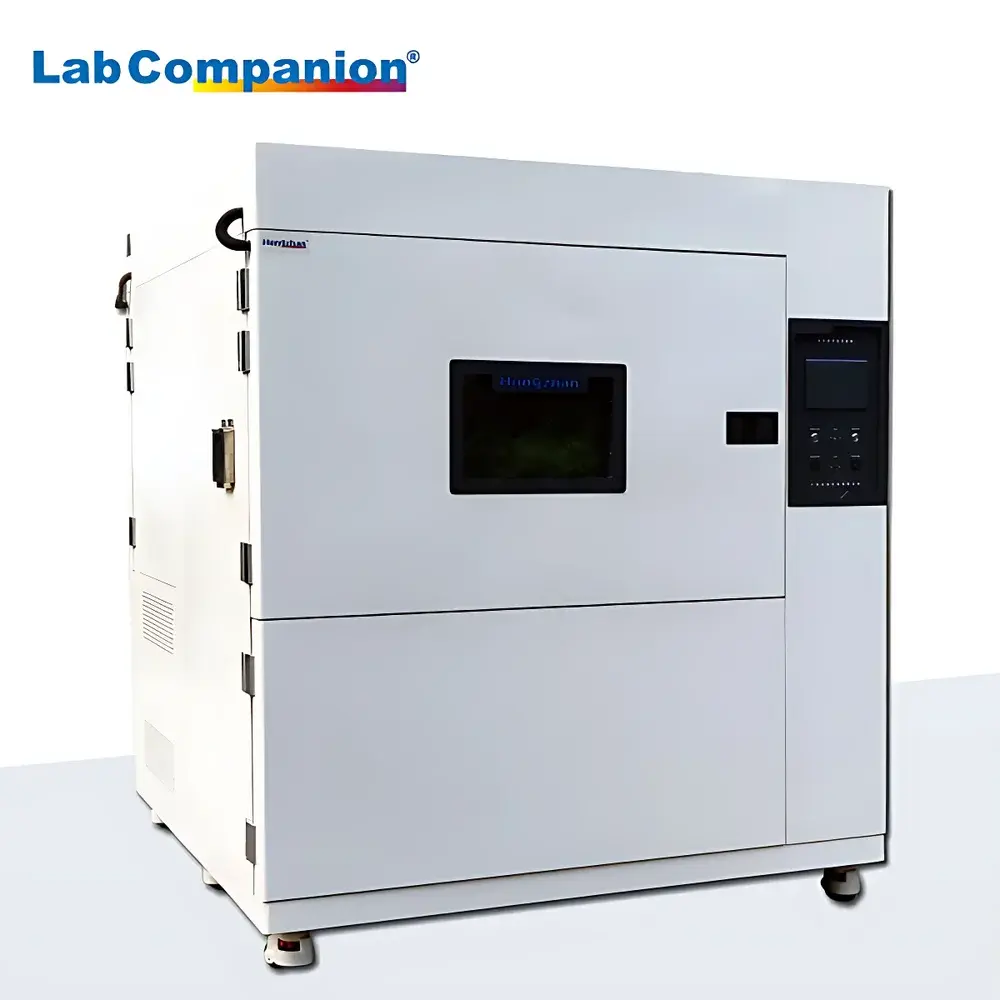
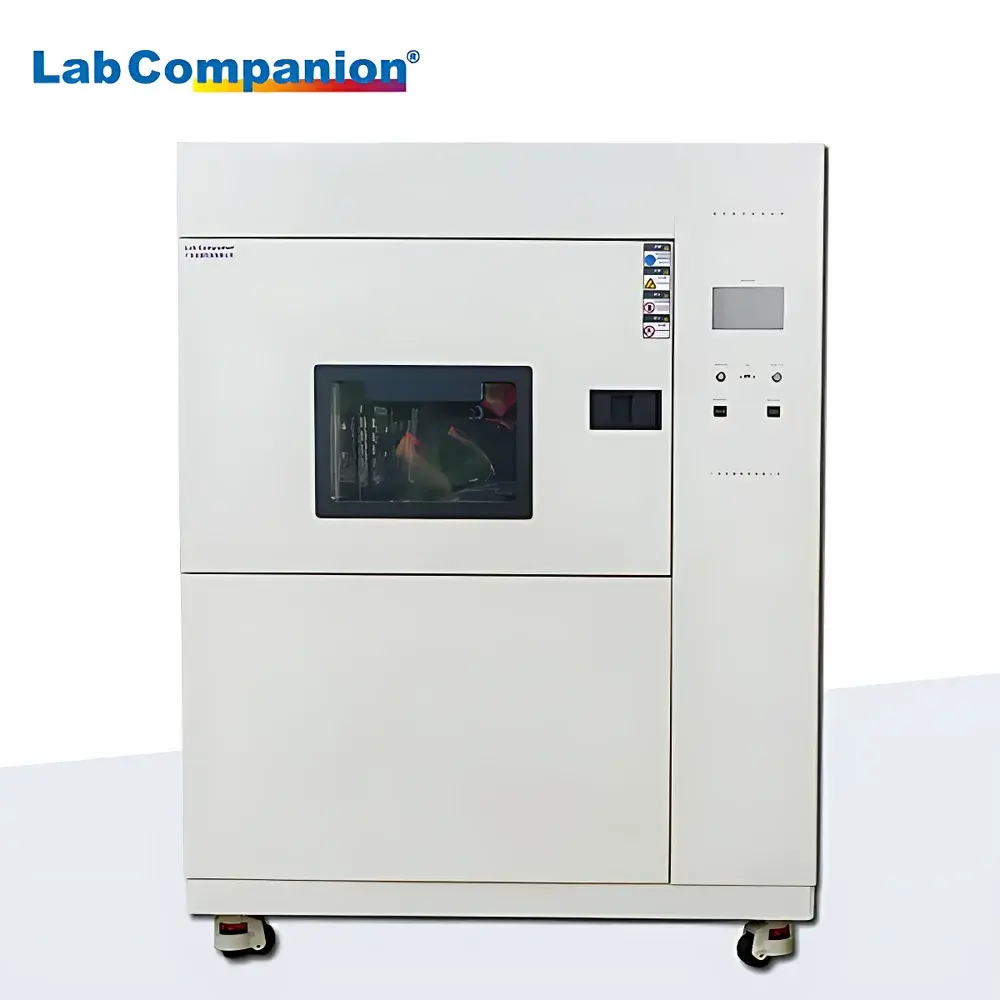
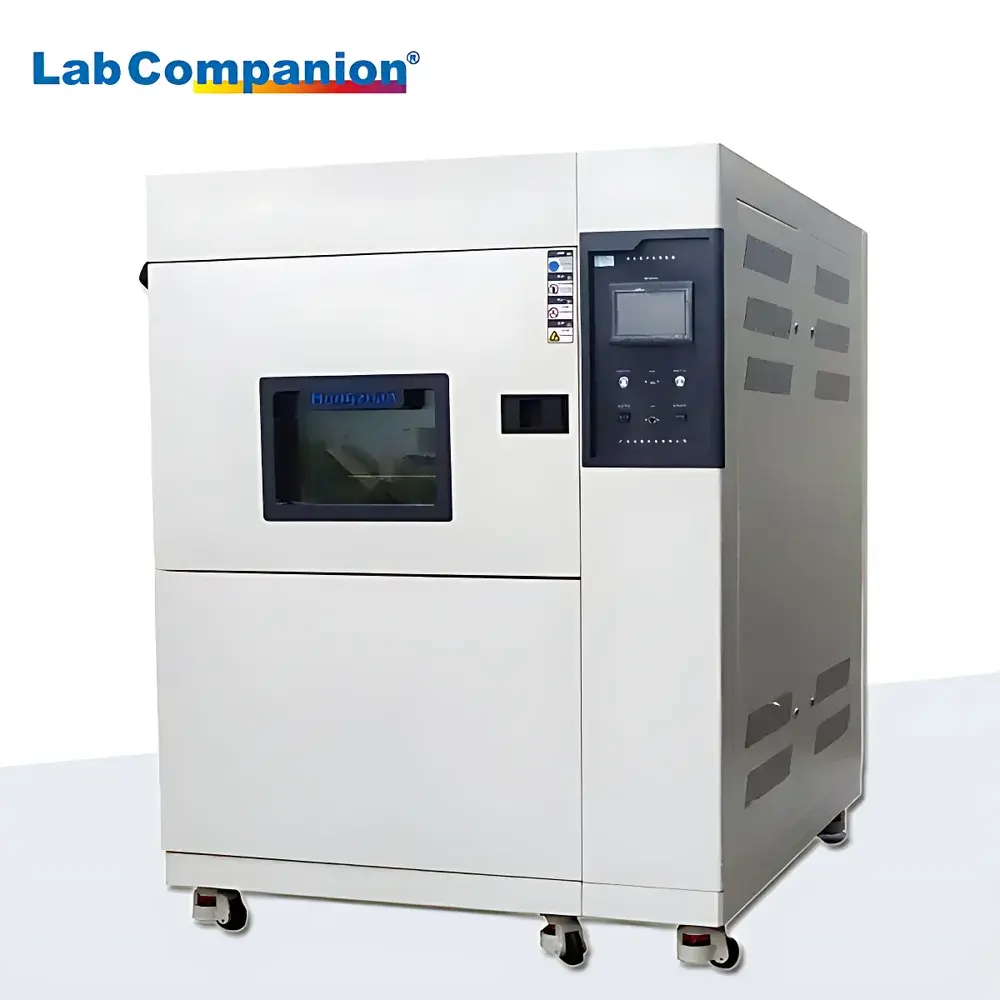
LabCompanion TSS-225W Programmable Thermal Shock Test Chamber
| Brand | LabCompanion |
|---|---|
| Origin | Guangdong, China |
| Manufacturer Type | Direct Manufacturer |
| Model | TSS-225W |
| High-Temperature Range | +60 °C to +200 °C |
| Low-Temperature Range | −78 °C to 0 °C |
| Thermal Shock Range | −55 °C to +150 °C |
| Temperature Stability | ±2 °C |
| Heating Rate | +60 °C to +200 °C ≤ 20 min |
| Cooling Rate | +20 °C to −75 °C ≤ 60 min |
Overview
The LabCompanion TSS-225W Programmable Thermal Shock Test Chamber is an engineered environmental stress screening (ESS) system designed for rapid, repeatable transitions between extreme high- and low-temperature zones. It operates on a three-chamber thermal shock architecture—comprising independent high-temperature, low-temperature, and test chambers—enabling precise, programmable exposure cycles without subjecting samples to ambient air contamination or thermal lag. The chamber utilizes pneumatic door actuation to transfer test specimens between conditioned zones within seconds, minimizing dwell time and ensuring high-fidelity thermal transients. This design conforms to the fundamental requirements of MIL-STD-810H Method 503.5, IEC 60068-2-14, and JESD22-A104 for temperature cycling qualification of electronic components, aerospace hardware, and polymer-based assemblies.
Key Features
- Three-zone thermal separation architecture with independently controlled high-temperature (+60 °C to +200 °C) and low-temperature (−78 °C to 0 °C) reservoirs
- Pneumatically actuated transfer mechanism achieving specimen movement between zones in under 5 seconds
- Programmable thermal shock range spanning −55 °C to +150 °C, optimized for qualification testing per JEDEC JESD22-A104D and IPC-9701A
- Temperature stability maintained at ±2 °C across the entire working volume during static hold phases
- Controlled heating rate: +60 °C to +200 °C in ≤20 minutes; controlled cooling rate: +20 °C to −75 °C in ≤60 minutes (chamber-only, no load)
- Internal chamber dimensions: 750 mm (W) × 500 mm (H) × 600 mm (D); usable test volume: 225 L
- Stainless steel 304 interior construction with non-contaminating insulation and condensate management system
- Touchscreen HMI with embedded real-time data logging, cycle sequencing, and alarm history traceability
Sample Compatibility & Compliance
The TSS-225W accommodates standard industry sample configurations including PCB assemblies, IC packages (QFP, BGA, CSP), automotive ECUs, and molded plastic housings. Its 30 kg maximum shelf load capacity and 10 kg recommended specimen mass support typical qualification batches while maintaining thermal uniformity. The chamber meets mechanical and operational requirements for ISO/IEC 17025-accredited laboratories performing environmental stress screening. It supports audit-ready documentation for GLP and GMP environments, with optional calibration certificate traceable to NIM (China National Institute of Metrology). While not intrinsically rated for hazardous locations, its electrical architecture complies with GB/T 5226.1–2019 (equivalent to IEC 60204-1) for industrial machinery safety.
Software & Data Management
The integrated control system runs LabCompanion’s proprietary ESS-OS firmware, offering multi-step program editing with up to 999 cycles, dwell time resolution of 1 second, and transition delay configuration. All thermal profiles are stored with timestamped metadata—including chamber setpoints, actual sensor readings, door actuation events, and fault logs. Export formats include CSV and PDF reports compatible with LIMS integration. Optional Ethernet/IP and Modbus TCP interfaces enable remote monitoring and centralized fleet management. For regulated industries, optional 21 CFR Part 11-compliant software add-ons provide electronic signatures, user role-based access control, and immutable audit trails—all validated per IQ/OQ protocols.
Applications
- Qualification testing of solder joint reliability in lead-free electronics per IPC-J-STD-020
- Accelerated aging studies of encapsulant materials and conformal coatings under cyclic thermal stress
- Failure mode analysis of MEMS devices and optoelectronic modules exposed to rapid ΔT gradients
- Pre-screening of automotive-grade components prior to AEC-Q200 stress validation
- Thermal fatigue evaluation of battery module housings and thermal interface materials (TIMs)
- Process validation for reflow soldering and underfill curing steps in semiconductor packaging lines
FAQ
What is the difference between two-chamber and three-chamber thermal shock configurations?
The TSS-225W uses a three-chamber design (hot zone / cold zone / test zone), eliminating thermal cross-contamination and enabling tighter control over dwell times and transition repeatability compared to dual-chamber systems that rely on air transfer.
Does this chamber support automated test sequencing with external handlers?
Yes—via optional digital I/O expansion module and RS-485 Modbus interface, it can synchronize with robotic loaders and MES systems for unattended batch processing.
Is calibration certification included with shipment?
A factory calibration report (traceable to national standards) is provided; full ISO/IEC 17025 calibration with uncertainty budget is available as an add-on service.
Can the chamber operate continuously for extended qualification runs?
Designed for 24/7 operation with redundant safety interlocks, continuous-duty compressors, and predictive maintenance alerts via system diagnostics.
What refrigerant is used in the low-temperature system?
Environmentally compliant R-507A (zeotropic blend), meeting current EU F-Gas Regulation and EPA SNAP requirements.



