
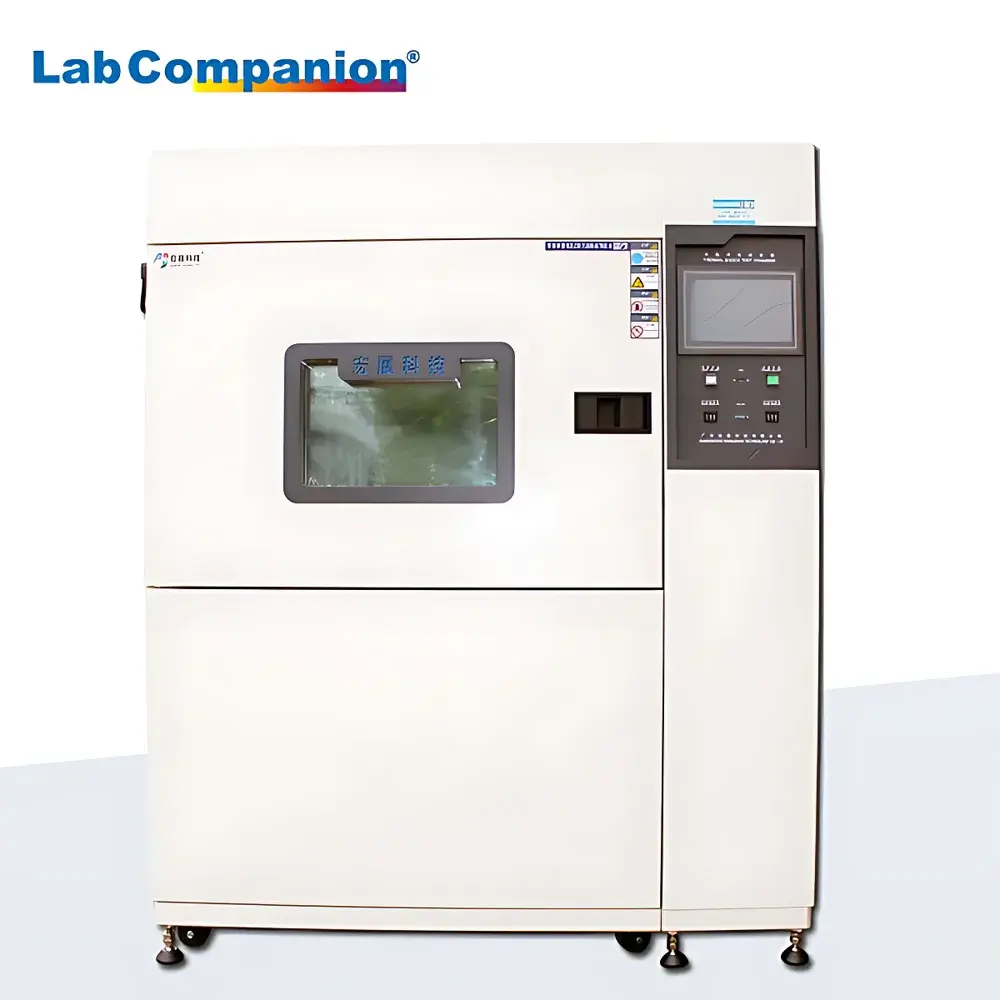
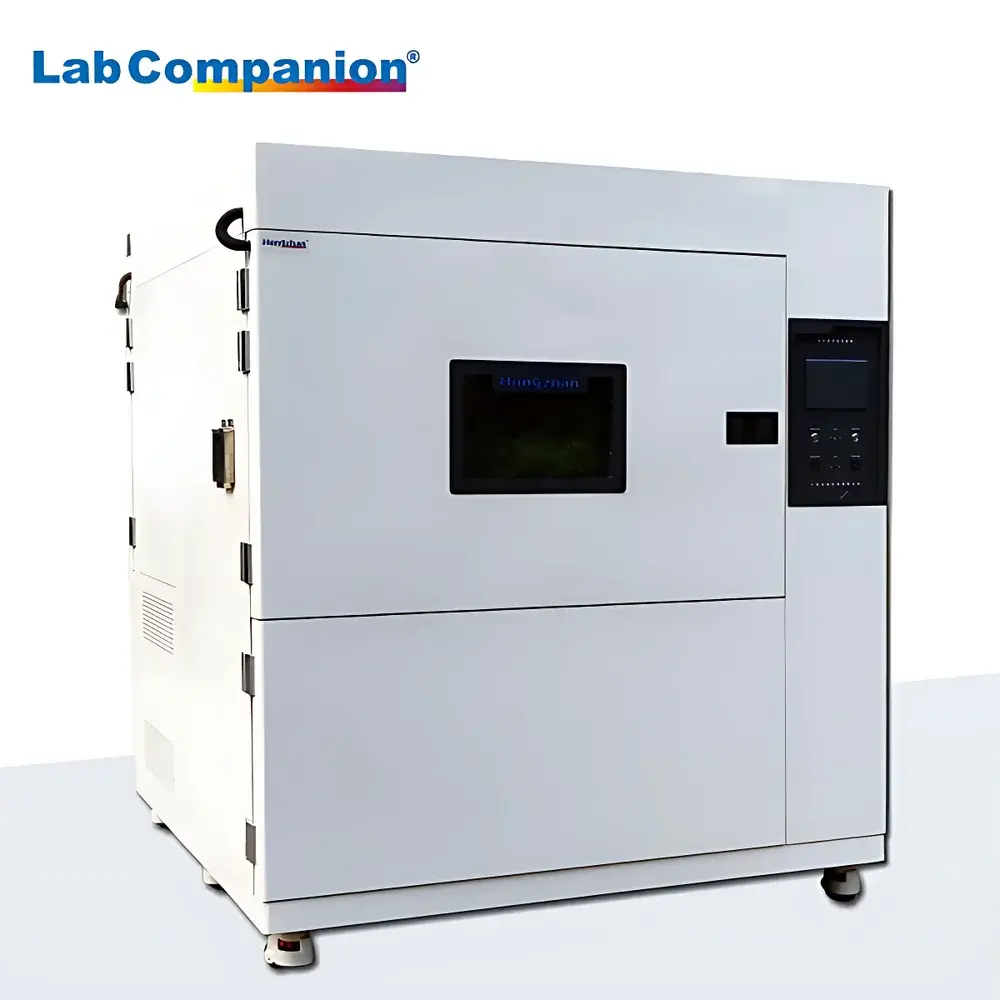
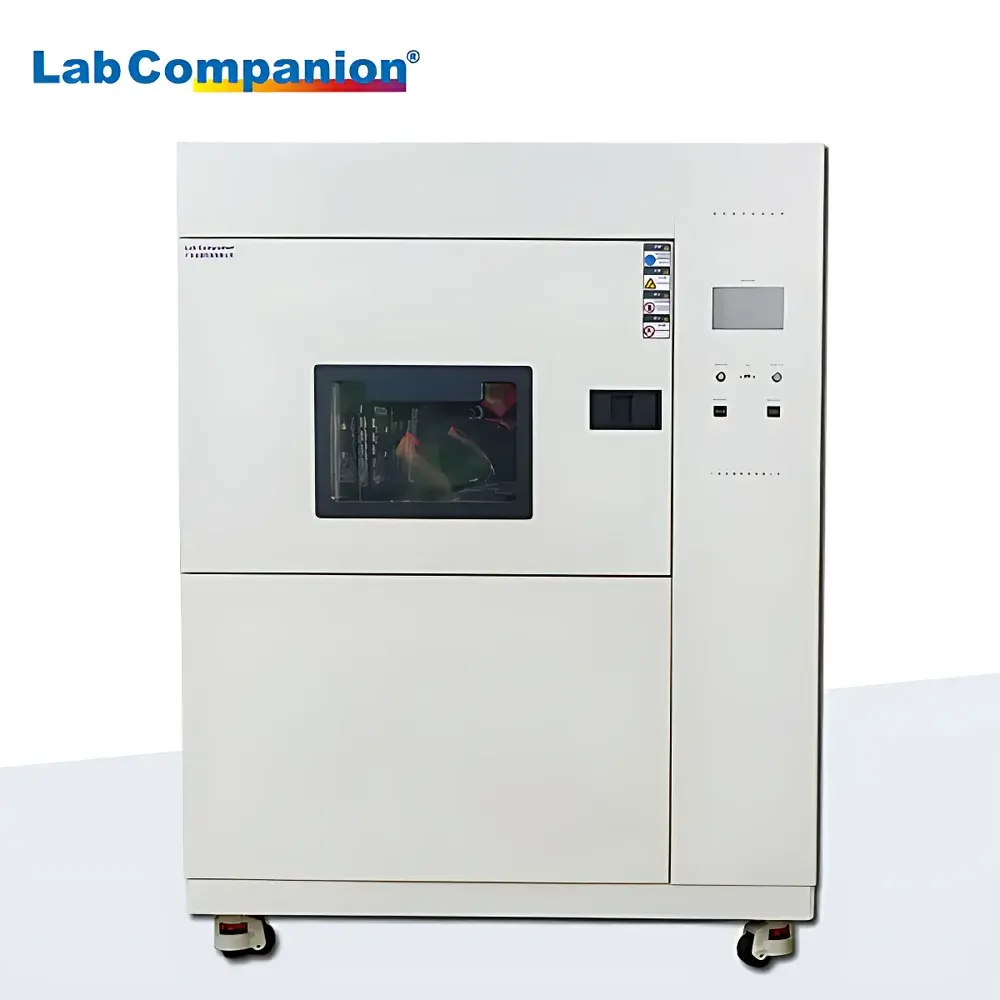
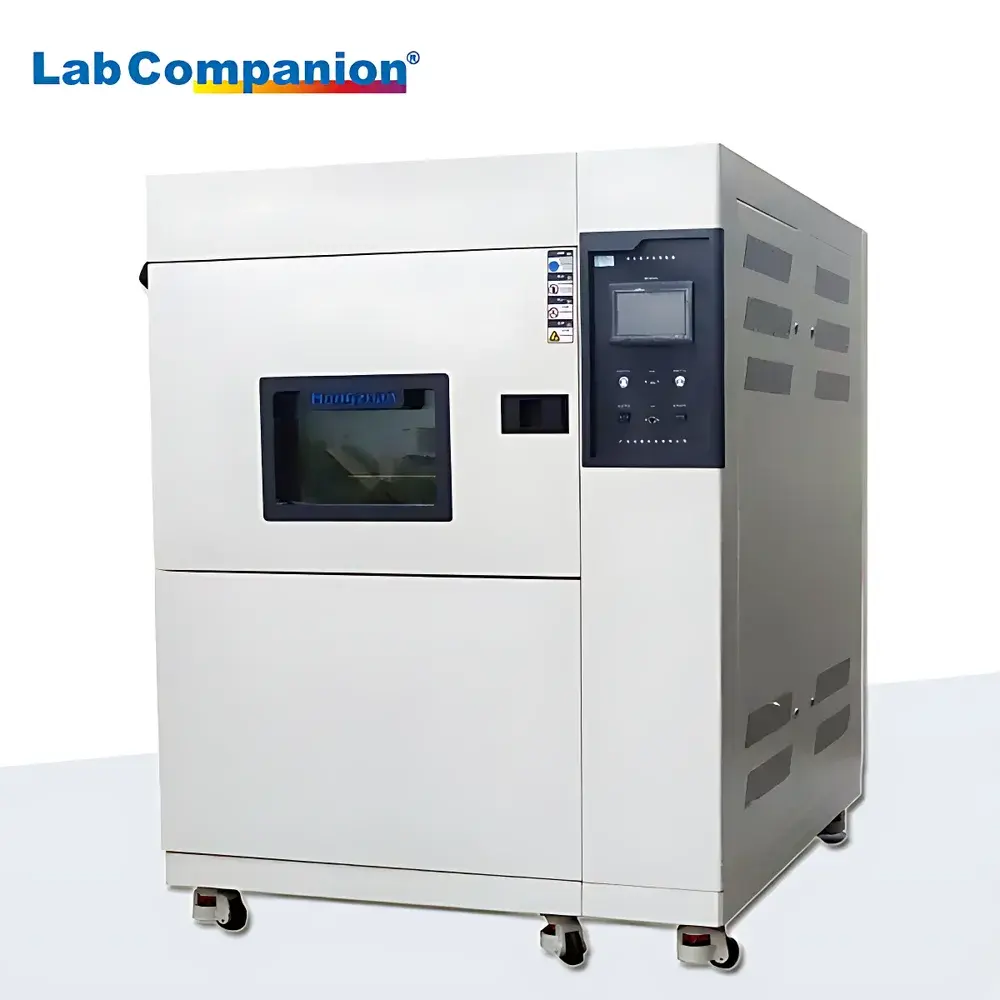
LabCompanion TSU-225W Thermal Shock Test Chamber
| Brand | LabCompanion |
|---|---|
| Origin | Guangdong, China |
| Manufacturer Type | Direct Manufacturer |
| Model | TSU-225W |
| High-Temperature Range | +60 °C to +200 °C |
| Low-Temperature Range | −78 °C to 0 °C |
| Thermal Shock Range | −55 °C to +150 °C |
| Temperature Stability | ±2 °C |
| Heating Rate | +60 °C to −200 °C ≤ 20 min |
| Cooling Rate | +20 °C to −75 °C ≤ 60 min |
Overview
The LabCompanion TSU-225W Thermal Shock Test Chamber is an engineered environmental stress screening (ESS) system designed for rapid, repeatable, and highly controlled temperature transitions between extreme thermal states. It operates on a three-zone thermal shock architecture—comprising independent high-temperature, low-temperature, and test chambers—enabling precise, programmable cycling without subjecting samples to ambient exposure during transfer. The chamber utilizes pneumatic air-flap actuation to isolate and rapidly switch the test specimen between conditioned zones, minimizing thermal lag and ensuring compliance with standardized thermal shock protocols defined in MIL-STD-810H Method 503.5, IEC 60068-2-14, and JESD22-A104. Its core function is to accelerate failure mechanisms related to coefficient-of-thermal-expansion (CTE) mismatch, interfacial delamination, solder joint fatigue, and material embrittlement in electronic components, PCB assemblies, automotive sensors, aerospace avionics, and advanced packaging substrates.
Key Features
- Three-chamber configuration with independently controlled high-temperature (+60 °C to +200 °C) and low-temperature (−78 °C to 0 °C) reservoirs, plus a dedicated test zone
- Pneumatically actuated dual air-flap isolation system enabling sub-second chamber switching and <5-minute temperature recovery time (per IEC 60068-2-14 Annex B)
- Thermal shock operating range of −55 °C to +150 °C, validated under load with standard plastic-encapsulated IC test specimens
- Temperature stability maintained at ±2 °C across the full operational envelope, verified via calibrated PT100 sensor arrays and PID-controlled SSR-driven heating/cooling circuits
- Robust stainless-steel interior (SUS304), insulated with high-density polyurethane foam (≥150 mm thickness), and equipped with double-glazed observation window with anti-fog coating
- Integrated safety interlocks including over-temperature cutoff, refrigerant pressure monitoring, door open detection, and emergency stop circuit per EN 61000-6-2/6-4
Sample Compatibility & Compliance
The TSU-225W accommodates specimens up to 7.5 kg mass and 30 kg static load on its adjustable stainless-steel test shelf. Internal dimensions (W×H×D) measure 750 × 500 × 600 mm, supporting common JEDEC trays, 19-inch rack-mount modules, and multi-layer PCB stacks. All thermal profiles are traceable to NIST-traceable reference sensors and support GLP/GMP-aligned validation documentation packages—including IQ/OQ/PQ protocols, calibration certificates (ISO/IEC 17025 accredited), and deviation reporting logs. The system meets requirements for qualification testing under AEC-Q200, IPC-9701A, and USP for accelerated aging of medical device enclosures.
Software & Data Management
Equipped with LabCompanion’s TC-Studio v4.2 control software, the TSU-225W provides real-time multi-channel temperature logging (up to 16 external thermocouple inputs), customizable ramp-soak-cycle programming, and automated report generation in PDF/CSV formats. Audit trails record all parameter changes, user logins, and alarm events with timestamped digital signatures—fully compliant with FDA 21 CFR Part 11 for electronic records and signatures. Data export supports integration with LIMS platforms via OPC UA or Modbus TCP, and firmware updates are delivered through secure HTTPS-based OTA channels with SHA-256 signature verification.
Applications
- Qualification and reliability screening of semiconductor packages (QFN, BGA, CSP), MEMS devices, and optoelectronic modules
- Validation of conformal coatings, potting compounds, and thermal interface materials under cyclic thermal stress
- Failure analysis support for automotive ECUs subjected to under-hood thermal transients (SAE J2223)
- Material compatibility testing of polymer composites, battery cell housings, and aerospace-grade adhesives
- Process capability assessment of reflow soldering lines and wafer-level packaging processes
FAQ
What is the minimum dwell time per temperature zone?
Dwell time is fully programmable from 1 minute to 999 hours per segment; default qualification cycles use ≥10 minutes per zone as specified in JEDEC JESD22-A104.
Does the system support humidity control?
No—the TSU-225W is a dry thermal shock chamber; for combined temperature/humidity stress, refer to LabCompanion’s THU-series Environmental Chambers.
Can the chamber be integrated into an automated test line?
Yes—RS-485, Ethernet (TCP/IP), and dry-contact I/O interfaces enable seamless integration with PLC-based MES systems and robotic handlers.
Is liquid nitrogen required for low-temperature operation?
No—the TSU-225W employs a cascade refrigeration system with R404A/R23 mixed-refrigerant stages, eliminating dependency on consumable cryogens.
What calibration standards does the chamber comply with?
Factory calibration follows ISO/IEC 17025 procedures using Fluke 1524 readers and Hart 1590B PRT standards; on-site recalibration kits and third-party certification services are available.



