
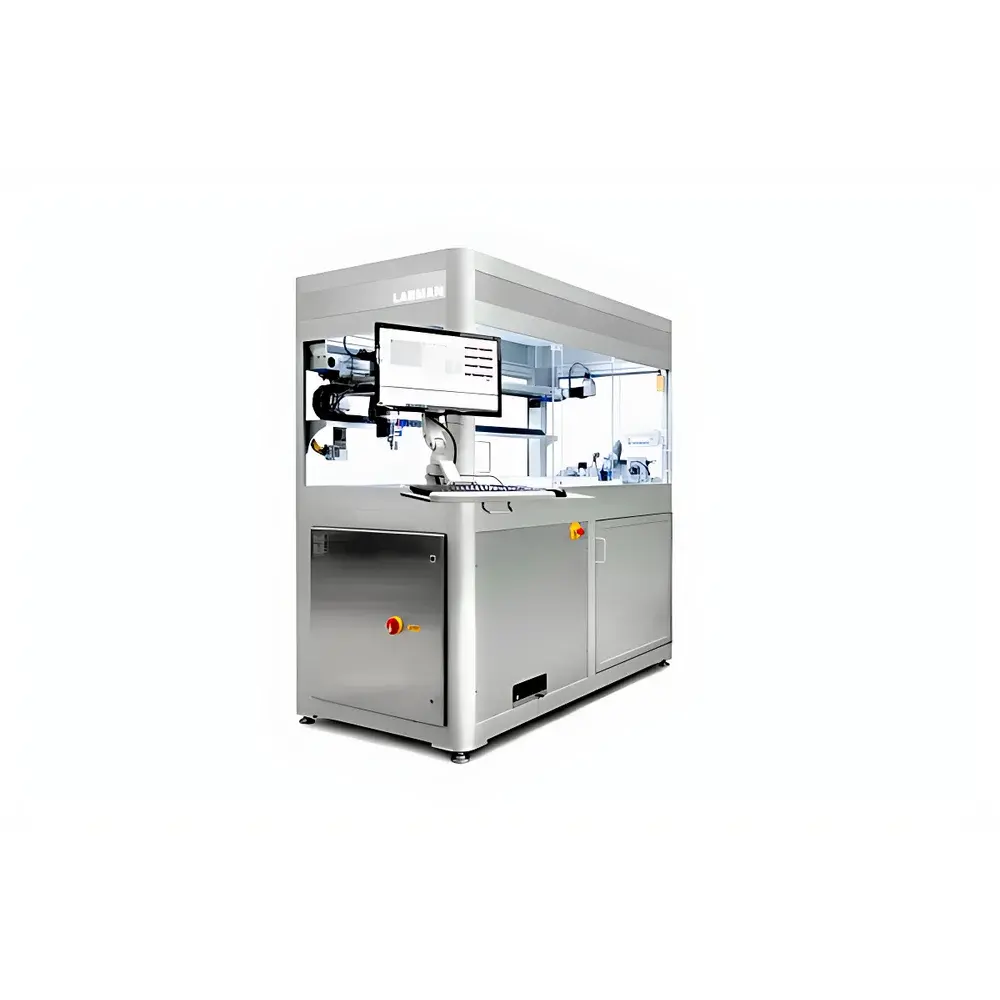
Labman Plant Sample Grinding and Weighing System
| Brand | Labman |
|---|---|
| Origin | United Kingdom |
| Manufacturer Type | Authorized Distributor |
| Country of Origin | Imported |
| Model | Plant Sample Grinding and Weighing System |
| Price Range | USD 260,000 – 390,000 |
Overview
The Labman Plant Sample Grinding and Weighing System is a fully automated, benchtop-scale sample preparation workstation engineered for high-precision mechanical disruption and gravimetric dispensing of botanical matrices. It operates on the principle of cryo-free vibrational ball milling—eliminating thermal degradation risks associated with conventional cryogenic grinding—followed by controlled gravitational transfer and micro-weighing under ambient laboratory conditions. Designed specifically for plant tissues (e.g., leaves, stems, seeds, roots, and dried herbs), the system integrates mechanical comminution, container actuation (cap piercing), mass-controlled powder transfer, and traceable gravimetric quantification into a single coordinated sequence. Its architecture adheres to ISO/IEC 17025-aligned metrological traceability principles for weighing operations and supports GLP-compliant workflow documentation when integrated with validated software environments.
Key Features
- Vibrational ball milling module with programmable amplitude, frequency, and duration—optimized for fibrous, waxy, or lignified plant material without liquid nitrogen or refrigerated enclosures.
- Integrated analytical balance with 0.1 mg readability (100 µg resolution) and internal calibration traceable to NIST standards; full audit trail of weight events including tare, gross, net, and deviation logs.
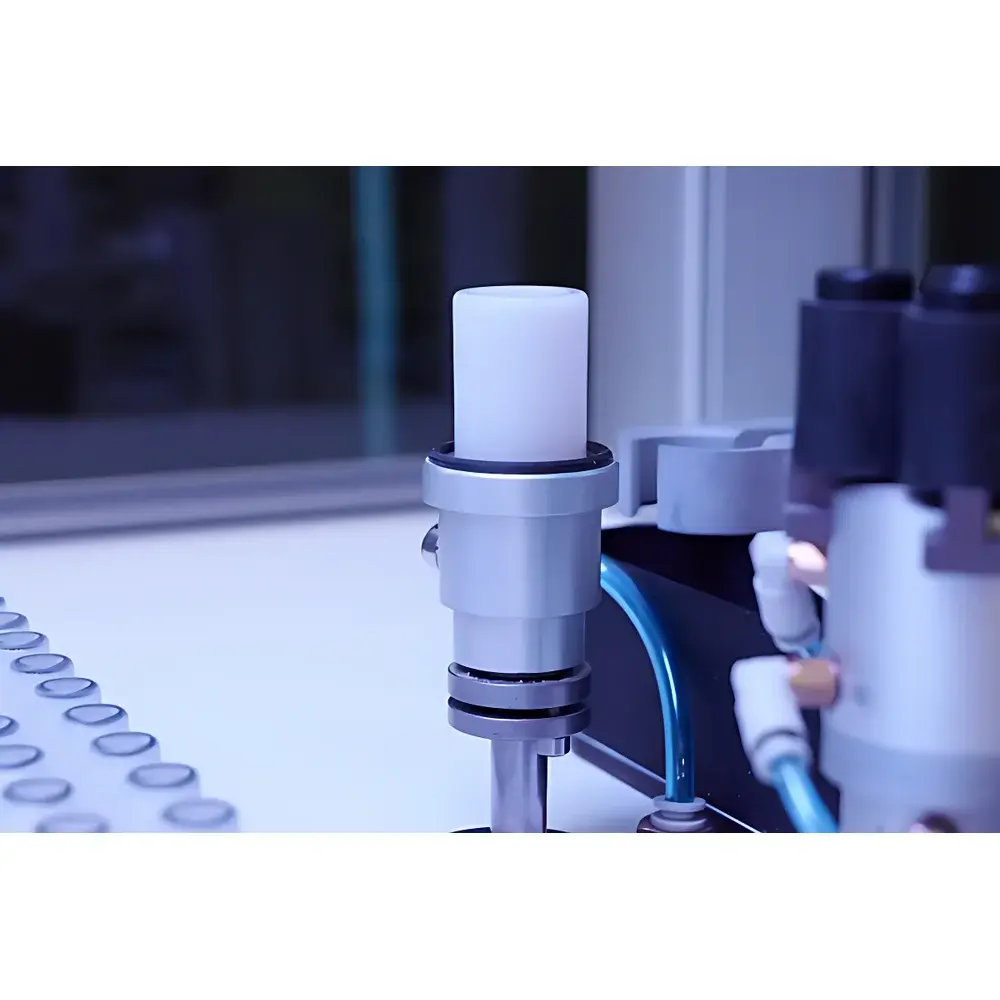
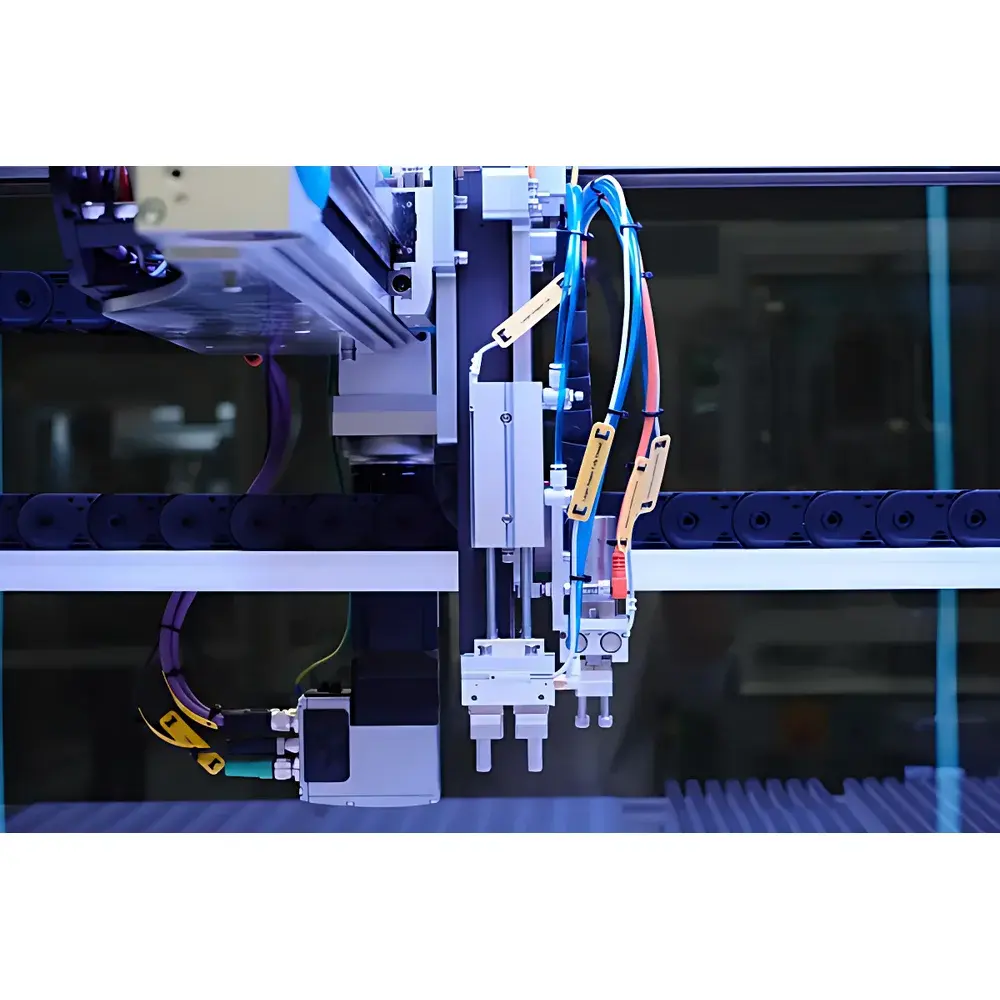
- Automated cap-piercing mechanism for 2 mL and 20 mL screw-cap vials—compatible with standard polypropylene and glass autosampler tubes per ASTM D4327 and ISO 17034 requirements.
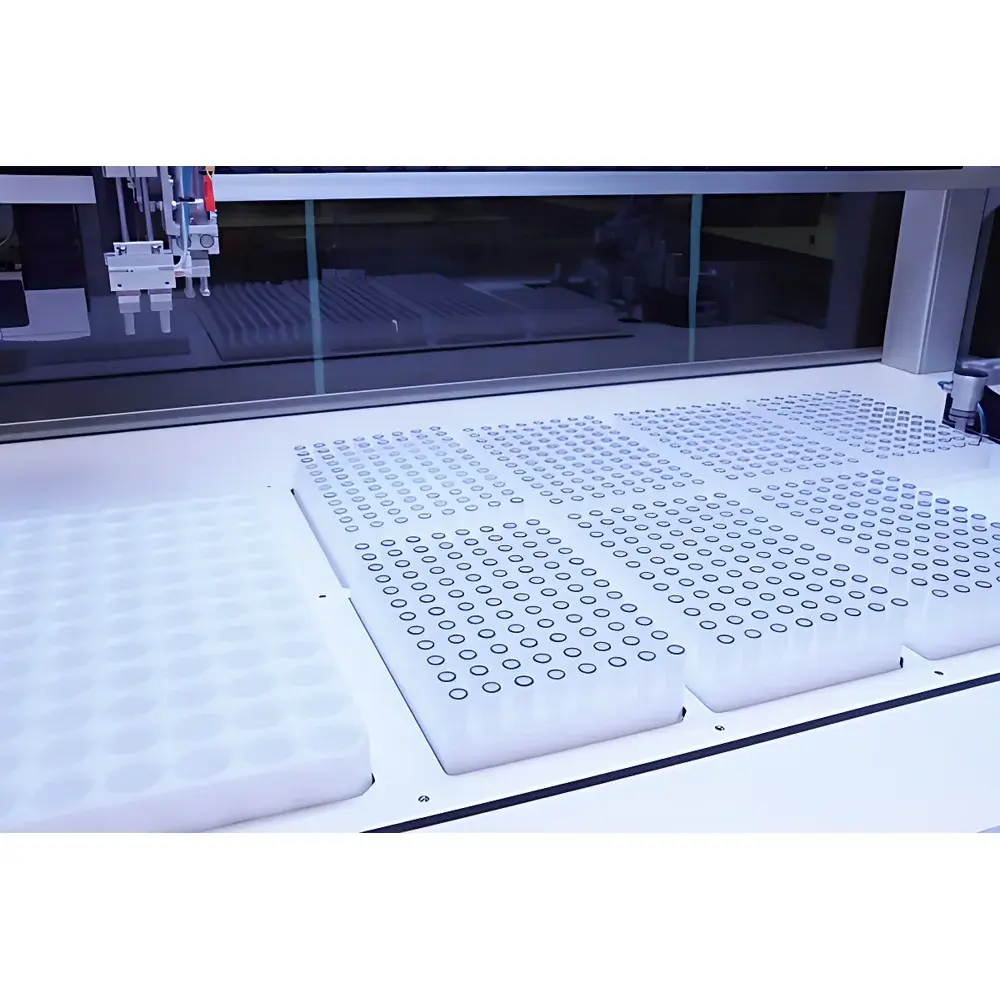
- Modular output tube handling: accommodates 0.5–2.0 mL microcentrifuge tubes, 96-well deep-well plates, or custom receptacles; position-controlled dispensing via gravity-assisted vibration—not pneumatic or screw-driven—to preserve particle integrity.
- Throughput of up to 576 samples per 24-hour cycle, adjustable based on sample density, moisture content, and target mass (range: 1–100 mg per dispense, ±0.5 mg tolerance at 10 mg nominal).
- Programmable dispensing logic: supports multi-step sequences (e.g., split aliquots, staggered transfers, conditional weighing retries), configurable via Labman’s proprietary automation control interface.
Sample Compatibility & Compliance
The system accepts fresh, frozen, lyophilized, or air-dried plant tissues—including high-cellulose grasses, resinous conifer needles, oily seeds (e.g., soybean, rapeseed), and silica-rich samples (e.g., rice husks). Input vial formats include 2 mL microtubes (with O-ring seals) and 20 mL wide-mouth vials—both compliant with ICH Q5C stability storage guidelines. All wetted components are constructed from USP Class VI-certified polymers or electropolished 316L stainless steel. The platform conforms to CE Machinery Directive 2006/42/EC, EMC Directive 2014/30/EU, and carries UKCA marking. Optional IQ/OQ documentation packages support FDA 21 CFR Part 11 compliance for regulated laboratories in pharmaceutical and agricultural biotechnology sectors.
Software & Data Management
Controlled via Labman’s LAMS (Labman Automation Management System) v5.x—a Windows-based, role-based interface supporting method creation, run scheduling, real-time status monitoring, and electronic lab notebook (ELN) integration. All weighing data, motor actuation timestamps, vial ID scans (via optional 2D barcode reader), and error flags are logged in SQLite databases with SHA-256 hash integrity verification. Export formats include CSV, XML, and ASTM E1384-compliant SDF for LIMS ingestion. Audit trails meet ALCOA+ criteria (Attributable, Legible, Contemporaneous, Original, Accurate, Complete, Consistent, Enduring, Available) and are exportable as PDF/A-2b for regulatory submission.
Applications
- Pre-analytical preparation for LC-MS/MS metabolomics profiling of secondary plant compounds (e.g., flavonoids, alkaloids, terpenes).
- Homogenization and dosing of botanical reference materials for ISO/IEC 17034-certified CRM production.
- High-throughput extraction workflow initiation in agrochemical residue analysis (AOAC 2007.01, EN 15662).
- Standardized biomass input for enzymatic digestibility assays in lignocellulosic biofuel research.
- Automated sample splitting for parallel analysis across GC-FID, ICP-MS, and NIR spectroscopy platforms.
- GLP-compliant seed quality testing per ISTA Rule 5B (moisture, viability, purity).
FAQ
Does the system require cryogenic cooling during grinding?
No—mechanical energy input is optimized via resonant-frequency vibration and tungsten carbide grinding media to achieve sub-100 µm particle size distributions without freezing.
Can the system handle high-moisture samples such as fresh leaves?
Yes; optional pre-drying modules (low-temperature vacuum desiccation) can be integrated upstream, or samples may be flash-frozen and milled immediately post-thaw to minimize enzymatic degradation.
Is method validation support available?
Labman provides application-specific validation protocols—including precision (repeatability, intermediate precision), accuracy (spike recovery), and robustness (parameter sensitivity)—aligned with ICH Q2(R2) guidance.
What maintenance intervals are recommended?
Vibration motor bearings: 12 months or 2,000 operating hours; balance recalibration: quarterly or after relocation; grinding media replacement: every 500 cycles or upon visual wear inspection.
Can output tubes be barcoded and tracked through the entire workflow?
Yes—optional integrated 2D barcode scanner validates tube IDs pre- and post-dispensing, linking physical samples to digital metadata in LAMS and third-party LIMS.



