
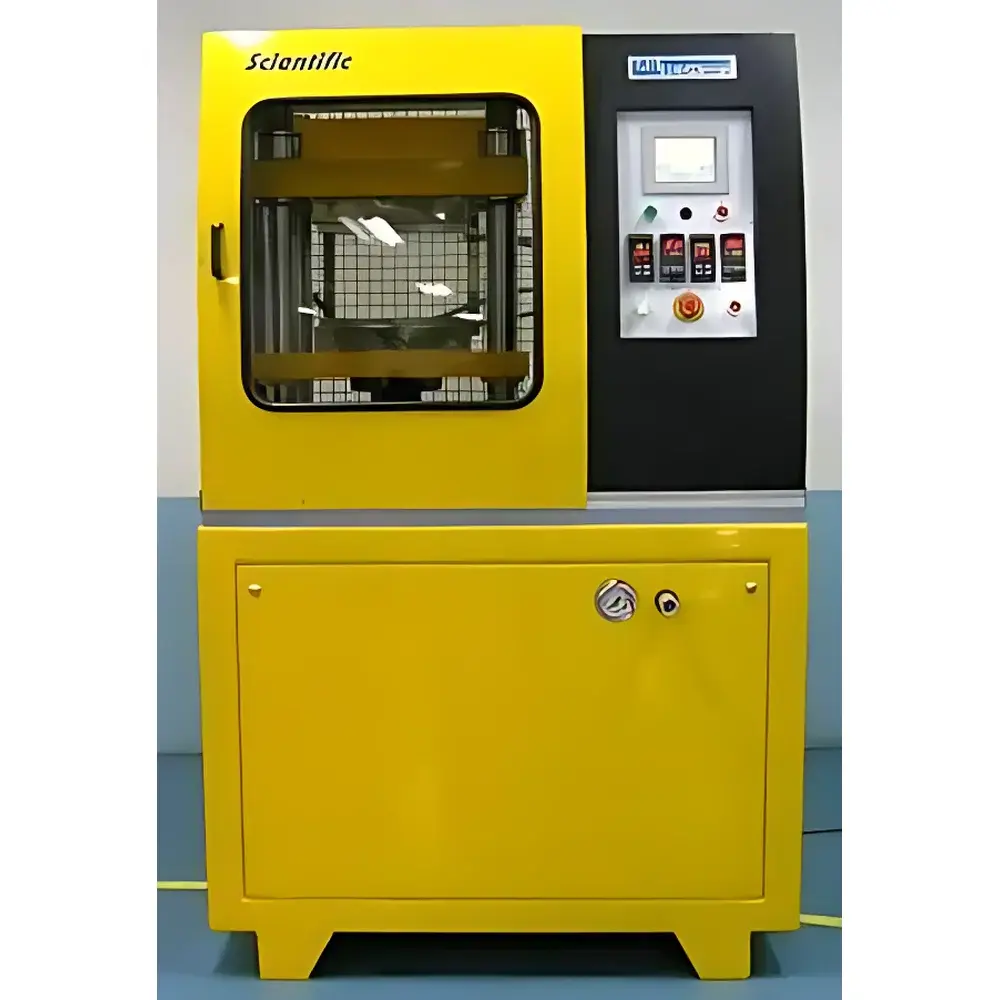
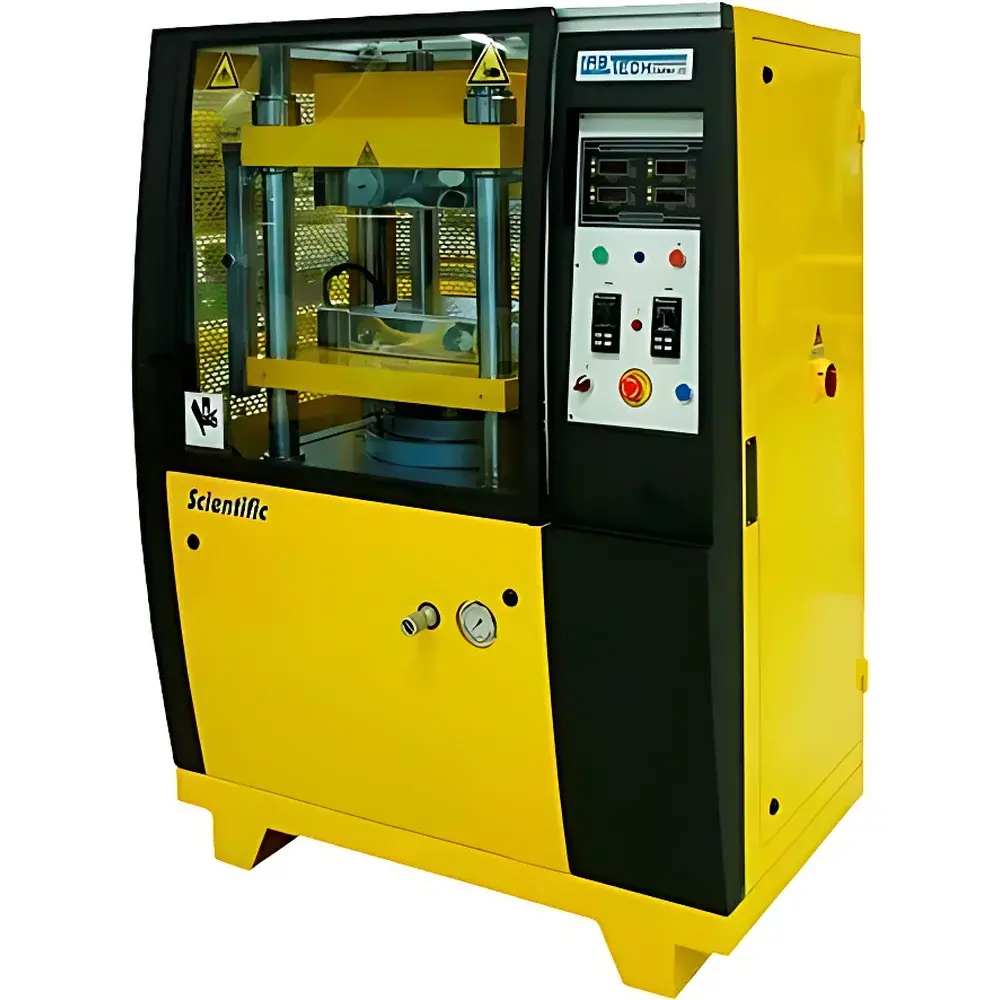
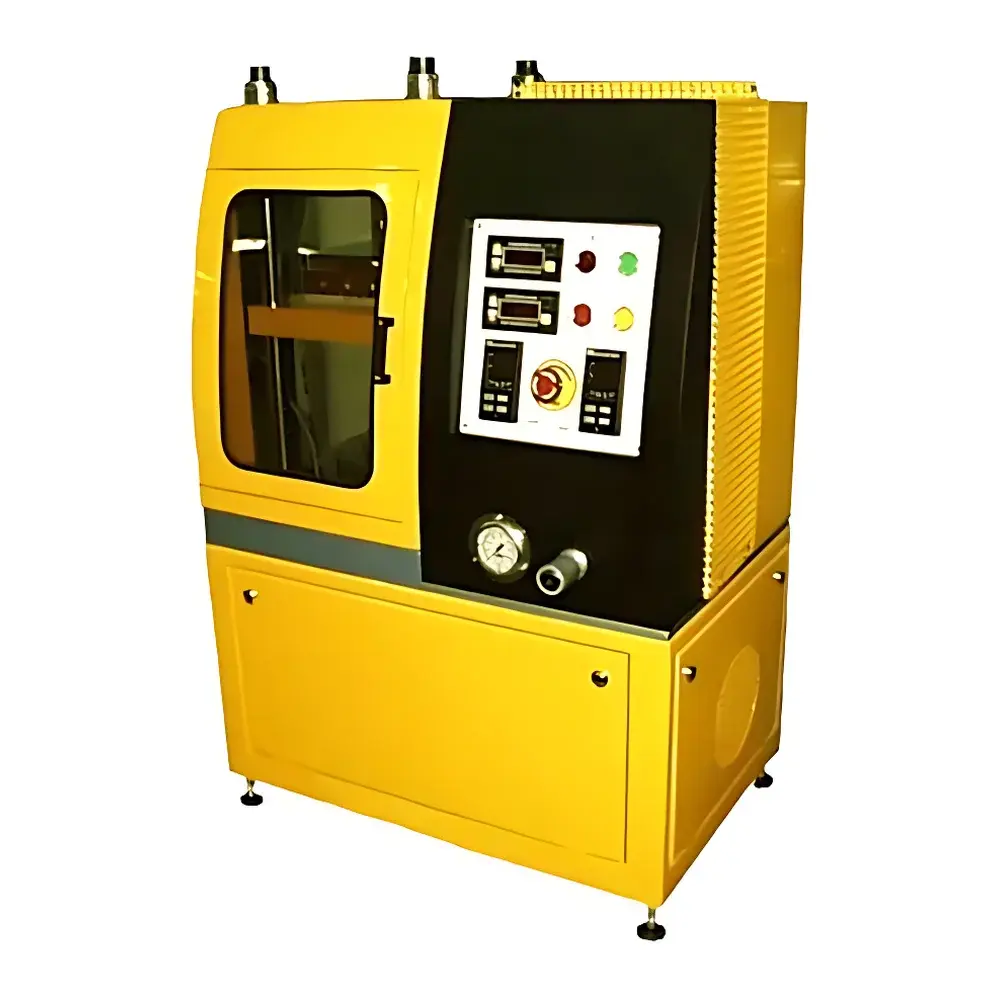
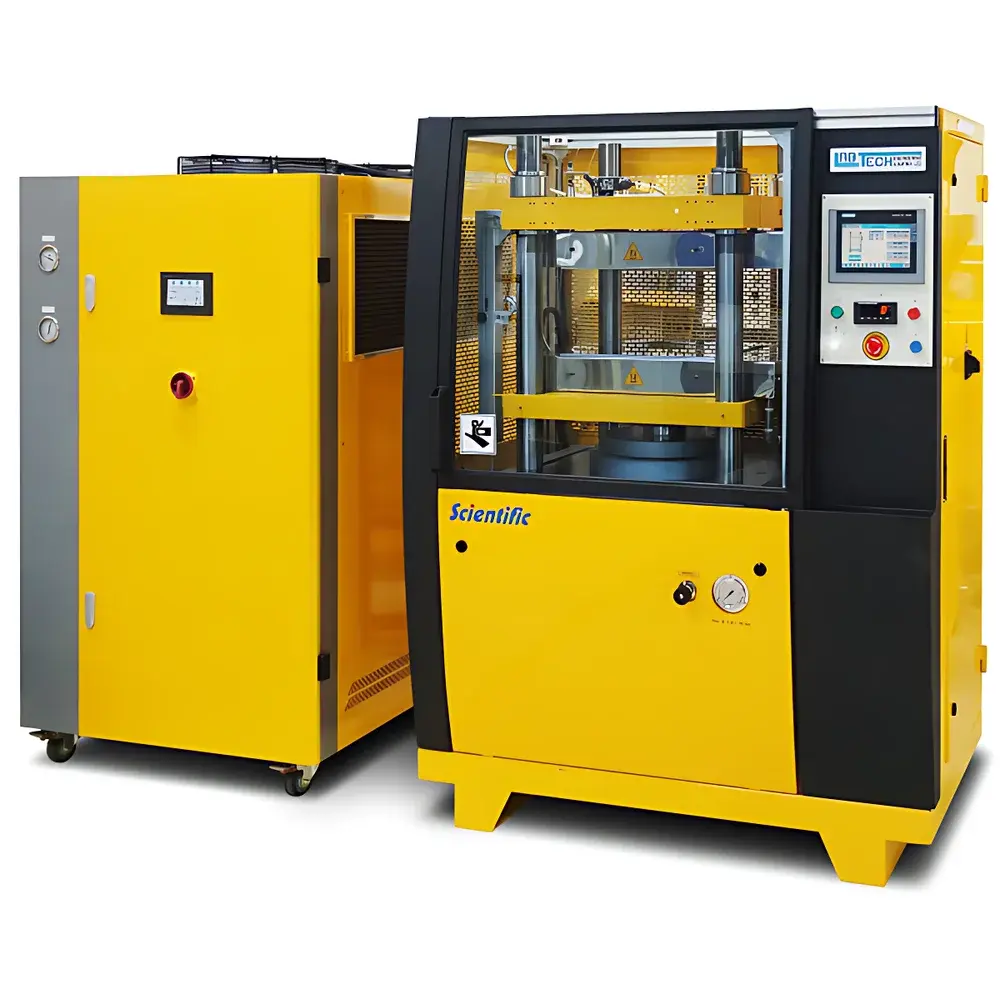
Labtech LP-S-80 Automated Hydraulic Pellet Press &平板 Vulcanizing Press
| Brand | Labtech Engineering |
|---|---|
| Origin | Imported (Non-Chinese) |
| Model | LP-S-80 |
| Type | Fully Automatic Hydraulic Pellet Press & Vulcanizing Press |
| Max. Platen Pressure | 80 MT |
| Platen Dimensions | 400 × 400 mm |
| Max. Opening Distance | 150 mm |
| Machine Footprint | 120 × 70 × 176 cm |
| Net Weight | 950 kg |
| Heating Power | 2 × 8 kW |
| Max. Platen Temperature | 300 °C |
| Temperature Control Accuracy | ±0.3 °C |
| Hydraulic Motor Power | 4.0 kW |
| Optional Configuration | Triple-Platen / Dual-Daylight System |
Overview
The Labtech LP-S-80 is a fully automated, high-capacity hydraulic press engineered for standardized sample preparation and laboratory-scale vulcanization of elastomers, thermoplastics, and polymer composites. Designed in accordance with core principles of uniaxial compression and controlled thermal consolidation, the system integrates precision hydraulics, dual-zone resistive heating, and closed-loop PID temperature regulation to deliver repeatable, traceable, and standards-compliant specimen fabrication. Its operational architecture supports both pellet pressing—commonly used for FTIR, XRF, and elemental analysis sample conditioning—and rubber vulcanization per ASTM D3182, ISO 34-1, and GB/T 16584, making it a dual-function platform for quality control laboratories in petrochemical, polymer compounding, and advanced materials R&D environments.
Key Features
- Fully automatic cycle control with programmable pressure ramping, dwell time, cooling phase, and platen separation—enabling reproducible compression profiles across batched samples.
- Robust 80-metric-ton hydraulic system with pressure transducer feedback and real-time load monitoring for compliance with ISO 7500-1 Class 1 accuracy requirements.
- Large-format 400 × 400 mm heated platens fabricated from hardened tool steel, offering uniform thermal distribution and long-term dimensional stability under cyclic thermal stress.
- Dual independent 8 kW heating circuits provide rapid thermal response and stable equilibrium at temperatures up to 300 °C, with ±0.3 °C setpoint accuracy verified per ASTM E220 calibration protocols.
- Optional triple-platen/dual-daylight configuration allows simultaneous curing of multiple specimens or staged vulcanization protocols—ideal for comparative studies and formulation screening.
- Modular thermal management: configurable for electric resistance heating only, or integrated with external steam or thermal oil circulation systems for specialized process compatibility.
Sample Compatibility & Compliance
The LP-S-80 accommodates a broad spectrum of polymeric and composite feedstocks—including natural and synthetic rubbers (SBR, EPDM, NBR), thermoplastic elastomers (TPEs), masterbatches, filled compounds, and powdered resins—without degradation or flow instability under controlled compression. All operational parameters are documented and exportable to support GLP/GMP audit readiness. The system meets mechanical and thermal safety requirements per CE Machinery Directive 2006/42/EC and complies with essential clauses of ASTM D3182 (Standard Practice for Rubber—Vulcanized—Preparation of Test Pieces), ISO 34-1 (Rubber, vulcanized or thermoplastic—Determination of tear strength), and GB/T 16584 (Rubber—Vulcanized—Determination of tensile stress–strain properties). Pressure and temperature logs are timestamped and retain full traceability for regulatory submissions.
Software & Data Management
Equipped with Labtech’s proprietary L-PressControl™ firmware, the LP-S-80 provides intuitive touchscreen HMI navigation, multi-step recipe storage (up to 99 programs), and real-time graphical display of pressure vs. time and temperature vs. time curves. All cycle data—including actual platen force, surface temperature gradients, dwell duration, and hydraulic system status—are automatically logged in CSV format with UTC timestamps. Audit trail functionality supports 21 CFR Part 11 compliance when deployed with networked authentication and electronic signature modules. Data export is compatible with LIMS integration via RS-485 Modbus RTU or optional Ethernet/IP interface.
Applications
- Preparation of homogeneous, void-free pellets for spectroscopic analysis (FTIR, XRF, NIR) and elemental quantification.
- Standardized vulcanization of rubber test specimens for tensile, hardness, compression set, and tear resistance evaluation.
- Processing of color concentrate and additive masterbatches prior to rheological or extrusion testing.
- Thermoforming of polymer blends and filled composites for mechanical property benchmarking under controlled P-T-t conditions.
- Accelerated aging studies requiring precise thermal compression cycles aligned with OEM material specifications.
FAQ
What standards does the LP-S-80 support for rubber vulcanization?
ASTM D3182, ISO 34-1, ISO 6502, and GB/T 16584 define the procedural and dimensional requirements met by this press.
Can the system be validated for GMP environments?
Yes—when configured with electronic signature capability, audit trail logging, and IQ/OQ documentation packages, it supports FDA-regulated QC labs.
Is remote monitoring or integration with lab automation systems possible?
Standard RS-485 Modbus RTU enables SCADA connectivity; optional Ethernet/IP or OPC UA gateways are available for enterprise-level integration.
What maintenance intervals are recommended for hydraulic and heating subsystems?
Hydraulic oil analysis every 1,500 operating hours; heater element resistance verification annually; platen surface flatness inspection per ISO 10791-7 every 2 years.
Does Labtech provide installation qualification (IQ) and operational qualification (OQ) services?
Yes—factory-trained application engineers offer on-site IQ/OQ execution with certified calibration certificates traceable to NIST and PTB standards.



