
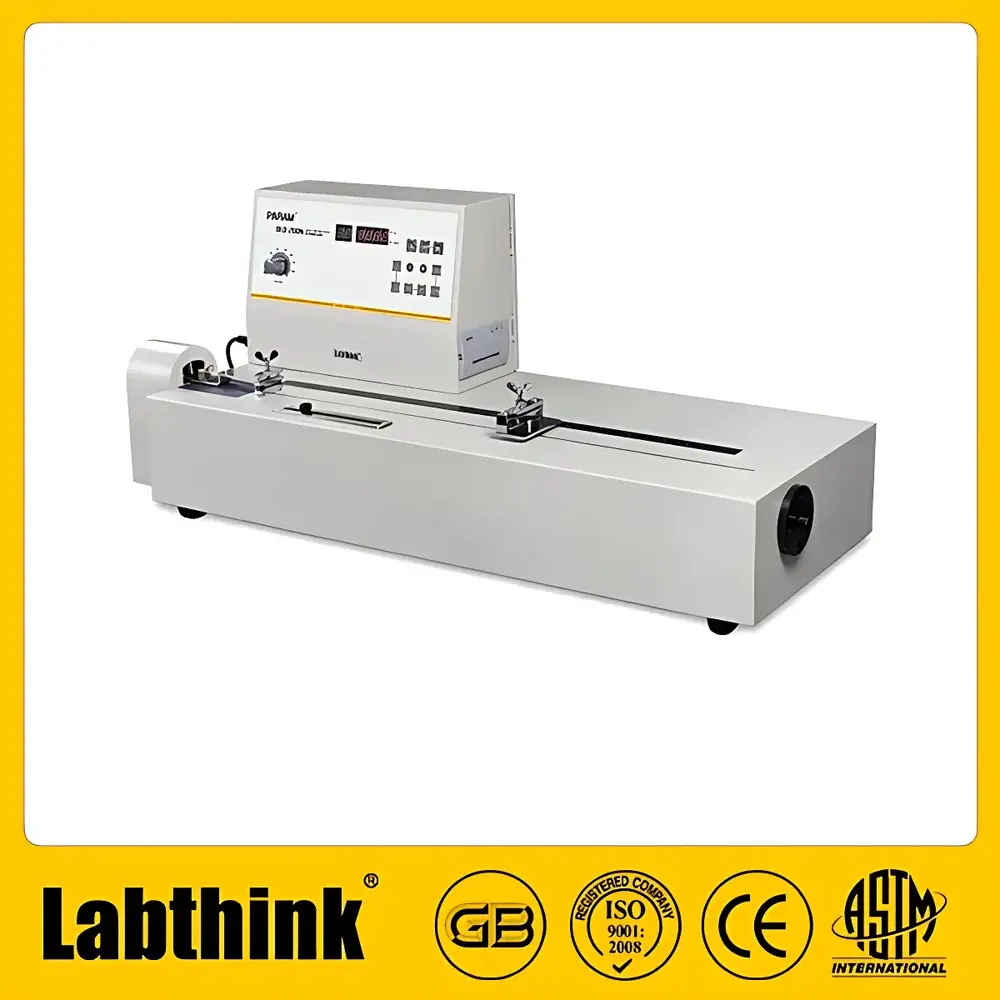
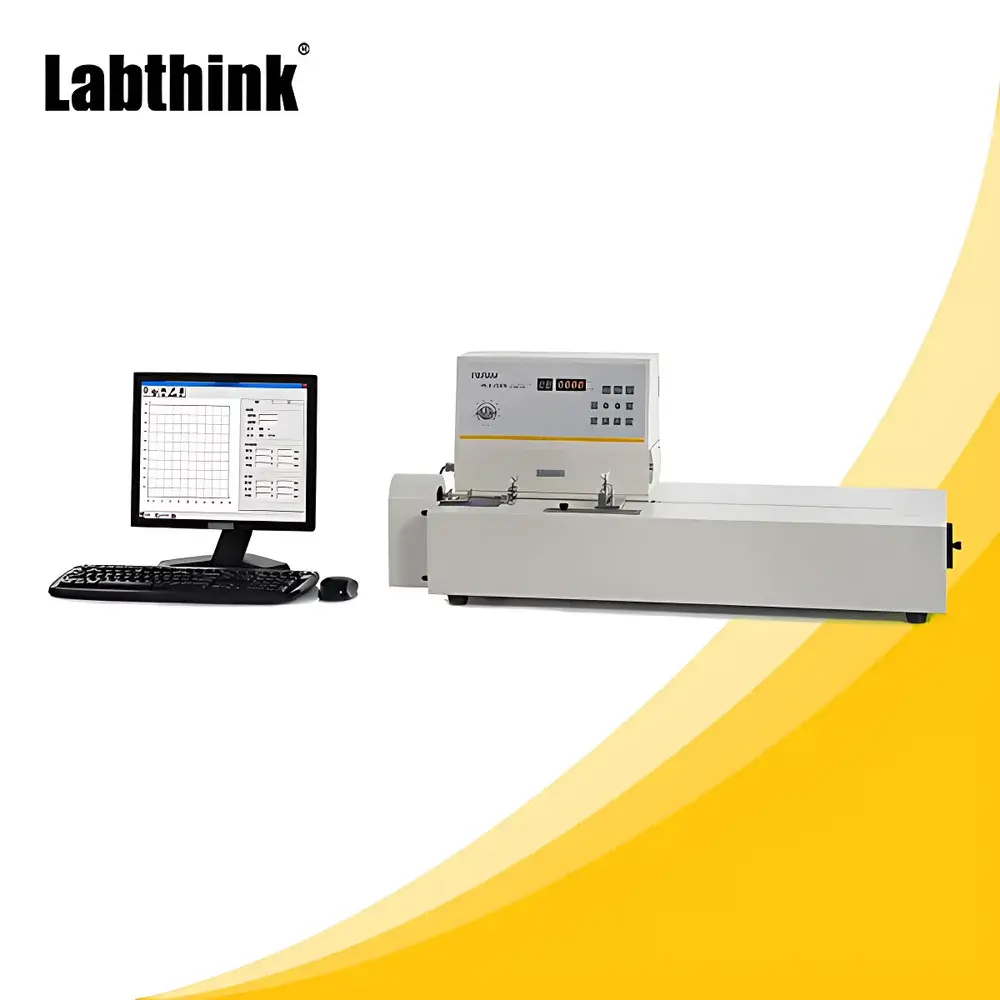
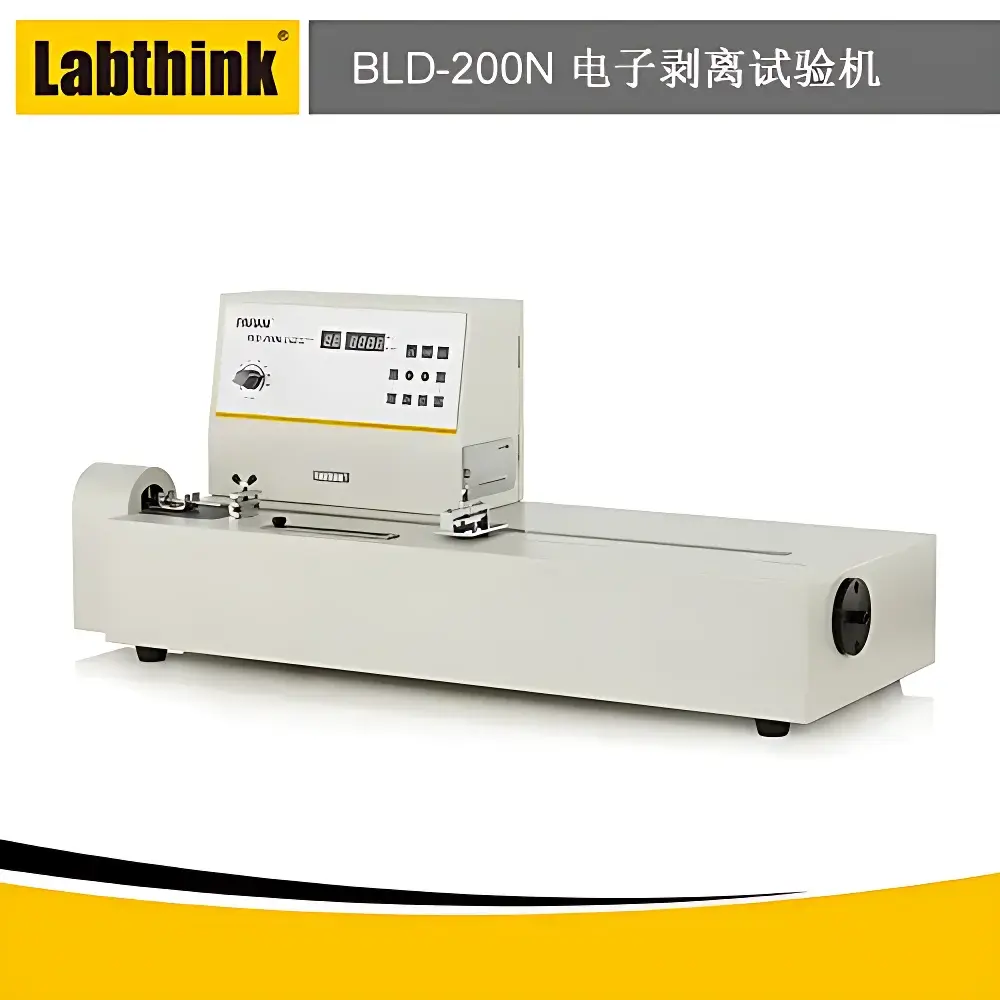
Labthink BLD-200N 180-Degree Adhesive Tape Peel Strength Tester
| Brand | Labthink |
|---|---|
| Origin | Jinan, Shandong, China |
| Manufacturer Type | Direct Manufacturer |
| Country of Origin | China |
| Model | BLD-200N |
| Instrument Category | Electronic Tensile Testing Machine |
| Load Accuracy Class | Class 1 |
| Maximum Load Capacity | 0–200 N (optional ranges: 30 N, 50 N, 100 N) |
| Resolution | 0.01 N |
| Test Speed Options | 50, 100, 150, 200, 250, 300, 500 mm/min |
| Specimen Width Limit | ≤30 mm |
| Travel Distance | 500 mm |
| Power Supply | AC 220 V, 50 Hz |
| Dimensions (L×W×H) | 1000 × 370 × 400 mm |
Overview
The Labthink BLD-200N 180-Degree Adhesive Tape Peel Strength Tester is a dedicated electromechanical testing system engineered for quantitative evaluation of interfacial adhesion performance under standardized 180° peel geometry. It operates on the principle of controlled unidirectional tensile separation between a flexible backing (e.g., tape or film) and a rigid or semi-rigid substrate (e.g., stainless steel, glass, or polymer-coated panel), in accordance with established mechanical test methodologies defined in ISO 8510-2, ASTM D3330, and GB/T 2792. Unlike general-purpose universal testers, the BLD-200N integrates purpose-built kinematics, load train calibration traceability, and specimen alignment fixtures optimized specifically for low-force, high-reproducibility peel measurements—critical for quality control in pressure-sensitive adhesive (PSA) manufacturing, medical transdermal patch development, protective film validation, and packaging integrity assurance.
Key Features
- Microprocessor-controlled actuation system with LED digital display and tactile PVC membrane keypad for intuitive operation and real-time force/displacement monitoring
- Dual-mode capability: configurable for both 180° peel testing and uniaxial tensile testing (e.g., film strength, elongation at break) via interchangeable grips and software-defined test profiles
- Seven preset crosshead speeds (50–500 mm/min), enabling compliance with multiple international standards requiring specific peeling velocities
- Class 1 load accuracy per ISO 7500-1, with 0.01 N resolution across the full 0–200 N range; optional lower-capacity transducers (30 N, 50 N, 100 N) available for enhanced sensitivity in low-adhesion applications
- Integrated safety architecture including mechanical end-stop limit switches, electronic overload protection, automatic zero-reset, and diagnostic error messaging
- Onboard statistical engine calculating max/min/mean peel force per test cycle, plus group-level summary statistics (n ≥ 3) for process capability assessment (Cp/Cpk)
- Equipped with precision vernier scale for manual verification of specimen elongation and peel front progression
Sample Compatibility & Compliance
The BLD-200N accommodates specimens up to 30 mm wide and 500 mm travel length, supporting standardized test strips per GB/T 2792, ASTM D903, and ISO 29862. Compatible substrates include polished stainless steel (as specified in ASTM D3330), anodized aluminum, PET-coated boards, and medical-grade silicone release liners. The instrument meets mechanical verification requirements of JJG 475 and supports audit-ready documentation for GLP and GMP environments. Its design aligns with essential clauses of ISO/IEC 17025 for testing laboratory competence, particularly in measurement uncertainty estimation for peel force reporting.
Software & Data Management
The system supports native RS232 serial communication for direct connection to PCs running Windows-based data acquisition software. Optional integration with Lystem™ Laboratory Data Sharing System enables centralized storage, version-controlled report generation (PDF/Excel), user access tiering, and electronic signature workflows compliant with FDA 21 CFR Part 11 Annex 11 requirements. All test records—including raw force-time curves, peak load annotations, and environmental metadata (operator ID, date/time stamp, calibration status)—are time-stamped and cryptographically logged to prevent post-hoc modification.
Applications
- Quantification of peel adhesion of acrylic, rubber-based, and silicone PSAs used in labeling, masking, and electronic component bonding
- Release liner characterization for pharmaceutical blister packaging and transdermal drug delivery systems
- Quality conformance testing of protective films for LCD panels, automotive trim, and architectural glass
- Comparative evaluation of aging effects (thermal, UV, humidity) on adhesive bond durability
- Validation of surface treatment efficacy (corona, plasma, flame) on polyolefin films prior to coating or lamination
- Supporting R&D activities in ISO 10993-5 cytotoxicity screening where adhesive residue quantification informs biocompatibility assessments
FAQ
What standards does the BLD-200N support for 180° peel testing?
It fully implements GB/T 2792, GB/T 4850, ASTM D3330, ISO 8510-2, and ISO 29862, with mechanical configuration and speed options matching each standard’s procedural requirements.
Can the instrument be calibrated to national metrological standards?
Yes—load cell calibration is traceable to CNAS-accredited reference standards (e.g., NIM primary force standards), and users receive a calibration certificate with uncertainty budget per ISO/IEC 17025.
Is it possible to export raw data for third-party statistical analysis?
All force-displacement datasets are exportable in CSV format via RS232 or USB-to-serial adapter; timestamps and unit metadata are preserved for Minitab, JMP, or Python pandas ingestion.
Does the system support multi-user permission levels?
When deployed with Lystem™, role-based access control (RBAC) enforces separation of duties—operators run tests, supervisors approve reports, and QA managers audit logs—all within a single auditable environment.
How is specimen alignment ensured during peel testing?
The fixture includes adjustable clamping jaws with parallelism tolerance <0.05 mm/m and a fixed-angle peel guide block ensuring consistent 180° peel geometry throughout the 500 mm stroke.



