
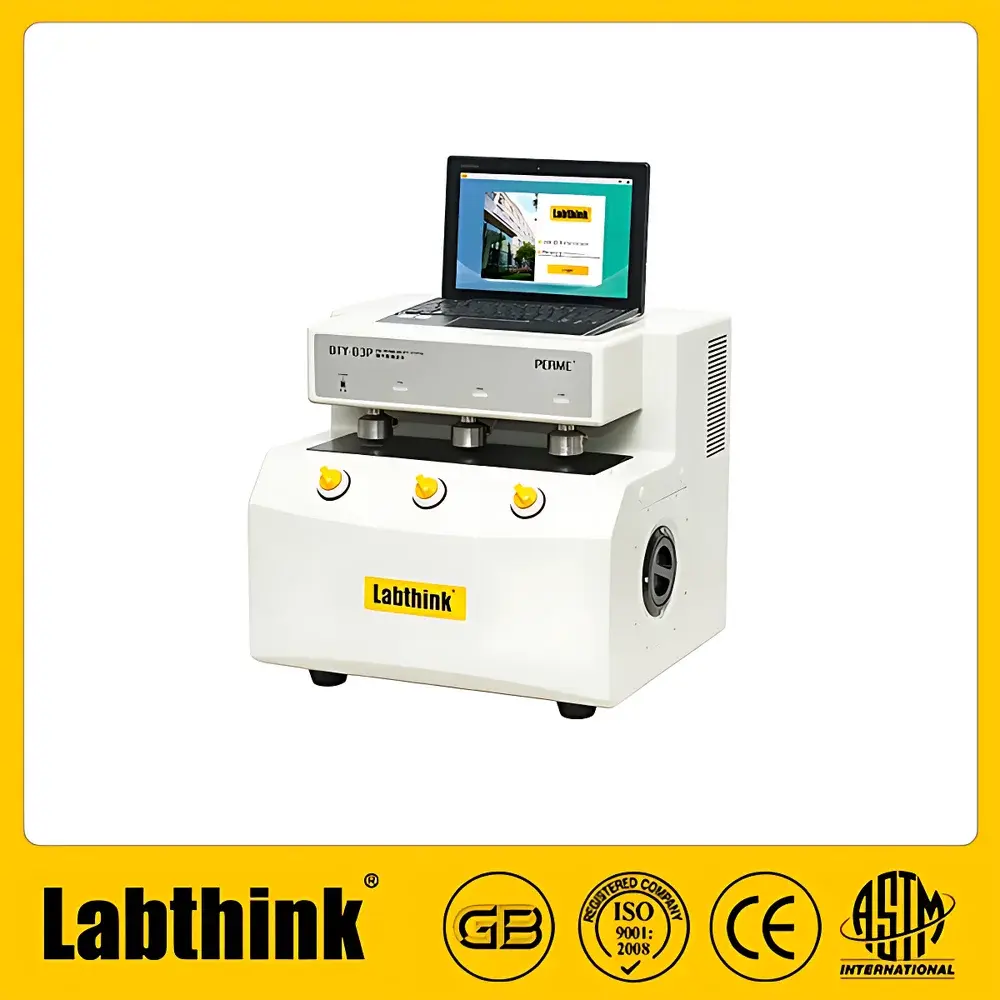
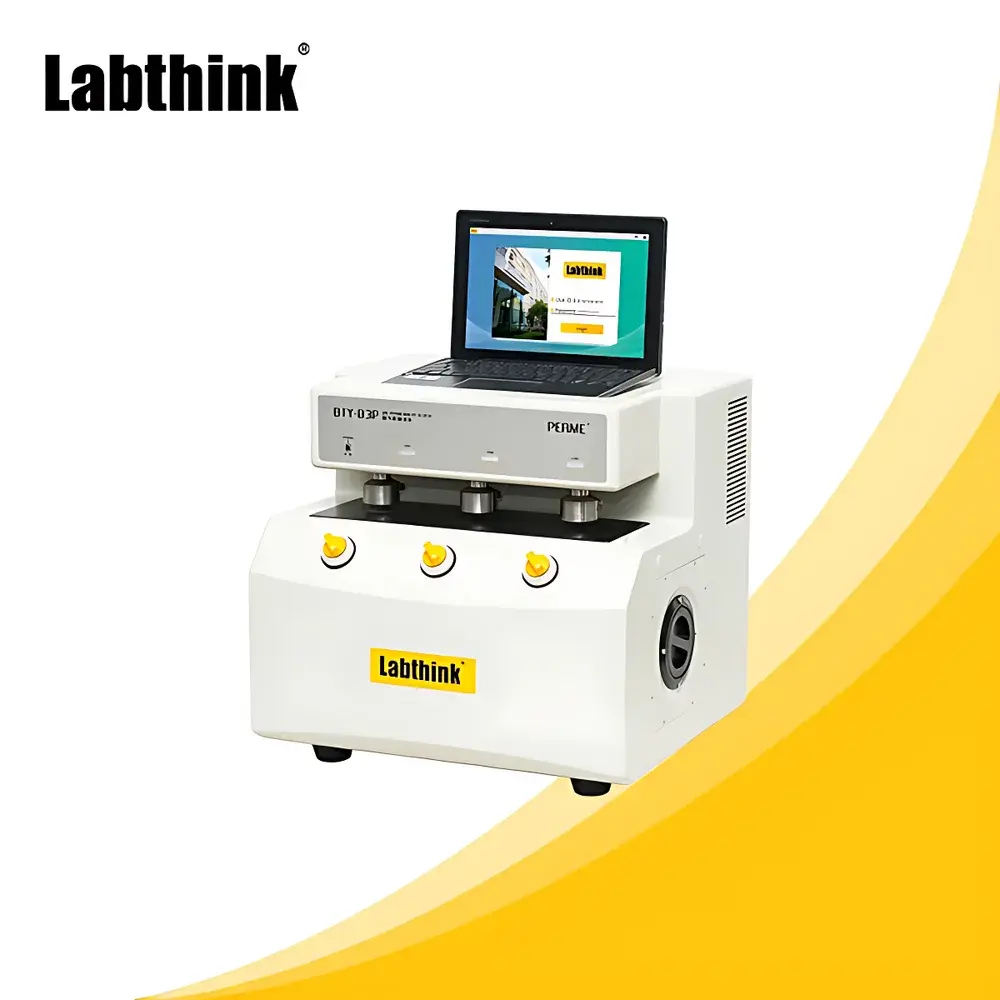
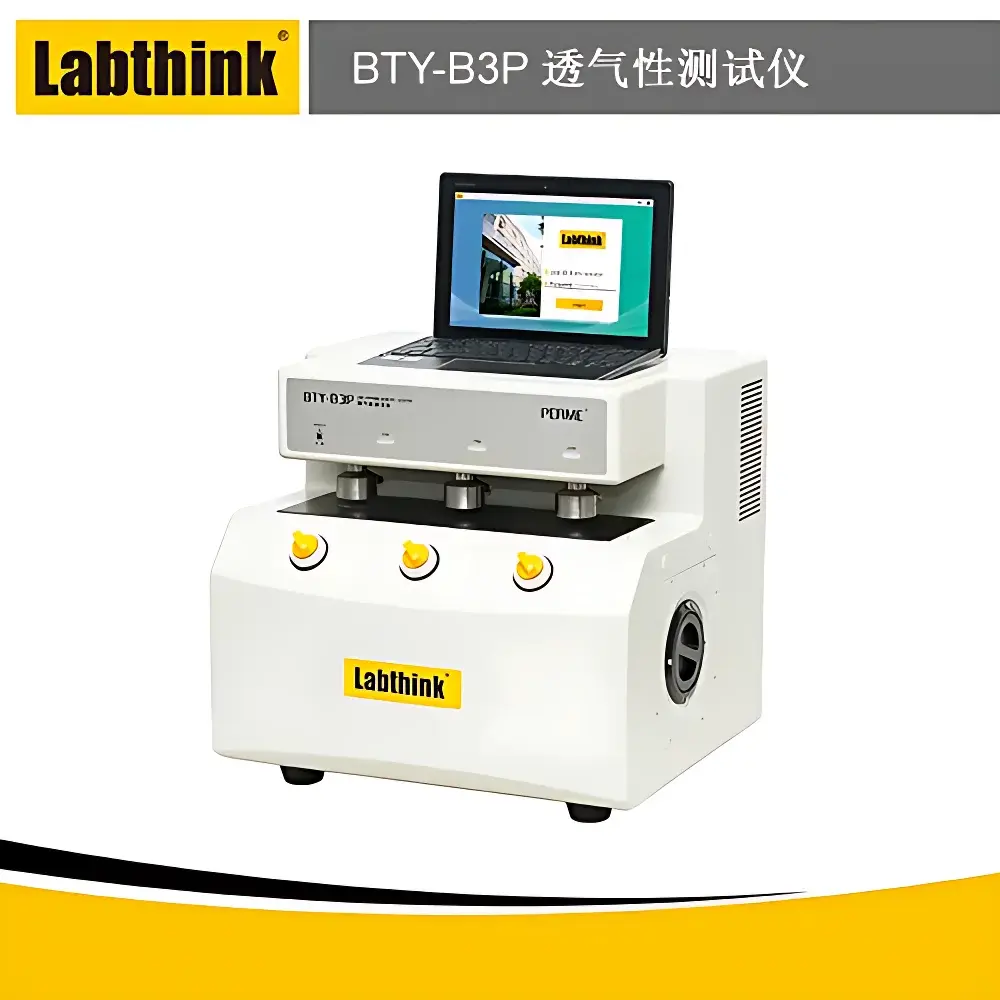
Labthink BTY-B3P Gas Permeability Tester for Lithium-ion Battery Separator
| Brand | Labthink |
|---|---|
| Origin | Shandong, China |
| Manufacturer Type | Direct Manufacturer |
| Country of Origin | China |
| Model | BTY-B3P |
| Price Range | USD 14,000 – 70,000 |
| Measurement Gases | O₂ (standard), CO₂ (optional) |
| O₂ Range | 0.2–21% vol |
| O₂ Accuracy | ±0.2% vol |
| CO₂ Range | 2–100% vol |
| CO₂ Accuracy | ±2% vol |
| Sample Volume (O₂) | ≥5 mL (at 101.3 kPa) |
| Sample Volume (CO₂) | ≥20 mL (at 101.3 kPa) |
| Dimensions | 350 × 330 × 200 mm (L×W×H) |
| Power Supply | 220 VAC 50 Hz / 120 VAC 60 Hz |
| Net Weight | 5.5 kg |
Overview
The Labthink BTY-B3P Gas Permeability Tester is a precision-engineered instrument designed specifically for quantitative analysis of residual oxygen (O₂) and optional carbon dioxide (CO₂) concentrations within sealed packaging systems—particularly critical for lithium-ion battery separator quality control, pharmaceutical primary packaging, and modified atmosphere packaging (MAP) validation. Unlike traditional permeation rate testers that measure gas transmission through barrier films over time, the BTY-B3P operates on a headspace gas analysis principle: it extracts a representative sample from the internal headspace of rigid or flexible sealed containers via vacuum-assisted sampling, delivers it to a high-stability electrochemical sensor, and converts the resulting current/voltage signal into volumetric concentration data. This approach enables rapid, non-destructive, endpoint-based quantification—essential for release testing, stability monitoring, and process verification in GMP-compliant environments.
Key Features
- Proprietary ceramic electrochemical O₂ sensor: Non-consumable design ensures long-term calibration stability and measurement repeatability (RSD ≤ 1.5% under controlled conditions); no frequent sensor replacement required.
- Dual-gas capability: Standard O₂ detection (0.2–21% vol) with optional CO₂ module (2–100% vol), enabling comprehensive headspace profiling for nitrogen-flushed, CO₂-enriched, or air-filled packages.
- Microprocessor-controlled vacuum sampling system: Precisely regulates draw volume and flow rate to ensure consistent sample representativeness across container types—from flexible pouches to rigid cans and ampoules.
- Intuitive human-machine interface: 4.3-inch LCD touchscreen with bilingual (English/Chinese) menu navigation, real-time concentration display, and on-device data review functionality.
- Integrated thermal printer and local storage: Supports immediate hardcopy output of test reports (including timestamp, sample ID, O₂/CO₂ values, operator ID) and retains up to 1,000 test records internally.
- RS232 serial interface with Labthink proprietary software: Enables automated data export (CSV/Excel), remote instrument control, audit trail generation, and compliance with FDA 21 CFR Part 11 requirements when configured with user authentication and electronic signature modules.
Sample Compatibility & Compliance
The BTY-B3P accommodates a broad range of package geometries and materials without requiring destructive modification. Standard applications include flat-bottom pouches (e.g., battery separator pouches, coffee bags), cylindrical metal/glass cans (e.g., infant formula, canned foods), cartons (e.g., Tetra Pak®), and glass vials/ampoules. Optional accessories—such as rigid-package sampling probes, underwater sampling kits for buoyant containers, and sterile needle assemblies—extend usability to regulated pharmaceutical and biotech workflows. The system complies with ISO 11671:2021 (determination of headspace O₂ in sealed packages), ASTM F2476-22 (standard practice for measuring headspace gases in flexible packaging), and supports GLP/GMP documentation practices through configurable report templates and traceable metadata logging.
Software & Data Management
Labthink’s BTY-B3P Control Software provides full PC-based instrument management, including method setup (sampling volume, dwell time, sensor warm-up delay), batch test scheduling, statistical summary generation (mean, SD, CV%), and customizable PDF/CSV reporting. Audit trail features record all user actions—including parameter changes, calibration events, and data deletions—with timestamps and operator IDs. When deployed in validated environments, the software can be configured to meet 21 CFR Part 11 requirements, supporting role-based access control, electronic signatures, and immutable data archiving. Raw sensor voltage outputs are logged at 10 Hz resolution for post-acquisition waveform analysis if needed.
Applications
- Lithium-ion battery manufacturing: Quantitative verification of O₂ levels inside dry-room sealed separator pouches to prevent oxidative degradation during storage and transport.
- Pharmaceutical packaging: Residual oxygen testing in blister packs, vials, and ampoules per USP and EP 3.2.1 guidelines to ensure product shelf-life integrity.
- Food & beverage MAP validation: Routine monitoring of O₂ and CO₂ ratios in retail-ready trays, vacuum-sealed meats, and dairy products to confirm gas flush efficacy and detect seal integrity failures.
- Medical device packaging: Final lot release testing for sterile barrier systems where O₂ ingress may compromise sterility assurance levels (SAL).
- Research & development: Accelerated aging studies correlating headspace composition shifts with material permeability, seal strength, and environmental stress exposure.
FAQ
What is the minimum detectable O₂ concentration?
The instrument achieves a lower limit of quantitation (LLOQ) of 0.2% vol O₂ under standard atmospheric pressure (101.3 kPa) and ambient temperature (23 ± 2°C).
Can the BTY-B3P measure nitrogen or argon?
No—the system is calibrated exclusively for O₂ and optionally CO₂ using electrochemical sensing principles; inert gases require paramagnetic or TCD-based analyzers.
Is calibration traceable to NIST standards?
Yes—Labthink provides factory calibration certificates traceable to national metrology institutes; users may perform field verification using certified gas standards (e.g., 1.00% O₂ in N₂, 5.0% CO₂ in N₂).
How often does the O₂ sensor require recalibration?
Under normal use (≤5 tests/day), annual recalibration is recommended; sensor drift is monitored via built-in zero/span check routines prior to each test series.
Does the system support IQ/OQ/PQ documentation packages?
Yes—Labthink offers vendor-supplied qualification protocols (including test scripts, acceptance criteria, and blank execution records) compliant with ISO 13485 and ICH Q9 frameworks.






