
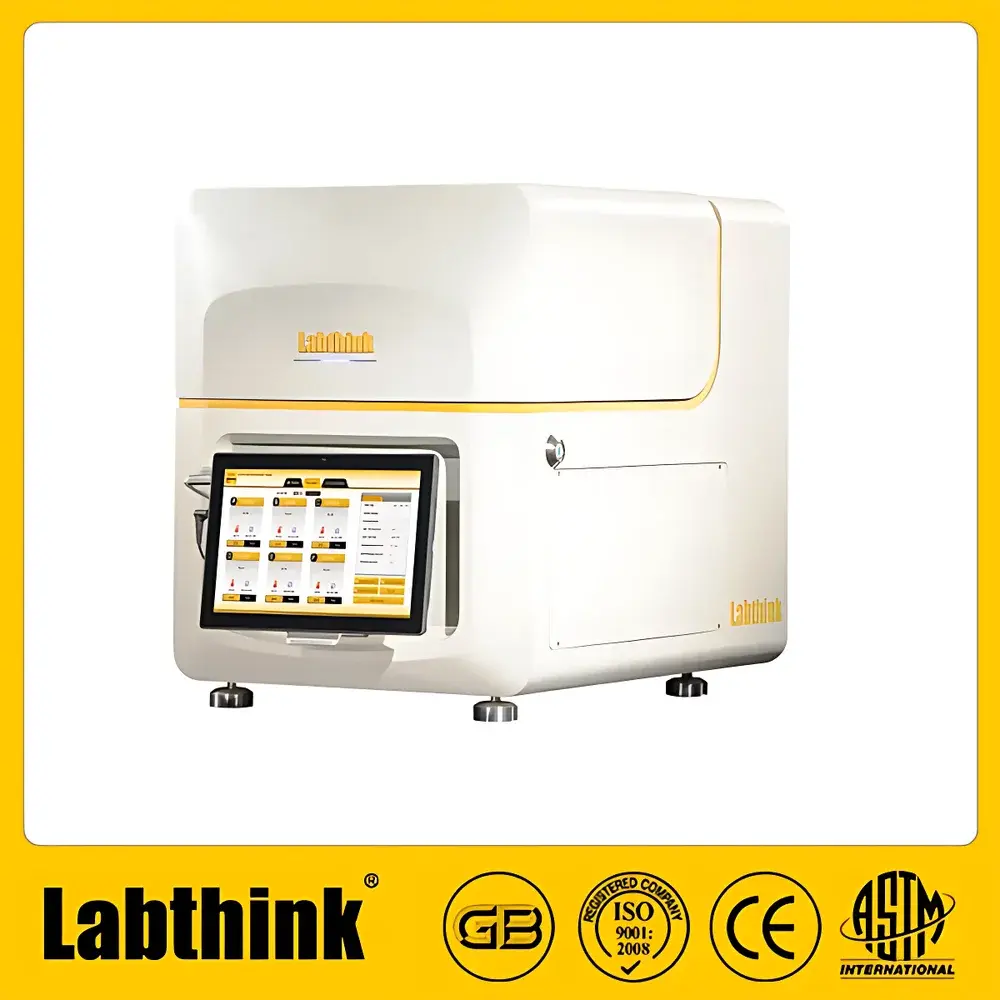
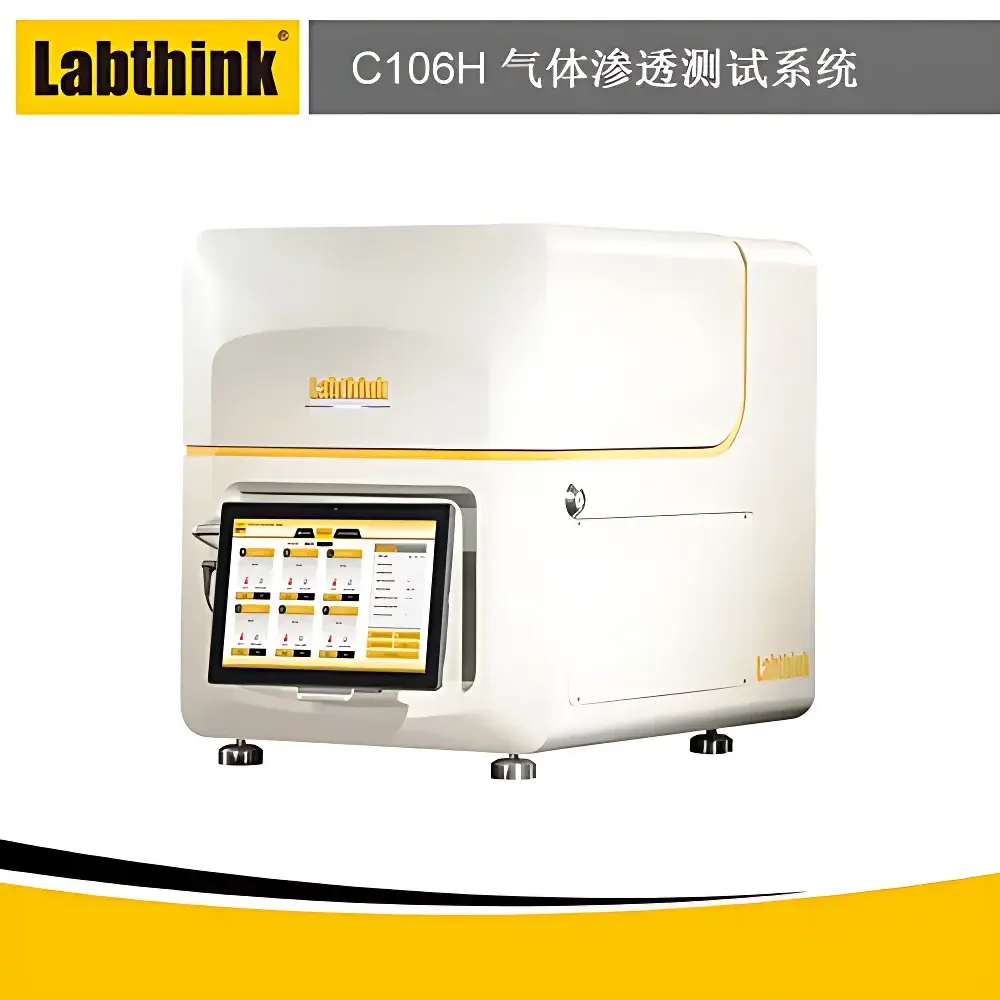
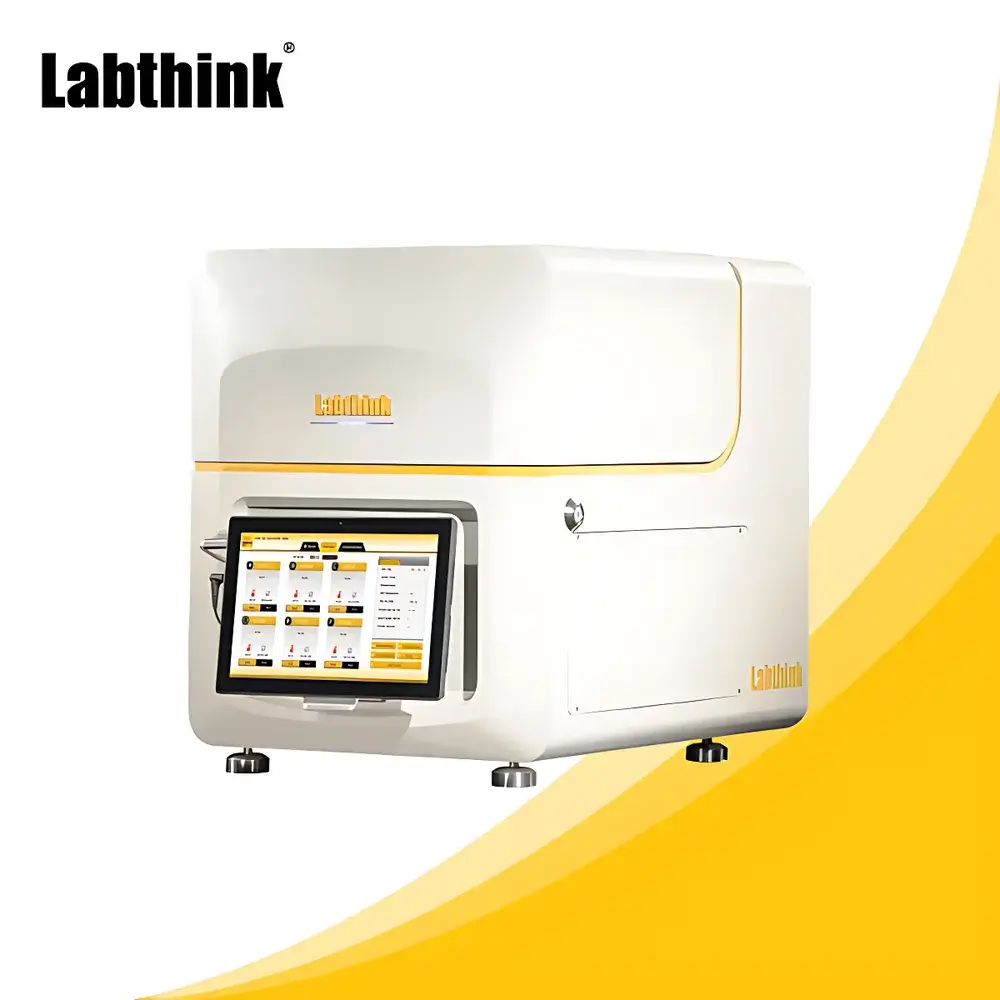
Labthink C106H Differential-Pressure Method Oxygen Transmission Rate (OTR) Tester for Pharmaceutical PVC Films and Multilayer Packaging Materials
| Brand | Labthink |
|---|---|
| Origin | Shandong, China |
| Manufacturer Type | Direct Manufacturer |
| Region | Domestic (China) |
| Model | C106H |
| Price Range | USD 14,000 – 98,000 |
Overview
The Labthink C106H Differential-Pressure Method Oxygen Transmission Rate (OTR) Tester is a high-precision, six-chamber gas permeation analysis system engineered for quantitative determination of oxygen transmission rate (OTR), permeability coefficient (P), diffusion coefficient (D), and solubility coefficient (S) in rigid and flexible packaging materials. It operates on the standardized differential-pressure (manometric) principle per ISO 15105-1, ASTM D1434, GB/T 1038-2000, and JIS K7126-1. In this method, a conditioned specimen is sealed between upper (high-pressure) and lower (vacuum) test chambers; a controlled pressure gradient drives O2 across the film, and real-time pressure rise in the evacuated lower chamber is measured via high-stability vacuum transducers. The system calculates OTR with traceable accuracy under defined temperature, pressure, and humidity conditions—critical for pharmaceutical packaging qualification where oxygen-induced degradation of active pharmaceutical ingredients (APIs) must be rigorously controlled.
Key Features
- Six independent test chambers (38.48 cm² standard area each), enabling concurrent, statistically independent OTR measurements on up to six specimens—triple the throughput of conventional single- or dual-chamber instruments.
- Rainbow-bridge test cavity architecture with 360° circumferential air circulation heating, achieving ±0.15 °C temperature uniformity and stability across the full 15–50 °C operating range (5–60 °C optional).
- Imported ultra-high-resolution vacuum sensor (0.01 Pa resolution, ±0.2% full-scale accuracy) and vacuum pump (ultimate vacuum ≤0.2 Pa), enabling reliable quantification of ultra-high-barrier materials down to 0.01 cm³/m²·24h·0.1MPa.
- Automated pressure maintenance system with dynamic compensation: maintains high-side pressure within ±0.2 kPa deviation across user-defined setpoints (10–150 kPa), ensuring constant driving force throughout testing.
- Electro-pneumatic clamping mechanism with consistent force application, eliminating operator-induced sealing variability and minimizing edge leakage risk.
- Integrated 12-inch Windows-based touch tablet interface with intuitive workflow navigation—supports both one-touch automated mode and advanced manual control for R&D applications.
- Intelligent lid actuation with audible/visual feedback and fully automatic vacuum pump sequencing—no manual valve operation required.
Sample Compatibility & Compliance
The C106H accommodates rigid and semi-rigid sheet materials—including PVC, PVDC, PP, aluminum foil, metallized films, rubber, and silicon wafers—up to 3 mm thick and 11.2 cm × 11.2 cm in dimension. It complies with regulatory frameworks governing pharmaceutical packaging integrity: YBB 00082003 (Chinese Pharmacopoeia), USP <671>, and supports audit-ready data generation when configured with CFR 21 Part 11-compliant software options (available as optional module). Test reports include full metadata traceability: environmental conditions (T, RH, P), calibration history, operator ID, timestamped raw pressure curves, and calculated coefficients—all structured for GLP/GMP documentation requirements.
Software & Data Management
The embedded Windows OS platform delivers real-time visualization of OTR vs. time, permeability coefficient vs. temperature, and Arrhenius-derived activation energy plots. Raw pressure acquisition occurs at ≥10 Hz sampling frequency, with auto-smoothing and outlier rejection algorithms applied during post-processing. Data export formats include CSV, PDF, and XML (for LIMS integration). Optional DataShield™ security module enforces role-based access control, electronic signatures, and immutable audit trails—meeting FDA 21 CFR Part 11 and EU Annex 11 validation expectations. Calibration certificates are digitally linked to sensor serial numbers and retained within the instrument database.
Applications
- Pharmaceutical primary packaging: OTR validation of PVC/PVDC blister lidding, cold-form foil, alu-alu push-through packs, and barrier-coated sachets.
- Medical device packaging: Quantifying oxygen ingress into sterile barrier systems (SBS) per ISO 11607-1.
- Food packaging R&D: Comparative evaluation of biopolymer films, nanocomposites, and plasma-deposited oxide coatings.
- Industrial barrier materials: Characterization of fuel tank liners, battery separator films, and OLED encapsulation substrates.
- Regulatory submission support: Generating repeatable, standards-aligned datasets for DMF, CMC, and marketing authorization dossiers.
FAQ
What gases can be tested besides oxygen?
Nitrogen (N₂), carbon dioxide (CO₂), hydrogen (H₂), and methane (CH₄) are supported; H₂ and CH₄ require optional hazardous gas configuration including explosion-proof components and dedicated gas handling protocols.
Is humidity control integrated?
Relative humidity (RH) control from 0% to 90% ±2% RH is available as a factory-installed option; standard configuration operates at dry (0% RH) or ambient RH conditions.
How is calibration verified?
System performance is validated using certified reference films with NIST-traceable OTR values; Labthink provides annual calibration services with ISO/IEC 17025-accredited certificates.
Can the C106H be networked for centralized lab management?
Yes—Ethernet connectivity enables remote monitoring, data aggregation via Labthink’s CloudLink™ server, and integration with enterprise quality management systems (QMS) using OPC UA or RESTful API interfaces.
What maintenance intervals are recommended?
Vacuum pump oil replacement every 2,000 operational hours; O-ring inspection and grease reapplication every 6 months; full system verification annually or after major component replacement.





