
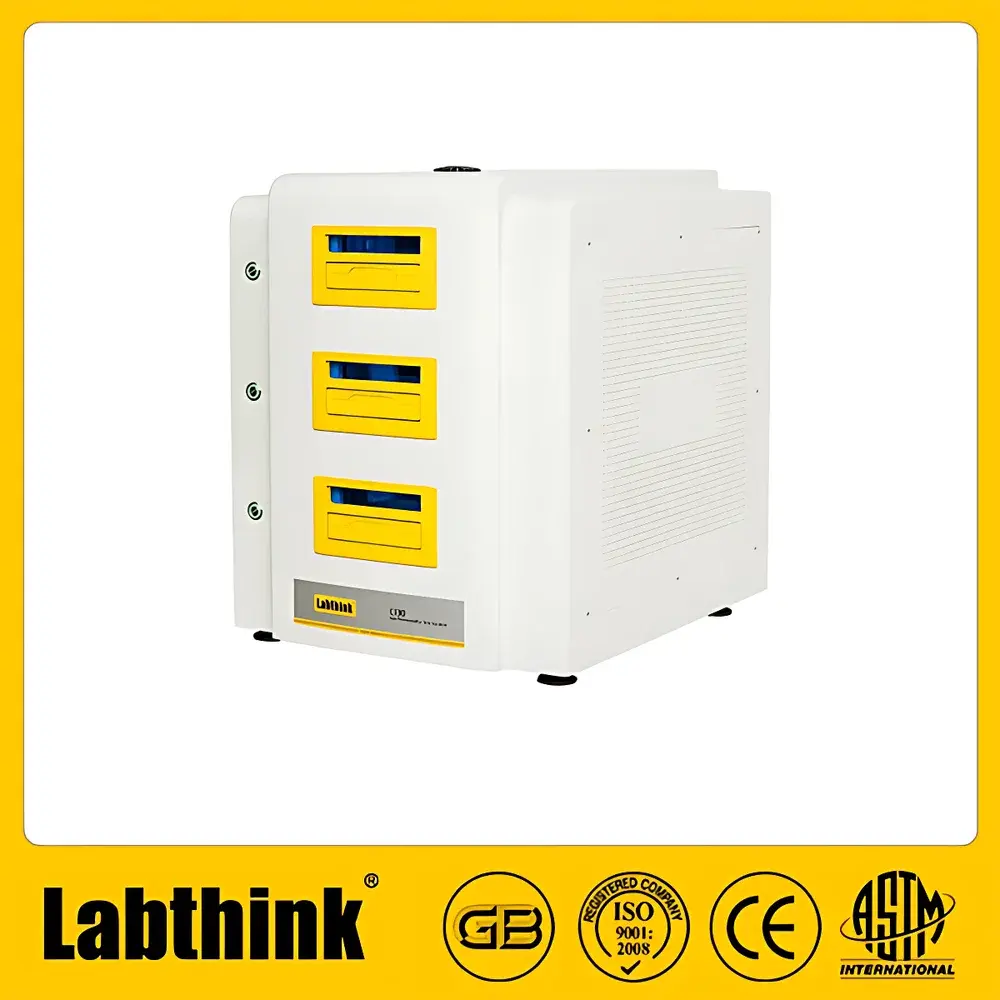
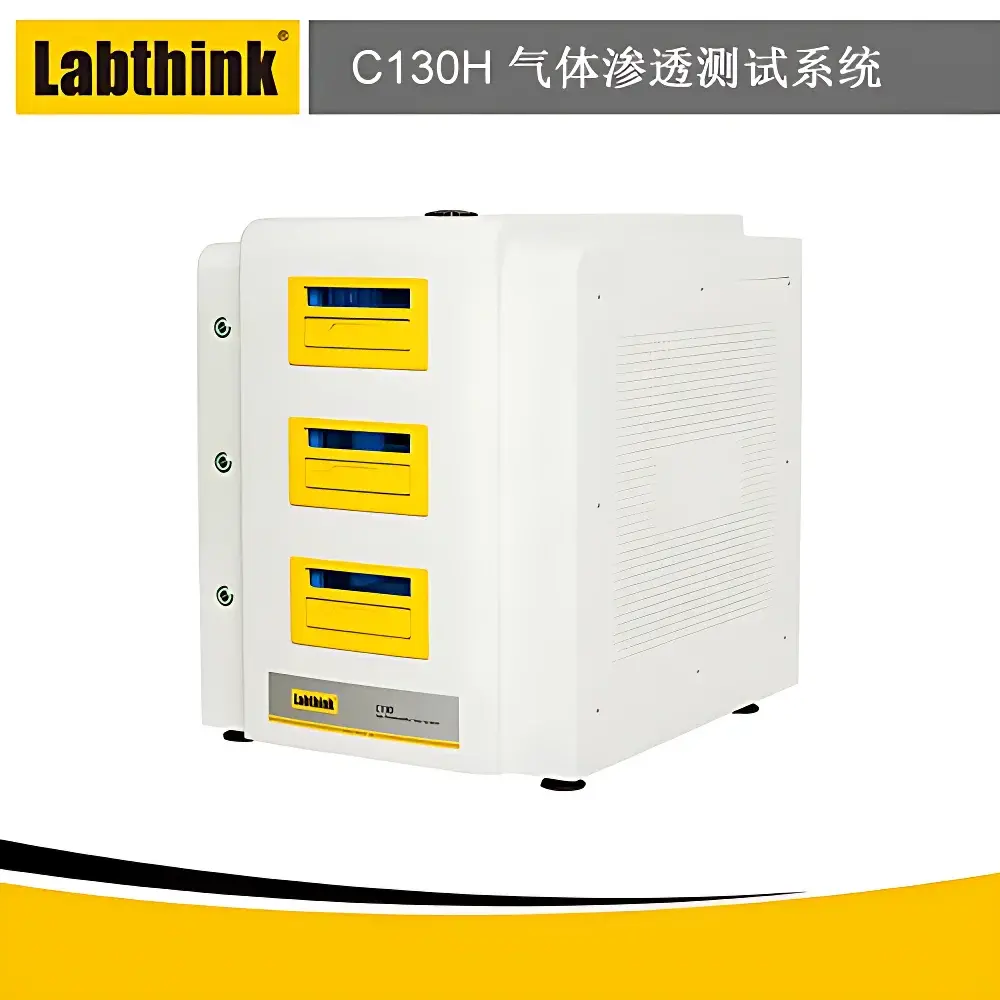
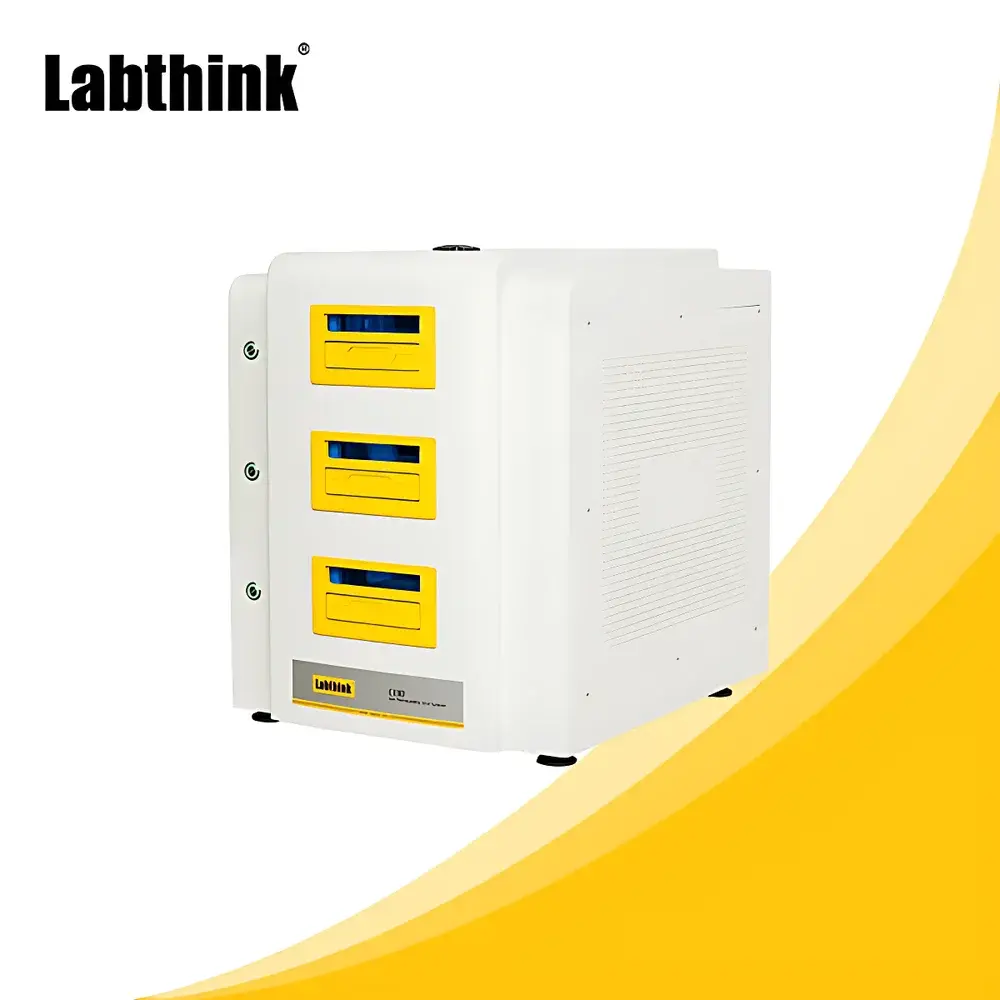
Labthink C130H High-Temperature Retort-Grade Gas Permeability Tester
| Brand | Labthink |
|---|---|
| Origin | Shandong, China |
| Manufacturer Type | Direct Manufacturer |
| Regional Category | Domestic (China) |
| Model | C130H |
| Price Range | USD 14,000 – 98,000 |
| Testing Principle | Differential Pressure Method (ISO 15105-1, ASTM D1434, GB/T 1038-2000) |
| Test Gases | O₂, N₂, CO₂ (customizable for mixed or hazardous gases) |
| Temperature Range | 10–50 °C (±0.05 °C stability) |
| Pressure Range | 10–210 kPa (adjustable high-side pressure) |
| Vacuum Capability | <10 Pa chamber vacuum |
| Measurement Range | 0.01–50,000 cm³/(m²·24h·0.1MPa) |
| Resolution | 0.001 cm³/(m²·24h·0.1MPa) |
| Sample Capacity | 3 independent test chambers (Φ97 mm, 38.48 cm² effective area) |
| Compliance | ISO 2556, JIS K7126-1, YBB 00082003, GLP/GMP-ready (optional DataShield™ & 21 CFR Part 11 support) |
Overview
The Labthink C130H High-Temperature Retort-Grade Gas Permeability Tester is an engineered solution for precise, traceable, and standards-compliant measurement of gas transmission rates (GTR) through flexible packaging materials under controlled thermal and pressure conditions. Designed specifically for the evaluation of retort-stable food packaging—such as laminated pouches, metallized films, and high-barrier coextrusions—the system implements the differential pressure method (also known as the manometric or vacuum-manometric method) in strict accordance with ISO 15105-1, ASTM D1434, GB/T 1038-2000, and ISO 2556. In this principle, a conditioned specimen separates two sealed chambers: the high-pressure side (upstream) is pressurized with the test gas (e.g., O₂, N₂, or CO₂), while the low-pressure side (downstream) is maintained under high vacuum. The transient rise in downstream pressure—monitored via a calibrated high-resolution vacuum transducer—is mathematically integrated to calculate gas permeability (P), diffusion coefficient (D), solubility coefficient (S), and permeability coefficient (P = D × S). The C130H extends conventional capability by enabling stable operation across 10–50 °C, with ±0.05 °C temperature uniformity achieved via 360° forced-air circulation and active pressure compensation—critical for validating barrier performance after thermal sterilization cycles.
Key Features
- Triple independent test chambers (Φ97 mm, 38.48 cm² effective area), each with autonomous vacuum control, real-time pressure logging, and synchronized data acquisition—enabling comparative analysis of heterogeneous materials without cross-contamination or scheduling conflict.
- Automated drawer-style test cavity with pneumatically actuated clamping (imported German components), ensuring repeatable sealing force (>150 N) and eliminating operator-induced variability in sample loading.
- High-fidelity vacuum architecture: dual-stage imported vacuum pump (ultimate vacuum ≤0.2 Pa), ultra-stable vacuum sensor (0.01 Pa resolution, ±0.2% full-scale accuracy), and closed-loop pressure regulation maintaining high-side differential within ±0.2 kPa over extended test durations.
- Intelligent operational modes: “Research Mode” permits granular adjustment of ramp rates, dwell times, pressure setpoints, and data sampling intervals; “Standard Mode” executes preconfigured protocols compliant with ISO/ASTM/GB methods at one-touch initiation.
- Integrated environmental control: humidity conditioning (optional, factory-installed) enables testing under defined RH profiles (10–90% RH, ±2% RH accuracy); custom gas handling modules support inert, flammable, or multi-component gas blends under Class I Div 1 safety provisions.
- Embedded industrial PC platform running Windows OS with native USB 3.0 and Gigabit Ethernet interfaces—eliminating external computer dependency and associated cybersecurity or compatibility risks.
Sample Compatibility & Compliance
The C130H accommodates rigid and flexible substrates up to 2 mm thick, including polymeric films (PET, OPP, PE, PA), aluminum foil laminates, SiOₓ- and AlOₓ-coated webs, paperboard composites, and pharmaceutical blister foils. It supports standardized specimen preparation per ISO 2556 Annex A and ASTM D1434 Section 7. All mechanical, thermal, and vacuum subsystems are validated against metrological traceability requirements outlined in ISO/IEC 17025. Optional GMP-compliant firmware includes full 21 CFR Part 11 audit trail functionality—recording user actions, parameter changes, calibration events, and raw data modifications with electronic signatures. System validation documentation (IQ/OQ/PQ templates), certificate of conformance (CoC), and as-found/as-left calibration reports are supplied with each unit. Regulatory alignment extends to YBB 00082003 (Chinese Pharmacopoeia), EU Annex 11, and ICH Q5C stability protocol frameworks.
Software & Data Management
The embedded PermeationSuite™ software provides real-time visualization of pressure–time, permeation rate–time, and temperature–time curves with auto-scaling axes and overlay capability. Raw sensor outputs are stored in binary .dat format (non-proprietary structure) and exportable to CSV, Excel, or PDF with configurable metadata headers. Advanced analytical tools include Arrhenius modeling for temperature-dependent permeability extrapolation, Fickian/non-Fickian diffusion classification, and time-lag derivation for diffusion coefficient calculation. For enterprise integration, optional DataShield™ middleware enables secure, role-based data synchronization with LIMS, MES, or ERP systems via TLS 1.2–encrypted RESTful API or OPC UA. All data files carry embedded digital signatures and immutable timestamps compliant with ALCOA+ principles (Attributable, Legible, Contemporaneous, Original, Accurate, Complete, Consistent, Enduring, Available).
Applications
- Validation of shelf-life predictive models for retort pouches used in ready-to-eat meals, baby food, and pet nutrition products.
- Quality control of high-barrier coatings on flexible packaging prior to release—ensuring O₂ transmission rates (OTR) remain below critical thresholds (<1 cm³/m²·24h·0.1MPa) for lipid oxidation-sensitive formulations.
- Accelerated aging studies correlating accelerated temperature exposure (e.g., 40 °C/75% RH) with real-time field performance using time–temperature superposition (TTS) methodology.
- Regulatory submission support for FDA 510(k), PMDA MHLW, or NMPA registration dossiers requiring full characterization of container closure integrity for sterile pharmaceuticals.
- Development of novel biopolymer films (e.g., PLA, PHA, cellulose nanocrystal composites) where moisture sensitivity and thermal degradation must be decoupled from intrinsic permeability behavior.
FAQ
What gas types can the C130H test, and are custom gas modules available?
The base system supports O₂, N₂, and CO₂ using standard gas regulators and stainless-steel manifolds. Custom configurations—including explosion-proof housings, mass flow controllers for gas mixtures, and catalytic scrubbers for reactive species—are available upon request and subject to hazard analysis per IEC 60079.
Does the system comply with FDA 21 CFR Part 11 requirements for electronic records?
Yes—when equipped with the optional GMP software package, the C130H delivers full Part 11 compliance: electronic signatures with identity verification, immutable audit trails, role-based access control, and automated backup with version history.
How is temperature uniformity verified across the three test chambers?
Each chamber contains a calibrated PT100 sensor connected to an independent PID loop; 360° air recirculation ensures spatial deviation ≤±0.03 °C during steady-state operation, confirmed annually via NIST-traceable dry-block calibrator.
Can the C130H measure water vapor transmission (WVTR)?
No—WVTR requires gravimetric or modulated IR detection per ASTM F1249 or ISO 15106; for combined gas + moisture barrier assessment, Labthink recommends parallel deployment of the C330H Water Vapor Transmission Tester.
Is on-site installation and qualification support provided?
Yes—Labthink offers IQ/OQ execution by certified field engineers, including chamber leak testing (≤5×10⁻⁷ mbar·L/s), vacuum decay validation, temperature mapping, and protocol documentation aligned with ISO 9001 and ISO/IEC 17025 requirements.




