
Labthink C190H Battery Separator Air Permeability Tester
| Brand | Labthink |
|---|---|
| Model | C190H |
| Measurement Principle | Volumetric Method (Air Flow Time per 100 mL) |
| Test Range | 30–1500 s/100 mL |
| Volume Resolution | 0.001 mL |
| Volume Accuracy | ±1% |
| Pressure Range | 0–2 kPa |
| Pressure Control Accuracy | ±0.01 kPa |
| Test Area | 6.45 cm² (1 in²) |
| Sample Size | ≥60 mm × 60 mm |
| Max Sample Thickness | 3 mm |
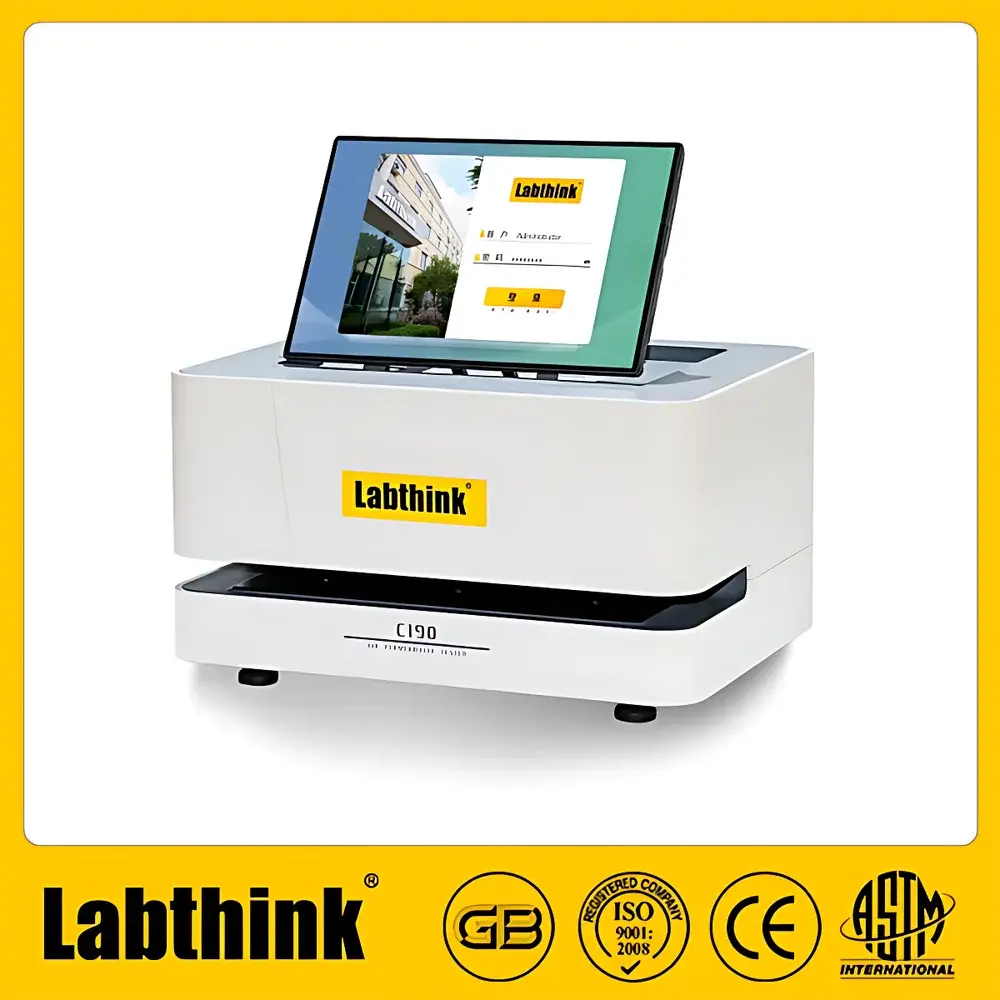
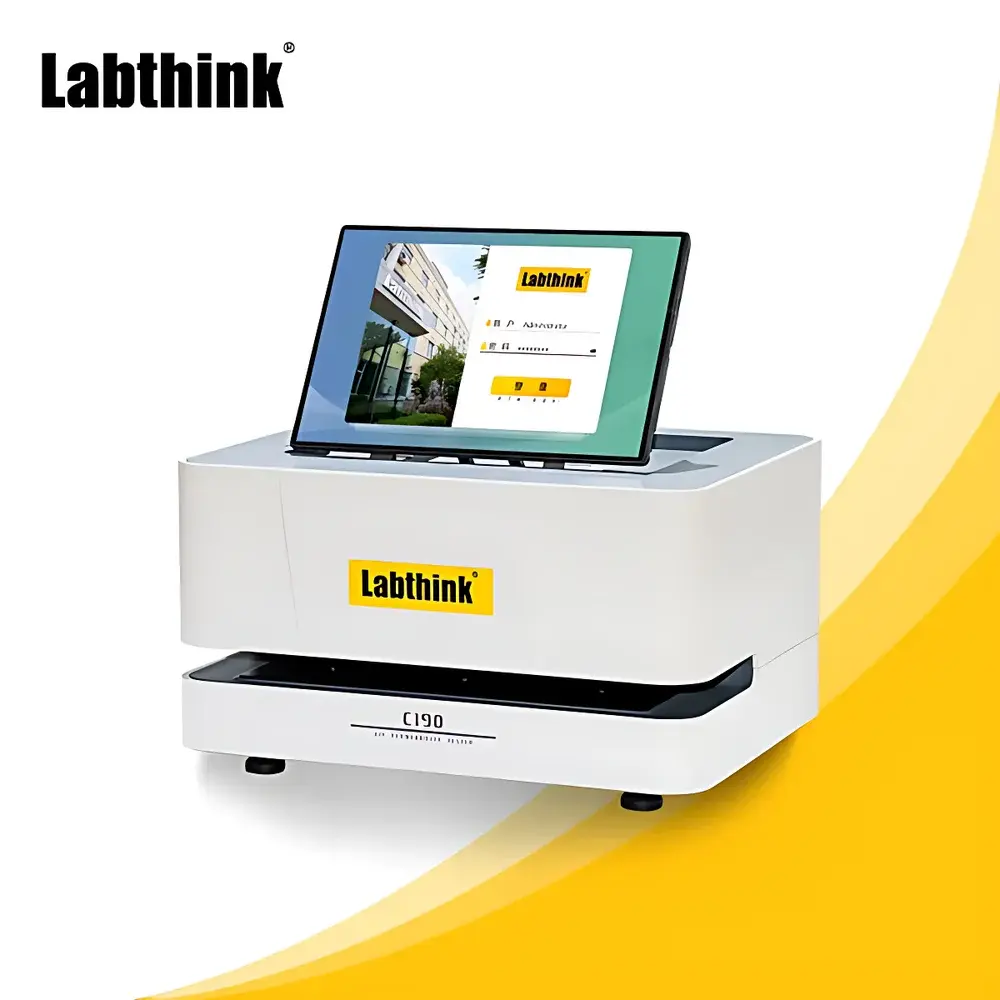
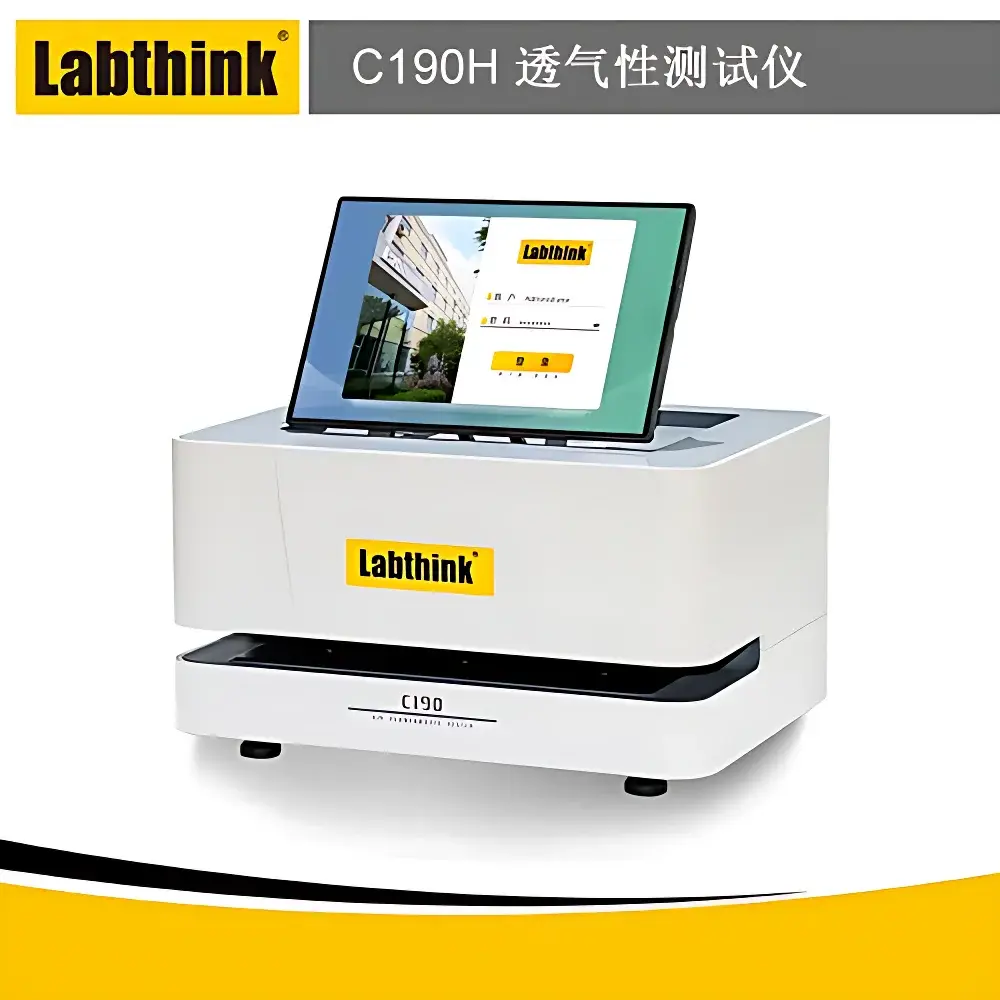
| Touchscreen Control | 12" Windows-based Industrial Tablet |
| Environmental Monitoring | Integrated Temp & RH Sensors |
| Compliance Standards | ISO 5636, TAPPI T460, GB/T 36363-2018, GB/T 458-2008, GB/T 23227, GB/T 12655 |
| Optional | 21 CFR Part 11 Audit Trail, GMP Validation Support, DataShield™ Secure Data Management |
Overview
The Labthink C190H Battery Separator Air Permeability Tester is an industrial-grade volumetric gas permeability analyzer engineered for precise, repeatable measurement of air flow resistance through microporous polymer membranes—primarily lithium-ion battery separators, breathable films, and specialty papers. It operates on the standardized volumetric principle defined in ISO 5636 and TAPPI T460: under controlled ambient temperature and humidity, a regulated differential pressure of 1.21 kPa is applied across a 6.45 cm² sample area, and the time required for 100 mL of dry air to pass through is recorded. This metric—expressed as seconds per 100 mL (s/100 mL)—directly correlates with pore structure uniformity, tortuosity, and effective open area, making it a critical quality control parameter for electrochemical performance, thermal shutdown safety, and electrolyte wettability in battery manufacturing. The instrument’s design prioritizes metrological integrity, mechanical stability, and long-term operational reliability in high-throughput QC labs.
Key Features
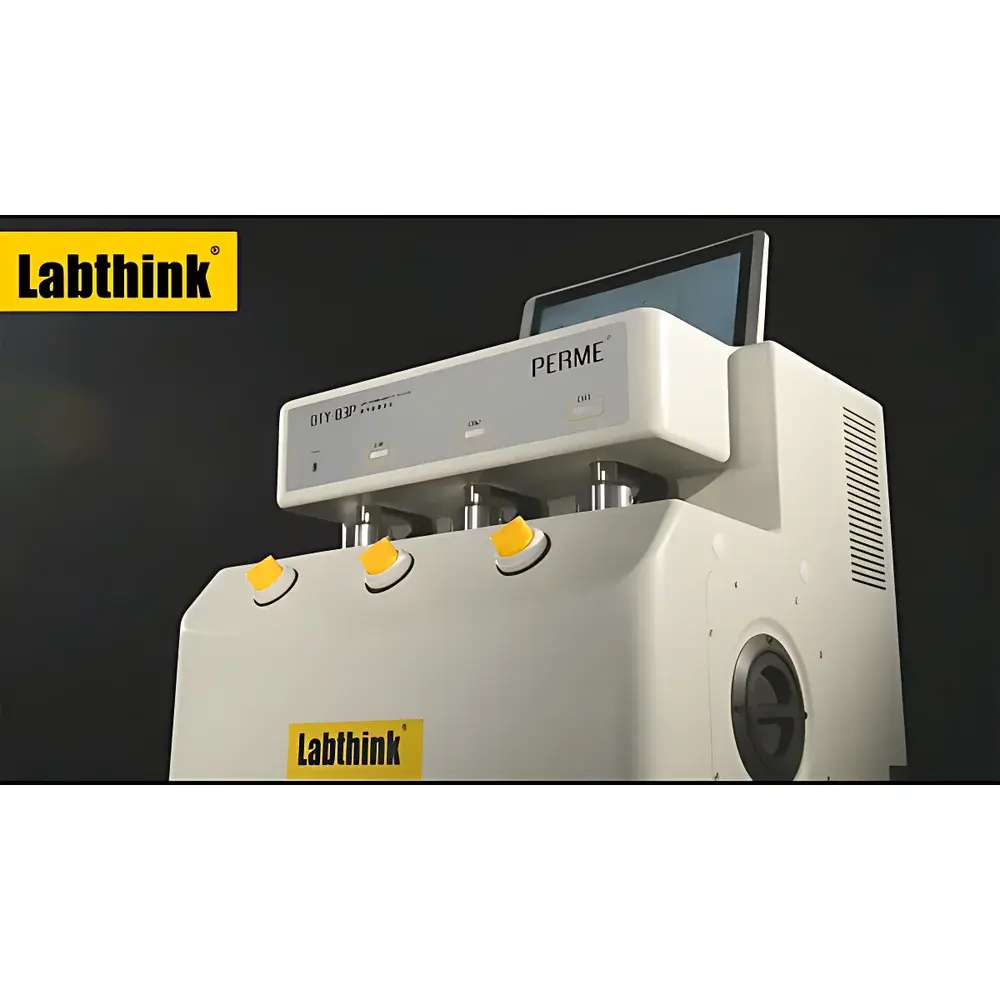
- Triple independent test chambers enable parallel evaluation of three samples under identical environmental and pressure conditions—reducing inter-test variability and accelerating batch release.
- High-fidelity pneumatic clamping system delivers consistent, repeatable sealing force across all chambers, eliminating operator-dependent leakage errors common in manual clamp designs.
- Ultra-precise pressure regulation with ±0.01 kPa accuracy ensures strict adherence to standard test pressures (e.g., 1.21 kPa per GB/T 36363-2018), minimizing drift-induced measurement uncertainty.
- Integrated 12-inch industrial touchscreen tablet runs embedded Windows OS with Labthink’s proprietary firmware—immune to external malware, ensuring data continuity and system uptime over extended validation cycles.
- Real-time environmental monitoring logs ambient temperature and relative humidity alongside each test result, satisfying GLP traceability requirements for method-controlled testing environments.
- Multi-unit display capability supports both s/100 mL (air resistance) and µm/(Pa·s) (permeability coefficient), facilitating cross-standard reporting and regulatory submissions under ASTM, ISO, or regional specifications.
- Quick-test mode reduces total cycle time to ≤60 seconds for triple-chamber operation—ideal for incoming inspection screening without compromising repeatability (RSD < 2.5% per ASTM D726).
Sample Compatibility & Compliance
The C190H is validated for rigid and semi-flexible sheet materials up to 3 mm thickness and minimum dimensions of 60 mm × 60 mm. Primary applications include polyolefin-based battery separators (PP, PE, PP/PE/PP trilayer), ceramic-coated membranes, hydrophilic nonwovens, and medical breathable films. Extended use cases cover cigarette paper, filter paper, tea bag stock, and packaging barrier laminates—subject to optional calibration kits and application-specific SOPs. All hardware and software components comply with IEC 61000-4 electromagnetic compatibility standards. When configured with optional 21 CFR Part 11 modules, the system supports full audit trail logging, electronic signatures, role-based access control, and secure data archiving—meeting FDA-regulated GMP environments and EU Annex 11 requirements.
Software & Data Management
Labthink’s proprietary PermeaSoft™ v4.x provides intuitive workflow-driven test setup, real-time graphing of flow curves, automatic outlier detection, and customizable report generation (PDF, CSV, XML). The software includes built-in statistical process control (SPC) tools—X-bar/R charts, capability indices (Cp/Cpk), and trend analysis—for continuous improvement initiatives. Raw data files are stored in encrypted, tamper-evident format with SHA-256 hashing. Optional DataShield™ module adds AES-256 encryption at rest and in transit, automated backup to network drives, and configurable retention policies aligned with ISO/IEC 27001 data governance frameworks.
Applications
- Battery R&D: Quantifying separator breathability impact on ionic conductivity, dendrite suppression, and rate capability.
- Quality Assurance: In-line verification of coating uniformity, calendering effects, and post-lamination pore closure.
- Supplier Qualification: Benchmarking against OEM-specified permeability windows (e.g., 150–450 s/100 mL for automotive-grade LiFePO₄ cells).
- Paper Industry: Evaluating porosity gradients in cigarette paper for controlled burn rate and tar filtration efficiency.
- Medical Device Packaging: Assessing microbial barrier integrity of Tyvek® and SMS nonwovens per ISO 11607-1 Annex B.
FAQ
What gas is used during testing?
Dry compressed air is the default test medium, supplied externally at 600 kPa (87 psi) via a Φ6 mm polyurethane tube. Nitrogen or other inert gases may be substituted with appropriate calibration and safety review.
Is calibration traceable to national standards?
Yes—Labthink provides NIST-traceable calibration certificates for pressure transducers and volumetric sensors, with annual recalibration recommended per ISO/IEC 17025 guidelines.
Can the C190H be integrated into a LIMS environment?
Yes—via OPC UA or RESTful API interfaces (optional), enabling bidirectional data exchange with laboratory information management systems for automated result ingestion and metadata synchronization.
Does the instrument require periodic maintenance beyond sensor calibration?
Routine maintenance is limited to filter replacement (inlet air dryer) every 6 months and chamber O-ring inspection; no consumables or lubricants are required in the core pneumatic or measurement path.
How does the C190H handle edge leakage during thin-film testing?
The patented dual-seal chamber design isolates the active test area using concentric gasket geometry, verified by helium leak testing (99.8% of measured flow originates solely from bulk material permeation.





