
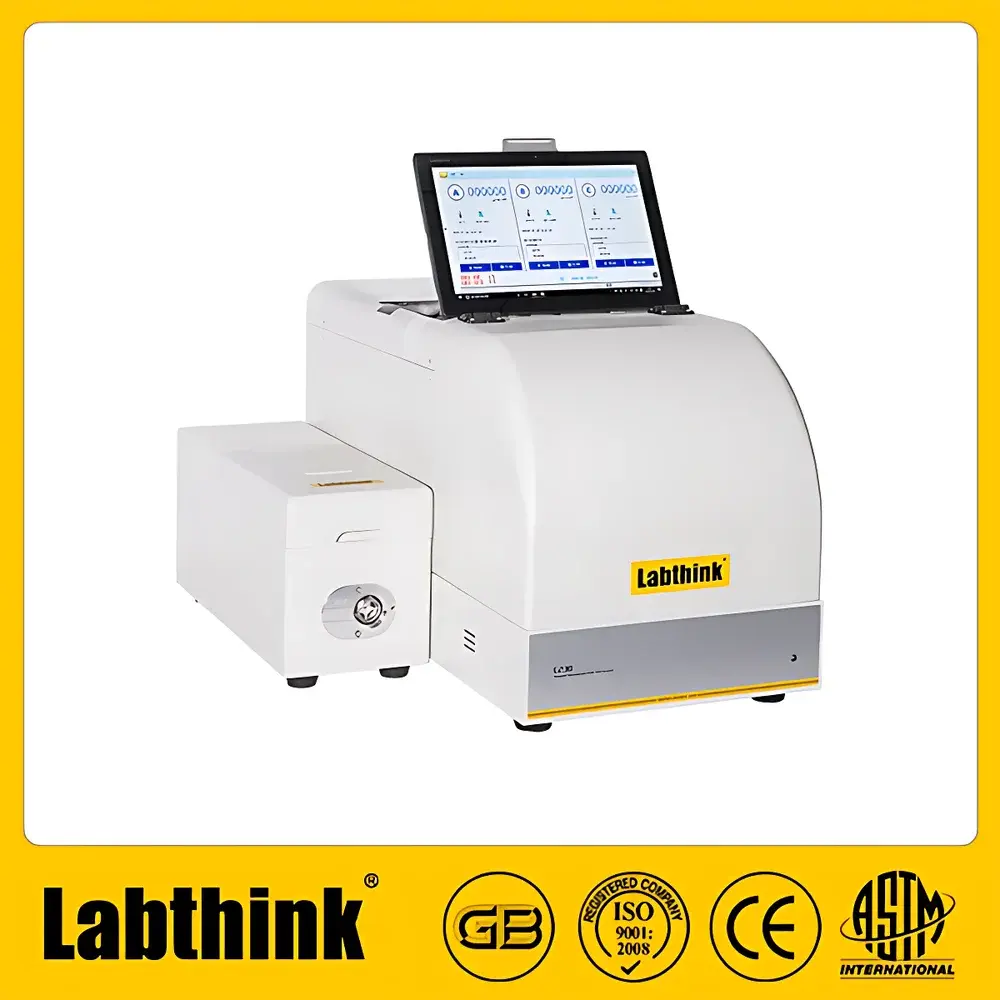
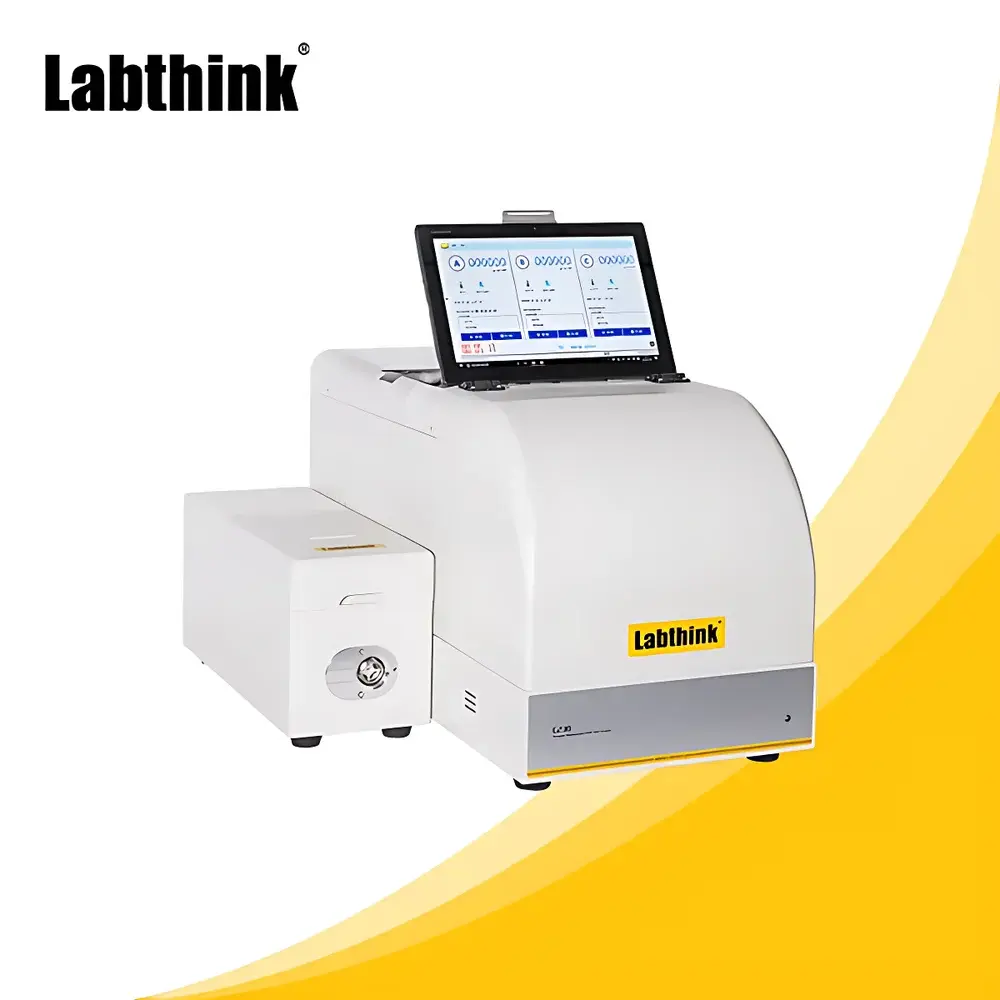
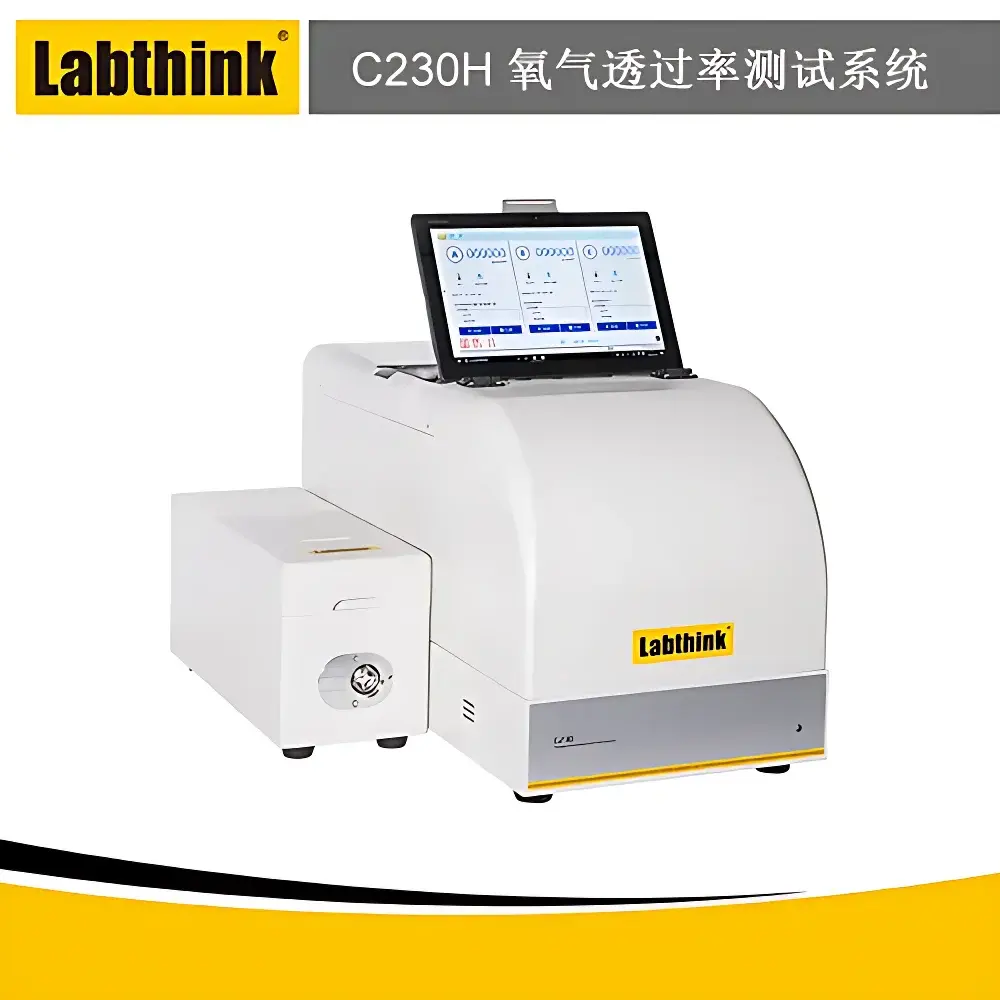
Labthink C230H Oxygen Transmission Rate (OTR) Analyzer
| Brand | Labthink |
|---|---|
| Model | C230H |
| Principle | Isobaric Coulometric Sensor Method (ASTM D3985 compliant) |
| Test Range | 0.01–200 cm³/(m²·day) |
| Resolution | 0.001 cm³/(m²·day) |
| Repeatability | ±0.01 cm³/(m²·day) or ±2% (whichever is greater) |
| Temperature Control | 10–55 °C (±0.2 °C) |
| Humidity Control | 0% RH, 5–90% RH (±1% RH), 100% RH |
| Test Chambers | 3 independent |
| Sample Area | 50 cm² (standard) |
| Max. Sample Size | 108 mm × 108 mm |
| Max. Thickness | ≤3 mm |
| Package Testing Capacity | up to 3 L (optional) |
| Carrier Gas | ≥99.999% N₂, ≥0.28 MPa (40.6 psi) |
| Interface | 1/8″ stainless steel tubing |
| Data Compliance | CFR 21 Part 11, GMP-ready, DataShield™ audit-trail enabled |
Overview
The Labthink C230H Oxygen Transmission Rate (OTR) Analyzer is an isobaric, coulometric-sensor-based instrumentation system engineered for precise, reproducible measurement of oxygen permeation through polymeric films, sheets, laminates, and rigid or flexible packaging containers. It operates on the fundamental principle defined in ASTM D3985 — where oxygen diffuses across a test specimen under controlled temperature and relative humidity conditions, is swept by high-purity nitrogen (carrier gas) from the low-oxygen side, and quantified via a stabilized coulometric oxygen sensor. This method ensures traceable, gravimetrically calibrated results without reliance on reference films or empirical correction factors. The C230H is purpose-built for laboratories requiring regulatory-grade data integrity in food packaging shelf-life prediction, pharmaceutical primary container qualification, medical device barrier validation, and photovoltaic encapsulant performance assessment.
Key Features
- Tri-chamber integrated test block: A patented monolithic aluminum manifold designed using computational fluid dynamics (CFD) and thermodynamic modeling to minimize inter-chamber thermal gradient (<±0.1°C), humidity deviation (<±0.5% RH), and gas flow asymmetry — enabling true parallel testing per ASTM F1307 and ISO 15105-2.
- Independent environmental control per chamber: Each test cavity incorporates dual high-accuracy Pt100 temperature sensors and capacitive RH sensors with real-time feedback loops, ensuring compliance with USP , ISO 2528, and YBB 00082003-2015 environmental tolerances.
- Automated climate conditioning: Integrated Peltier-based heating/cooling and ultrasonic humidification deliver stable, programmable test environments from 10–55°C and 0–100% RH without external chiller or steam generator dependencies.
- Windows 10 industrial touch interface: 12-inch capacitive touchscreen with quad-core processor supports both guided Auto-Test mode (fully parameterized workflows) and Advanced Mode (manual valve sequencing, custom ramp profiles, sensor diagnostics).
- DataShield™ secure data management: Role-based access control, electronic signatures, full audit trail (per FDA 21 CFR Part 11 Annex 11), encrypted local storage, and export compatibility with CSV, XML, PDF, and LIMS-compatible formats.
Sample Compatibility & Compliance
The C230H accommodates flat specimens up to 108 mm × 108 mm and 3 mm thick, with standardized test area of 50 cm². Optional fixtures enable OTR testing of pouches, bottles, blister cards, and syringes up to 3 L volume (per ASTM F1307 and GB/T 31354). All hardware and firmware comply with IEC 61326-1 (EMC), IEC 61010-1 (safety), and ISO/IEC 17025 calibration traceability requirements. Validation documentation includes IQ/OQ/PQ protocols, uncertainty budgets per GUM (JCGM 100), and metrological verification against NIST-traceable O₂ permeation standards.
Software & Data Management
The embedded Labthink OTR Studio software provides full lifecycle data governance: automated calibration verification (zero/gain checks pre/post-test), real-time sensor health monitoring, dynamic baseline drift compensation, and statistical process control (SPC) charts for longitudinal stability tracking. DataShield™ enforces ALCOA+ principles (Attributable, Legible, Contemporaneous, Original, Accurate, Complete, Consistent, Enduring, Available) with immutable timestamps, operator ID logging, and configurable retention policies. Integration with enterprise systems is supported via OPC UA, RESTful API, and HL7-compliant interfaces for seamless connection to MES, ERP, or centralized QA databases.
Applications
- Food packaging: Quantifying OTR of PET/PE laminates, metallized CPP, and ethylene-vinyl alcohol (EVOH) coextrusions to predict oxidative rancidity onset in nuts, coffee, and ready-to-eat meals.
- Pharmaceuticals: Barrier validation of cold-form blisters (PVC/PVDC), Alu-Alu foils, and polymer-coated vials per USP and Ph. Eur. 3.2.1.
- Medical devices: O₂ ingress rate assessment of IV bag films (PVC, TPU), sterilization pouches (Tyvek®/PET), and implant packaging per ISO 11607-1.
- Renewable energy: Encapsulant degradation screening for PV modules (EVA, POE) under accelerated damp-heat (85°C/85% RH) per IEC 61215-2 MQT 10.1.
- Automotive battery enclosures: Quantitative evaluation of oxygen diffusion into lithium-ion battery housings (PP, PC/ABS blends) to assess long-term electrolyte oxidation risk.
FAQ
What standard test methods does the C230H support?
ASTM D3985 (film/sheet), ASTM F1307 (packaging), ISO 15105-2, GB/T 19789, GB/T 31354, JIS K7126-2-B, DIN 53380-3, and YBB 00082003-2015.
Is the system compliant with 21 CFR Part 11?
Yes — when configured with DataShield™ and GMP Computer System Validation (CSV) package, including electronic signature, audit trail, and role-based access controls.
Can the C230H test both flat materials and 3D packages simultaneously?
No — flat film and package modes require separate fixture configurations; however, all three chambers can operate in the same mode concurrently (e.g., three identical pouches or three different films).
What carrier gas purity is required?
≥99.999% nitrogen (oxygen impurity ≤1 ppm); supply pressure must be ≥0.28 MPa (40.6 psi) at the instrument inlet.
How is sensor calibration maintained over time?
The coulometric sensor undergoes automatic zero-point verification before each test sequence using ultra-high-purity nitrogen; gain calibration is performed semi-annually using certified O₂-permeable reference films traceable to NIST SRM 2820.




