
Labthink C330H Water Vapor Transmission Rate (WVTR) Tester – Electrolytic Sensor-Based System
| Brand | Labthink |
|---|---|
| Model | C330H |
| Measurement Principle | Electrolytic (Coulometric) Moisture Sensor per ISO 15106-3 |
| Test Range | 0.005–50 g/(m²·day) |
| Resolution | 0.001 g/(m²·day) |
| Repeatability | ±0.005 g/(m²·day) or ±2% (whichever is greater) |
| Temperature Control | 10–55 °C ±0.2 °C |
| Humidity Control | 5–90% RH ±1% RH (with optional 100% RH capability) |
| Test Chambers | 3 independent, simultaneous |
| Sample Area | 50 cm² (standard) |
| Max. Sample Size | 108 mm × 108 mm |
| Max. Sample Thickness | ≤3 mm |
| Package Testing Capacity | up to 3 L |
| Carrier Gas | ≥99.999% N₂, inlet pressure ≥0.28 MPa (40.6 psi), 1/8″ metal tubing interface |
| Compliance | ISO 15106-3, ASTM F3299, GB/T 21529, YBB 00092003-2015 |
| Optional Modules | DataShield™ Data Integrity System, CFR 21 Part 11 Compliance Package, GMP Computer System Validation Support |
Overview
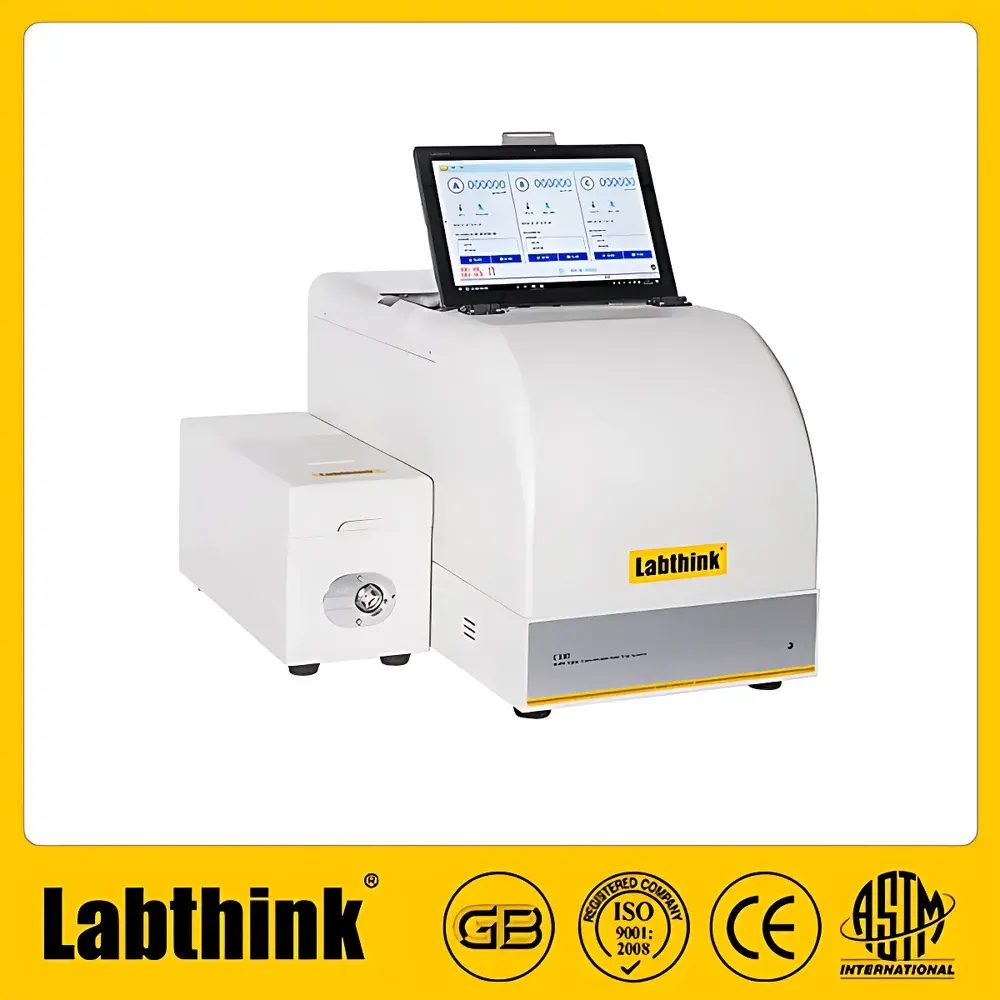
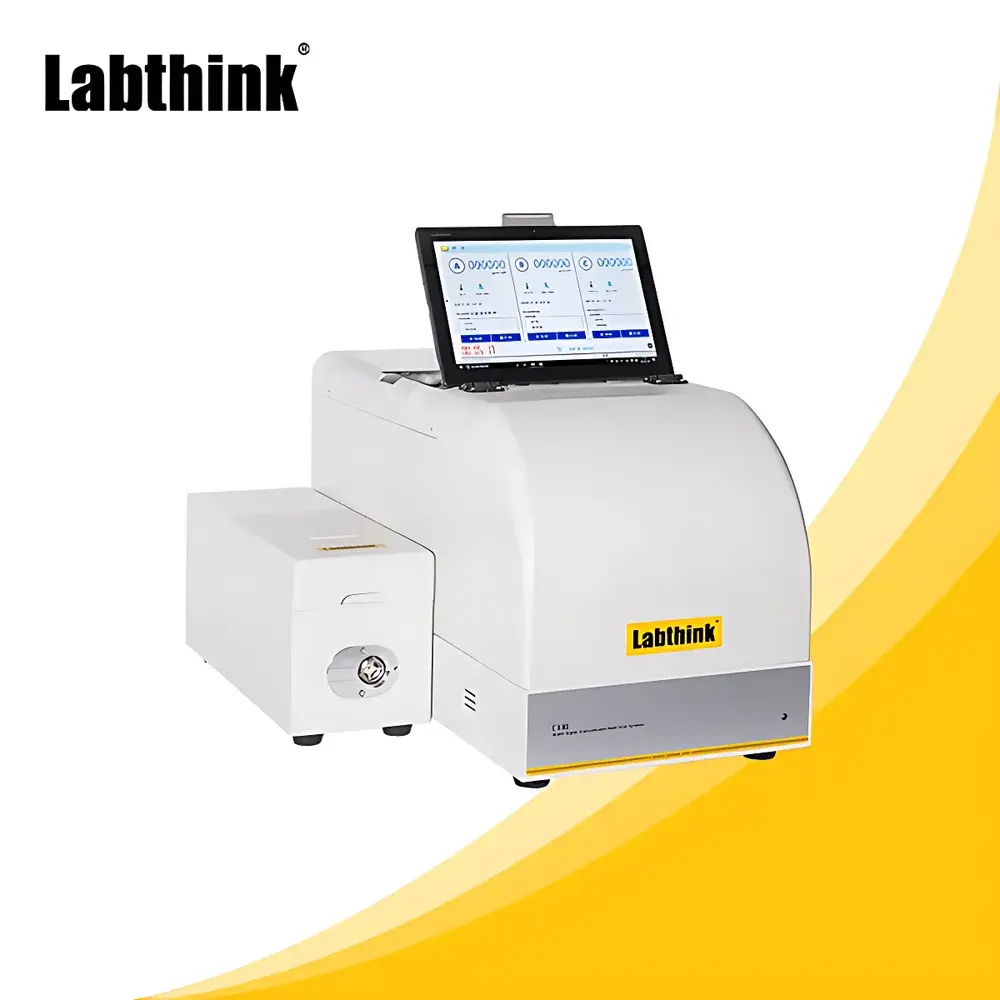
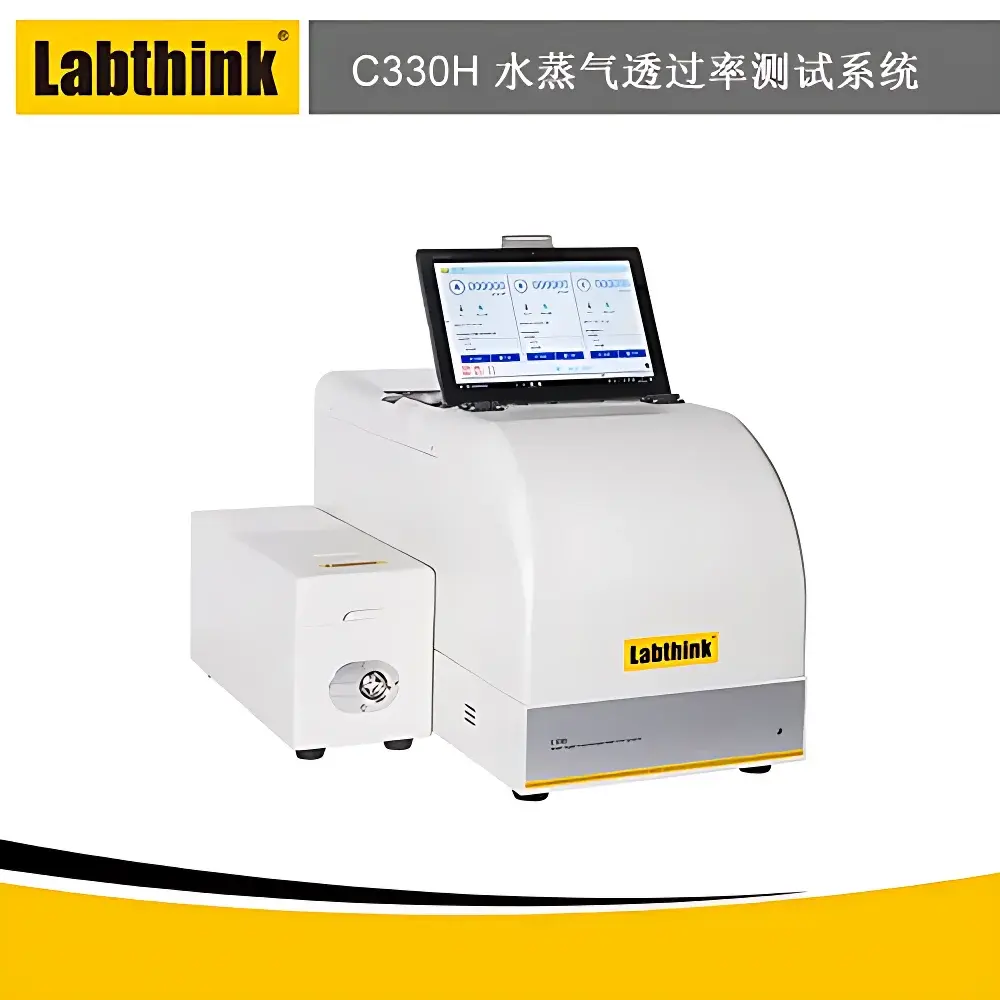
The Labthink C330H Water Vapor Transmission Rate (WVTR) Tester is a high-precision, triple-chamber electrolytic sensor-based system engineered for quantitative determination of water vapor permeation through polymeric films, laminates, foils, papers, and rigid or flexible packaging structures. It operates on the fundamental principle of coulometric moisture detection—where water vapor permeating across a test specimen is carried by dry nitrogen gas to an electrolytic sensor, generating a current proportional to water concentration via Faraday’s law of electrolysis. This method delivers exceptional sensitivity, long-term stability, and traceable linearity across low-to-moderate WVTR ranges (0.005–50 g/(m²·day)), making it especially suitable for evaluating barrier integrity in photovoltaic backsheet materials, pharmaceutical blister packs, medical device packaging, and high-performance food and electronics packaging. The system is fully aligned with international regulatory test protocols—including ISO 15106-3 (electrolytic sensor method), ASTM F3299, and Chinese pharmacopoeial standards (YBB 00092003-2015)—ensuring data acceptability in GLP, GMP, and FDA-submitted dossiers.
Key Features
- Triple independent test chambers enabling parallel evaluation of three identical specimens (for statistical validity per ASTM/ISO parallel testing requirements) or three distinct materials under identical environmental conditions
- Patented monolithic test block integrating advanced thermodynamic and fluid dynamic design—ensuring uniform laminar carrier gas flow, minimized boundary layer effects, and stable humidity gradient establishment across each specimen
- Labthink-developed electrolytic moisture sensor with coulometric transduction: offers superior signal-to-noise ratio, 5-year operational lifetime under routine use
- Spatial 3D thermal regulation system maintaining ±0.2 °C temperature uniformity across all chambers and sensor zones—critical for minimizing thermal-induced measurement artifacts
- Dedicated RH and temperature sensors mounted inside each chamber for real-time, closed-loop environmental monitoring and active feedback control
- Integrated 12-inch Windows 10 touchscreen HMI with industrial-grade processor—supporting both automated standard-test mode and customizable advanced-test mode with granular parameter scripting
Sample Compatibility & Compliance
The C330H accommodates flat sheet materials (films, foils, papers, composites) up to 108 mm × 108 mm and 3 mm thick, as well as rigid and semi-rigid packaging units (bottles, cups, pouches, trays) with internal volume up to 3 L. Its modular sealing architecture supports irregular geometries—including blister cavities, tube ends, and solar module edge seals—via custom fixture kits. All hardware and firmware comply with ISO/IEC 17025 preconditions for testing laboratories. Optional CFR 21 Part 11-compliant configuration includes electronic signatures, full audit trail logging (user actions, parameter changes, calibration events), role-based access control, and encrypted database storage—fully satisfying FDA-regulated quality systems. Test reports are exportable in PDF/A-2, CSV, and XML formats compatible with LIMS and ERP integration.
Software & Data Management
Equipped with Labthink’s proprietary DataShield™ software platform, the C330H implements end-to-end data integrity governance: raw sensor signals, environmental logs, and calculated WVTR values are timestamped, digitally signed, and stored in tamper-evident archives. The system supports secure LAN/WLAN connectivity (including IEEE 802.11ac optional module) and exposes RESTful APIs for third-party MES or QMS interoperability. Calibration history, maintenance records, and user-defined SOPs are embedded within the test sequence metadata—enabling full traceability from raw data acquisition to final report generation. All data handling conforms to ALCOA+ principles (Attributable, Legible, Contemporaneous, Original, Accurate, Complete, Consistent, Enduring, Available).
Applications
Primary applications include WVTR assessment of photovoltaic backsheets (PET/EVA/PE, fluoropolymer-coated TPT), pharmaceutical cold-form blister lidding foils, sterile barrier systems for implantables, lithium-ion battery pouch film laminates, and high-barrier snack packaging. Extended use cases cover moisture ingress analysis in OLED encapsulation films, desiccant-filled pharmaceutical bottles, wound dressing membranes, and automotive EV battery module housings. The system is routinely deployed in R&D labs, QC departments, and contract testing facilities serving Tier-1 suppliers to solar OEMs, global pharma manufacturers, and FDA-registered medical device producers.
FAQ
What sensor technology does the C330H employ, and why is it preferred for low-permeability materials?
It uses a coulometric electrolytic moisture sensor compliant with ISO 15106-3—offering sub-ppm-level detection sensitivity and inherent linearity without calibration drift, critical for measuring ultra-low WVTR in PV backsheets and pharmaceutical barrier films.
Can the system validate compliance with FDA 21 CFR Part 11?
Yes—when configured with the optional CFR 21 Part 11 package, it provides full electronic record and signature functionality, including audit trails, user authentication, and data encryption per NIST SP 800-53 controls.
Is package testing limited to specific shapes or volumes?
No—the system supports custom fixtures for non-standard geometries; maximum internal volume is 3 L, with validated methods for bottles, tubs, pouches, and blister cards per ASTM F1249 and ISO 15106-3 Annex B.
What carrier gas specifications are required for optimal performance?
High-purity nitrogen (≥99.999%) at ≥0.28 MPa inlet pressure is mandatory; impurities (O₂, H₂O, hydrocarbons) must be below 1 ppm to prevent sensor poisoning and baseline instability.
How is temperature and humidity uniformity verified across all three chambers?
Each chamber contains calibrated PT100 RTD and capacitive RH sensors; system firmware performs continuous inter-chamber deviation checks and auto-adjusts heating/cooling outputs to maintain ≤±0.2 °C and ≤±1% RH tolerance across all active test zones.
Related Products





