
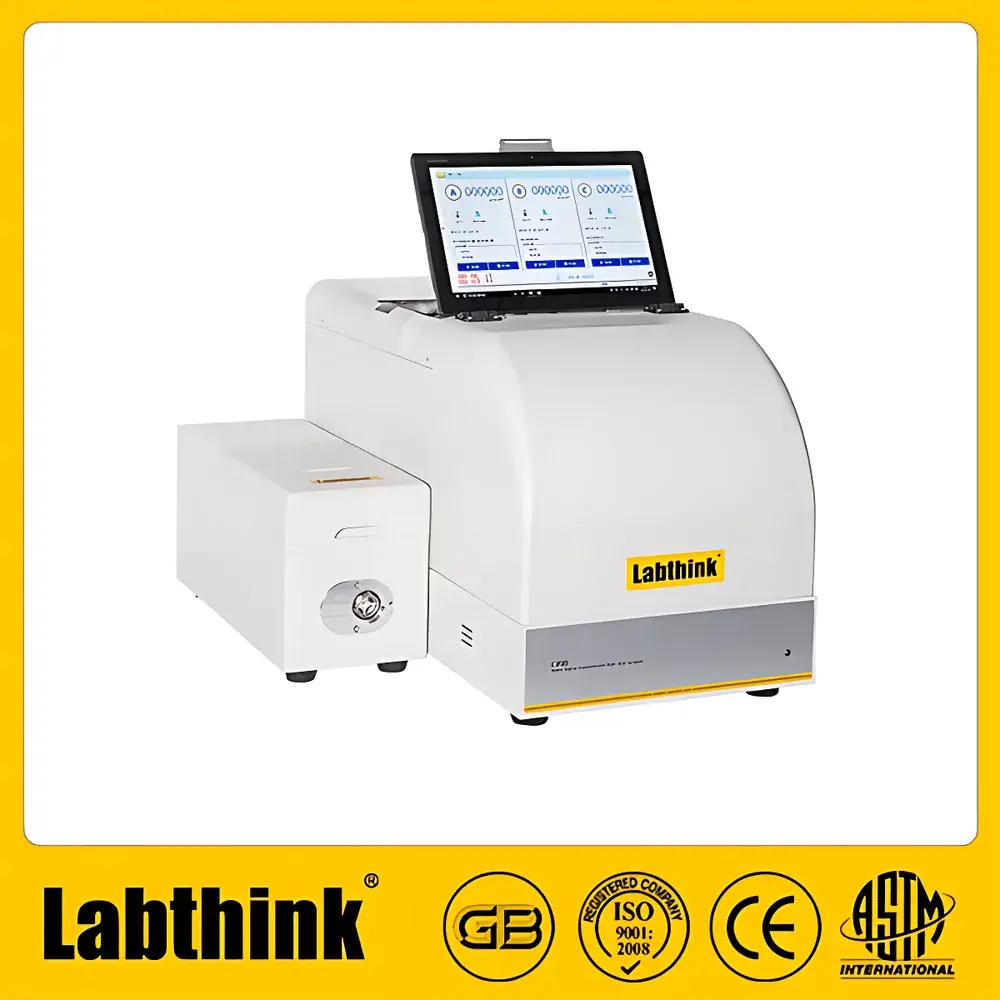
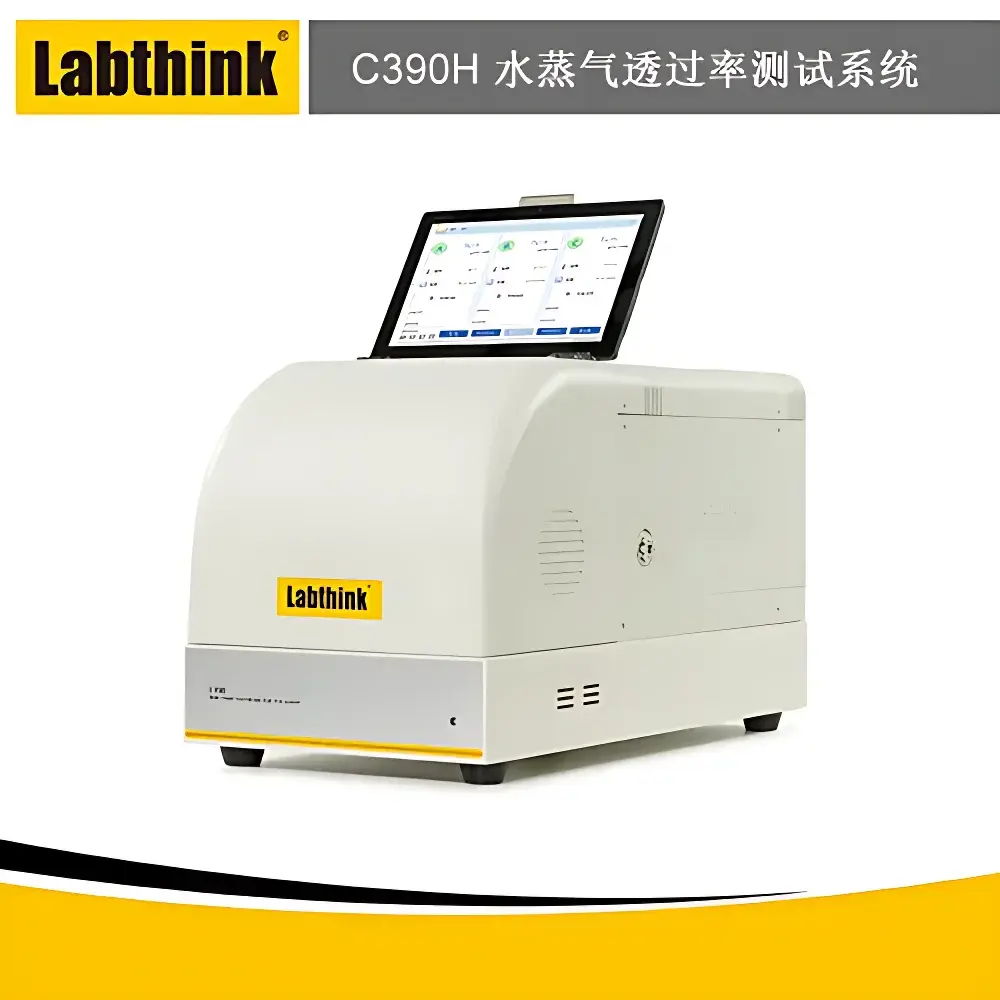
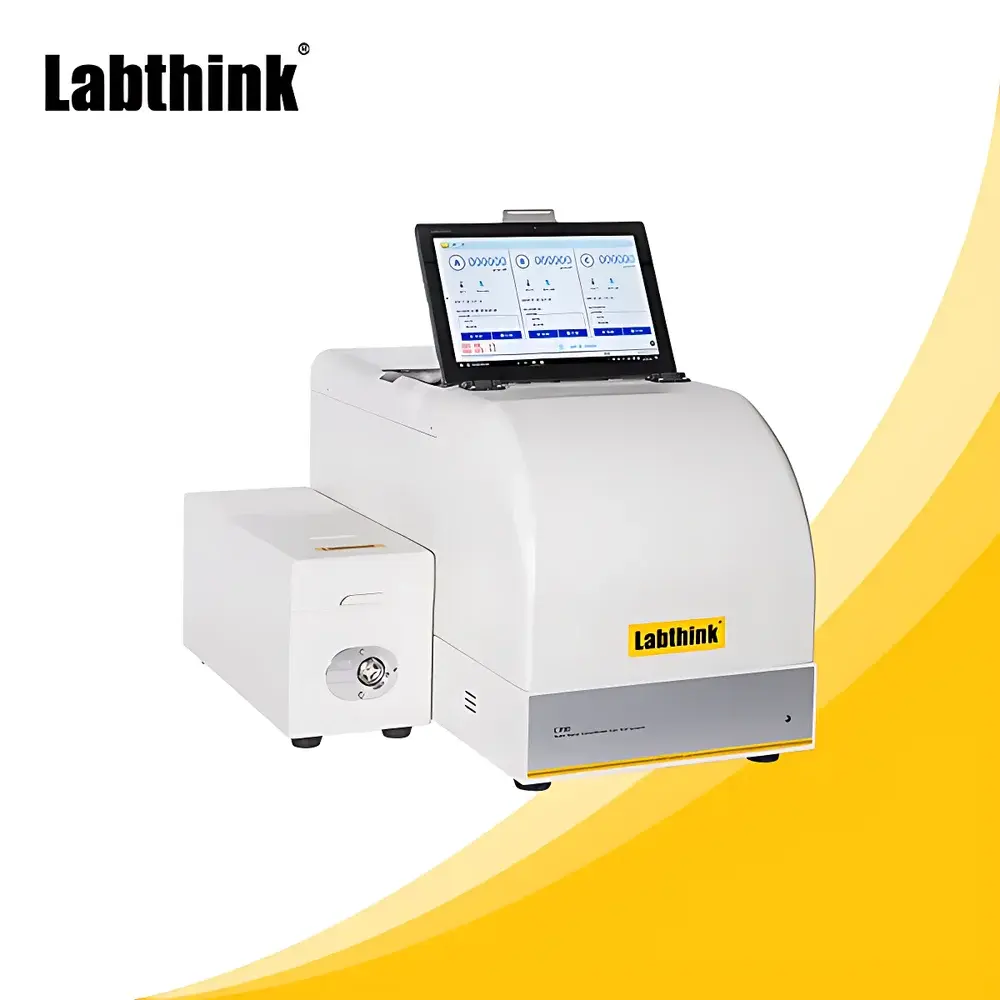
Labthink C390H Infrared-Based Water Vapor Transmission Rate (WVTR) Tester for Packaging Containers and Films
| Brand | Labthink |
|---|---|
| Model | C390H |
| Measurement Principle | Infrared Detection of Water Vapor |
| Standards Compliance | ASTM F1249, ISO 15106-2, GB/T 26253, JIS K7129, YBB00092003-2015 |
| Test Range | 0.005–40 g/(m²·day) (film) |
| Resolution | 0.0001 g/(m²·day) |
| Repeatability | ±0.005 g/(m²·day) or ±2% (whichever is greater) |
| Temperature Control | 10–55 °C (±0.2 °C) |
| Humidity Control | 5–90% RH (±1% RH), up to 100% RH |
| Test Chambers | 3 independent, integrated cavities |
| Sample Area | 50 cm² (standard) |
| Max. Sample Size | 108 mm × 108 mm |
| Max. Sample Thickness | ≤3 mm |
| Container Capacity | Up to 3 L |
| Carrier Gas | Ultra-high-purity N₂ (≥99.999%), inlet pressure ≥0.28 MPa (40.6 psi) |
| Gas Interface | 1/8″ stainless steel tubing |
| Data Management | DataShield™ audit-trail compliant software |
| Regulatory Options | CFR 21 Part 11, GMP-compliant computer system, GLP/GMP validation support |
Overview
The Labthink C390H is a high-precision, infrared-based Water Vapor Transmission Rate (WVTR) tester engineered for quantitative permeation analysis of rigid and semi-rigid packaging containers—including PET beer bottles, HDPE milk bottles, pharmaceutical blister packs, and pouches—as well as flat barrier materials such as films, laminates, foils, and coated papers. It operates on the principle of dynamic infrared moisture detection: a controlled humidity gradient is established across the test specimen, driving water vapor diffusion from a high-humidity side (e.g., saturated nitrogen or ambient humid air) to a dry carrier gas stream (ultra-pure nitrogen) on the opposite side. The permeated water vapor is swept into an IR-sensitive optical cell where its concentration is quantified in real time via absorption spectroscopy at characteristic wavelengths (e.g., 2.7 µm). This method delivers trace-level sensitivity, high linearity, and long-term sensor stability—enabling accurate measurement of ultra-low WVTR values down to 0.005 g/(m²·day) without reliance on reference membranes or manual range switching.
Key Features
- Triple-integrated test chamber architecture with patented thermal-fluidic symmetry—minimizes inter-chamber variance in temperature (±0.2 °C), relative humidity (±1% RH), and nitrogen flow rate (<±1% deviation), ensuring statistical validity per ASTM E177 and ISO 5725.
- Labthink-developed infrared moisture sensor with auto-ranging capability: dynamically selects optimal detection sensitivity based on real-time signal amplitude, eliminating manual calibration adjustments and extending calibration intervals beyond 12 months under routine use.
- Spatial 3D thermostatic control system: independently regulated heating/cooling zones around each chamber and sensor housing maintain uniform thermal equilibrium across all operational conditions (10–55 °C).
- Dedicated RH and temperature sensors within each test cavity enable closed-loop environmental feedback—critical for validating test condition compliance during regulatory audits (e.g., FDA inspection, EU Annex 11).
- Automated carrier gas flow regulation with mass flow controllers (MFCs) ensures constant sweep velocity (±0.5% stability), reducing boundary layer effects and improving reproducibility for low-permeability samples.
Sample Compatibility & Compliance
The C390H accommodates both planar specimens (films, sheets, foils) and three-dimensional packaging containers up to 3 L volume. For container testing, the internal cavity is purged with dry nitrogen while the exterior is exposed to controlled humid air—mimicking real-world storage conditions. Standardized fixtures ensure consistent sealing and minimize edge leakage per ASTM D3078. The system meets full regulatory alignment requirements: it supports 21 CFR Part 11-compliant electronic records and signatures when configured with optional GMP-grade computing hardware and DataShield™ audit-trail software. All test protocols adhere to ISO/IEC 17025 technical competence criteria and are traceable to NIST-certified humidity and temperature standards. Validation documentation—including IQ/OQ/PQ templates, uncertainty budgets, and metrological traceability statements—is available upon request.
Software & Data Management
The embedded Windows 10-based control interface features a 12-inch capacitive touchscreen with intuitive workflow navigation. Two operational modes are provided: Auto Mode for routine QC testing (predefined SOPs, one-click start, pass/fail flagging against user-defined limits); and Advanced Mode for R&D applications (customizable ramp profiles, multi-step humidity cycling, real-time spectral diagnostics). DataShield™ software provides ALCOA+ compliant data integrity: immutable audit trails, role-based access control, electronic signature capture, and encrypted local/cloud backup. Export formats include CSV, PDF reports (with embedded metadata), XML (for LIMS integration), and Excel-compatible structured datasets. Optional API support enables bidirectional communication with enterprise MES or ERP platforms.
Applications
The C390H serves critical quality assurance and development functions across regulated and industrial sectors. In food packaging, it validates moisture barrier integrity of PET carbonated beverage bottles and multilayer dairy containers—directly correlating WVTR performance with shelf-life prediction models. In pharmaceuticals, it supports container-closure integrity (CCI) assessment per USP , particularly for hygroscopic solid dosage forms requiring strict humidity control. Medical device manufacturers use it to verify sterility maintenance of Tyvek®-laminated trays and peelable pouches. Additionally, it supports formulation optimization of barrier coatings (e.g., SiOₓ, AlOₓ, PVDC) and supports lifecycle management of packaging materials through accelerated aging studies under controlled T/RH stress conditions.
FAQ
What standards does the C390H comply with for container testing?
ASTM F1249 (for films), ISO 15106-2 (infrared method), GB/T 26253 (Chinese national standard), and YBB00092003-2015 (Chinese pharmaceutical packaging standard) — all validated for both flat and 3D specimens.
Can the instrument perform simultaneous testing on three different container types?
Yes — each of the three independent chambers supports individual parameter configuration (T, RH, flow), enabling comparative evaluation of heterogeneous packaging designs under identical environmental conditions.
Is external calibration required before each test series?
No — the IR sensor’s auto-ranging function and built-in zero/span verification eliminate the need for reference membrane calibration; only annual verification using NIST-traceable humidity generators is recommended.
How is data integrity ensured during long-term stability studies?
DataShield™ enforces timestamped, immutable logging of all user actions, environmental deviations, and raw sensor outputs — fully compliant with FDA 21 CFR Part 11 and EU Annex 11 requirements for electronic records.
What carrier gas specifications are mandatory for optimal performance?
Ultra-high-purity nitrogen (≥99.999%, oxygen content <1 ppm, moisture <0.1 ppm) at inlet pressure ≥0.28 MPa (40.6 psi) is required to prevent baseline drift and ensure detector saturation avoidance.





