
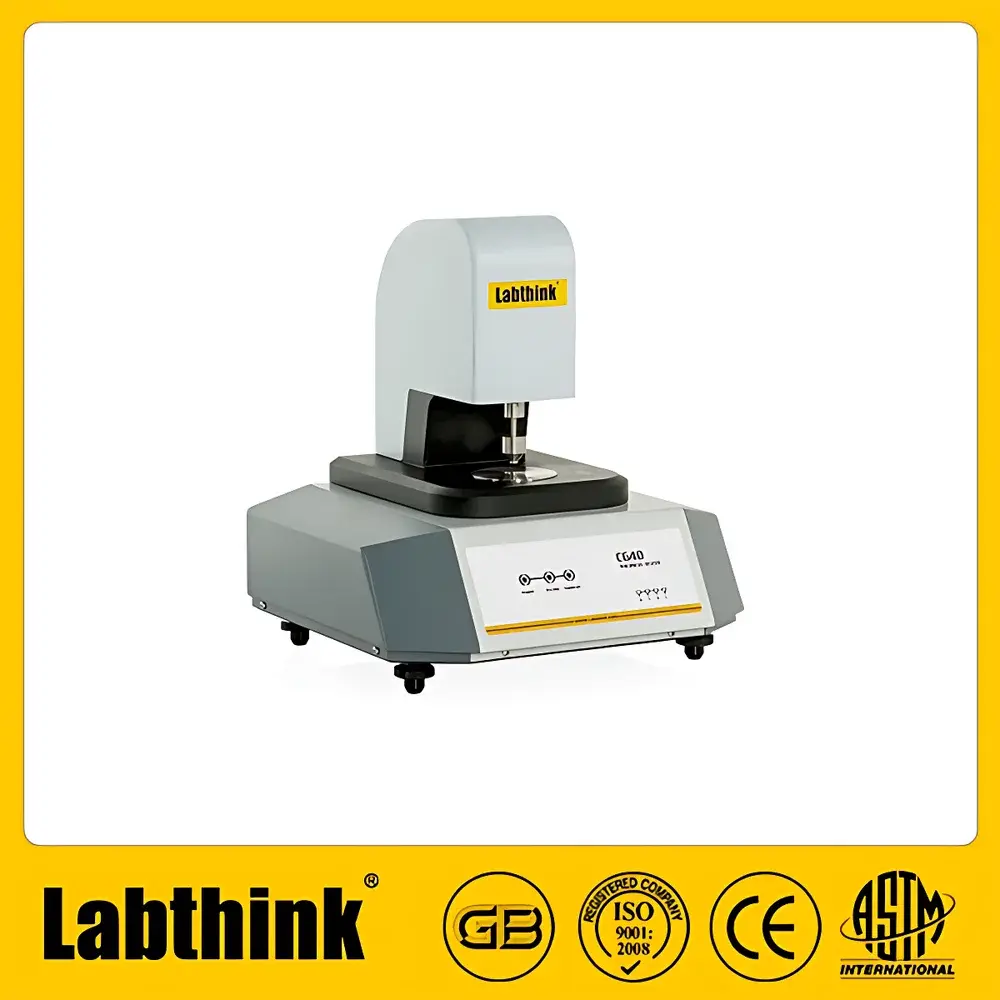
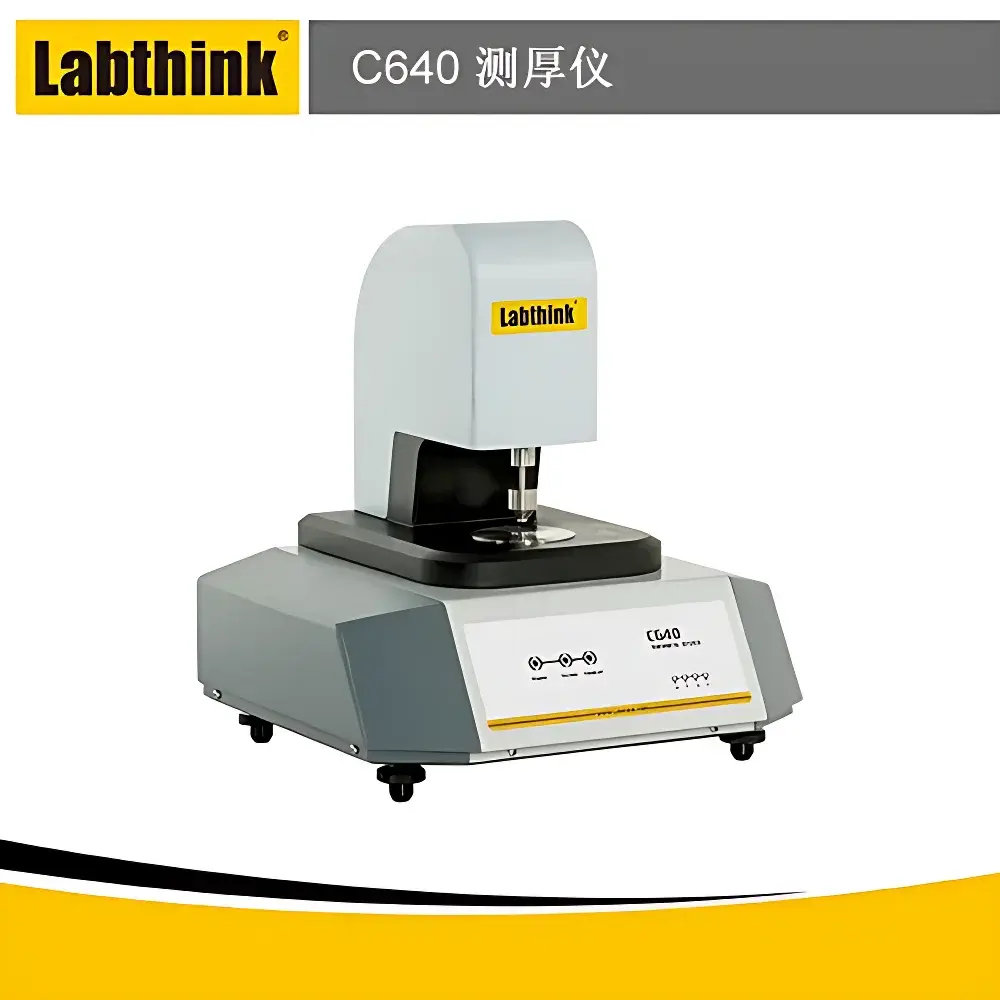
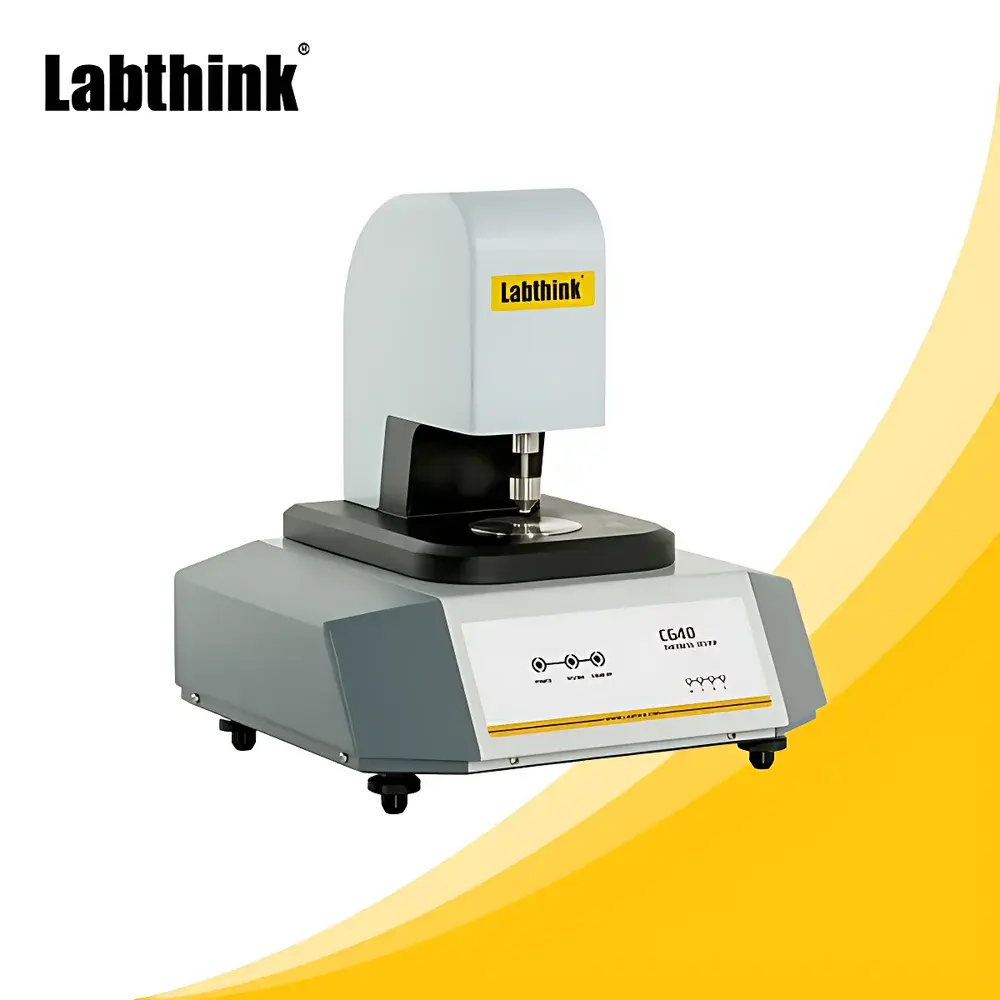
Labthink C640H Mechanical Contact Thickness Gauge for Silicon Wafers and Thin Materials
| Brand | Labthink |
|---|---|
| Model | C640H |
| Origin | Shandong, China |
| Manufacturer Type | Direct Manufacturer |
| Regional Category | Domestic (China) |
| Price Range | USD 2,800 – 14,000 |
| Measurement Principle | Mechanical Contact with Controlled Load |
| Standards Compliance | ISO 4593, ISO 534, ASTM D6988, ASTM F2251, GB/T 6672, GB/T 451.3, TAPPI T411, EN 1942, JIS K6250 |
| Test Range (Std) | 0–2 mm |
| Resolution | 0.1 µm |
| Repeatability | ±0.4 µm |
| Load Options | 17.5 ±1 kPa (50 mm², film), 100 ±1 kPa or 50 ±1 kPa (200 mm², paper/board) |
| Sample Traverse Distance | 0–1000 mm (programmable) |
| Feed Speed | 1.5–80 mm/s (adjustable) |
| Optional Accessories | Auto-Feeding Module, DataShield™ Secure Data Management System, GMP-Compliant Software Configuration (21 CFR Part 11 Audit Trail & User Access Control) |
Overview
The Labthink C640H is a precision mechanical contact thickness gauge engineered for high-reproducibility measurement of rigid and semi-rigid planar materials—including silicon wafers used in photovoltaic cell manufacturing, battery separator films, polymer thin films, metallic foils, and insulating substrates. It operates on the principle of controlled-force displacement sensing: a calibrated upper anvil applies a standardized pressure to the sample surface while a high-resolution linear variable differential transformer (LVDT) sensor measures the axial gap between upper and lower parallel anvils. This method ensures traceable, non-destructive thickness determination compliant with international standards for dimensional metrology in quality control laboratories. Unlike optical or ultrasonic alternatives, the C640H eliminates refractive index dependency and surface reflectivity artifacts—critical for opaque, multi-layered, or low-contrast substrates such as doped silicon wafers or ceramic-coated battery separators.
Key Features
- Sub-micron resolution (0.1 µm) and exceptional repeatability (±0.4 µm) achieved via dual-stage thermal compensation and zero-drift LVDT transducers.
- Configurable test load profiles per material class: 17.5 ±1 kPa for thin films (50 mm² contact area); 100 ±1 kPa or 50 ±1 kPa for paperboard and rigid sheets (200 mm²).
- Modular mechanical architecture supporting optional auto-feeding modules for unattended multi-point scanning across up to 1000 mm of sample length.
- Programmable feed speed (1.5–80 mm/s) and dwell time to accommodate viscoelastic relaxation in soft polymers or compressible nonwovens.
- Robust cast-aluminum frame with granite base plate minimizes vibration-induced error and ensures long-term geometric stability under continuous QC operation.
Sample Compatibility & Compliance
The C640H accommodates flat, dimensionally stable specimens up to 300 mm × 300 mm and 12 mm thick (with extended-range option). Validated applications include silicon wafers (100–300 µm typical thickness), lithium-ion battery anode/cathode foils (6–25 µm Cu/Al current collectors), microporous polyolefin separators (12–30 µm), and solid dielectric films per IEC 60674-2. All measurement protocols adhere to ISO 5084 (determination of thickness of rigid plastic sheeting), ASTM D374 (electrical insulation materials), and GB/T 24218.2 (nonwovens for medical use). Optional GMP-compliant software configuration includes full 21 CFR Part 11 audit trail, electronic signatures, role-based access control, and encrypted database storage—meeting FDA and EMA requirements for regulated pharmaceutical and medical device manufacturing environments.
Software & Data Management
Labthink’s proprietary testing software provides ISO/IEC 17025-aligned data acquisition, statistical process control (SPC) charting, and automated report generation (PDF/CSV/XLSX). The interface supports customizable test templates, real-time deviation alerts, and batch-level trend analysis. With the optional DataShield™ module, raw sensor data, calibration logs, user actions, and report exports are cryptographically timestamped and stored in a tamper-evident repository—enabling full forensic traceability during regulatory inspections. Software validation documentation (IQ/OQ/PQ protocols) and CSV export compliance with ALCOA+ principles (Attributable, Legible, Contemporaneous, Original, Accurate, Complete, Consistent, Enduring, Available) are available upon request.
Applications
- Photovoltaics: Thickness uniformity mapping of monocrystalline and multicrystalline silicon wafers pre- and post-texturing.
- Battery Manufacturing: QA verification of electrode coating thickness, foil substrate consistency, and separator caliper tolerance (±0.5 µm spec).
- Packaging & Films: In-line QC of BOPP, PET, PE, and metallized barrier films per ASTM D6988.
- Medical Devices: Thickness profiling of hydrophilic coatings on catheter shafts and nonwoven components in surgical drapes.
- Electronics: Dimensional verification of flexible printed circuit (FPC) substrates and thermal interface materials (TIMs).
FAQ
What is the maximum allowable sample thickness for the C640H with standard configuration?
The standard measurement range is 0–2 mm; extended ranges of 0–6 mm or 0–12 mm are available via optional sensor calibration kits.
Can the C640H measure curved or warped silicon wafers?
No—it requires flat, rigid samples with minimal bow (<50 µm) and total thickness variation (TTV) within instrument resolution limits. Wafer flattening fixtures are not supported.
Is calibration traceable to NIST or other national metrology institutes?
Yes—Labthink provides factory calibration certificates traceable to CNAS-accredited standards (equivalent to ISO/IEC 17025), with optional NIST-traceable reference gauges available.
Does the system support integration with MES or LIMS platforms?
Yes—via TCP/IP and OPC UA protocols; RESTful API documentation and middleware drivers for Siemens SIMATIC IT, Thermo Fisher SampleManager, and LabVantage are provided.
What maintenance intervals are recommended for daily QC use?
Daily zero calibration, monthly mechanical inspection of anvil parallelism and load cell linearity, and annual full recalibration by authorized service engineers.



