
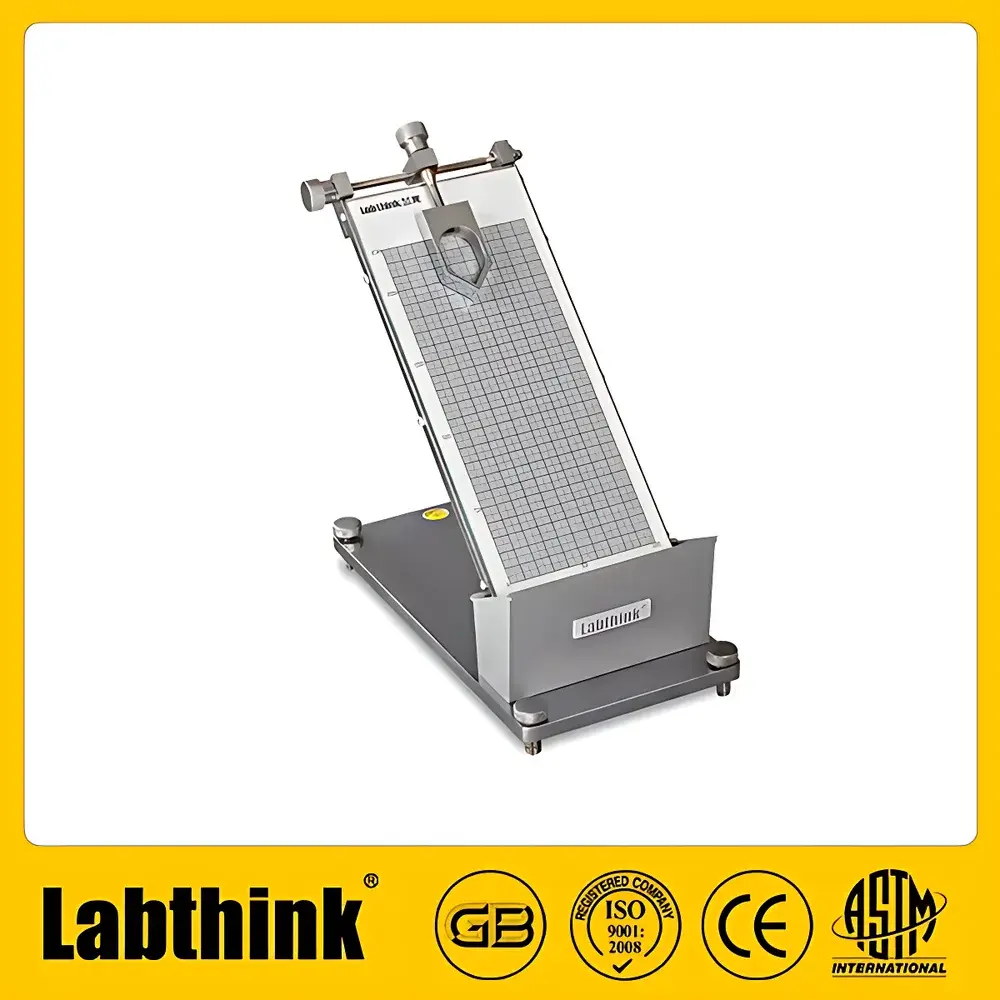
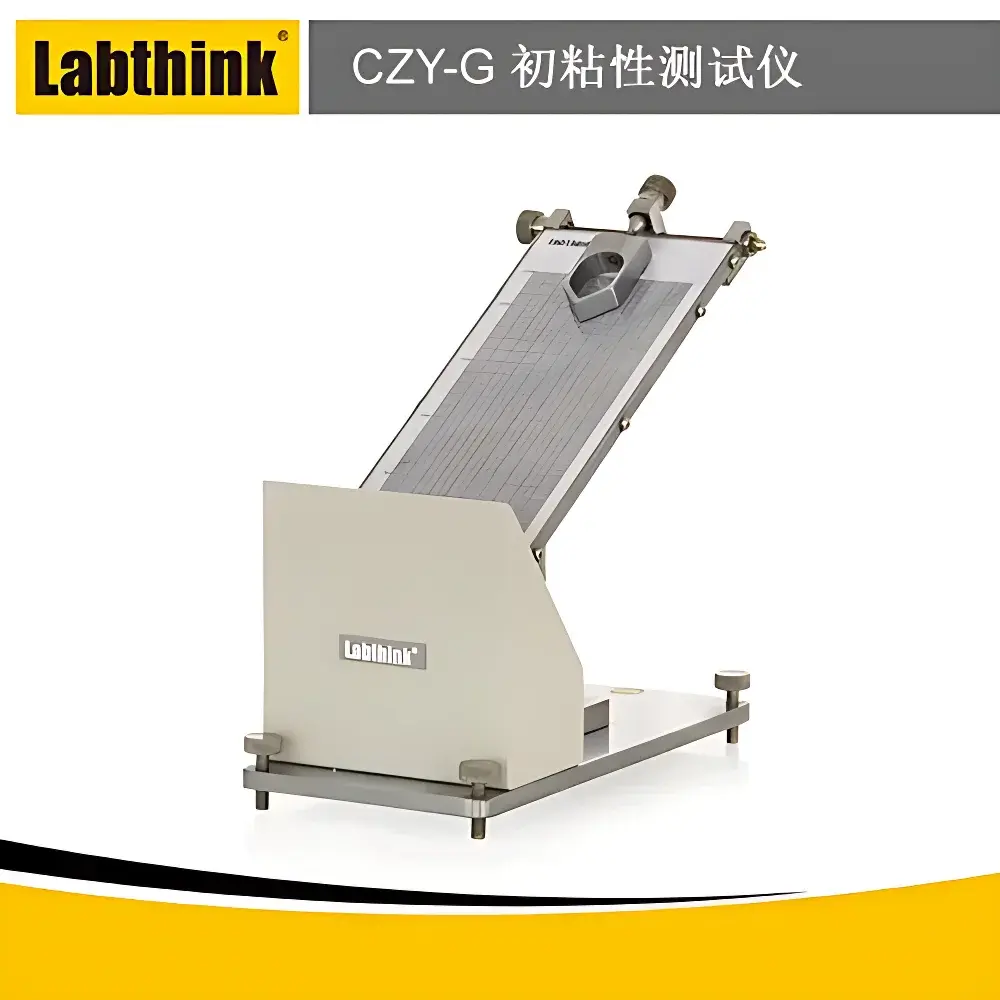
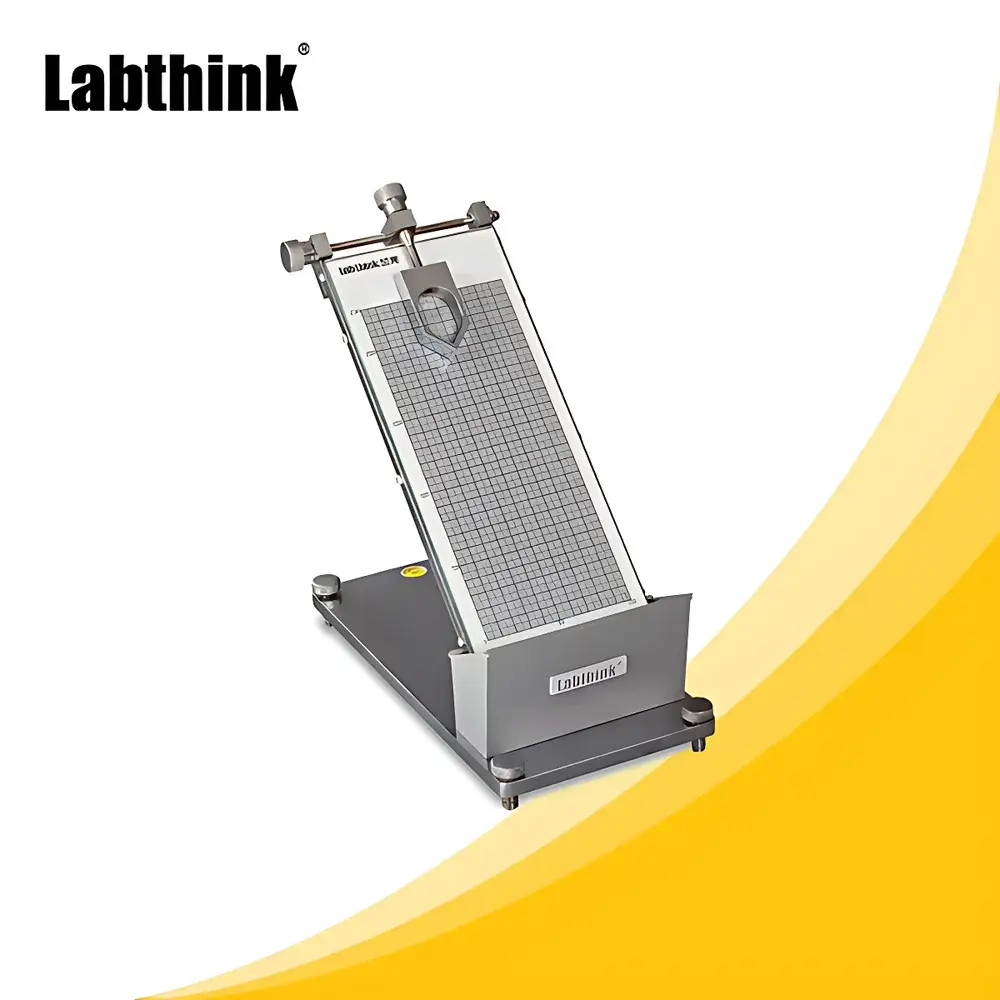
Labthink CYZ-G Initial Adhesion Tester for Pressure-Sensitive Adhesives
| Brand | Labthink |
|---|---|
| Model | CYZ-G |
| Testing Method | Inclined Plane Rolling Ball Method |
| Adjustable Incline Angle | 0–60° |
| Test Surface Width | 80 mm |
| Base Table Width | 120 mm |
| Standard Steel Balls | 1/32″ to 1″ (0.794 mm to 25.4 mm) |
| Dimensions (L×W×H) | 320 × 140 × 180 mm |
| Net Weight | 6 kg |
| Compliance | GB/T 4852, JIS Z 0237-2000 |
Overview
The Labthink CYZ-G Initial Adhesion Tester is an engineered instrument designed specifically for quantitative evaluation of the initial tack performance of pressure-sensitive adhesives (PSAs). It operates on the well-established inclined plane rolling ball principle—defined in international standards such as GB/T 4852 and JIS Z 0237-2000—to assess the instantaneous adhesive force developed upon brief, low-pressure contact between a standardized steel ball and the adhesive surface. Unlike peel or shear testing methods, this technique isolates the earliest stage of adhesion development—critical for applications where rapid bonding onset is essential, including medical transdermal patches, labeling systems, protective films, and industrial masking tapes. The instrument’s mechanical architecture ensures high reproducibility across repeated trials by maintaining precise control over incline angle, ball release consistency, and test surface alignment.
Key Features
- Adjustable inclination mechanism calibrated from 0° to 60° in fine increments, enabling graded sensitivity for comparative analysis across diverse PSA formulations.
- Optimized test zone geometry: 80 mm effective width accommodates standard specimen dimensions while minimizing edge effects during ball roll trajectory.
- Integrated steel ball storage and handling system compliant with ISO 3290-1 specifications for bearing-grade chrome steel balls (diameters ranging from 1/32″ to 1″).
- Sturdy aluminum alloy frame with anti-vibration base plate ensures stable positioning during operation and long-term dimensional stability.
- Compact footprint (320 × 140 × 180 mm) and lightweight design (6 kg) facilitate integration into QC laboratories, R&D workbenches, and production line validation stations.
- No electrical power requirement—purely mechanical operation eliminates calibration drift associated with motorized or sensor-based systems.
Sample Compatibility & Compliance
The CYZ-G supports a broad range of PSA-coated substrates, including acrylic, rubber-based, silicone, and hybrid adhesive systems applied to paper, film, foil, and nonwoven backings. Specimens are mounted on the horizontal platform using double-sided tape or clamping fixtures (not supplied), ensuring flatness and parallelism relative to the incline plane. All operational parameters—including ball diameter selection, incline angle setting, and release height—are traceable to national and industry standards. The device satisfies requirements for routine testing under GLP-compliant quality control environments and supports audit-ready documentation when paired with standardized test protocols per GB/T 4852 and JIS Z 0237-2000. While not a digital data logger, its mechanical repeatability enables consistent pass/fail screening aligned with internal specification limits or customer-facing technical datasheets.
Software & Data Management
The CYZ-G is a manually operated mechanical tester with no embedded electronics or software interface. Test results are recorded as discrete ordinal outcomes—typically reported as the largest-diameter steel ball that rolls off the adhesive surface within a defined distance (e.g., 100 mm), or conversely, the smallest ball retained at a given incline angle. Laboratories integrate the instrument into broader data ecosystems via manual entry into LIMS or Excel-based tracking templates. For regulated environments requiring electronic records, users may pair the CYZ-G with third-party digital calipers or high-speed imaging systems (e.g., machine vision with frame-by-frame ball position logging) to generate time-stamped, operator-annotated test reports compliant with FDA 21 CFR Part 11 when validated per site-specific SOPs.
Applications
- Quality assurance of label stock adhesives in packaging printing facilities, verifying consistency batch-to-batch against established tack thresholds.
- R&D screening of novel PSA chemistries during formulation development, particularly where rapid set-time and substrate-specific wetting behavior must be balanced.
- Validation of medical adhesive performance on skin simulants or cadaver tissue models, supporting biocompatibility and wear-duration studies.
- Technical service support for converter operations, diagnosing adhesive transfer issues or backing-induced tack loss during slitting and rewinding.
- Supplier qualification testing for automotive interior trim tapes, where initial grab must prevent slippage during assembly under ambient temperature variations.
FAQ
What standards does the CYZ-G comply with?
It conforms to GB/T 4852 (China National Standard) and JIS Z 0237-2000 (Japanese Industrial Standard) for initial adhesion measurement using the inclined plane rolling ball method.
Is calibration required before use?
No formal calibration is mandated; however, periodic verification of incline angle accuracy using a certified digital inclinometer and ball diameter verification using grade-certified micrometers is recommended for ISO/IEC 17025-aligned labs.
Can the instrument test curved or flexible substrates?
Only flat, rigidly mounted specimens are suitable—substrate curvature or excessive compliance will distort ball trajectory and invalidate results.
What maintenance does the CYZ-G require?
Routine cleaning of the incline track with isopropyl alcohol and inspection for surface scratches or debris; steel balls should be inspected for pitting or deformation before each test series.
Does Labthink provide test protocol documentation?
Yes—Labthink supplies a bilingual (English/Chinese) operating manual with step-by-step test procedures, troubleshooting guidelines, and sample report templates aligned with GB/T 4852 Annex A.



