
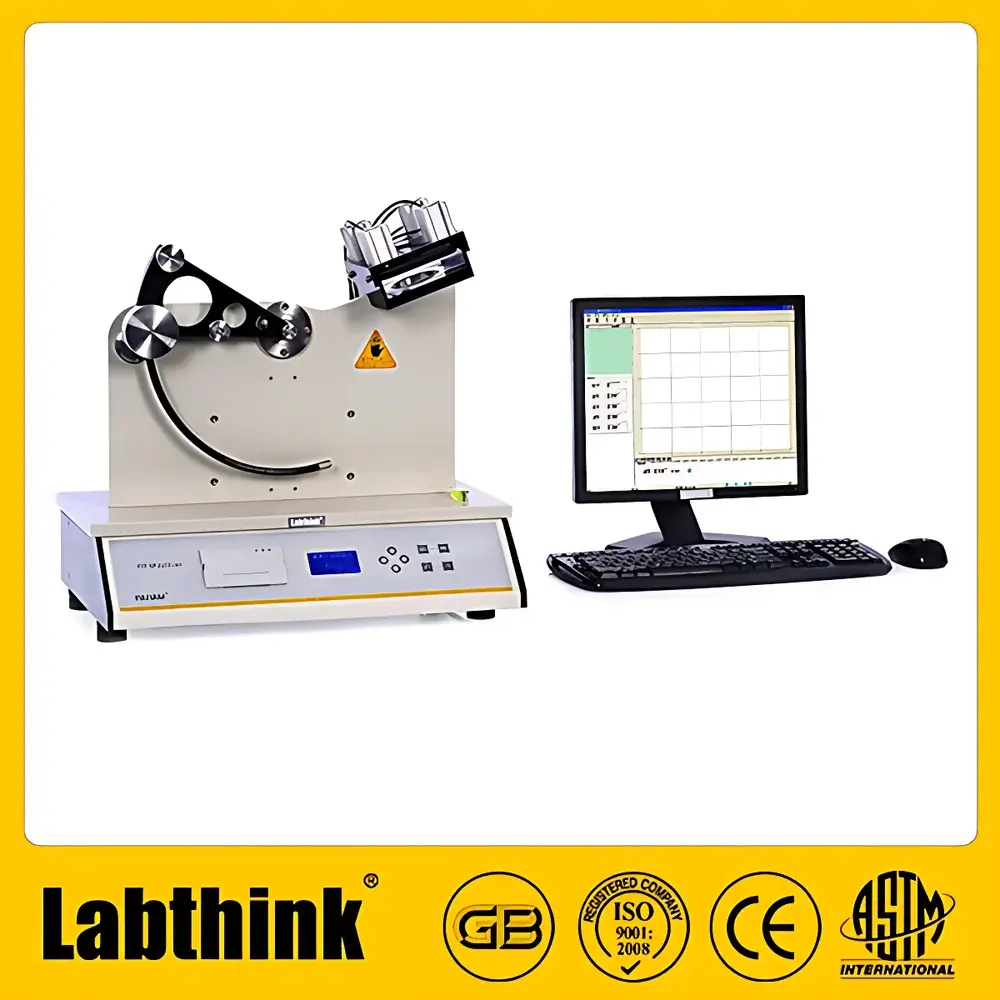
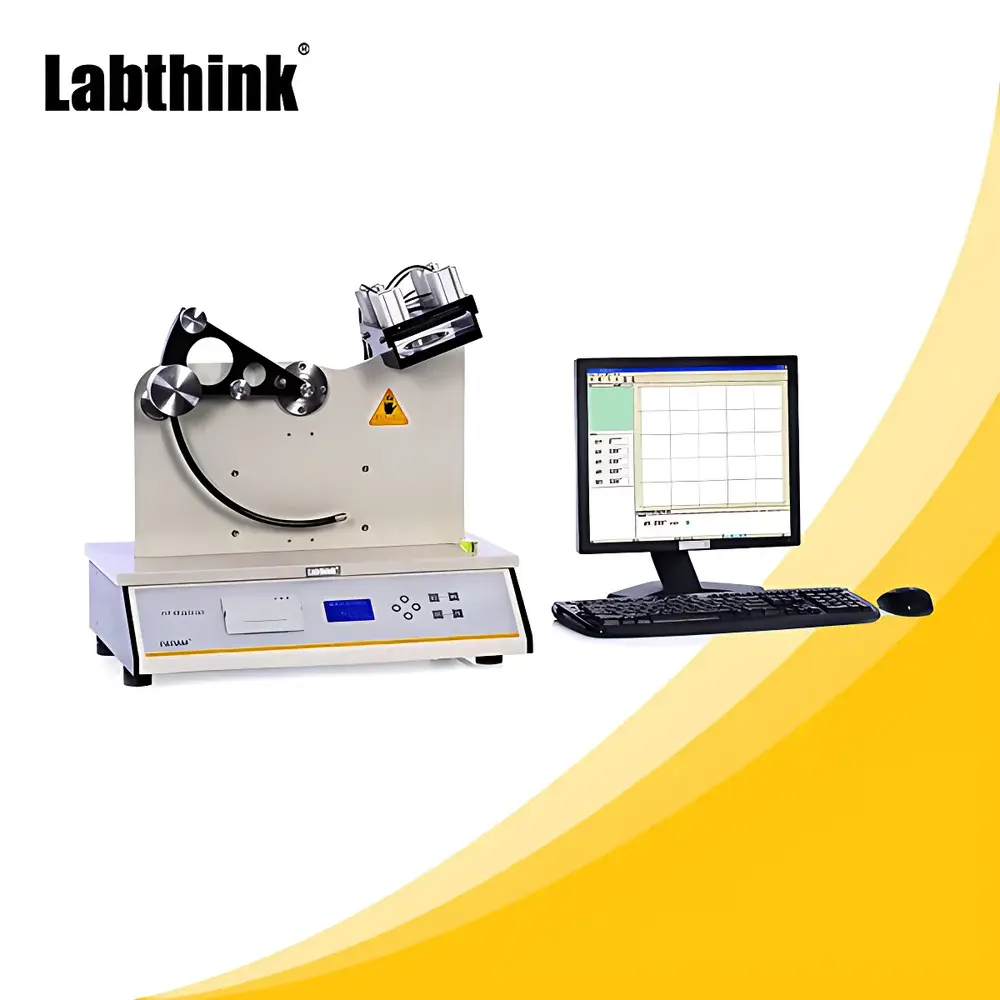
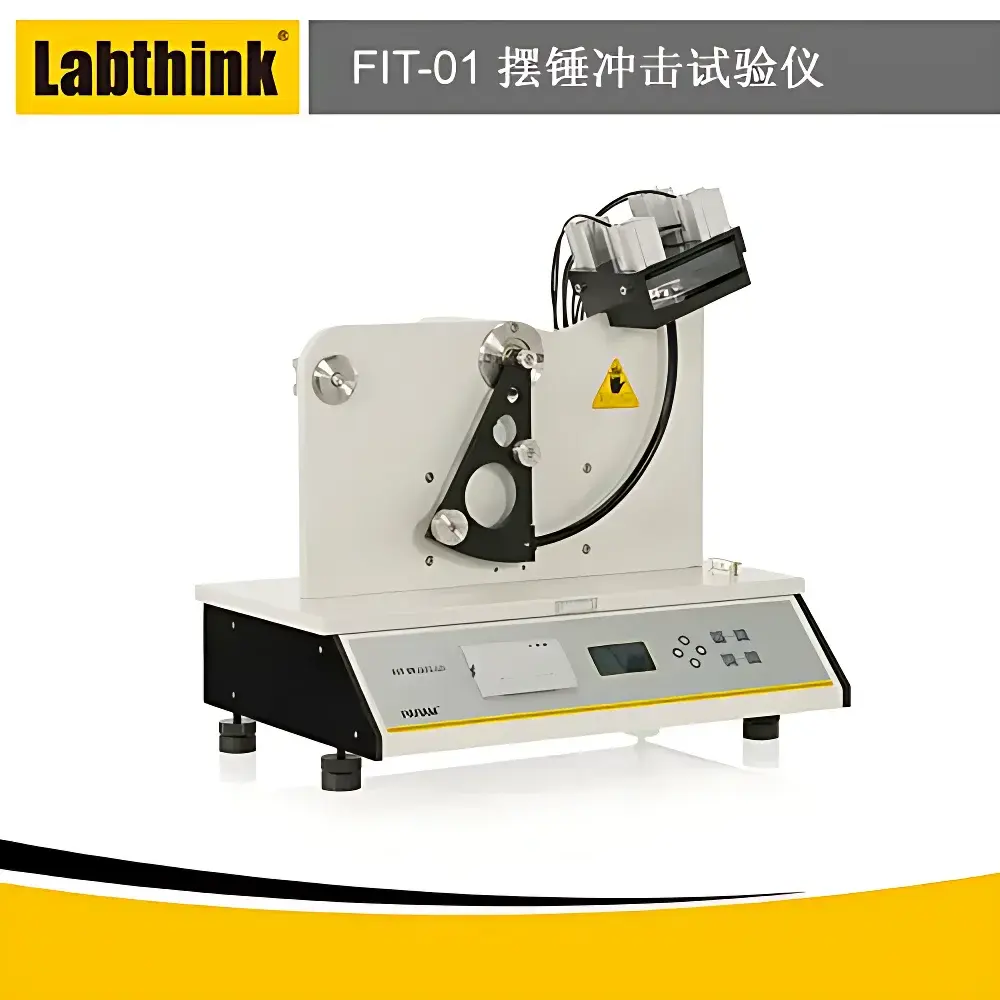
Labthink FIT-01 Pendulum Impact Tester for Pharmaceutical Packaging Films
| Brand | Labthink |
|---|---|
| Model | FIT-01 |
| Type | Pendulum Impact Testing Machine |
| Impact Energy | 1 J, 2 J, 3 J |
| Impact Energy Resolution | 0.001 J |
| Punch Diameter Options | Φ25.4 mm, Φ19 mm, Φ12.7 mm (customizable) |
| Clamp Aperture | Φ89 mm, Φ60 mm |
| Specimen Size | 100 mm × 100 mm or Φ100 mm |
| Air Supply Pressure | 0.6 MPa |
| Air Interface | Φ6 mm polyurethane tubing |
| Dimensions (L×W×H) | 600 mm × 390 mm × 600 mm |
| Weight | 64 kg |
| Power Supply | 220 VAC 50 Hz / 120 VAC 60 Hz |
| Standard Accessories | Base pendulum (1 J), 2 J & 3 J add-on weights, Φ25.4 mm & Φ19 mm punches, Φ89 mm & Φ60 mm clamp sets (with O-rings), micro-printer |
| Optional Accessories | Lystem™ Lab Data Management Software, RS232 communication cable, non-standard punches, replacement O-rings |
Overview
The Labthink FIT-01 Pendulum Impact Tester is a precision-engineered instrument designed to quantify the impact resistance of thin, flexible packaging materials used in pharmaceutical and medical device applications. It operates on the principle of pendulum impact testing per ASTM D3420, GB/T 8809, and NF T54-116—measuring the energy required for a hemispherical punch to rupture a clamped film specimen under controlled gravitational acceleration. Unlike drop-weight or Charpy-style impact testers, the FIT-01 employs a calibrated pendulum system with interchangeable weights and standardized punch geometries to deliver repeatable, traceable impact energy values (1 J, 2 J, 3 J) with a resolution of 0.001 J. Its application scope includes blister foil laminates, cold-forming aluminum foils, peelable lid films, PVC/PVDC coextrusions, and sterile barrier pouches—materials where mechanical integrity during handling, filling, and sterilization must be quantitatively verified. The system’s pneumatic specimen clamping and pendulum release mechanisms eliminate manual variability, ensuring high reproducibility across laboratories operating under GLP or ISO/IEC 17025 frameworks.
Key Features
- Triple-range impact energy calibration: 1 J, 2 J, and 3 J configurations supported via modular weight assembly—enabling accurate assessment across low-to-moderate impact thresholds typical of pharmaceutical packaging.
- Pneumatically actuated clamping system with dual clamp apertures (Φ89 mm and Φ60 mm) ensures uniform radial force distribution and eliminates slippage during high-speed impact events.
- Interchangeable hemispherical punches (Φ25.4 mm, Φ19 mm, Φ12.7 mm) allow method adaptation per material stiffness and regulatory requirement—e.g., ASTM D3420 specifies Φ12.7 mm for rigid films, while GB/T 8809 recommends Φ25.4 mm for soft laminates.
- Microprocessor-based control with LCD interface and tactile PVC keypad enables intuitive test setup, real-time energy readout, and on-device data review without external software dependency.
- Integrated thermal-printed output provides immediate hard-copy documentation compliant with audit trails required under FDA 21 CFR Part 11 when paired with optional Lystem™ software and timestamped electronic signatures.
- RS232 serial interface supports bidirectional communication with laboratory information management systems (LIMS) or statistical process control (SPC) platforms for automated data ingestion and trend analysis.
Sample Compatibility & Compliance
The FIT-01 accommodates standard specimens of 100 mm × 100 mm or Φ100 mm, compatible with ASTM D882 tensile sample preparation workflows. It is validated for use with polymer films (PET, OPP, PE, CPP), metallized laminates, aluminum foils (≥25 µm), paper-plastic composites, and peel-open medical packaging substrates. All test protocols align with pharmacopoeial and packaging standards including USP , ISO 11607-1:2019 (Packaging for terminally sterilized medical devices), and ICH Q5C stability guidance requiring mechanical robustness verification. The instrument’s mechanical design meets CE Machinery Directive 2006/42/EC requirements, and its electrical architecture complies with IEC 61010-1 safety standards for laboratory equipment.
Software & Data Management
The optional Lystem™ Laboratory Data Sharing System transforms the FIT-01 into a networked node within a centralized quality assurance infrastructure. It provides role-based user access control, electronic audit trails with operator ID and timestamp logging, automatic report generation (PDF/CSV), and integration with ERP or MES platforms via OPC UA or RESTful API. When configured for 21 CFR Part 11 compliance, Lystem™ enforces electronic signature validation, data immutability, and change history tracking—critical for pharmaceutical manufacturers undergoing FDA pre-approval inspections or EMA GMP audits. Raw energy values, failure mode annotations (ductile tear vs. brittle fracture), and environmental metadata (temperature/humidity logged via optional sensor input) are stored in encrypted SQLite databases with daily backup scheduling.
Applications
- Quantitative validation of blister cavity seal integrity against mechanical shock during cartoning and palletization.
- Comparative evaluation of foil-laminate puncture resistance before and after accelerated aging (40 °C/75% RH, 6 months).
- Supplier qualification testing for peel strength–impact resistance correlation studies.
- Root cause analysis of field failures linked to transport-induced micro-tears in sterile barrier systems.
- Design verification of child-resistant packaging films per ISO 8317 and ASTM D3475.
- QC release testing of cold-forming aluminum foil batches prior to pharmaceutical tablet encapsulation.
FAQ
What standards does the FIT-01 comply with?
ASTM D3420, GB/T 8809-1988, NF T54-116, and ISO 11607-1 Annex C for impact resistance of packaging materials.
Is air supply included with the instrument?
No—the FIT-01 requires an external compressed air source at 0.6 MPa; users must provide a clean, dry, oil-free supply connected via Φ6 mm polyurethane tubing.
Can test data be exported to Excel or LIMS?
Yes—via RS232 interface using Lystem™ software or third-party serial data loggers supporting ASCII protocol.
What maintenance is required for long-term accuracy?
Annual recalibration of the pendulum moment arm and punch alignment is recommended; O-ring replacement every 6 months ensures consistent clamping pressure.
Does the system support multi-user permission levels?
Yes—Lystem™ software offers administrator, technician, and reviewer roles with configurable data visibility and edit rights.



