
Labthink GC-7800 Automated Headspace Gas Chromatograph for Ethylene Oxide Residue Testing in Medical Gowns
| Brand | Labthink |
|---|---|
| Model | GC-7800 |
| Detection Principle | Headspace Gas Chromatography with Dual FID/TCD Detectors |
| Temperature Control Accuracy | ±0.1°C (sample chambers), ±0.5°C (gas lines & valve oven) |
| Sample Capacity | Dual 300 mL headspace vials |
| Injection Volume | 1.0 mL (optional: 0.5/2/3 mL) |
| Programmable Temperature Ramping | 5-stage linear, 1–30 °C/min |
| Column Oven Stability | <±0.1°C, gradient ≤1% across active zone |
| FID Detection Limit | ≤1×10⁻¹¹ g/s (benzene) |
| TCD Sensitivity | ≥3000 mV·mL/mg (benzene/H₂) |
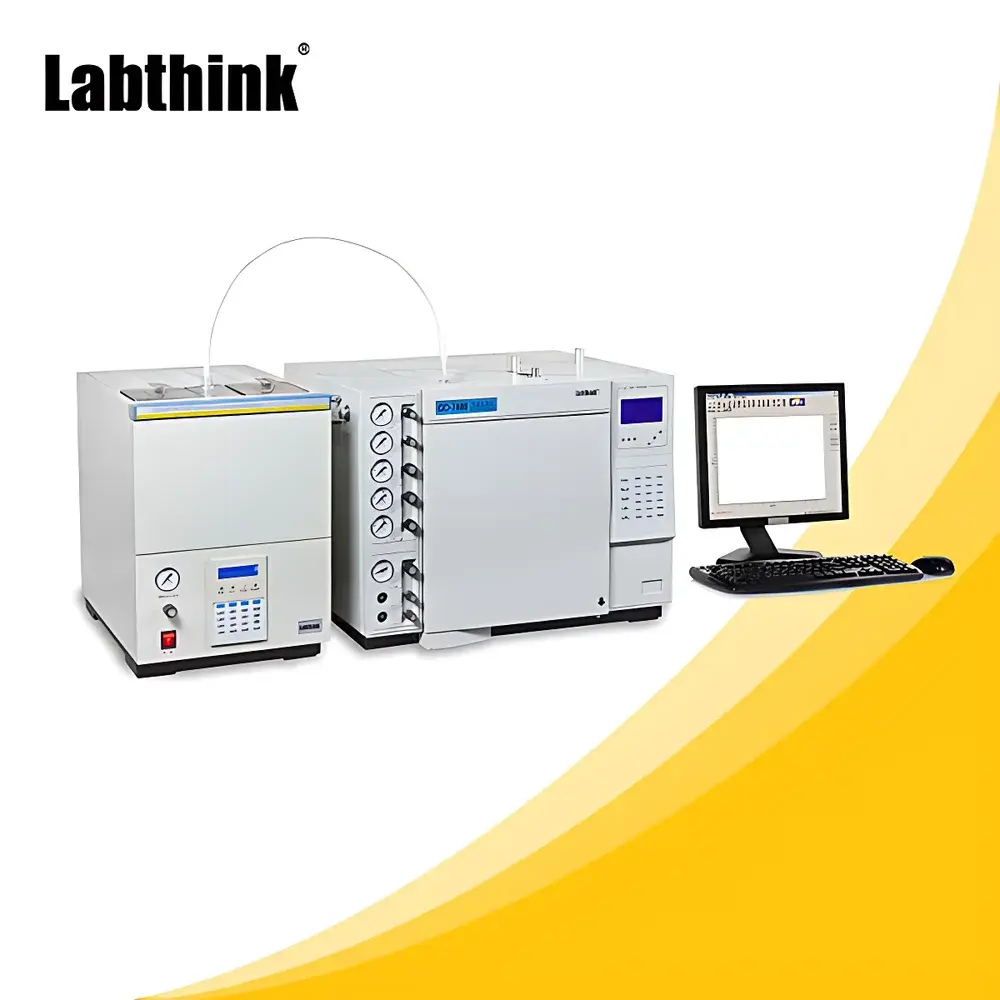
| Data System | PC-based chromatography workstation with audit trail, method validation support, and GLP-compliant reporting |
Overview
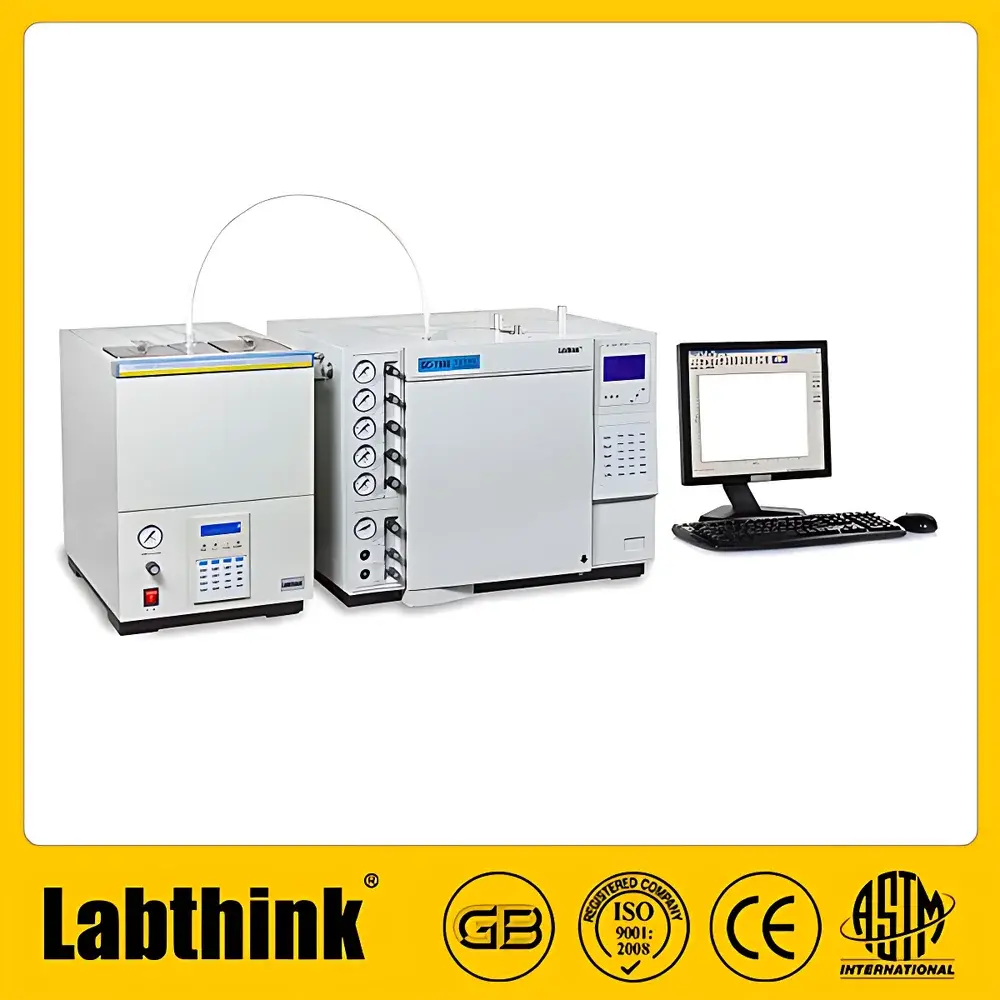
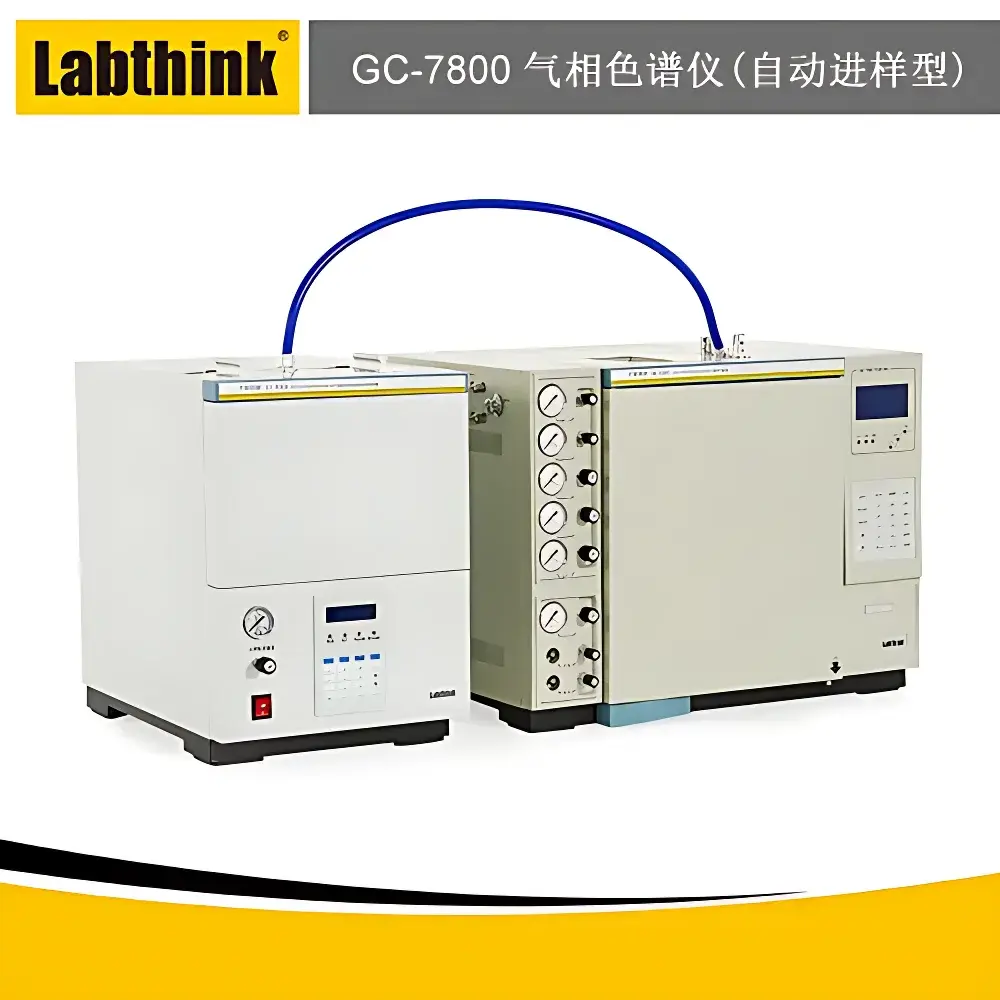
The Labthink GC-7800 is a fully automated headspace gas chromatograph engineered for precise quantification of residual ethylene oxide (EO) in sterilized medical personal protective equipment—including disposable gowns, surgical masks, and implant packaging—per ISO 10993-7, USP , and GB 19082–2009. EO residue testing is a critical quality control requirement following low-temperature gas sterilization; regulatory limits mandate ≤10 µg/g for patient-contacting devices. The GC-7800 implements validated headspace sampling coupled with dual-detector (FID + TCD) detection to deliver high specificity, reproducibility, and trace-level sensitivity without matrix interference. Its integrated thermal management architecture ensures stable, repeatable equilibration across dual sample chambers—eliminating manual transfer variability and enabling concurrent analysis of reference and test specimens under identical thermal conditions.
Key Features
- Dual independent headspace sample preparation zones: two 300 mL vial positions with individual temperature-controlled ovens (ambient +5°C to 200°C, ±0.1°C accuracy)
- Automated headspace injection system with programmable equilibrium time (0–60,000 s), valve switching delay (0–60,000 s), and purge/flush cycles to prevent carryover
- Modular detector design supporting simultaneous or sequential FID and TCD operation—ideal for co-detection of EO and residual solvents or moisture
- Column oven with 5-stage linear temperature programming (1–30°C/min), cooling from 300°C to 50°C in ≤15 minutes, and thermal uniformity <1% gradient across the active column length
- Gas delivery system featuring heated transfer lines (up to 150°C, ±0.5°C) and back-flush capability to minimize column contamination from high-boiling interferences
- Embedded microprocessor control with LCD interface, real-time parameter monitoring, auto-baseline zeroing, and non-volatile memory for method storage and recall
- Safety protections including over-temperature cutoff, thermal drift compensation, and power-fail recovery for uninterrupted sequence execution
Sample Compatibility & Compliance
The GC-7800 accommodates solid, semi-solid, and porous polymeric samples—including nonwoven PP/PE laminates, SMS fabrics, and Tyvek®-based gowns—without derivatization or extraction. Sample preparation follows ISO 10993-7 Annex B: 1.0 g specimen sealed in a 300 mL headspace vial, equilibrated at 60°C for 60 minutes prior to automated injection. The instrument meets essential requirements for GLP and GMP environments: full electronic audit trail, user-access controls, method versioning, and raw data integrity per FDA 21 CFR Part 11. It supports validation protocols aligned with ICH Q2(R2) for specificity, linearity (0.05–50 µg/g EO), LOD/LOQ, precision (<3% RSD), and robustness across ambient humidity and laboratory temperature fluctuations.
Software & Data Management
Controlled by Labthink’s proprietary ChromaSoft™ workstation, the GC-7800 provides ISO/IEC 17025-compliant data acquisition, peak integration, calibration curve generation (linear or quadratic), and report export in PDF, CSV, and XML formats. The software includes built-in compliance tools: electronic signatures, change history logging, forced re-calibration prompts after detector maintenance, and automatic flagging of out-of-spec results against configurable acceptance criteria (e.g., 10 µg/g EO limit). All chromatograms and processing parameters are stored with immutable timestamps and operator IDs—enabling full traceability during regulatory inspections or ISO 13485 audits.
Applications
Beyond EO residue testing in medical textiles, the GC-7800 serves as a versatile platform for regulated volatile organic compound (VOC) analysis: residual solvents in pharmaceutical packaging (ICH Q3C), moisture content in hygroscopic polymers, organic impurities in medical device adhesives, and off-gassing profiles of sterilization trays and blister foils. Its dual-column/dual-detector configuration allows parallel analysis—for example, quantifying EO (via FID) while simultaneously verifying water content (via TCD on a polar column)—reducing total assay time by up to 40% versus sequential single-detector systems.
FAQ
What regulatory standards does the GC-7800 support for EO testing?
It complies with GB 19082–2009, ISO 10993-7:2019, USP , and ASTM F2723–19 for residual EO determination in medical devices.
Can the system analyze multiple samples unattended?
Yes—the dual-vial configuration enables alternating analysis with automated sequence scheduling, supporting overnight runs of up to 48 samples when paired with optional tray-loading accessories.
Is method development assistance included?
Labthink’s application laboratory provides no-cost method establishment, validation documentation templates, and on-site or remote operator training per ISO/IEC 17025 competency requirements.
What consumables require routine replacement?
Capillary columns, FID jet assemblies, TCD filaments, and septa are standard wear items; GC-grade carrier gases (helium, hydrogen, or nitrogen) and certified EO reference standards must be procured separately.
Does the system meet cybersecurity requirements for networked labs?
ChromaSoft™ supports TLS 1.2 encryption, Active Directory integration, and role-based access control—fully compatible with modern IT security policies governing connected analytical instrumentation.
Related Products



