
Labthink HST-H3 Heat Sealing Tester (QB/T 2358 Compliant)
| Brand | Labthink |
|---|---|
| Model | HST-H3 |
| Origin | Shandong, China |
| Manufacturer Type | Direct Manufacturer |
| Country of Origin | China |
| Temperature Range | Ambient to 300 °C |
| Temperature Control Accuracy | ±0.2 °C |
| Sealing Time Range | 0.1–999.9 s |
| Sealing Pressure Range | 0.05–0.7 MPa |
| Sealing Surface Dimensions | 330 mm × 10 mm (customizable) |
| Heating Configuration | Single- or Dual-Zone Independent Heating |
| Pneumatic Supply Requirement | 0.5–0.7 MPa (user-supplied air source, Φ6 mm polyurethane tubing) |
| Power Supply | 220 VAC 50 Hz / 120 VAC 60 Hz |
| Net Weight | 43 kg |
| Dimensions (L×W×H) | 536 × 335 × 413 mm |
| Compliance Standards | QB/T 2358, ASTM F2029, YBB00122003 |
Overview
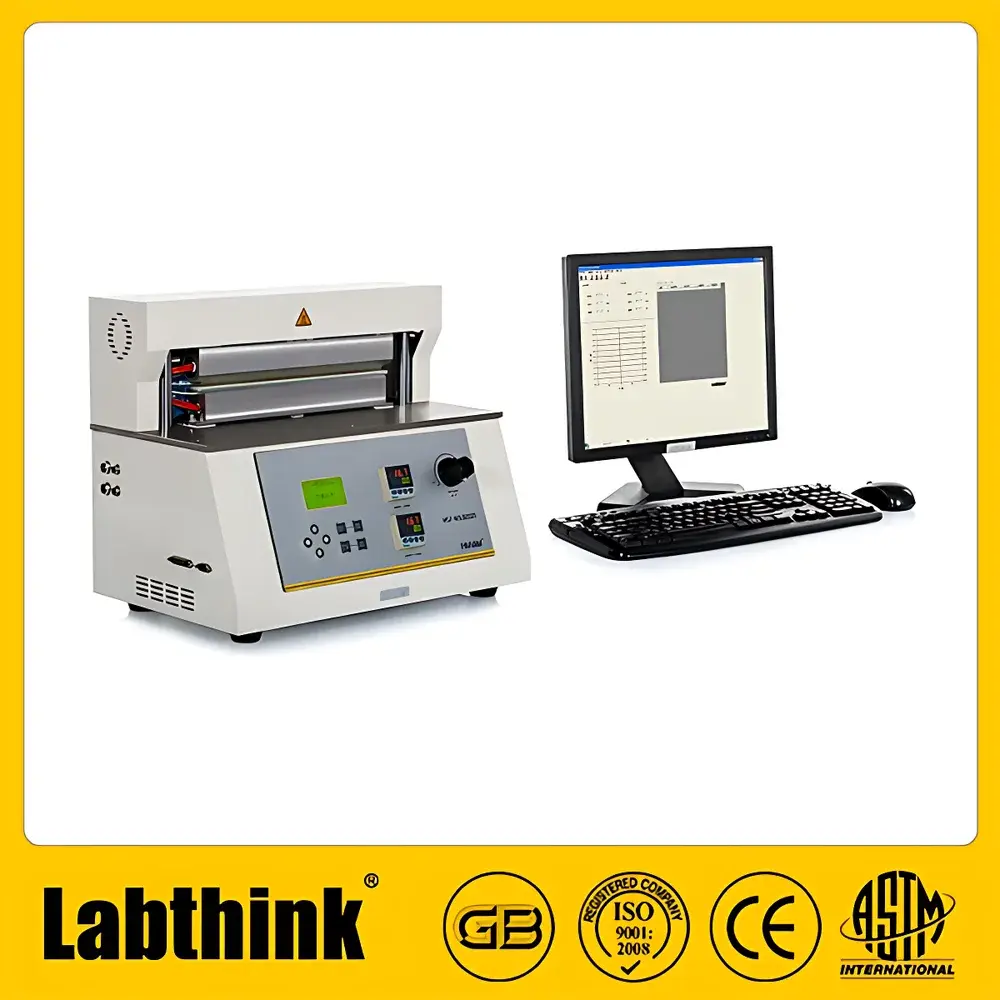
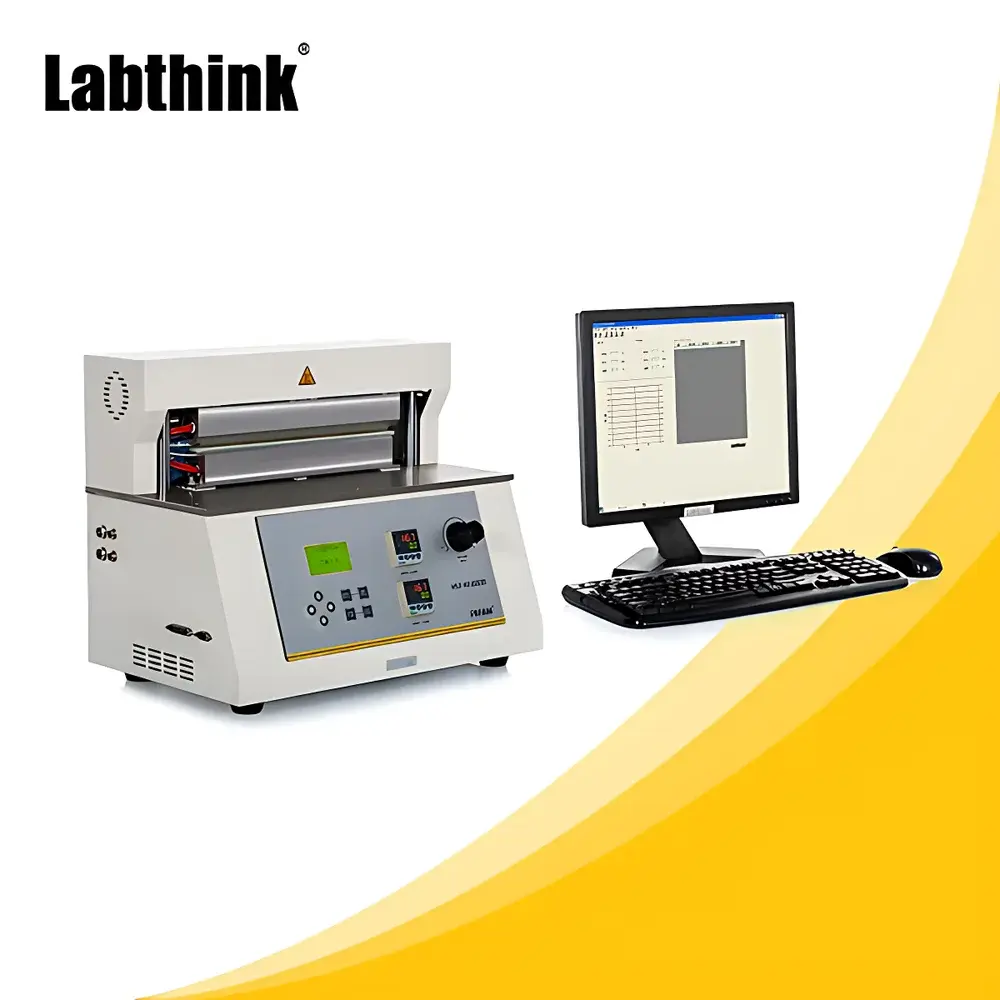
The Labthink HST-H3 Heat Sealing Tester is an engineered precision instrument designed for quantitative evaluation of heat seal integrity in flexible packaging materials. It operates on the principle of controlled thermal compression—applying precisely regulated temperature, pressure, and dwell time to replicate industrial sealing conditions under laboratory settings. This methodology enables deterministic characterization of seal initiation temperature, optimal sealing window, and seal strength dependency on process parameters. The system adheres to standardized test protocols defined in QB/T 2358 (Chinese light industry standard), ASTM F2029 (Standard Test Method for Measuring Heat Seal Strength of Thermoplastic Flexible Barrier Materials), and YBB00122003 (Chinese pharmaceutical packaging standard), ensuring data compatibility across global R&D, QC, and regulatory environments.
Key Features
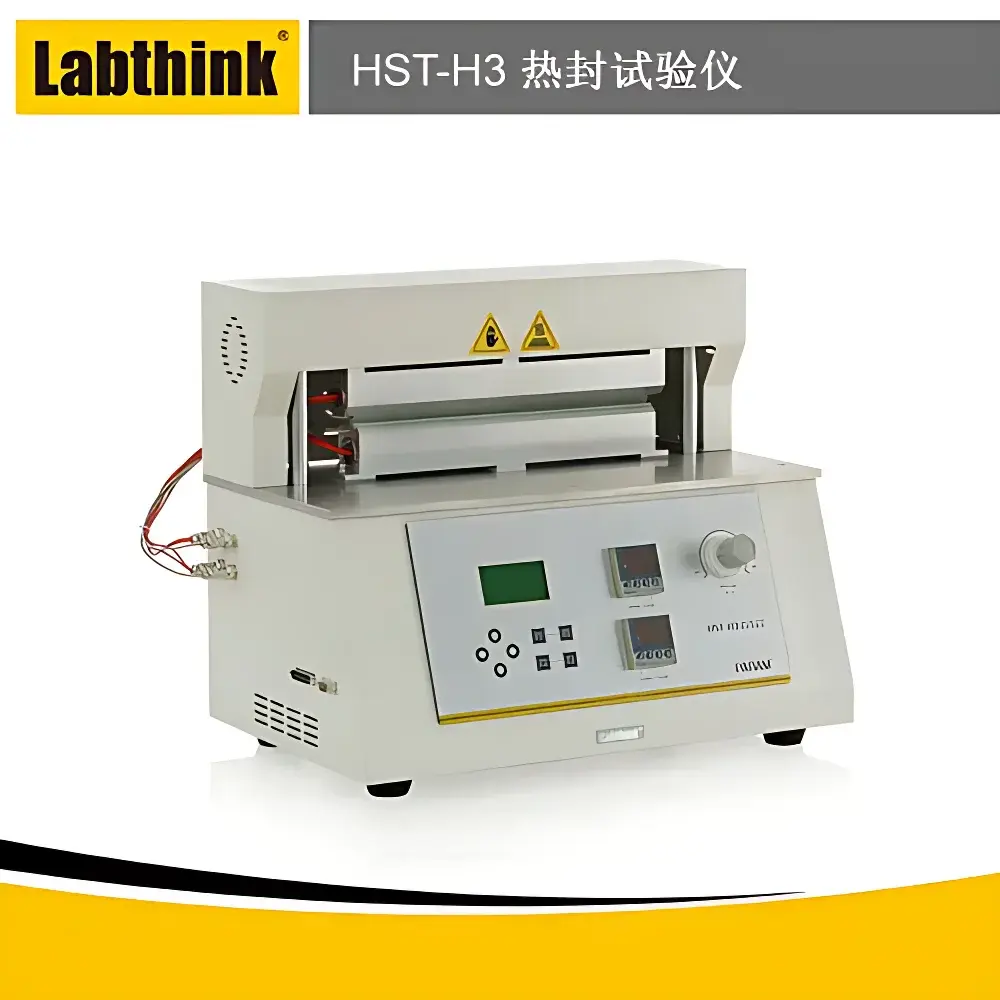
- Dual-zone independent PID temperature control: Upper and lower sealing jaws feature separate digital PID controllers with ±0.2 °C accuracy, enabling asymmetric thermal profiling for multilayer or dissimilar-material seals.
- Pneumatically actuated dual-cylinder system: Lower-mounted synchronized cylinders ensure uniform pressure distribution (0.05–0.7 MPa) across the full 330 mm sealing bar, minimizing edge effects and enhancing reproducibility.
- Modular thermal interface design: Aluminum-clad sealing bars provide rapid thermal response and lateral temperature uniformity; quick-disconnect heating element terminals support maintenance without calibration disruption.
- Operator safety and ergonomics: Integrated anti-scald shielding, foot-pedal activation (with manual override), and fail-safe pressure cutoff prevent unintended actuation during setup or adjustment.
- Human-machine interface: Backlit LCD display with tactile PVC membrane keypad and menu-driven navigation simplifies parameter entry, real-time monitoring, and protocol recall without external software dependency.
Sample Compatibility & Compliance
The HST-H3 accommodates a broad spectrum of thermoplastic and laminated substrates used in food, pharmaceutical, medical device, and consumer goods packaging. Standard configurations support flat-surface sealing of biaxially oriented polypropylene (BOPP), polyester (PET), polyethylene (PE), aluminum foil composites, metallized films, and paper-plastic laminates. Optional tooling—including patterned sealing bars, cup-sealing inserts for jelly containers, and tubular end-sealing fixtures—extends applicability to non-planar geometries. All test procedures align with Good Manufacturing Practice (GMP) documentation requirements, supporting audit readiness for FDA 21 CFR Part 11–compliant environments when paired with Labthink’s optional validation-ready software package. Traceable calibration certificates per ISO/IEC 17025 are available upon request.
Software & Data Management
An optional Windows-based control suite provides remote instrument operation via RS232 serial interface, enabling centralized test scheduling, parameter scripting, and automated data logging. Each test record includes timestamp, operator ID, environmental conditions (if externally logged), and full parameter history (temperature ramp profile, actual pressure trace, dwell timing). Export formats include CSV (for LIMS integration), PDF (for QA sign-off), and XML (for enterprise MES systems). Audit trail functionality meets GLP and 21 CFR Part 11 requirements, including electronic signatures, user-level access controls, and immutable event logs. Data encryption and role-based permissions ensure compliance with ISO 27001 information security frameworks.
Applications
- Optimization of production line sealing parameters: Correlating lab-scale HST-H3 results with high-speed form-fill-seal (FFS) equipment performance to reduce seal-related rejects.
- Material qualification: Comparative assessment of new resin grades, adhesive formulations, or surface treatments for thermal stability and melt flow behavior under constrained dwell conditions.
- Shelf-life validation: Accelerated aging studies combined with seal strength testing to establish correlation between seal integrity loss and barrier property degradation.
- Regulatory submission support: Generating repeatable, standards-aligned datasets required for packaging technical files under EU MDR, FDA 510(k), or PMDA approvals.
- Root cause analysis: Diagnosing intermittent seal failures by isolating variable interactions—e.g., humidity-induced polymer crystallinity shifts affecting seal onset temperature.
FAQ
What standards does the HST-H3 comply with?
The instrument is validated against QB/T 2358, ASTM F2029, and YBB00122003. Optional IQ/OQ documentation packages support compliance with ISO 9001, ISO 13485, and FDA 21 CFR Part 11.
Is compressed air supply included?
No. Users must provide a clean, dry, oil-free air source delivering 0.5–0.7 MPa through a Φ6 mm polyurethane tube connected to the rear panel port.
Can sealing parameters be programmed and recalled?
Yes. Up to 20 user-defined test protocols can be stored onboard; additional protocols are managed via PC software with version-controlled configuration libraries.
What maintenance is required?
Routine inspection of sealing bar surfaces for residue buildup, periodic verification of thermocouple calibration (recommended annually), and pneumatic filter replacement every 6 months under continuous use.
Is third-party calibration available?
Labthink offers accredited calibration services traceable to NIST and CNAS standards, including uncertainty budgets and ISO/IEC 17025-compliant certificates.





