
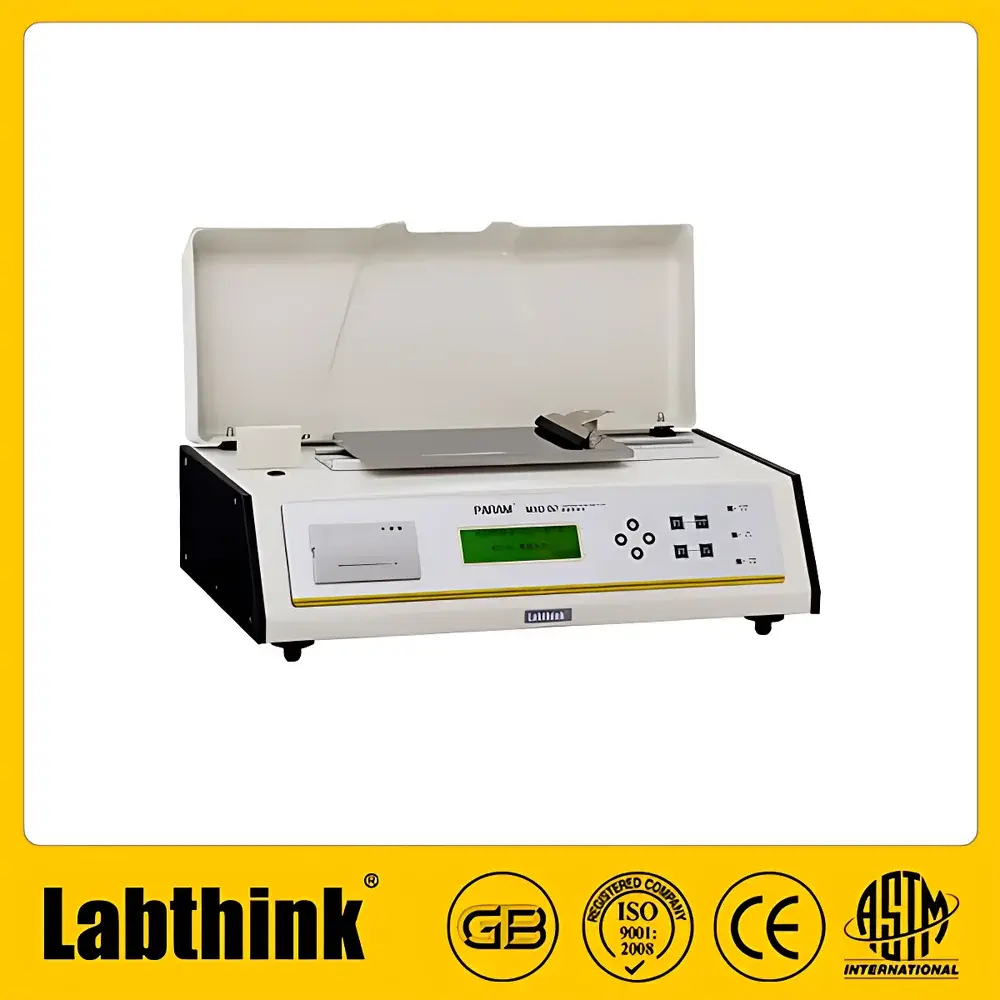
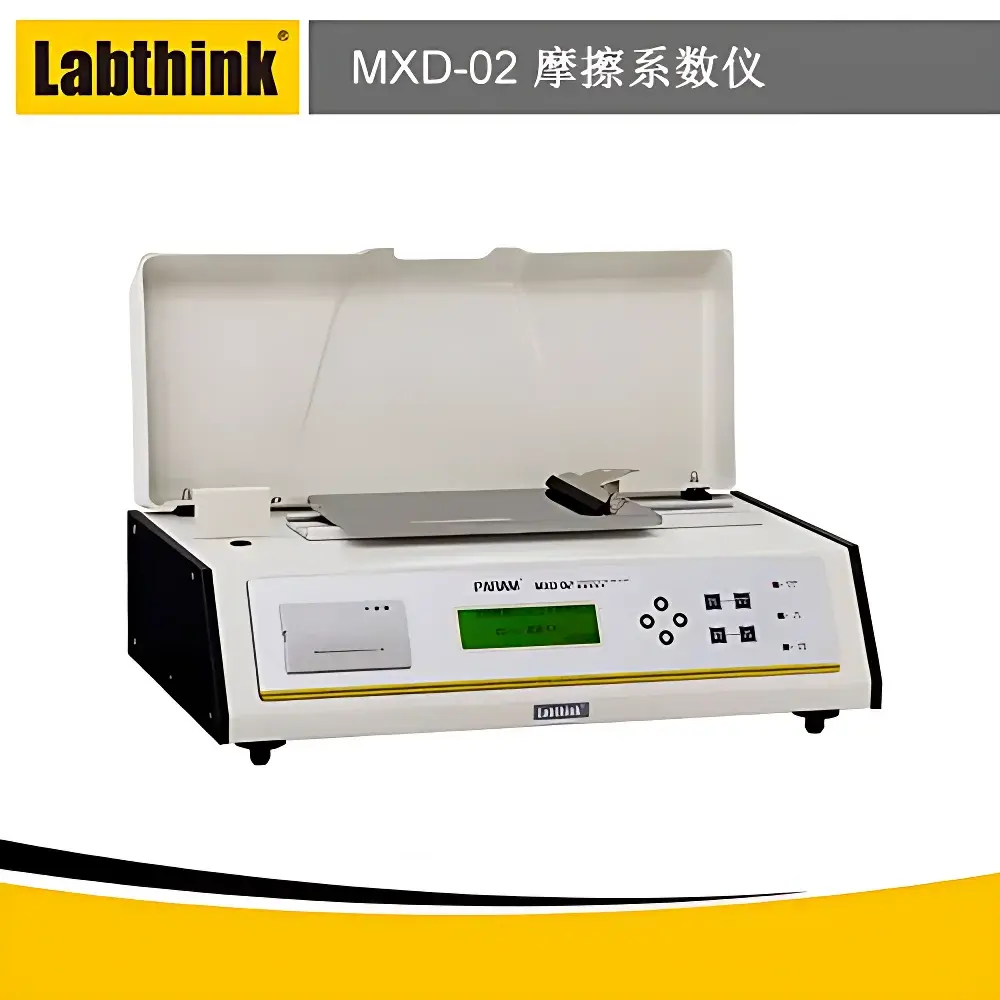
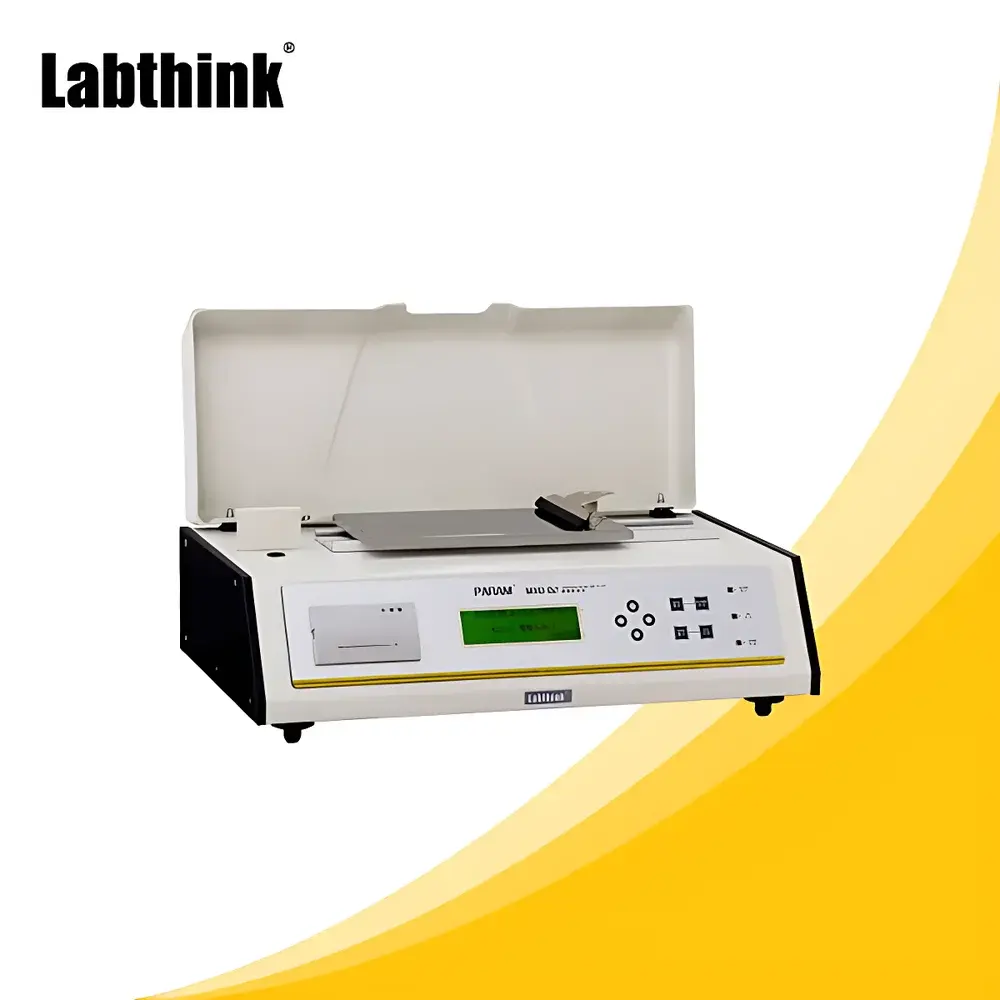
Labthink MXD-02 Coefficient of Friction Tester for Packaging & Industrial Materials
| Brand | Labthink |
|---|---|
| Model | MXD-02 |
| Origin | Shandong, China |
| Manufacturer Type | Direct Manufacturer |
| Country of Origin | China |
| Price Range | USD 1,400 – 8,500 |
| Load Capacity | 0–5 N (Class 0.5 Accuracy) |
| Travel Distance | 70 mm / 150 mm |
| Standard Sled Mass | 200 g (custom sleds available) |
| Test Speeds | 100 mm/min, 150 mm/min (adjustable) |
| Operating Environment | 23 ± 2 °C, 20–70 %RH |
| Power Supply | AC 220 V, 50 Hz |
| Dimensions (L×W×H) | 630 × 360 × 230 mm |
| Net Weight | 33 kg |
| Compliance | ISO 8295, GB 10006, ASTM D1894, TAPPI T816 |
Overview
The Labthink MXD-02 Coefficient of Friction (COF) Tester is a precision-engineered instrument designed for quantitative measurement of static and kinetic coefficients of friction in solid material interfaces under controlled mechanical and environmental conditions. Based on the fundamental principle of horizontal pull testing—where a standardized sled is drawn across a stationary specimen surface at defined normal force and velocity—the MXD-02 delivers repeatable, traceable COF data critical for quality assurance in packaging, polymer processing, automotive component validation, and consumer product development. Its dual-mode operation (static and dynamic friction measurement) enables full characterization of initial resistance to motion (μs) and sustained sliding resistance (μk), supporting both R&D optimization and routine QC verification workflows.
Key Features
- Triple-test mode selection: static friction, kinetic friction, or combined static-to-kinetic transition analysis
- Programmable test speed with factory-calibrated options at 100 mm/min and 150 mm/min; custom speed ranges available via firmware configuration
- Modular sled system accommodating standard 200 g mass and optional calibrated weights (e.g., 500 g) to simulate application-specific normal loads
- Electromagnetically neutralized test bed and sled surfaces—verified via residual magnetism detection—to eliminate parasitic force interference and ensure metrological integrity
- Microprocessor-based control architecture with intuitive PVC membrane keypad and backlit LCD display for real-time parameter monitoring and manual operation
- High-stability load cell (0–5 N, Class 0.5 accuracy per JJG 391) integrated with linear motion guidance system (70 mm / 150 mm travel range)
- Compliance-ready design: all mechanical and electronic subsystems meet requirements for auditability under GLP and GMP environments
Sample Compatibility & Compliance
The MXD-02 accommodates flat, flexible, and semi-rigid substrates up to 150 mm wide, including plastic films (BOPP, PET, PE), laminated foils, rubber sheets, coated papers, textile composites, conveyor belt materials, brake pad linings, footwear outsoles, and elastomeric seals. It supports direct evaluation of surface treatments such as silicone coatings, anti-block additives, and release agents used in pharmaceutical blister packaging and cosmetic applicator films. The instrument fully implements internationally harmonized test protocols: ISO 8295 (plastics—determination of coefficient of friction), GB/T 10006 (Chinese national standard for plastic film friction), ASTM D1894 (standard test method for coefficient of friction of plastic film and sheeting), and TAPPI T816 (coefficient of friction of paper and paperboard). All calibration and verification procedures align with ISO/IEC 17025 documentation practices.
Software & Data Management
Optional Lystem™ Laboratory Data Sharing System provides centralized, role-based access to test records across distributed facilities. The embedded software module enables automated statistical reporting—including mean, standard deviation, confidence intervals, and outlier detection—for single or grouped trials. Raw force-vs.-displacement curves are stored in timestamped, immutable format with full metadata (operator ID, environmental log, calibration certificate ID). Audit trail functionality complies with FDA 21 CFR Part 11 requirements, supporting electronic signatures, user authentication, and revision history tracking. Data export formats include CSV, PDF, and XML; integration with enterprise LIMS platforms is supported via RS232 serial interface and optional Ethernet adapter.
Applications
- Optimizing slip agent concentration in extruded polyolefin films to meet target COF specifications for high-speed packaging line performance
- Validating consistency of rubber compound batches used in tire treads and industrial rollers
- Assessing tactile glide properties of ophthalmic dropper tips and cosmetic applicators under simulated human-hand contact conditions
- Verifying surface energy modification efficacy after plasma or corona treatment of medical device packaging substrates
- Supporting regulatory submissions for Class II/III devices requiring documented frictional interface behavior per ISO 10993-6 biocompatibility guidelines
- Conducting comparative wear-in studies on polymer-coated metallic strips used in cable shielding and electromagnetic interference (EMI) shielding applications
FAQ
What standards does the MXD-02 support out-of-the-box?
The instrument ships pre-configured for ISO 8295, GB/T 10006, ASTM D1894, and TAPPI T816. Custom protocol implementation is achievable through firmware update and calibration certificate revision.
Can the MXD-02 measure friction on curved or textured surfaces?
It is validated exclusively for planar specimens. Curved or highly embossed samples require flattening or sectioning prior to testing to maintain contact uniformity and force vector alignment.
Is third-party calibration certification included with purchase?
A factory-issued calibration report traceable to NIM (National Institute of Metrology, China) is provided. ISO/IEC 17025-accredited external calibration services are available upon request.
How frequently should system verification be performed?
Daily verification using certified reference sleds and zero-load checks is recommended. Full recalibration is advised every 12 months or after 500 operational cycles, whichever occurs first.
Does the instrument support networked data archiving?
Yes—when equipped with the Lystem™ system, test data syncs automatically to secure cloud or on-premise servers with configurable retention policies and encryption-at-rest compliance.






