
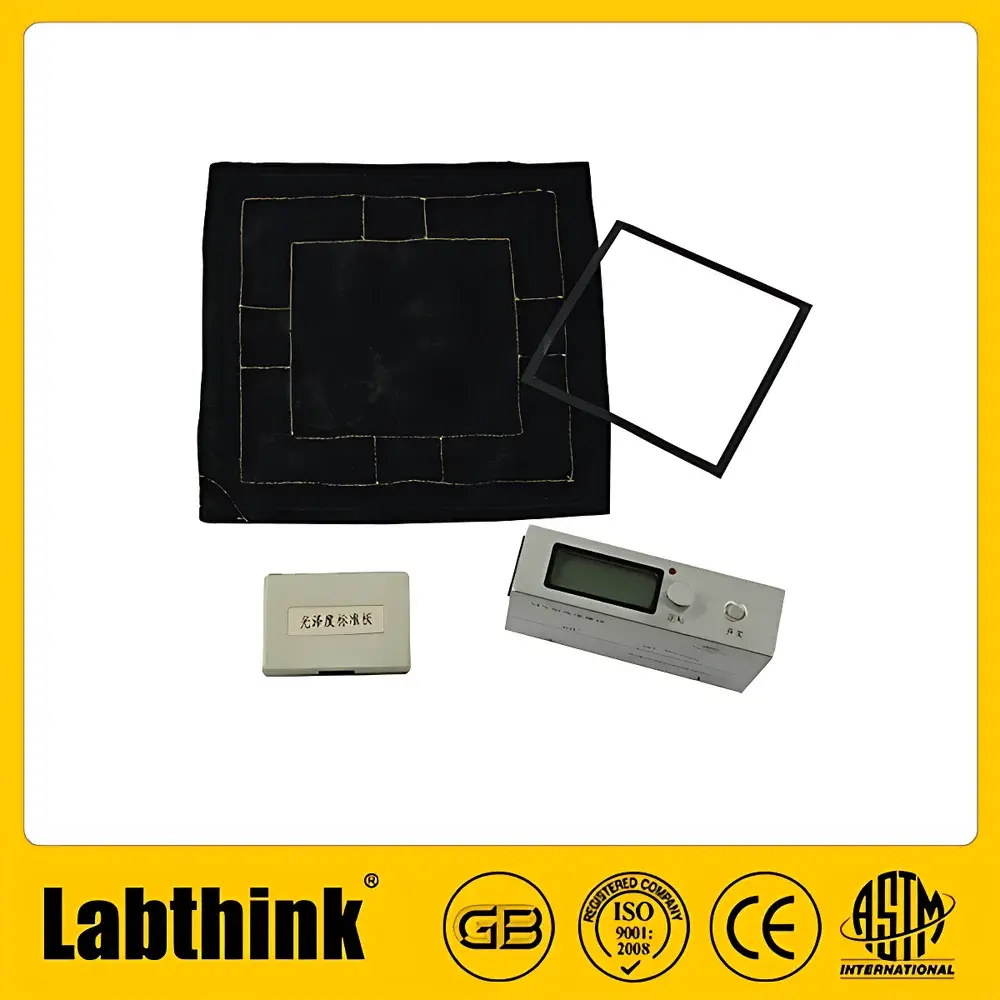
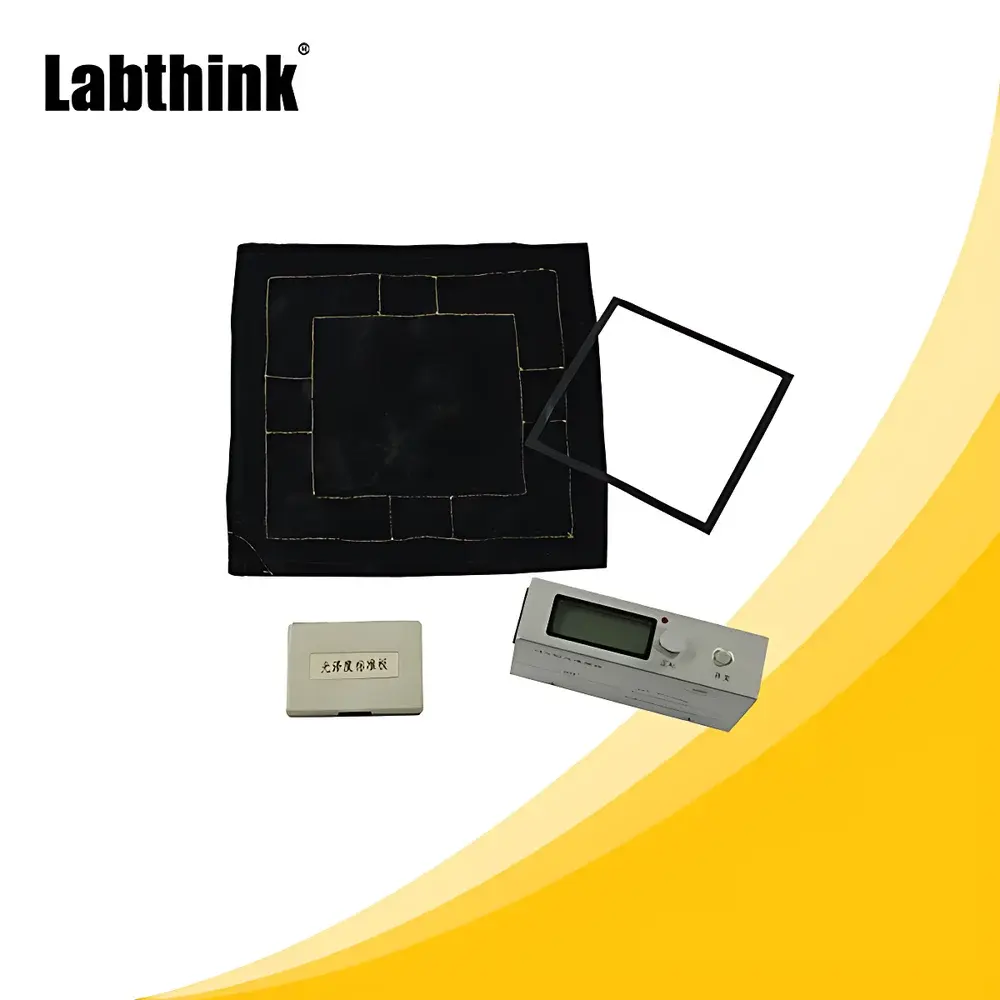
Labthink NG260 Tri-Angle Gloss Meter
| Brand | Labthink |
|---|---|
| Model | NG260 |
| Measurement Angles | 20°, 60°, 85° |
| Measurement Range | 0–199.9 GU |
| Resolution | 0.1 GU |
| Repeatability | ±1 GU |
| Zero Drift | ≤0.5 GU / 30 min |
| Accuracy | ±1 GU |
| Light Source | Tungsten Halogen Lamp (Lifespan ≥10,000 h) |
| Calibration Standard | Fused Quartz Reference Tile (Annual Stability <0.3%) |
| Power Supply | 4×AA Ni-MH Rechargeable Batteries (9 V DC, 100 mAh) |
| AC Adapter Input | 220 V, 50 Hz |
| Operating Temperature | –25 °C to +40 °C |
| Battery Life | Up to 10 h continuous operation |
| Auto-Zero Function | Yes |
| Data Hold & Low-Battery Indication | Yes |
| Compliance | GB/T 9754, ISO 2813, ASTM D523, ASTM D2457, JIS Z8741 |
Overview
The Labthink NG260 Tri-Angle Gloss Meter is a precision optical instrument engineered for the quantitative assessment of specular gloss across three standardized incident angles—20°, 60°, and 85°—in accordance with international measurement standards including ISO 2813, ASTM D523, ASTM D2457, JIS Z8741, and GB/T 9754. Gloss is defined as the ratio of reflected luminous flux from a test surface to that from a reference black glass standard under controlled geometric conditions. The NG260 employs a stabilized tungsten halogen light source (rated lifespan ≥10,000 hours) and a fused quartz calibration tile with annual stability better than 0.3%—a performance benchmark aligned with national metrological verification requirements and inter-laboratory comparison protocols. Its compact, handheld architecture integrates optomechanical alignment, analog-to-digital signal conditioning, and microprocessor-based data processing in a single robust housing, enabling rapid (<5 s warm-up), repeatable (±1 GU), and traceable gloss evaluation without manual zero adjustment.
Key Features
- Triple-angle measurement capability (20°, 60°, 85°) for comprehensive characterization of low-, medium-, and high-gloss surfaces
- Integrated auto-zero compensation circuitry eliminating routine zero-point recalibration
- Fused quartz reference standard with certified long-term stability (<0.3% annual drift), traceable to national metrology institutes
- High-efficiency tungsten halogen illuminant delivering stable spectral output across the visible range (380–780 nm)
- Dual-power operation: rechargeable Ni-MH battery pack (4×AA, 100 mAh, 9 V DC) supports >10 h continuous use; AC adapter functions as both charger and line-powered operational mode
- Real-time low-battery warning and automatic data hold function activated via power button
- Industrial-grade enclosure rated for ambient operation between –25 °C and +40 °C, suitable for lab, production floor, and field applications
Sample Compatibility & Compliance
The NG260 is optimized for planar, non-metallic, and uniformly diffusing surfaces—including solvent- and water-based coatings, printing inks, laminated papers, thermoplastic films, and molded polymer parts. It complies with regulatory and quality assurance frameworks requiring documented measurement traceability: data acquisition meets GLP documentation prerequisites; calibration procedures align with ISO/IEC 17025 internal verification guidelines; and hardware design supports audit-ready operation in GMP-regulated environments (e.g., packaging validation per FDA 21 CFR Part 11-compliant workflows when paired with validated software). Surface curvature, texture, or translucency outside ISO 2813’s scope (e.g., textured metallics or frosted glass) require supplementary assessment using complementary instruments such as haze meters or bidirectional reflectance distribution function (BRDF) analyzers.
Software & Data Management
While the NG260 operates as a standalone, self-contained meter, it supports optional PC connectivity via RS-232 interface (cable and driver included) for batch data export to Labthink’s proprietary GLM (Gloss Logging Manager) software. GLM enables time-stamped result logging, statistical analysis (mean, SD, CPK), comparative trend reporting across multiple batches or suppliers, and PDF report generation compliant with internal QA templates. All stored measurements retain instrument serial number, calibration date, operator ID, and environmental metadata—facilitating full audit trail reconstruction during regulatory inspections or technical dispute resolution.
Applications
- QC/QA release testing of automotive clear coats, architectural paints, and industrial enamels per ASTM D523
- Process control of gravure and flexographic ink gloss consistency on paper and film substrates
- Validation of anti-glare surface treatments in consumer electronics housings
- Comparative evaluation of matte vs. glossy lamination finishes in food and pharmaceutical packaging
- R&D screening of pigment dispersion efficiency and binder formulation effects on surface reflectivity
- Third-party certification testing for ISO 12944 corrosion protection system qualification
FAQ
What are the primary international standards supported by the NG260?
The NG260 is configured and verified per ISO 2813 (plastics and paint), ASTM D523 (general-purpose gloss), ASTM D2457 (plastic films), JIS Z8741 (Japanese industrial standard), and GB/T 9754 (Chinese national standard).
Is the fused quartz standard tile certified and traceable?
Yes—the included reference tile is manufactured from synthetic fused quartz with documented annual stability <0.3%, calibrated against national primary standards and supplied with a certificate of conformity.
Can the NG260 measure curved or textured surfaces?
It is designed for flat, smooth, and optically homogeneous surfaces per ISO 2813. Curved or structured surfaces require alternative geometry or complementary instrumentation.
Does the instrument support GLP/GMP-compliant data handling?
When used with GLM software and configured with user authentication and electronic signature modules, it satisfies core ALCOA+ data integrity principles for regulated environments.
What maintenance is required beyond periodic calibration?
Routine lens cleaning with lens-grade tissue and anhydrous ethanol; annual verification of optical alignment and photodetector response using certified reference tiles.




