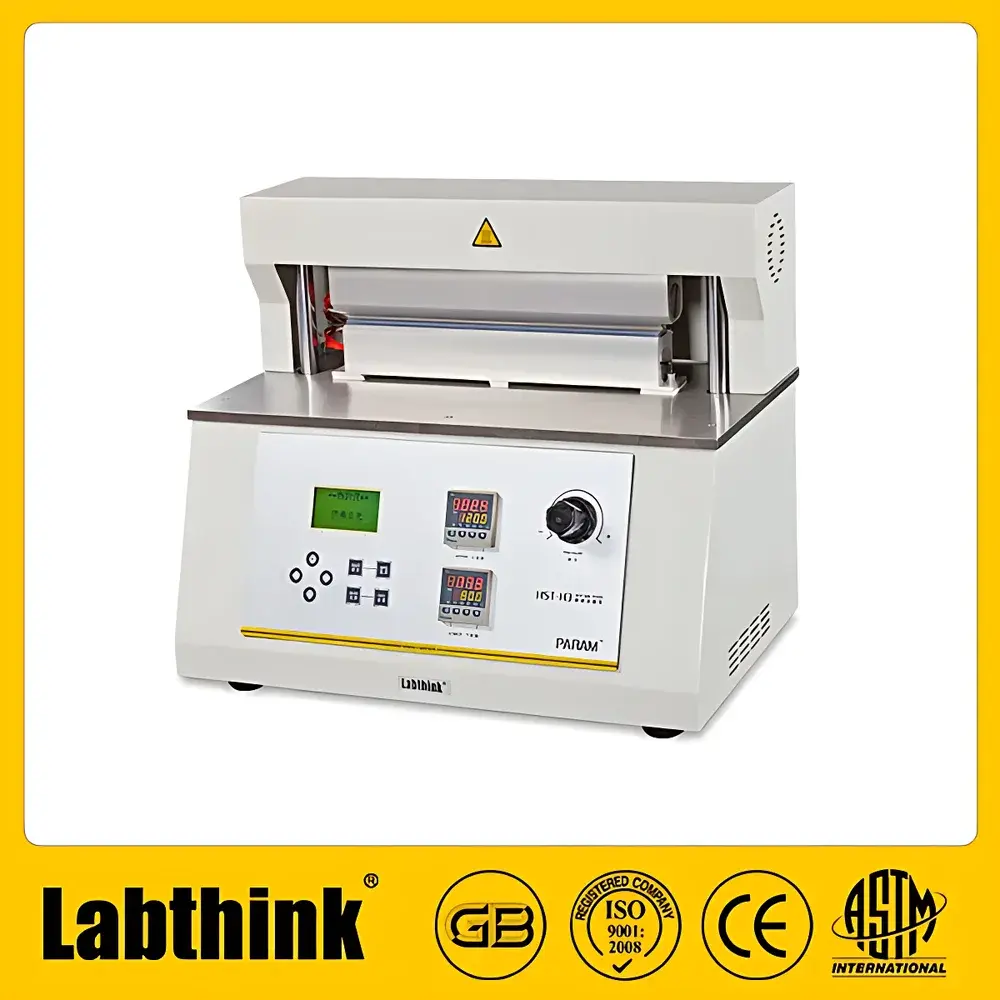
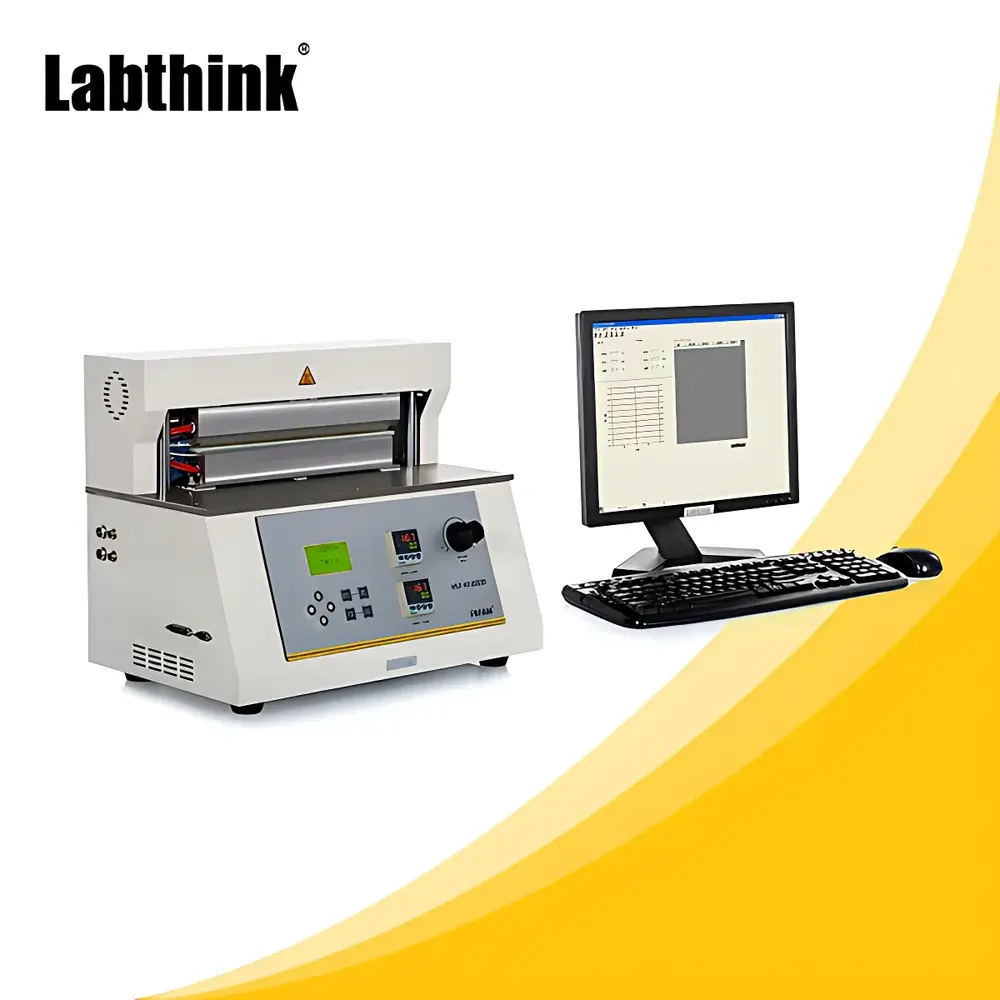
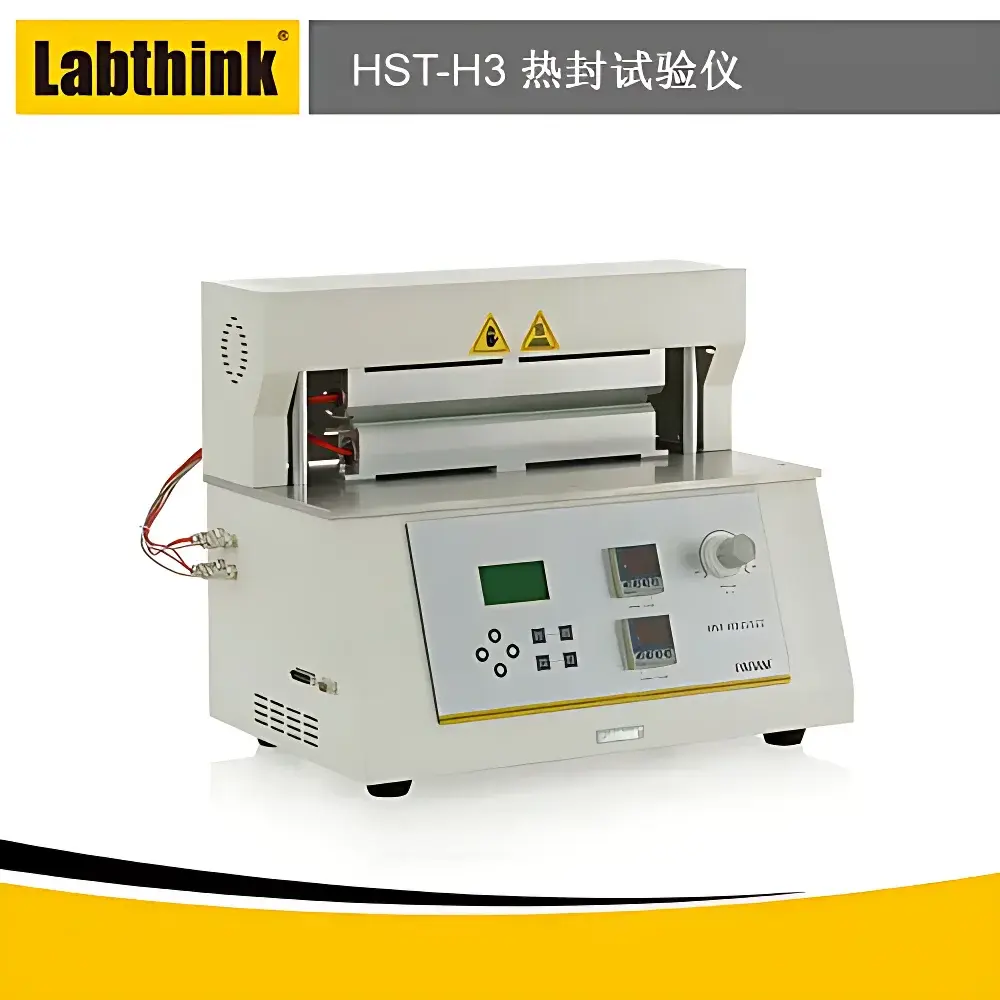
Labthink PARAM HST-H3 Heat Sealing Tester
| Brand | Labthink |
|---|---|
| Origin | Shandong, China |
| Manufacturer Type | Direct Manufacturer |
| Country of Origin | China |
| Model | PARAM HST-H3 |
| Price Range | USD 4,200 – 7,000 |
| Thermal Sealing Temperature Range | Ambient to 300 °C |
| Temperature Control Accuracy | ±0.2 °C |
| Sealing Time Range | 0.1–999.9 s |
| Sealing Pressure Range | 0.05–0.7 MPa |
| Sealing Jaw Dimensions | 330 mm × 10 mm (customizable) |
| Heating Mode | Single- or Dual-Side Heating |
| Pneumatic Supply Requirement | 0.5–0.7 MPa (user-supplied) |
| Air Inlet Fitting | Φ6 mm Polyurethane Tubing |
| Overall Dimensions | 536 mm (L) × 335 mm (W) × 413 mm (H) |
| Power Supply | AC 220 V, 50 Hz |
| Net Weight | 43 kg |
Overview
The Labthink PARAM HST-H3 Heat Sealing Tester is a precision-engineered instrument designed for controlled thermal sealing evaluation of flexible packaging materials. It operates on the principle of hot-bar thermal compression sealing—applying precisely regulated temperature, pressure, and dwell time to replicate industrial heat-sealing conditions in a laboratory environment. This method enables quantitative assessment of seal integrity across diverse substrates including plastic films (e.g., LDPE, PP, PET), laminated composites, coated papers, and metallized barrier structures. Unlike empirical trial-and-error approaches, the HST-H3 delivers repeatable, traceable, and standards-aligned sealing parameter data essential for process validation, material qualification, and quality assurance in packaging development and manufacturing.
Key Features
- Standard-Compliant Thermal Jaws: Equipped with a 330 mm × 10 mm aluminum-alloy sealing jaw engineered per QB/T 2358, ASTM F2029, and YBB00122003 specifications—ensuring geometric and thermal fidelity to standardized test protocols.
- High-Fidelity Temperature Control: PID-regulated heating system maintains ±0.2 °C stability across the full 0–300 °C operating range, critical for evaluating narrow thermal windows of heat-sensitive polymers and multi-layer structures.
- Pneumatically Actuated Uniform Pressure Application: Cylinder-driven jaw descent ensures consistent, non-dynamic force distribution across the entire sealing interface—eliminating edge effects and localized over-compression.
- Modular Heating Architecture: Supports both single- and dual-side heating configurations to accommodate asymmetric materials (e.g., paper-plastic laminates) and simulate real-world sealing equipment geometries.
- Tool-Free Maintenance Design: Quick-connect heating element terminals and standardized pneumatic fittings (Φ6 mm PU tubing) enable rapid component replacement and field serviceability without specialized tools.
Sample Compatibility & Compliance
The HST-H3 accommodates a broad spectrum of packaging substrates: monolayer thermoplastics, coextruded films, foil-laminates, cold-seal coatings, and pharmaceutical-grade blister lidding materials. Its operational envelope supports validation of seal initiation temperature (SIT), hot-tack strength onset, and seal degradation thresholds—key inputs for defining upper and lower thermal limits in production line setup. The instrument conforms to regulatory testing frameworks required under ISO 11607-2 (sterile packaging), ASTM F88 (seal strength), and USP (package integrity). While not intrinsically GLP/GMP-certified, its documented calibration traceability, parameter logging capability (with optional software), and audit-ready configuration support 21 CFR Part 11-compliant workflows when integrated into validated laboratory systems.
Software & Data Management
When paired with Labthink’s optional PC-based control software, the HST-H3 enables automated test sequencing, real-time parameter monitoring, and timestamped data export in CSV and PDF formats. Software-controlled ramp/soak profiles allow multi-step thermal cycling to simulate preheat-cool-down cycles observed in rotary heat sealers. All test records include operator ID, environmental ambient reading (if external sensor connected), and digital signature fields—supporting ALCOA+ data integrity principles. Raw data files retain uneditable metadata (e.g., firmware version, calibration date), fulfilling requirements for internal QA audits and regulatory submissions.
Applications
- Determining optimal sealing parameters for new film formulations prior to production line trials
- Comparative evaluation of seal strength vs. temperature curves for supplier qualification
- Root-cause analysis of seal failures (leaks, wrinkles, delamination) through controlled variable isolation
- Validation of shelf-life packaging integrity under accelerated aging conditions
- Supporting technical documentation for FDA 510(k) submissions and EU MDR Annex I compliance dossiers
- Training production technicians on thermal window boundaries using reproducible lab-scale benchmarks
FAQ
Does the HST-H3 require an external air compressor?
Yes. A clean, oil-free compressed air source delivering 0.5–0.7 MPa at ≥10 L/min is mandatory. The unit includes a Φ6 mm polyurethane quick-connect fitting; no integrated compressor is provided.
Can sealing jaw dimensions be modified for non-standard samples?
Yes. Custom jaw widths (e.g., 5 mm, 20 mm, 50 mm) and lengths up to 400 mm are available as factory-configured options—subject to mechanical compatibility verification.
Is temperature calibration traceable to national standards?
Yes. Each unit ships with a NIST-traceable calibration certificate for the primary PT100 sensor. Annual recalibration services—including uncertainty reporting per ISO/IEC 17025—are offered by Labthink’s accredited metrology lab.
What safety certifications does the instrument hold?
The HST-H3 complies with IEC 61010-1:2010 for electrical safety and carries CE marking under the Low Voltage Directive (2014/35/EU) and EMC Directive (2014/30/EU). RoHS 2011/65/EU compliance is documented in the Declaration of Conformity.
How is seal strength quantified after thermal sealing?
The HST-H3 performs thermal sealing only. Seal strength measurement requires integration with a tensile tester (e.g., Labthink XLW series) per ASTM F88 or QB/T 2358. The instrument ensures standardized seal formation—enabling direct correlation between sealing parameters and subsequent peel or burst test results.