
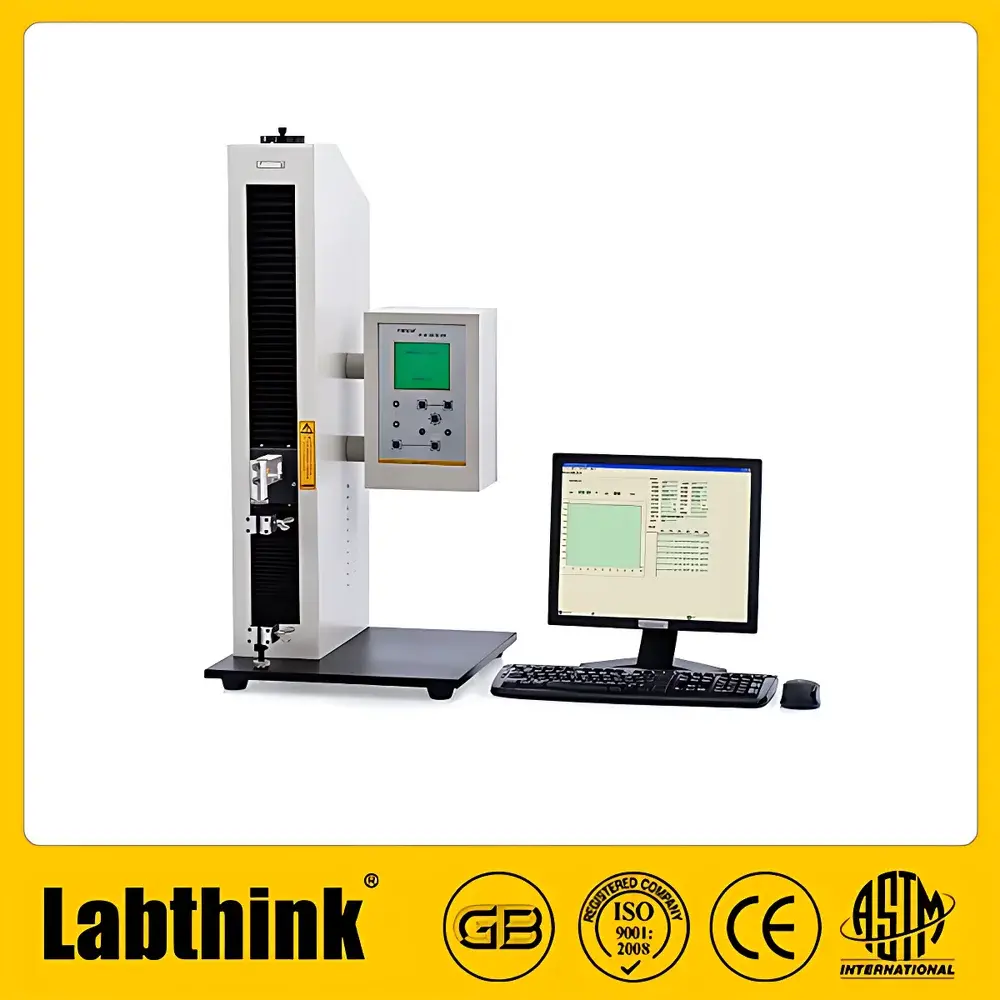
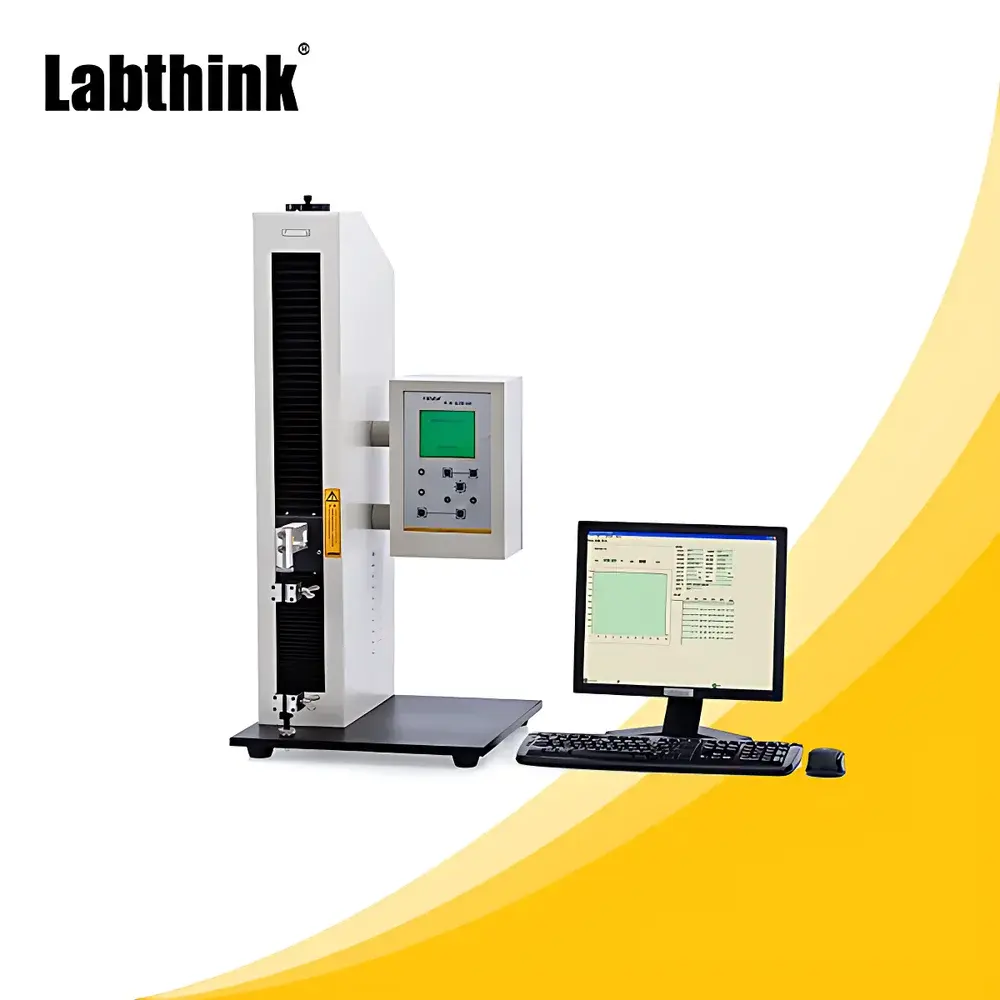
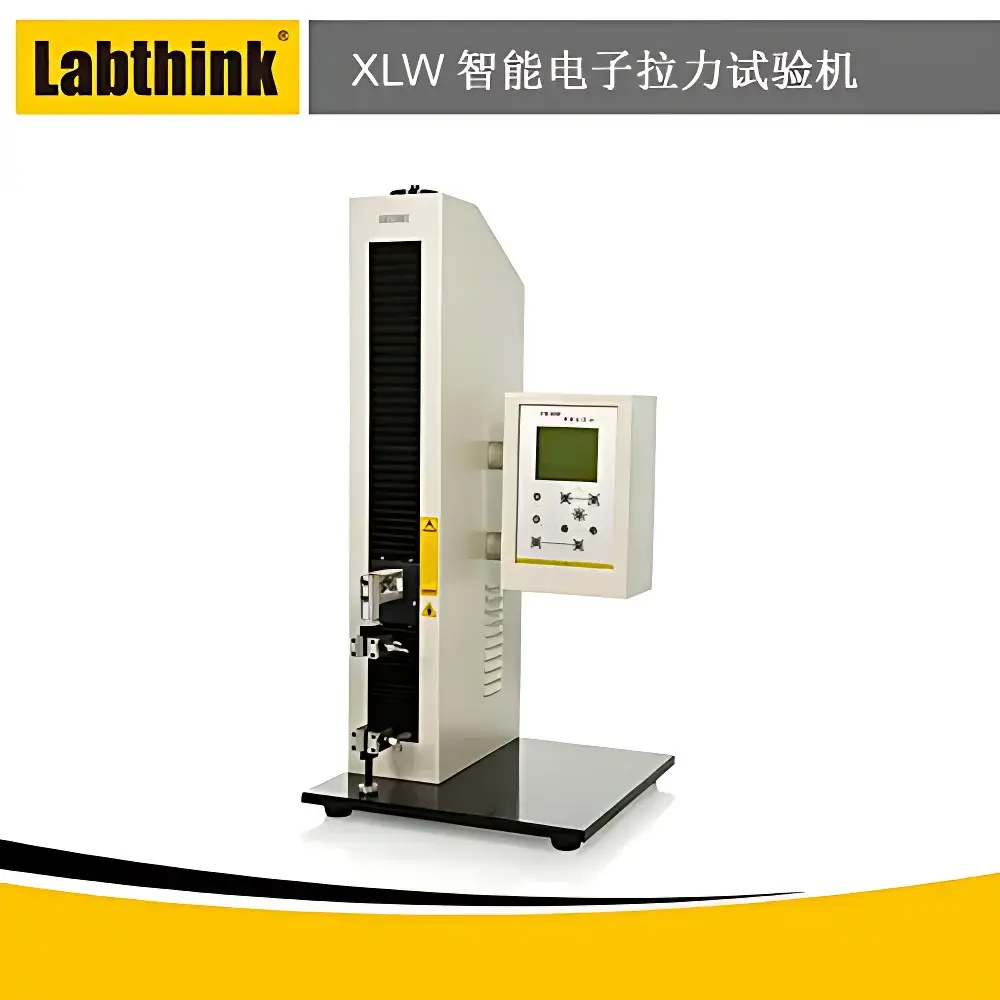
Labthink PARAM XLW Intelligent Electronic Tensile Tester (500 N)
| Brand | Labthink |
|---|---|
| Model | PARAM XLW |
| Max Load Capacity | 500 N (standard) |
| optional ranges | 30 N, 50 N, 100 N, 200 N |
| Accuracy Class | Class 1 per ISO 7500-1 |
| Test Speeds | 50, 100, 150, 200, 250, 300, 500 mm/min (7 fixed rates) |
| Specimen Width | 30 mm (standard grip), 50 mm (optional) |
| Gauge Length | 600 mm |
| Dimensions (L×W×H) | 450 × 450 × 980 mm |
| Weight | 65 kg |
| Power Supply | 220 VAC 50 Hz / 120 VAC 60 Hz |
| Compliance | ISO 37, ASTM D882, ASTM D1938, ASTM F88, GB/T 1040.1–2006, GB/T 8808, GB/T 12914, JIS P8113, QB/T 2358 |
Overview
The Labthink PARAM XLW Intelligent Electronic Tensile Tester (500 N) is a precision-engineered universal testing system designed for static mechanical property evaluation of thin, flexible materials commonly used in packaging, medical device, and industrial applications. Based on the fundamental principle of uniaxial tensile loading under controlled displacement rate, the instrument applies calibrated force via dual-grip motion while synchronously recording load (via high-stability load cell) and axial displacement (via linear encoder). This enables quantitative determination of key mechanical parameters including tensile strength, elongation at break, yield point, tear resistance, peel adhesion, heat seal strength, puncture force, opening force, and low-speed unwind torque — all traceable to international standards.
Key Features
- Class 1 accuracy per ISO 7500-1 ensures metrological reliability for QA/QC and regulatory submissions.
- Seven pre-programmed test modes: tensile, peel, tear, heat seal, puncture, opening force, and unwind—eliminating manual setup errors and enabling rapid method switching.
- Modular load cell options (30 N to 1000 N) support wide material stiffness ranges—from ultra-thin barrier films to reinforced laminates—without hardware replacement.
- Seven fixed crosshead speeds (50–500 mm/min) provide consistent strain-rate control aligned with ASTM D882 and ISO 37 requirements for polymeric films.
- Microprocessor-based controller with PVC membrane keypad and large LCD display enables standalone operation without PC dependency.
- Integrated safety architecture includes mechanical limit switches, overload cutoff, automatic return-to-start, and power-loss memory retention.
- RS232 serial interface and parallel printer port enable direct data export and hard-copy reporting; compatible with Lystem™ Laboratory Data Management System for centralized audit-trail-enabled result archiving.
Sample Compatibility & Compliance
The PARAM XLW accommodates specimens up to 600 mm in travel length and 50 mm in width, supporting standardized geometries per ISO, ASTM, GB, JIS, and QB test methods. It is routinely deployed for evaluating plastic films (LDPE, PET, BOPP), aluminum foils, metallized papers, nonwovens, medical adhesive tapes, pharmaceutical blister lidding, pouch seals, and battery separator membranes. All test protocols comply with ISO 37 (rubber vulcanizates), ASTM D882 (thin plastic sheeting), ASTM D1938 (tear propagation), ASTM F88 (heat seal strength), GB/T 1040.1–2006 (tensile testing of plastics), and GB/T 8808 (peel strength of composite films). The system supports GLP/GMP-aligned workflows through configurable user access levels, electronic signatures, and 21 CFR Part 11-compliant audit trails when integrated with Lystem™ software.
Software & Data Management
The dedicated Windows-based control software provides full test configuration, real-time curve visualization, and post-test analysis. Functions include group statistics (mean, SD, CV%), curve superposition for comparative evaluation, elastic modulus calculation from linear region slope, parameter calibration management, and customizable report templates (PDF/Excel). Raw data files are stored with timestamped metadata—including operator ID, environmental conditions (if linked to optional hygrothermograph), and instrument calibration status—to satisfy ISO/IEC 17025 documentation requirements. Data exchange is supported via CSV export, ODBC connectivity, and RESTful API integration into enterprise LIMS or MES platforms.
Applications
- Quality assurance of food, pharmaceutical, and medical packaging integrity during shelf life validation.
- R&D evaluation of new film formulations, coating adhesion, and laminate bond strength under simulated end-use stress.
- Regulatory compliance testing for FDA 21 CFR 177/178, EU 10/2011, and China GB 9685 migration-related mechanical performance benchmarks.
- Failure analysis of delamination, seal rupture, or liner debonding in multi-layer pouches and stick packs.
- Supplier qualification testing against contractual specifications for tensile modulus, seal peel resistance, and tear initiation energy.
- Process optimization of extrusion, lamination, and heat sealing parameters using mechanical response feedback.
FAQ
What standards does the PARAM XLW support out-of-the-box?
It natively executes test methods defined in ISO 37, ASTM D882, ASTM D1938, ASTM F88, GB/T 1040.1–2006, GB/T 8808, and QB/T 2358—with method-specific speed, grip spacing, and data analysis logic preloaded.
Can the system be validated for GMP environments?
Yes—when operated with Lystem™ software, it delivers electronic records with full audit trail, user authentication, and change control compliant with FDA 21 CFR Part 11 and EU Annex 11.
Is calibration traceable to national standards?
All load cells are factory-calibrated against NIST-traceable reference standards; certificate of calibration (including uncertainty budget) is provided with each instrument.
How is specimen alignment ensured during clamping?
The manually actuated grips feature precision-machined parallel faces and uniform pressure distribution; optional floating roller grips are available for low-modulus or slippery samples to minimize slippage-induced error.
What maintenance is required for long-term accuracy?
Annual verification per ISO 7500-1 is recommended; routine checks include grip cleanliness, encoder belt tension, and load cell zero stability—documented in the included maintenance log template.



