
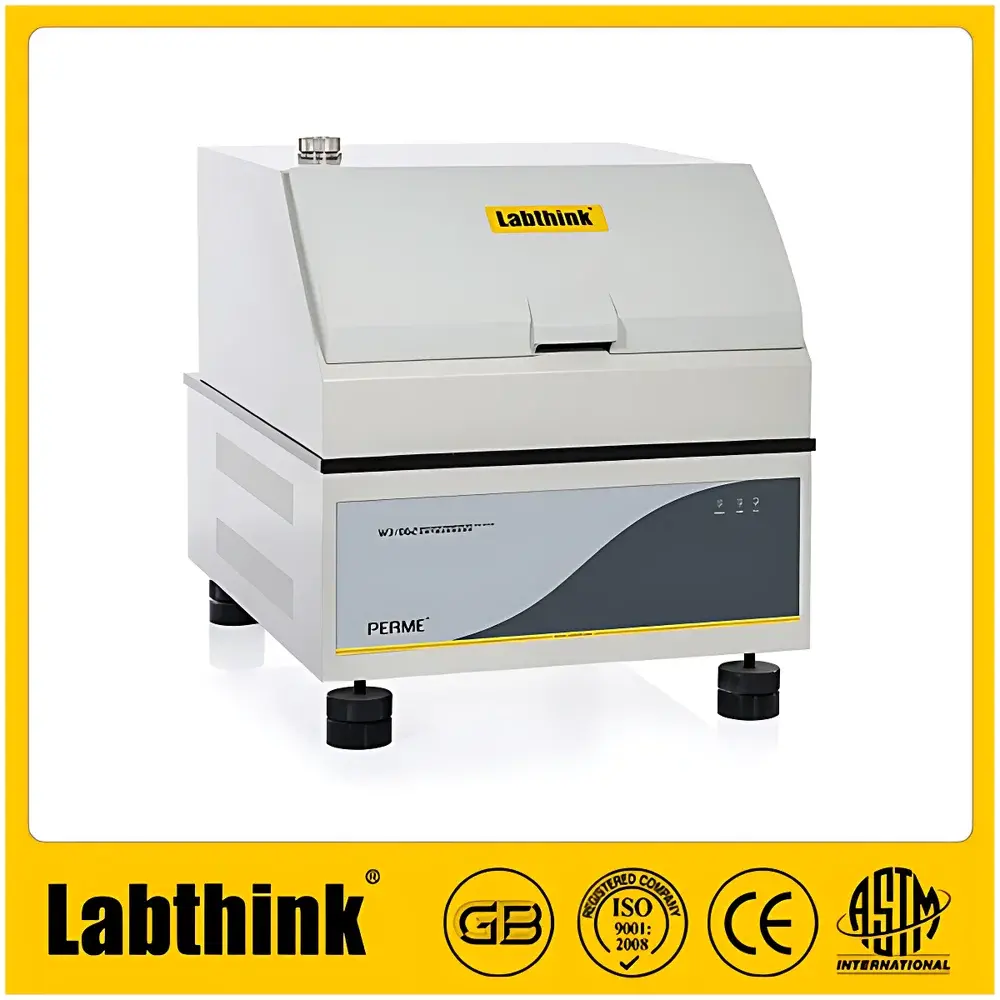
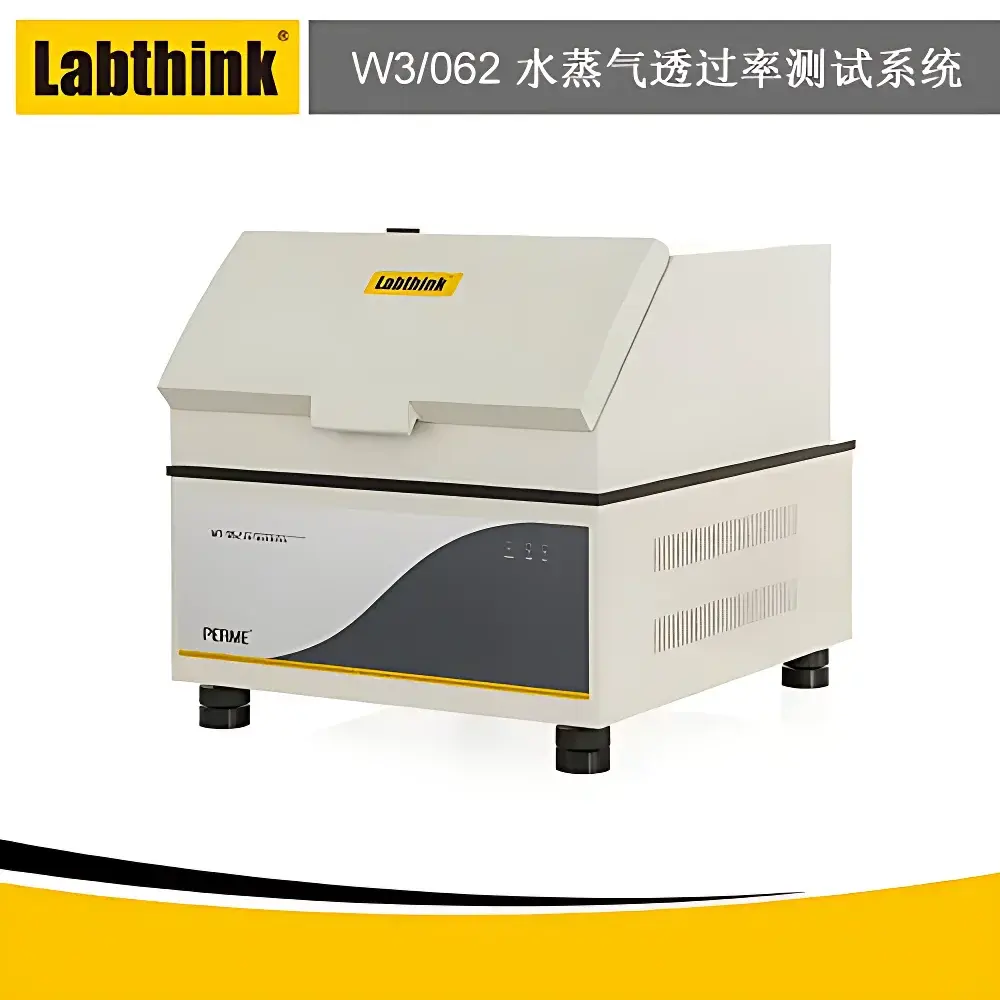
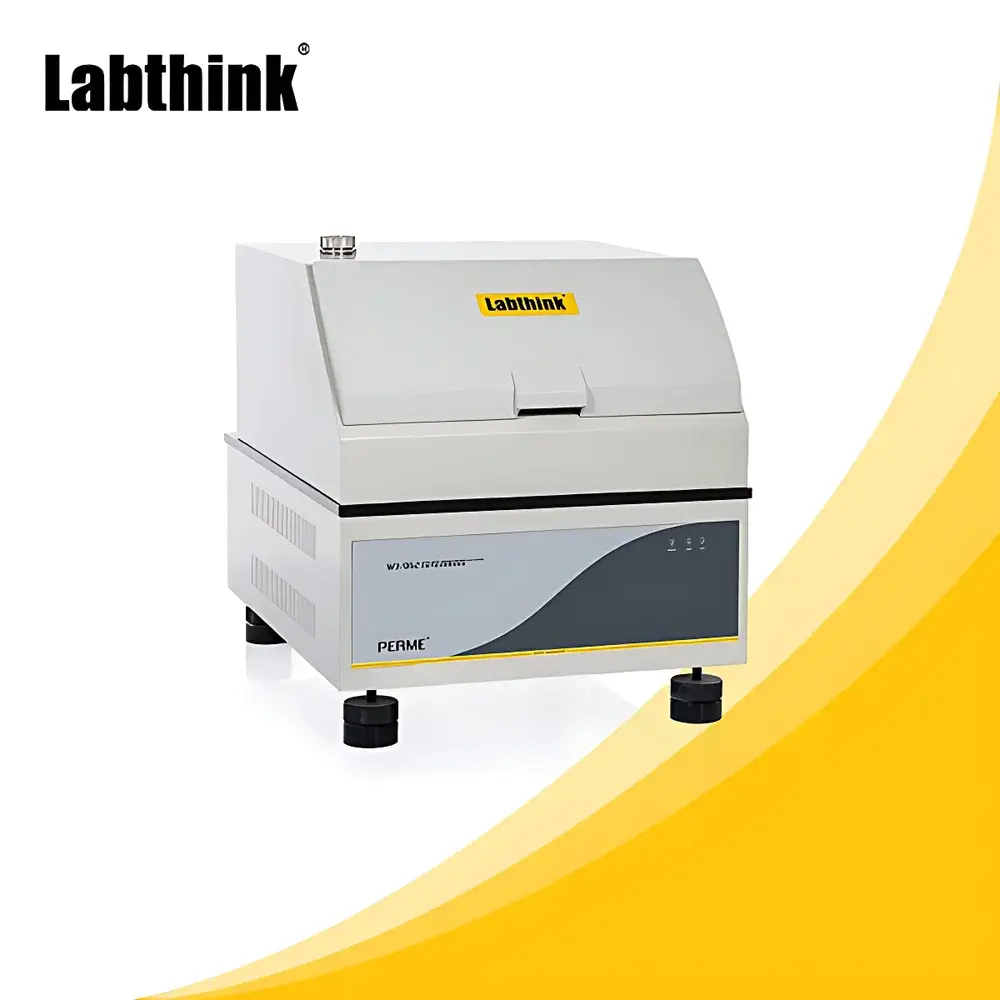
Labthink W3/062 Gravimetric Water Vapor Transmission Rate (WVTR) Tester
| Brand | Labthink |
|---|---|
| Origin | Shandong, China |
| Manufacturer Type | Original Equipment Manufacturer (OEM) |
| Product Category | Domestic Instrument |
| Model | W3/062 |
| Pricing | Available Upon Request |
Overview
The Labthink W3/062 Gravimetric Water Vapor Transmission Rate (WVTR) Tester is a precision-engineered instrument designed for the quantitative determination of water vapor permeation through flexible barrier materials. It operates on the standardized cup-based gravimetric principle—commonly referred to as the desiccant or water method—where a controlled humidity gradient is established across a planar test specimen sealed over a permeation cup. Under isothermal and isohygrometric conditions, water vapor migrates through the sample via diffusion-driven transport, resulting in measurable mass change of the cup assembly over time. This mass differential—recorded continuously by a high-resolution analytical balance—is mathematically converted into water vapor transmission rate (WVTR), expressed in g/m²·24h. The system supports both desiccant-side (weight-loss) and humid-side (weight-gain) configurations, enabling compliance with dual-directional testing protocols required for diverse material behaviors—including hydrophilic polymers, metallized films, and multilayer laminates used in medical packaging, pharmaceutical blister foils, and construction membranes.
Key Features
- High-sensitivity gravimetric detection: Equipped with a 0.001 g resolution load cell, delivering measurement repeatability ≤ ±0.5% RSD under controlled environmental conditions.
- Parallel multi-sample capacity: Six independent test stations integrated into a single main unit, each with dedicated humidity control, temperature regulation, and real-time mass monitoring.
- Scalable architecture: Supports up to nine satellite units per host controller, enabling concurrent testing of up to 60 specimens—ideal for high-throughput QC laboratories and ASTM E96-compliant validation batches.
- Precision environmental control: Dual-zone temperature regulation (15–55 °C, ±0.1 °C) and programmable relative humidity range (10–98% RH, ±1% RH), with adjustable sweep air velocity (0.5–2.5 m/s) to minimize boundary layer effects.
- Standardized cup geometry: Fixed test area of 33 cm² (Φ74 mm specimen), compatible with ISO 2528, ASTM E96, GB/T 1037, and YBB00092003 specimen preparation requirements.
Sample Compatibility & Compliance
The W3/062 accommodates rigid and flexible sheet materials up to 3 mm thickness—including thermoplastic elastomers, silicone rubber compounds, polyolefin films, PVDC-coated substrates, aluminum-laminated composites, and hydrocolloid dressings. Its mechanical design permits consistent clamping force and edge-seal integrity critical for low-permeability measurements (down to 0.1 g/m²·24h). All operational parameters adhere to internationally recognized standards: ASTM E96 (desiccant and inverted cup methods), ASTM D1653 (organic coating films), ISO 2528 (determination of WVTR), GB/T 16928 (Chinese national standard for packaging film), TAPPI T464 (paperboard), DIN 53122-1 (German industrial standard), JIS Z0208 (Japanese specification), and YBB00092003 (Chinese pharmaceutical packaging guidance). The system is engineered to support GLP-compliant workflows, including audit-trail-enabled data logging and user-access-controlled parameter locking.
Software & Data Management
The W3/062 integrates Labthink’s proprietary Lystem™ v3.x software suite—a Windows-based application compliant with FDA 21 CFR Part 11 requirements for electronic records and signatures. It features automated calibration verification, real-time curve fitting of mass-vs.-time data using linear regression (slope calculation per ASTM E96 Annex A4), and dynamic outlier detection based on residual analysis. Test reports include full metadata: operator ID, environmental setpoints, cup identification, seal integrity flag, statistical confidence intervals (95%), and traceable calibration certificate references. When deployed within a local area network, the instrument natively interfaces with Lystem™ Laboratory Data Management System (LDMS), enabling centralized storage, cross-instrument trending, role-based report generation, and seamless integration with enterprise quality management systems (QMS).
Applications
- Quality assurance of primary and secondary packaging for sterile medical devices, where WVTR directly correlates with shelf-life stability of lyophilized biologics.
- Development and validation of barrier coatings on rubber-based catheter tubing and infusion bag materials.
- Regulatory submission support for USP / cytotoxicity studies requiring moisture-sensitive polymer characterization.
- Comparative evaluation of nano-clay or graphene oxide filled polyethylene composites intended for food-grade flexible packaging.
- Accelerated aging protocol development for architectural membranes exposed to cyclic humidity environments per ASTM D5885.
FAQ
What is the minimum detectable WVTR value for the W3/062?
The system achieves a lower detection limit of 0.1 g/m²·24h under optimized desiccant-mode conditions with extended test duration and environmental stabilization.
Can the W3/062 test non-planar or textured samples?
No—the instrument requires flat, uniform-thickness specimens conforming to Φ74 mm circular geometry and ≤3 mm thickness; custom fixtures for irregular geometries are not supported.
Is the system compliant with 21 CFR Part 11 for regulated pharmaceutical labs?
Yes—Lystem™ software includes electronic signature enforcement, audit trail logging, and permission-level access controls validated per Part 11 Annex B guidelines.
Does the W3/062 require external compressed air or deionized water?
Yes—users must supply clean, oil-free compressed air at 0.6 MPa and distilled water for humidity generation; neither is included in standard configuration.
How is temperature and humidity uniformity verified across all six test stations?
Each station incorporates individual PT100 sensors and PID-controlled heaters/humidifiers; inter-station deviation is routinely verified using NIST-traceable portable hygrothermographs during IQ/OQ protocols.






