
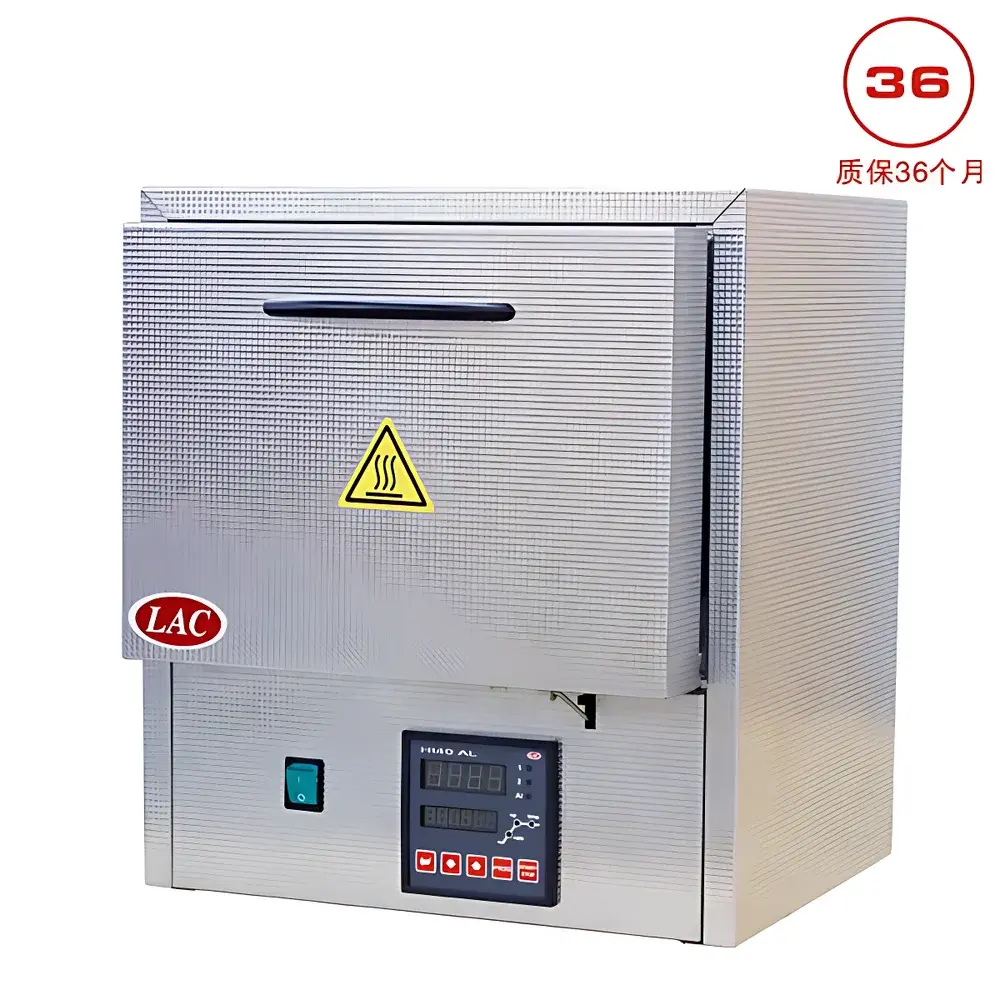
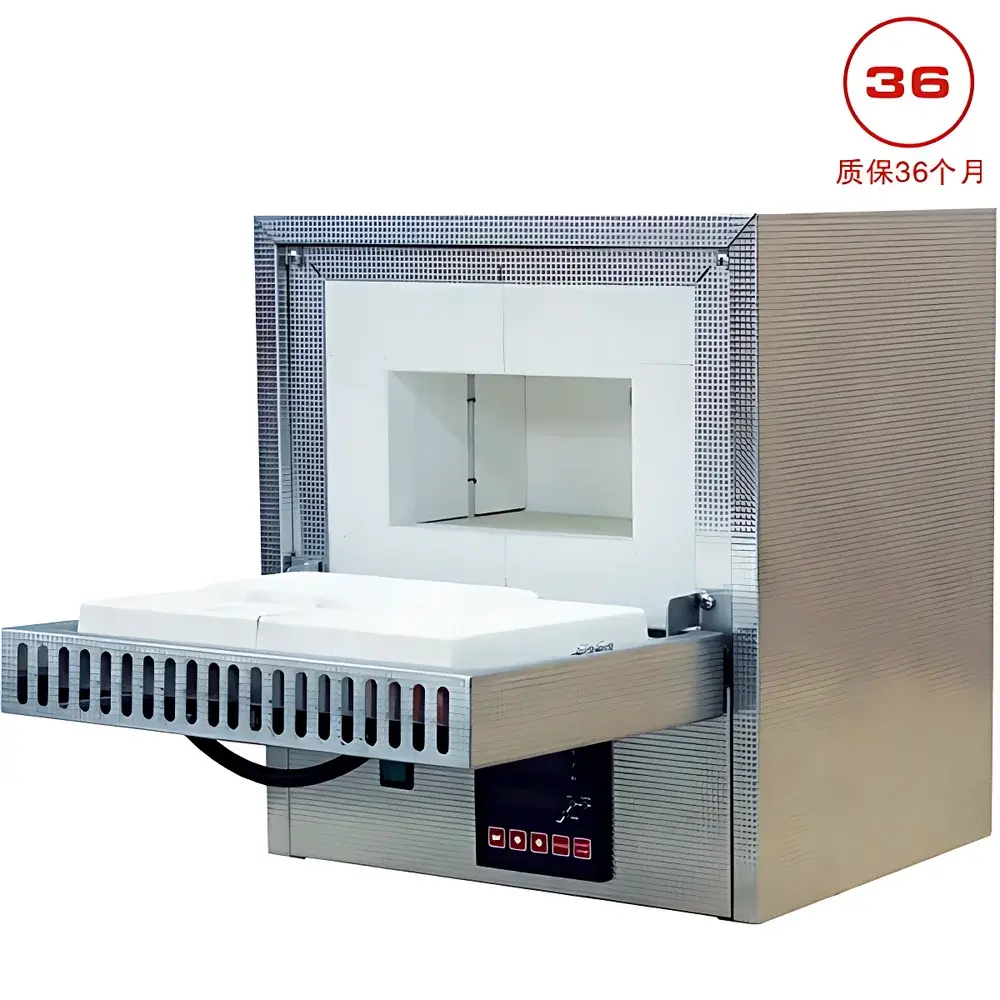
LAC L09/12 Universal Laboratory Muffle Furnace (1200 °C)
| Brand | LAC |
|---|---|
| Origin | Czech Republic |
| Model | L09/12 |
| Type | Box-Type Muffle Furnace |
| Max Temperature | 1200 °C |
| Temperature Control Accuracy | ±1 °C |
| Max Power | 3.0 kW |
| Heating Time to Max Temp | 65 min |
| Heating Element | Resistance Wire Embedded in Ceramic Insulation |
| Internal Chamber Dimensions | 230 × 170 × 240 mm (W × D × H) |
| Standard Controller | HT40AL (2 Ramp/Soak Programs) |
| Optional Controllers | HT200 (30 programs × 25 steps, LAN/USB), HT205 (30 programs × 15 steps, LAN) |
| Exhaust Port | Yes |
| Atmosphere Options | Inert Gas Inlet (with Flowmeter & Pressure Gauge) |
| Safety Features | Door Limit Switch, Manual Downward-Opening Door, Bottom Protective Plate |
Overview
The LAC L09/12 Universal Laboratory Muffle Furnace is a precision-engineered box-type muffle furnace designed for reliable, repeatable high-temperature thermal processing in research laboratories, quality control environments, and materials testing facilities. Operating on the principle of resistive heating via embedded ceramic-insulated resistance wire, the furnace isolates the sample chamber from combustion byproducts and external contamination—ensuring true muffle conditions. Its maximum operating temperature of 1200 °C enables applications ranging from ashing and calcination to sintering and heat treatment of ceramics, metals, and polymers. The furnace’s robust construction—including high-purity ceramic insulation, mechanically reinforced heating elements, and thermally stable refractory lining—supports long-term stability under cyclic thermal loads. All structural and electrical components comply with IEC 61000-6-3 (EMC emissions) and IEC 61000-6-2 (immunity), and the design meets general safety requirements per EN 61000-1-2 for laboratory equipment.
Key Features
- Temperature uniformity of ±3 °C across the working zone at 1200 °C, verified per ASTM E220 calibration methodology.
- ±1 °C control accuracy maintained over extended dwell periods, enabled by dual-stage PID regulation and S-type thermocouple feedback (IEC 60584-1 compliant).
- Ceramic-encapsulated resistance heating elements provide enhanced mechanical durability and corrosion resistance compared to exposed coil designs.
- Manually operated downward-opening door with integrated limit switch ensures power cutoff during access—meeting EN 61000-1-2 interlock requirements.
- Dedicated exhaust port (M12 threaded) allows passive venting of volatile decomposition products; not rated for pyrolysis or reducing-atmosphere operation without optional inert gas integration.
- Standard HT40AL controller supports two independent ramp-soak profiles; optional HT200/HT205 controllers enable full programmability with audit-ready event logging.
- Bottom protective plate minimizes thermal stress on benchtop surfaces and improves operational safety during high-temperature cycling.
Sample Compatibility & Compliance
The L09/12 accommodates standard crucibles (alumina, silica, platinum), ceramic boats, and metal trays within its 230 × 170 × 240 mm internal cavity. It is compatible with ISO 5660-1 cone calorimetry sample holders and ASTM D3175 ash content test vessels. The furnace does not support vacuum or pressurized atmospheres natively but accepts optional inert gas inlet kits (N₂, Ar) with integrated flowmeter and pressure gauge for oxidation-sensitive processes. All controllers meet CE marking requirements and support traceable calibration via RS232/EIA-485 interfaces. When equipped with HT200/HT205 and HTMonit software, the system satisfies basic data integrity requirements for GLP-compliant environments—including electronic signature capability, user access levels, and time-stamped audit trails per FDA 21 CFR Part 11 Annex 11 guidance.
Software & Data Management
The optional HTMonit software suite provides real-time temperature monitoring, profile execution supervision, and export of time-stamped CSV logs with metadata (operator ID, program name, start/stop timestamps). HT200 and HT205 controllers feature non-volatile memory retention for up to 30 programs (25 or 15 steps each), with password-protected parameter editing. Both support LAN-based remote configuration and firmware updates. Data export includes raw thermocouple voltage, calculated temperature, setpoint deviation, and relay status—enabling post-run statistical process analysis. Calibration certificates for S-type thermocouples and controller input channels are available upon request, traceable to national metrology institutes (Czech Metrological Institute, ČMI).
Applications
- Ash content determination per ISO 1171, ASTM D3174, and USP <281>
- Calcination of catalyst precursors and metal oxides
- Thermal gravimetric analysis (TGA) sample preparation
- Heat treatment of dental alloys and biomedical ceramics
- Residue ignition in environmental soil and sludge testing (EPA Method 9080)
- Pre-firing of ceramic green bodies prior to sintering
- Standardization of reference materials in metrology labs
FAQ
Is the L09/12 suitable for pyrolysis experiments?
No. The furnace lacks sealed atmosphere control and active gas purge capability; it is not designed for oxygen-free or controlled-reduction thermal decomposition.
Can the HT40AL controller be upgraded to HT200 in-field?
Yes—controller replacement is plug-and-play; no rewiring or firmware modification is required.
What is the recommended maintenance interval for the heating elements?
Under normal use (≤10 cycles/week at ≤1100 °C), inspection every 12 months is advised; element replacement is typically required after 5,000–7,000 cumulative hours at max temperature.
Does the furnace include a calibration certificate?
A factory-as-tested certificate (including thermocouple verification at 600 °C and 1000 °C) is supplied standard; accredited calibration per ISO/IEC 17025 is available as an option.
Is the exhaust port compatible with standard lab fume hood ducting?
The M12 port accepts flexible silicone or stainless-steel tubing (OD 12–14 mm); direct connection to centralized exhaust systems requires an adapter kit (not included).



