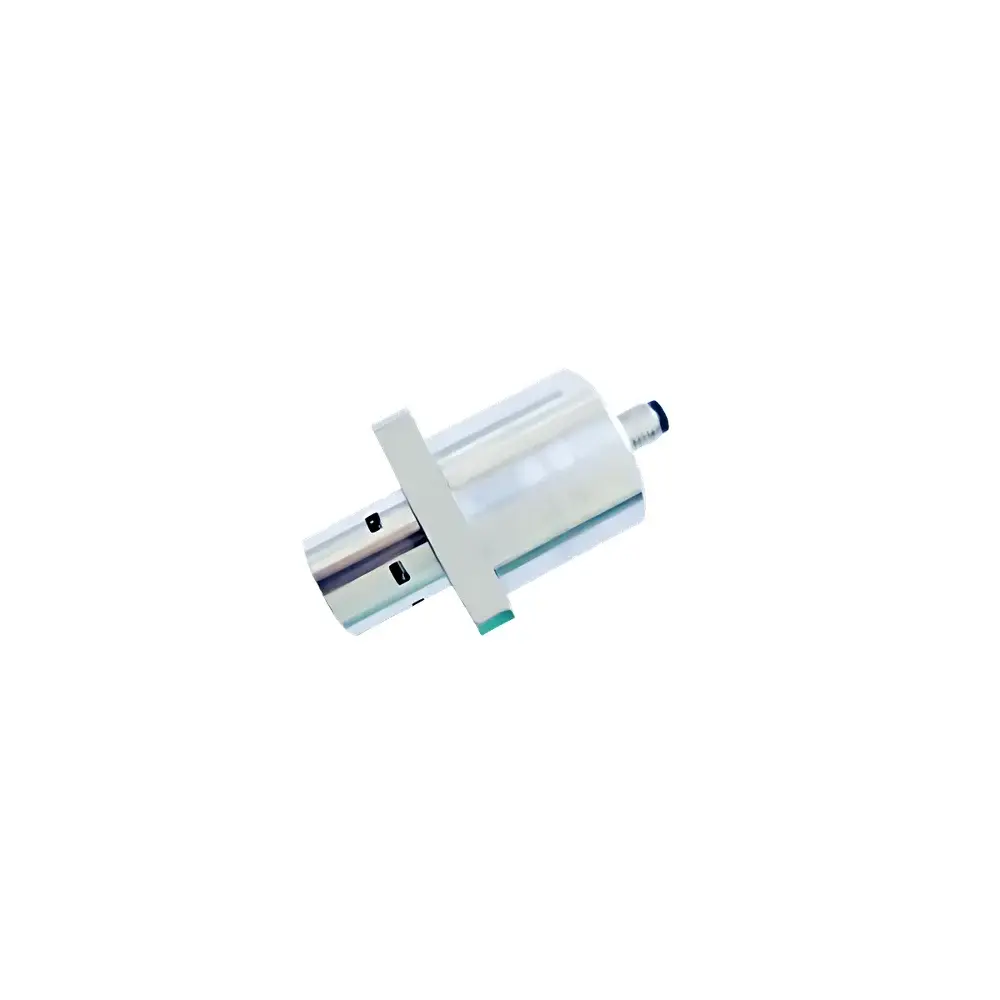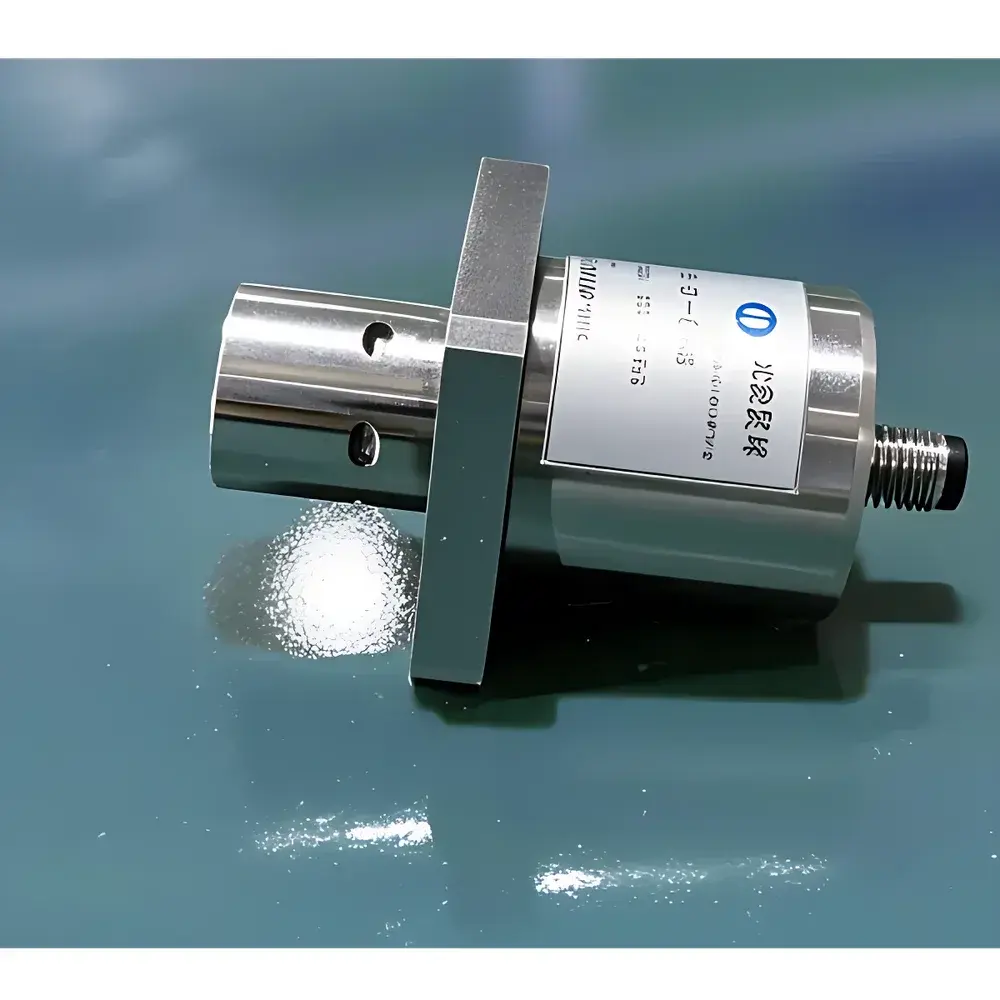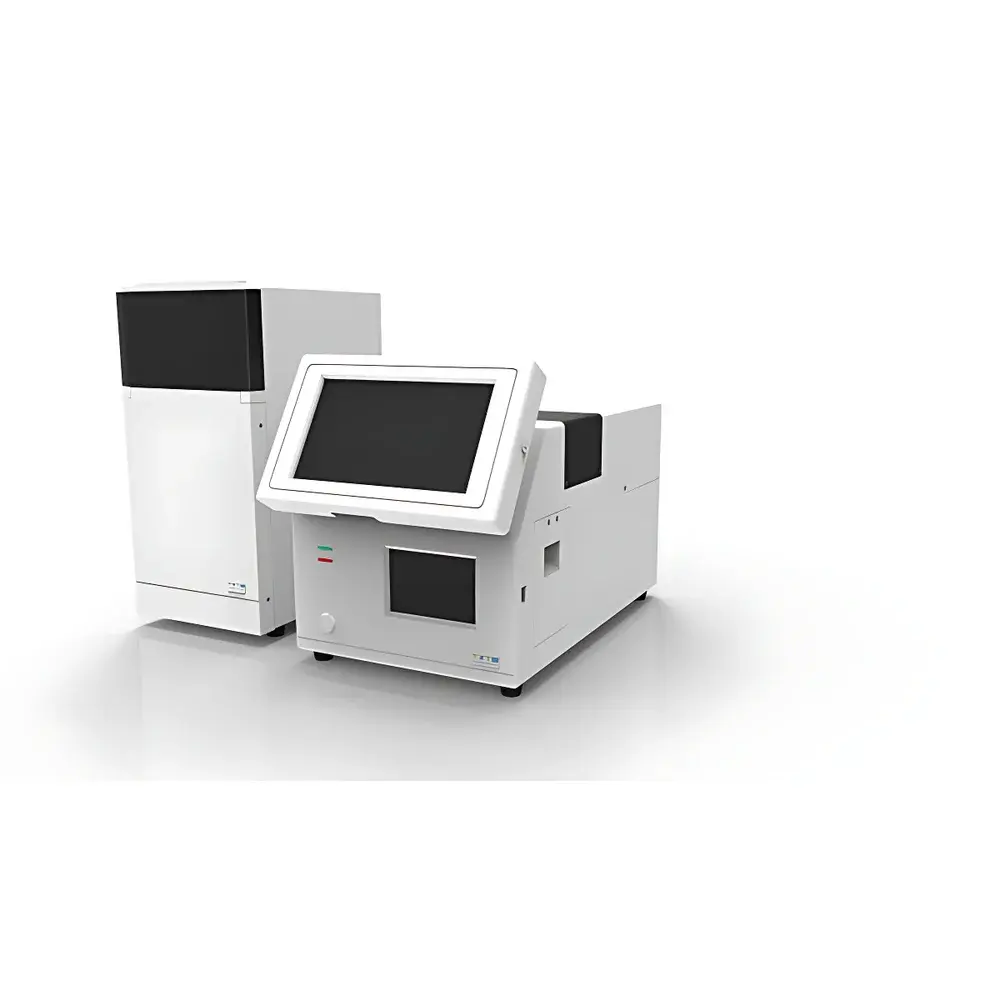
Tongxintianbo TRI-III Automated Fatty Acid Value Titrator
| Brand | Tongxintianbo |
|---|---|
| Model | TRI-III |
| Origin | Beijing, China |
| Power Supply | 220 V / 50 Hz |
| Dimensions | 500 × 450 × 350 mm |
| Power Consumption | 500 W |
| Endpoint Detection | Colorimetric (variable-spectrum photometric sensor) |
| Color Response Time | 10 ms |
| Minimum Dispensing Volume | 0.001 mL |
| Sample Cup Capacity | 50 mL / 100 mL (customizable) |
| Dispensing Accuracy | ≤0.25% per 10 mL |
| Dispensing Precision (RSD) | ≤0.5% per 10 mL |
| Titration Error | ≤0.25% per 10 mL |
| Display | 7-inch capacitive touchscreen |
| Communication Interfaces | RS232, Wi-Fi |
| Sample Handling | Magnetic stirring |
| Automation Features | Auto-blank correction, auto-pipette cleaning, cup-empty detection, adaptive titration speed control, endpoint overshoot recognition and stop |
Overview
The Tongxintianbo TRI-III Automated Fatty Acid Value Titrator is a dedicated analytical instrument engineered for precise, high-throughput determination of free fatty acid (FFA) content in grain, oilseed, and edible oil matrices—critical parameters in assessing rancidity, storage stability, and compliance with national and international food quality standards (e.g., GB/T 5530, ISO 660, AOAC 940.28). Unlike conventional manual or semi-automated titrators, the TRI-III implements a spectrally adaptive colorimetric endpoint detection system, eliminating subjective visual interpretation and operator-dependent variability. Its core measurement principle relies on potentiometrically referenced photometric monitoring of pH-sensitive indicator transitions (e.g., phenolphthalein or cresol red) during standardized alkaline titration with KOH or NaOH solution. The system dynamically tracks absorbance shifts across multiple wavelength bands, enabling robust endpoint identification even in turbid or pigmented samples common in crude oil or bran extracts. Designed for routine QC laboratories in grain elevators, oil refineries, and food safety testing centers, the TRI-III delivers traceable, auditable results under GLP-compliant workflows.
Key Features
- Spectrally adaptive color sensor with 10 ms real-time response—non-contact, no sample immersion, zero cross-contamination between runs
- Intelligent cup-empty detection via AI-driven optical void sensing—prevents erroneous titration initiation and reagent waste
- Adaptive titration speed control: rapid coarse addition near equivalence point, fine-droplet delivery (<0.001 mL increments) within ±0.1 mL of endpoint, automatic stop upon overshoot recognition
- Integrated magnetic stirring with programmable RPM profiles—ensures homogeneous mixing without vortex formation or splashing
- Self-cleaning fluidic path: post-titration automated rinse cycle using configurable solvent (e.g., ethanol, isopropanol) with pressure-assisted purge
- Modular architecture supports field-upgradable components—including dual-reagent dispensing modules, barcode sample tracking, and external autosampler integration
- 7-inch industrial-grade capacitive touchscreen with intuitive icon-driven UI; firmware supports over-the-air updates and multi-language localization
Sample Compatibility & Compliance
The TRI-III accommodates standard 50 mL and 100 mL borosilicate glass or polypropylene sample cups, with mechanical adaptability for custom vessel geometries (e.g., conical-bottom vials, extraction tubes). It is validated for use with common grain/oil extraction solvents including petroleum ether, hexane, and ethanol–water mixtures. All titration protocols align with ISO/IEC 17025 method validation requirements, supporting documented uncertainty budgets per ISO/IEC 17025:2017 Clause 7.7. Data integrity meets FDA 21 CFR Part 11 expectations through electronic signature support, audit trail logging (user actions, parameter changes, result modifications), and immutable data archiving. Instrument qualification includes IQ/OQ documentation templates compliant with GMP Annex 15 and Chinese GMP Chapter 90.
Software & Data Management
Embedded firmware (v3.2+) provides full local data management: up to 10,000 result records with timestamp, operator ID, method name, raw absorbance curves, and calculated FFA values (expressed as mg KOH/g sample or % oleic acid). Export formats include CSV, PDF reports (with embedded digital signatures), and XML for LIMS integration. Remote connectivity via Wi-Fi enables secure TLS 1.2–encrypted data push to centralized servers or cloud-based QA dashboards. RS232 interface supports legacy SCADA or PLC synchronization. Audit trail entries record every critical event—including calibration events, cleaning cycles, and method version switches—with tamper-proof hashing. Software validation package includes installation qualification (IQ), operational qualification (OQ), and performance qualification (PQ) test scripts.
Applications
- Quantification of free fatty acids in wheat, rice, corn, soybean, peanut, and rapeseed following standardized solvent extraction
- In-process monitoring of oil refining stages (degumming, neutralization, deodorization) to optimize caustic dosage and minimize soapstock loss
- Shelf-life prediction studies for packaged edible oils under accelerated oxidation conditions
- Regulatory compliance testing for national grain procurement (e.g., China’s GB 1351–2008, GB 1535–2017) and export certification (e.g., ASEAN, GCC, SPS measures)
- Research applications in lipid oxidation kinetics, antioxidant efficacy screening, and enzymatic lipolysis assays
FAQ
What standards does the TRI-III comply with for fatty acid value determination?
The instrument implements methodologies fully aligned with GB/T 5530–2019, ISO 660:2020, and AOAC Official Method 940.28. Its endpoint algorithm is validated against certified reference materials (CRMs) traceable to NIM (China) and NIST SRM 1849a.
Can the TRI-III be integrated into an existing LIMS environment?
Yes—via configurable CSV/XML export, HL7-compliant messaging (optional add-on), or direct SQL database write-through using ODBC drivers included in the Enterprise Software Package.
Is method validation support provided by the manufacturer?
Tongxintianbo supplies a complete method validation kit including protocol templates, CRM recommendations, precision/repeatability test data, and uncertainty calculation worksheets per EURACHEM/CITAC Guide.
What maintenance intervals are recommended for long-term accuracy?
Daily: visual inspection of tubing and sensor window; weekly: photometric calibration with neutral density filters; biannual: volumetric verification of syringe pump using gravimetric ISO 8655–5 procedures.
Does the system support multi-operator authentication with role-based access control?
Yes—LDAP/Active Directory integration is available; local user accounts support three tiers (Operator, Supervisor, Administrator) with granular permissions over method editing, report generation, and system configuration.
Related Products