
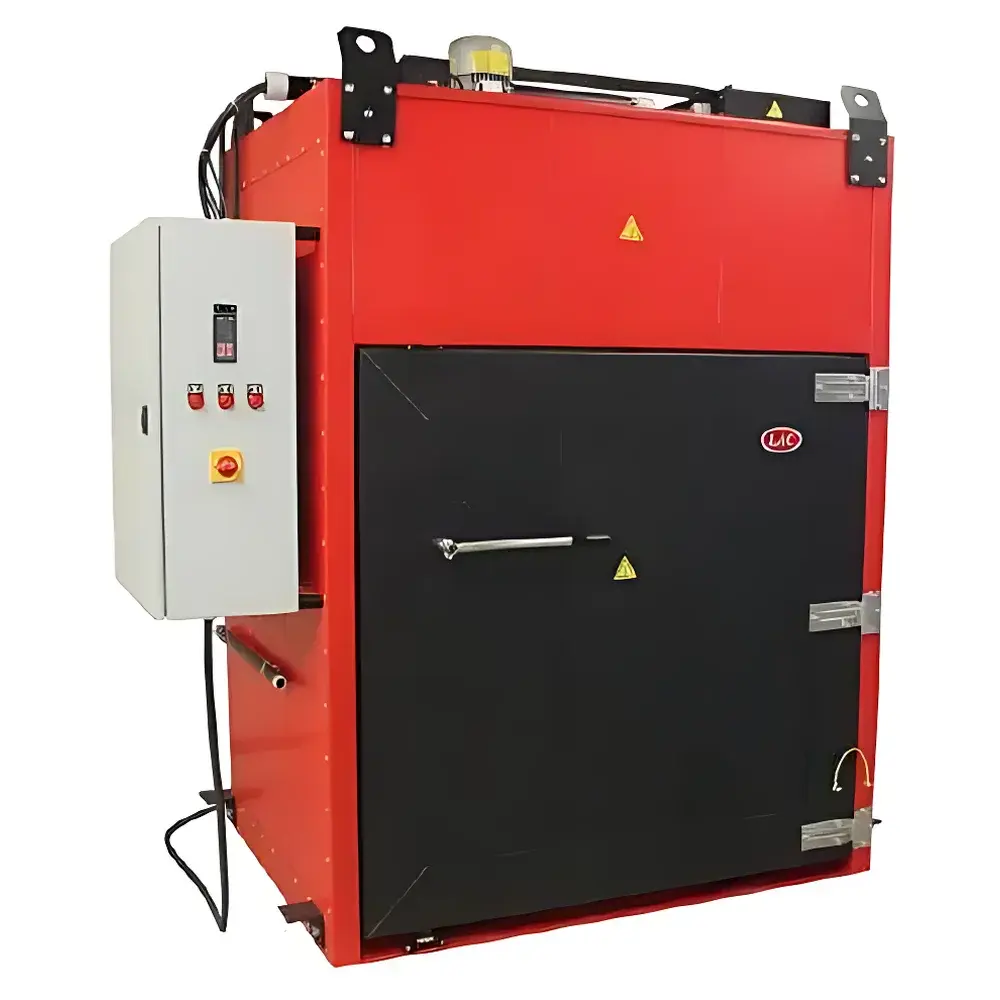
LAC SV1001/30 MKii Industrial Forced-Air Circulation Drying Oven
| Brand | LAC (Czech Republic) |
|---|---|
| Origin | Czech Republic |
| Model | SV1001/30 MKii |
| Temperature Range | 80–300 °C |
| Temperature Uniformity | ±1 °C |
| External Dimensions | 1800×2150×1200 mm (W×H×D) |
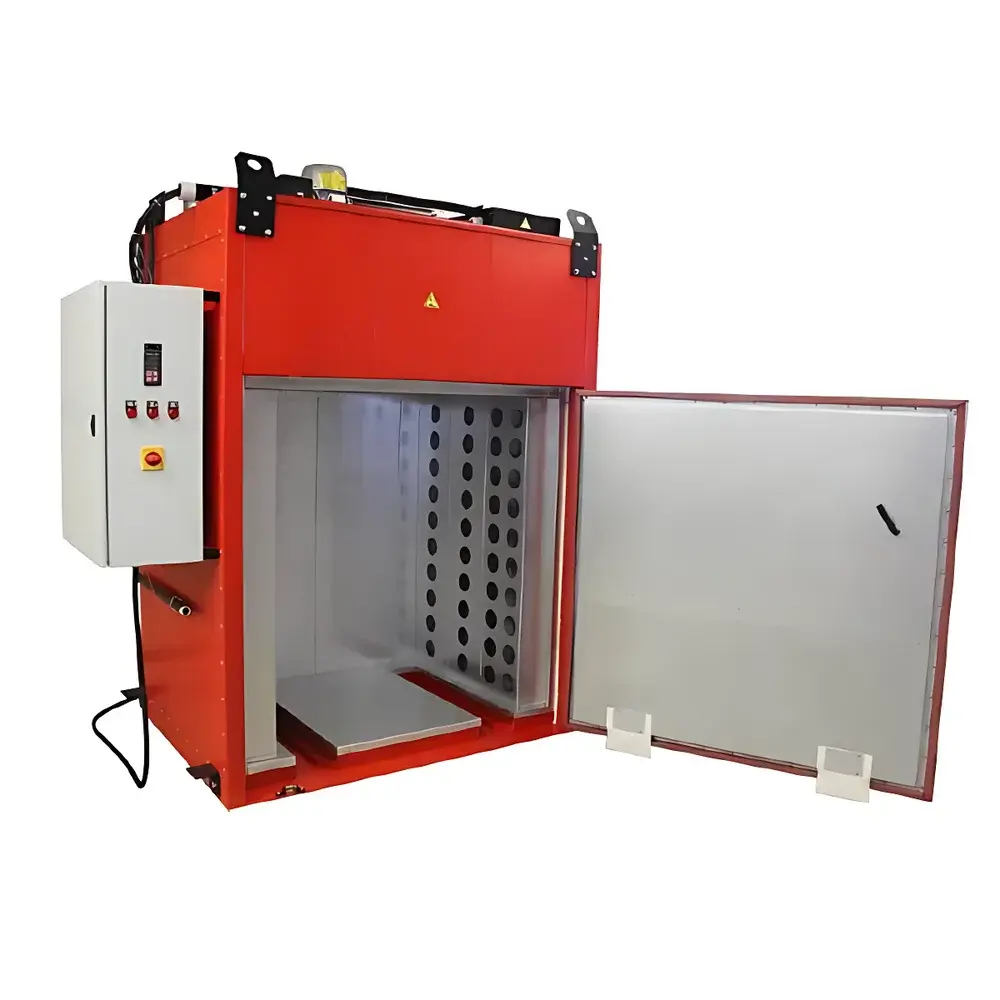
| Internal Chamber Dimensions | 1000×1200×800 mm (W×H×D) |
| Chamber Material | Stainless Steel (AISI 304) |
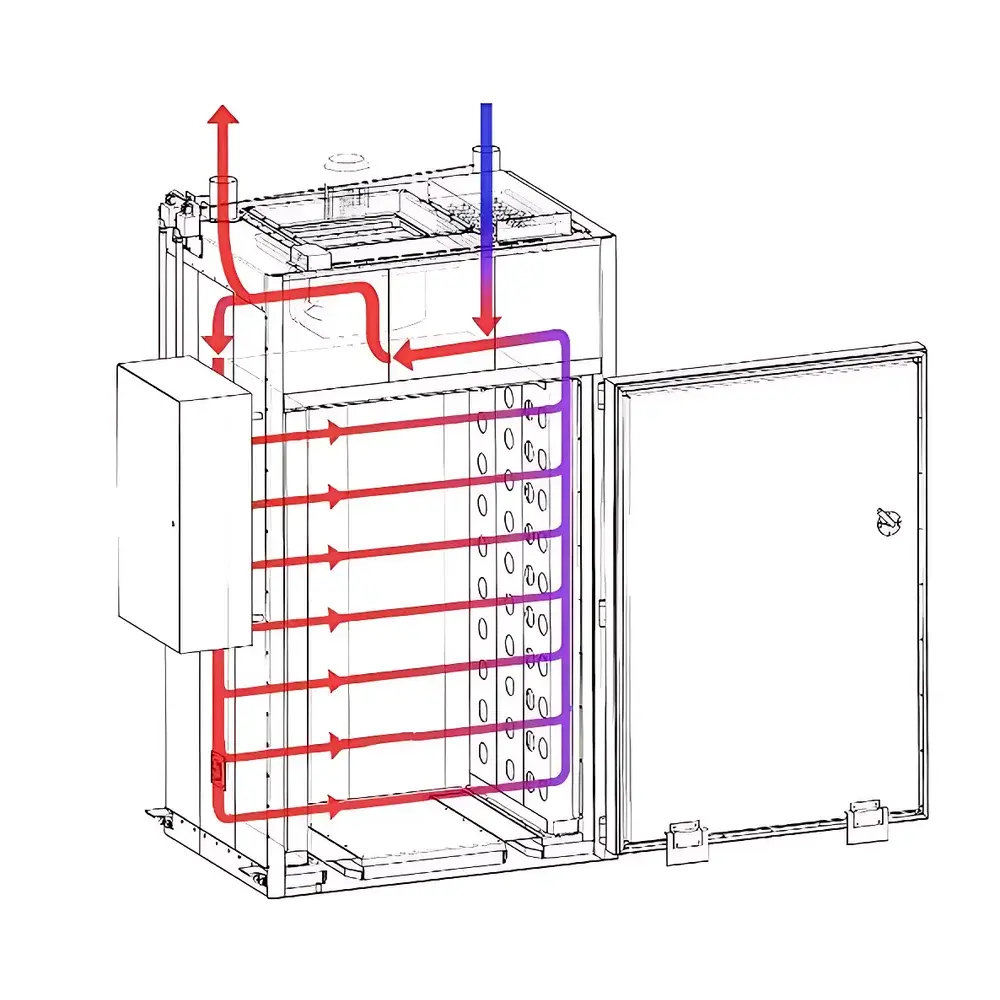
| Heating Method | Forced-Air Convection (50 air exchanges per minute) |
| Power Supply | 400 V, 3-phase, 50/60 Hz |
| Heating Power | 12 kW |
| Weight | 715 kg |
Overview
The LAC SV1001/30 MKii is a precision-engineered industrial forced-air circulation drying oven designed for demanding thermal processing applications in R&D laboratories, quality control facilities, and production environments. Operating on the principle of high-efficiency convection heating—where a top-mounted, maintenance-accessible centrifugal blower circulates heated air at a validated rate of 50 complete chamber air exchanges per minute—the SV1001/30 MKii ensures exceptional temperature uniformity (±1 °C across the working volume) and rapid thermal response. Its robust construction features a fully welded AISI 304 stainless steel inner chamber, offering long-term resistance to mechanical stress, oxidation, and chemical exposure from solvents, acids, or curing agents. Unlike static ovens, this system eliminates thermal stratification through dynamic airflow management, making it suitable for processes requiring strict thermal consistency—such as polymer crosslinking, metal aging, electrical component burn-in, and coating cure validation.
Key Features
- Top-integrated fan and heater assembly: Enables unobstructed chamber geometry, maximizes usable volume, and simplifies service access without disassembling insulation or chamber walls.
- High-reliability temperature control system: Equipped with the HT40P programmable controller supporting up to 10 independent multi-step programs (15 segments each), with real-time ramp/soak profiling and data logging capability.
- Dual safety architecture: Includes an independent overtemperature cut-off unit (separate from main controller) compliant with EN 60519-2 requirements for industrial heating equipment.
- Optimized airflow design: Radial air distribution via perforated ceiling plenum ensures laminar, non-turbulent circulation—critical for low-particulate environments and uniform heat transfer across stacked trays or fixtures.
- Modular door configuration: Right-hinged single-action door (standard for chambers < 4000 L); optional bi-directional doors available for larger variants—both featuring reinforced gasket sealing and integrated limit switches for interlocked power cutoff.
- No-contact solid-state relays (SSRs): Eliminate mechanical arcing and audible switching noise; support extended cycle life (>1 million operations) under continuous thermal load.
Sample Compatibility & Compliance
The SV1001/30 MKii accommodates diverse sample forms—including bulk powders, coated substrates, machined aluminum billets, rubber compounds, PCB assemblies, and ceramic green bodies—without risk of contamination or dimensional distortion. Its stainless steel chamber meets ISO 8502-3 surface cleanliness standards for post-cleaning verification and supports GLP-compliant documentation when paired with external data acquisition systems. The oven complies with CE marking directives (2014/35/EU Low Voltage Directive, 2014/30/EU EMC Directive), EN 60519-2 (safety requirements for industrial electroheating equipment), and is compatible with IQ/OQ/PQ validation protocols required under FDA 21 CFR Part 11 and EU Annex 11 for regulated manufacturing. Optional NIST-traceable calibration certificates and thermocouple mapping reports are available upon request.
Software & Data Management
While the HT40P controller operates autonomously via front-panel interface, it supports RS485 Modbus RTU communication for integration into centralized SCADA or MES platforms. Third-party software (e.g., WinCC, Ignition, LabVIEW) can acquire real-time temperature readings, program status, alarm logs, and event timestamps—including door-open duration, SSR activation cycles, and deviation alerts. Audit trails record all parameter changes with user ID, timestamp, and pre-/post-value—meeting ALCOA+ data integrity principles. For GxP environments, optional Ethernet-enabled controllers with TLS 1.2 encryption and electronic signature workflows are available to satisfy 21 CFR Part 11 requirements.
Applications
- Artificial aging of aluminum alloys (e.g., T6 tempering per ASTM B917)
- Curing of epoxy, silicone, and powder coatings (per ISO 20340 or MIL-STD-810)
- Pre-heating of molds, tooling, and composite layup mandrels prior to resin infusion
- Accelerated aging of elastomers and cable insulation (IEC 60811-501)
- Burn-in testing of electronic assemblies and passive components
- Moisture removal from hygroscopic ceramics and battery electrode materials
- Stress-relief annealing of machined steel components (per AMS 2750E)
- Debinding of metal injection molded (MIM) parts prior to sintering
FAQ
What is the maximum recommended operating temperature for continuous use?
The SV1001/30 MKii is rated for continuous operation at 300 °C, with thermal insulation and structural design validated per EN 13423 for Class H insulation systems.
Can the oven be configured for inert atmosphere processing?
Yes—optional gas purge ports (N₂ or Ar inlet/outlet) and pressure-relief valves enable controlled-atmosphere operation; full inert enclosure variants are available upon engineering review.
Is the HT40P controller compliant with FDA 21 CFR Part 11?
The base HT40P is not Part 11–compliant out-of-the-box, but LAC offers validated firmware upgrades with electronic signatures, audit trail export, and role-based access control for regulated users.
What maintenance intervals are recommended for the blower motor and heating elements?
Blower bearings require lubrication every 2,000 operational hours; heating elements should be inspected annually for continuity and surface oxidation—typical service life exceeds 15,000 hours under nominal load.
Does the oven support remote monitoring via Ethernet or Wi-Fi?
Standard configuration uses RS485; Ethernet connectivity (TCP/IP) is available via optional gateway module or upgraded controller variant with embedded web server and SNMP support.
Related Products



