Lafayette 80805A*C & 80800A*C Forced Exercise Treadmill System for Rodent Behavioral Studies
| Origin | USA |
|---|---|
| Manufacturer Type | Authorized Distributor |
| Origin Category | Imported |
| Model | 80805A*C (Rat), 80800A*C / 80800A10*C (Mouse) |
| Weight | 9.1 kg (base only), 18.6 kg (fully configured with 6 rat wheels) |
| Dimensions (with wheels) | 130 cm × 46 cm × 43 cm |
| Wheel Diameter (rat) | 33.985 cm |
| Wheel Width (rat) | 11.176 cm |
| Circumference (rat) | 1.06 m/rev |
| Circumference (mouse) | 0.47 m/rev |
| Speed Range (rat) | 1.0–28.0 m/min |
| Speed Range (mouse) | 0.9–11.4 m/min |
| Time Resolution | 1 sec |
| Rest/Test Duration | 1 min – 24 h |
| Revolutions | 1–99 (rat), 1–999 (mouse) |
| Runway Capacity | 1–6 (rat), 1–20 (mouse) |
| Material | Polycarbonate sidewalls, aluminum access hatches, stainless-steel rung surface, padded non-slip clamps |
| Waste Trays | 3 removable stainless-steel trays |
| Optional Accessories | Tail restraint nets (80806MSH18, 80801MSH25), drinking support kits (80807, 80803), Model 86165 AWM software (USB/serial compatible) |
Overview
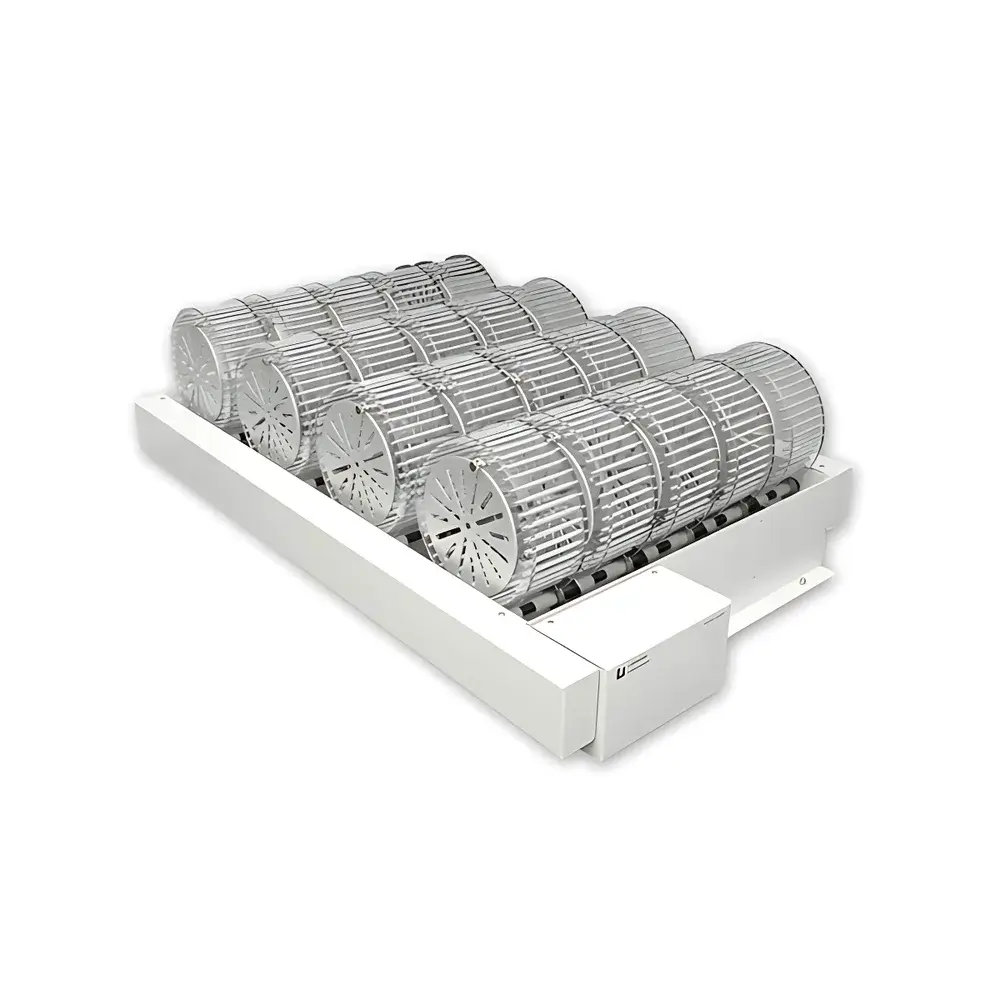
The Lafayette 80805A*C and 80800A*C Forced Exercise Treadmill Systems are precision-engineered platforms designed for controlled, quantifiable locomotor stimulation in rodent behavioral neuroscience and preclinical pharmacology research. These systems implement a validated forced treadmill paradigm—distinct from voluntary wheel running—to deliver reproducible physical stressors for experimental models of sleep deprivation, exercise physiology, metabolic adaptation, neuroplasticity, and chronic stress response. Each treadmill operates on a motor-driven, belt-free rotating drum principle: the animal stands on a circular, stainless-steel-rung drum that rotates at user-defined linear velocities. This design eliminates belt slippage artifacts, ensures consistent footfall kinematics, and enables real-time behavioral observation without obstructive side barriers. The system’s mechanical architecture supports both acute and chronic protocols across standardized durations (1 minute to 24 hours), with programmable rest intervals and precise revolution counting—critical for correlating locomotor output with downstream molecular or electrophysiological endpoints.
Key Features
- Modular, scalable configuration: Supports 1–6 independently operable drums for rats (80805A*C base) or 1–20 drums for mice (80800A*C series), enabling parallel-group experimental designs with inter-subject consistency.
- LCD handheld controller with intuitive interface: Enables on-the-fly adjustment of speed (0.1 m/min resolution), test duration, rest interval, and target revolutions—without requiring PC connectivity.
- Biocompatible, service-oriented construction: Polycarbonate sidewalls and aluminum access hatches facilitate rapid animal loading/unloading; stainless-steel rungs (82 per rat drum, 13.36 mm center-to-center spacing) provide uniform tactile feedback and minimize paw slippage.
- Dual-mode operation: Drums may be added or removed during active sessions—enabling staggered initiation, adaptive protocol modification, or emergency intervention without system shutdown.
- Integrated waste management: Three removable, autoclavable stainless-steel trays capture excreta beneath each drum zone, supporting GLP-compliant hygiene protocols and minimizing cross-contamination risk.
- Tail safety engineering: Optional tail restraint nets (80806MSH18 for rats, 80801MSH25 for mice) prevent entanglement between rungs—a documented confounder in prolonged forced-exercise paradigms.
Sample Compatibility & Compliance
The system accommodates Sprague-Dawley, Wistar, Long-Evans, and C57BL/6J rodents within standard weight ranges (rats: 200–500 g; mice: 18–35 g). All contact surfaces comply with ISO 10993-5 (cytotoxicity) and USP Class VI biocompatibility standards. Stainless-steel components meet ASTM A240/A240M specifications for corrosion resistance in laboratory environments. The absence of adhesives, volatile coatings, or polymer-based friction surfaces ensures chemical compatibility with common disinfectants (e.g., 70% ethanol, quaternary ammonium solutions) and eliminates interference with subsequent tissue collection or mass spectrometry workflows. The platform is routinely deployed in AAALAC-accredited facilities and conforms to NIH OLAW guidelines for humane endpoint monitoring during forced locomotion.
Software & Data Management
Model 86165 Activity Wheel Monitor (AWM) software provides advanced protocol orchestration via USB or RS-232 interface. Its dual-mode interface includes a guided wizard for novice users and a professional mode supporting custom scripting, multi-parameter synchronization (e.g., treadmill activation + EEG acquisition triggers), and timestamped event logging. All parameter changes, session starts/stops, and hardware alerts are recorded with audit-trail metadata—including operator ID, system time (NTP-sync capable), and firmware version—meeting FDA 21 CFR Part 11 requirements for electronic records when paired with institutional digital signature policies. Export formats include CSV, MATLAB (.mat), and EDF+ for integration with NeuroScore, Spike2, or custom Python analysis pipelines.
Applications
- Sleep-wake architecture disruption studies: Precise temporal control over forced activity enables selective REM/NREM suppression protocols aligned with circadian phase markers.
- Exercise preconditioning in ischemia-reperfusion models: Standardized treadmill exposure prior to cardiac or cerebral occlusion establishes dose-response relationships between locomotor load and infarct volume reduction.
- Neuroinflammatory modulation: Chronic forced exercise regimens are used to quantify IL-1β, TNF-α, and BDNF expression gradients in hippocampal subregions via qPCR and IHC.
- Muscle metabolism phenotyping: Paired with indirect calorimetry, the system supports substrate utilization analysis (RER shifts) during incremental velocity challenges.
- Pharmacokinetic-pharmacodynamic modeling: Enables correlation of drug half-life (e.g., corticosteroids, SSRIs) with dynamic changes in fatigue onset latency and recovery kinetics.
FAQ
Can the treadmill system be integrated with third-party physiological monitoring equipment?
Yes—digital TTL trigger outputs and analog voltage inputs (±10 V) are available on the base controller for synchronizing treadmill activation with EEG, EMG, or telemetry systems.
Is calibration traceable to NIST standards?
Linear velocity is calibrated using a certified optical tachometer (NIST-traceable model 3300, ±0.2% full-scale accuracy); calibration certificates are provided with each shipment.
What maintenance is required for long-term reliability?
Monthly inspection of rung alignment and clamp tension is recommended; stainless-steel components require only deionized water rinse after disinfection—no lubrication or consumable parts are needed.
Does the system support automated start/stop based on animal behavior detection?
Not natively—but the 86165 software API allows external integration with video-based pose estimation tools (e.g., DeepLabCut) to initiate or halt rotation upon detected immobility or rearing events.
Are replacement parts available for individual drum assemblies?
Yes—each drum, clamp set, and waste tray is sold as a field-replaceable unit (FRU) with documented disassembly schematics and torque specifications in the service manual.