
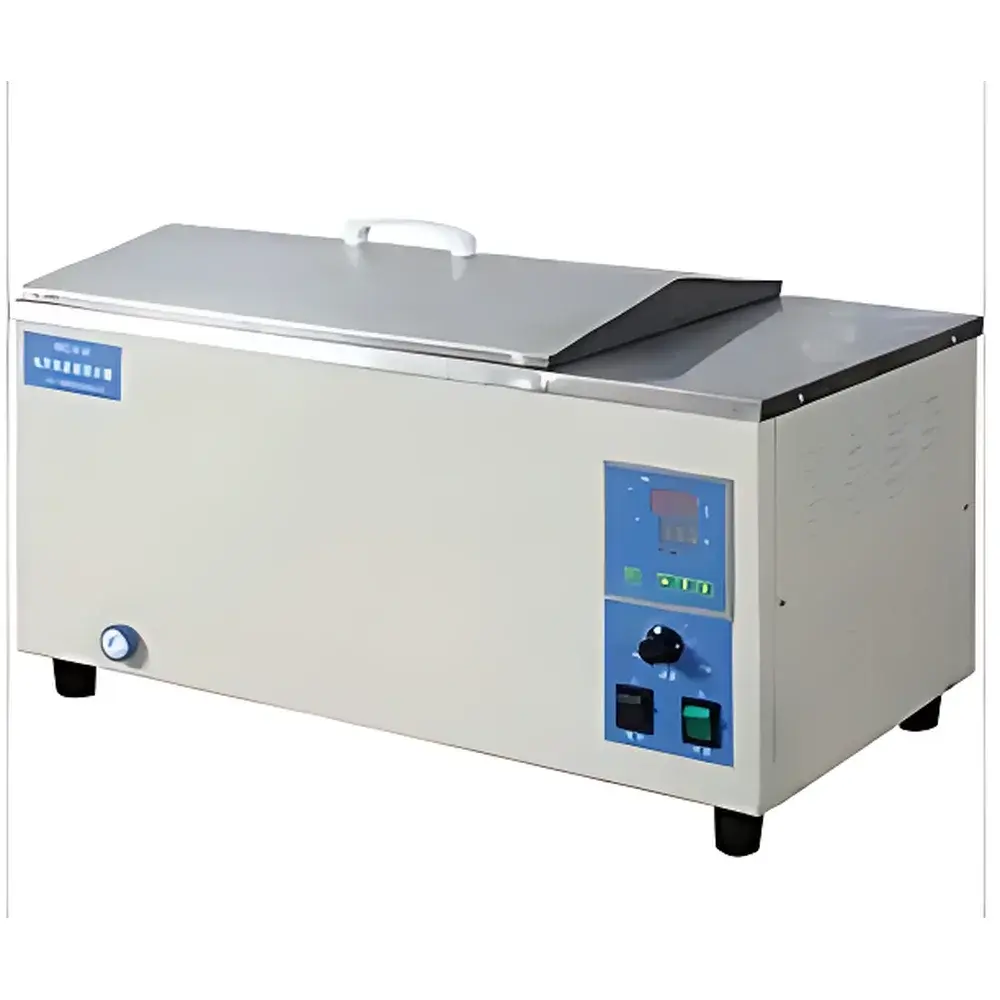
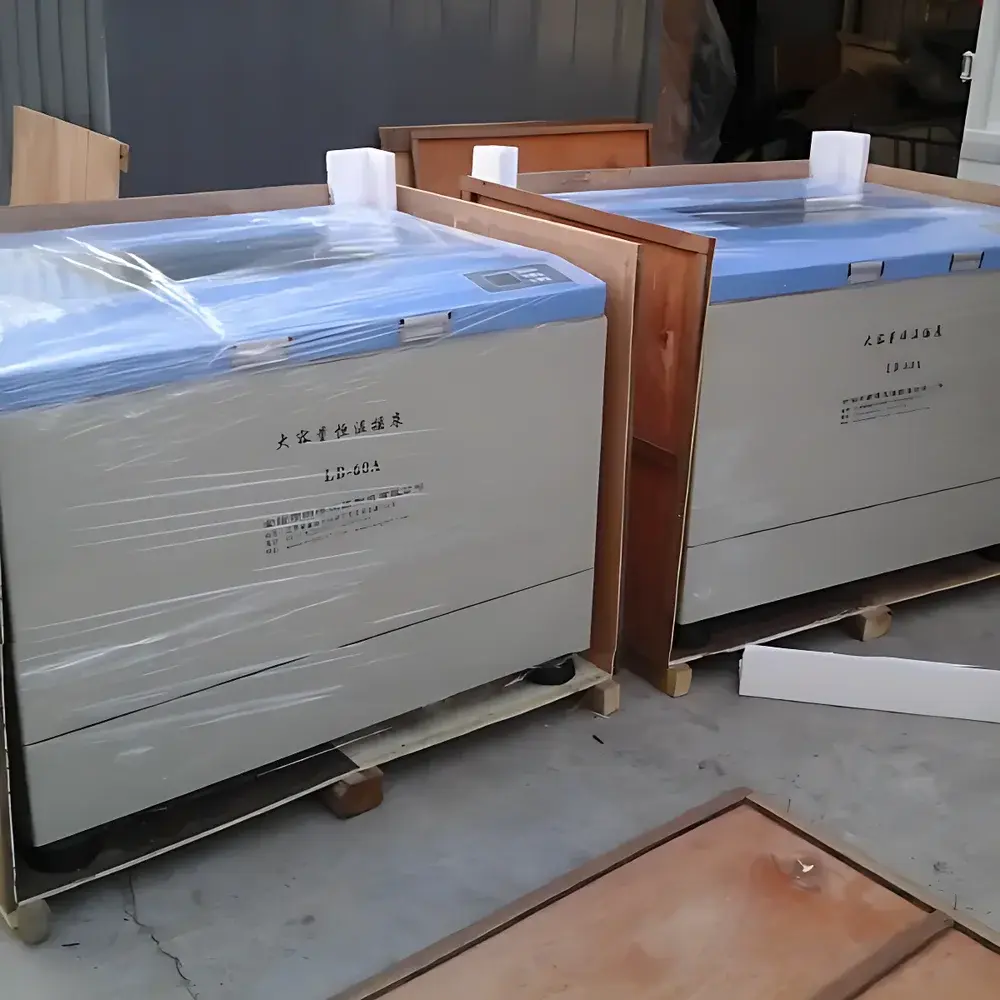
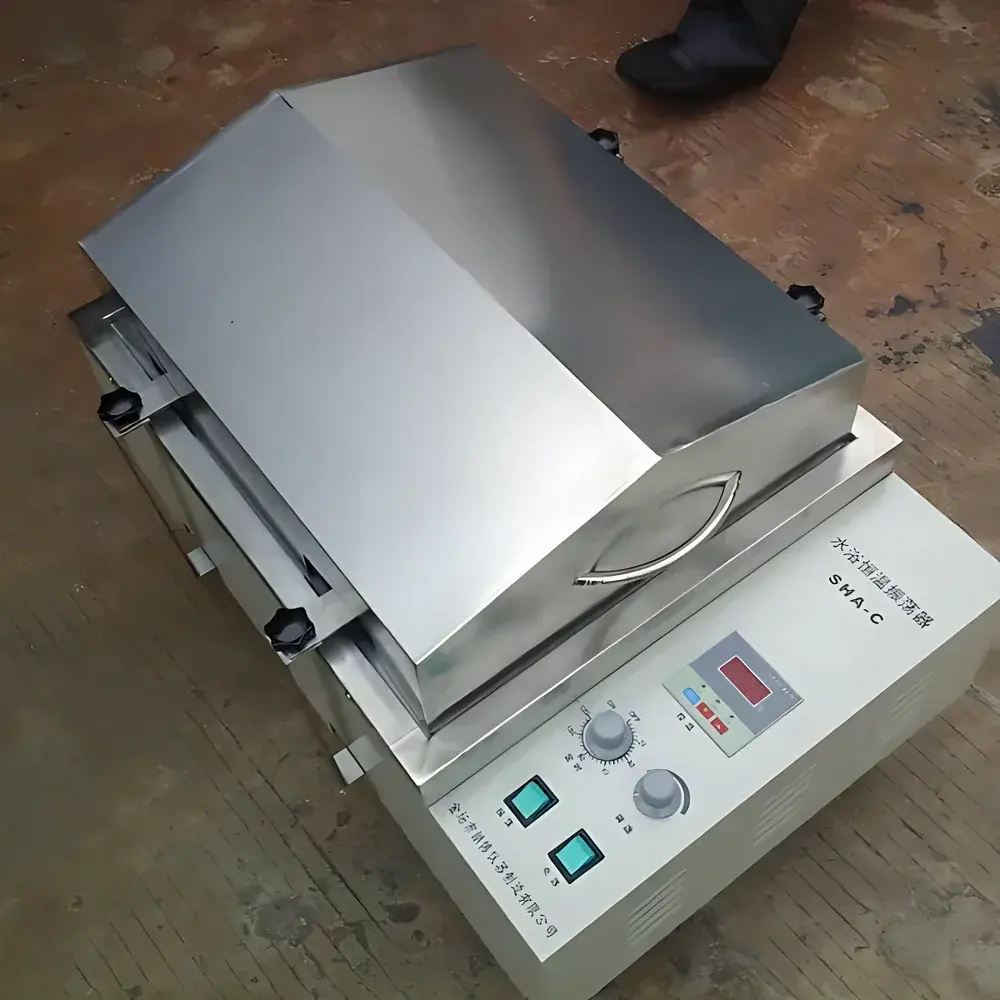
Langbo DKZ-3 Constant-Temperature Orbital Shaker Bath
| Brand | Langbo |
|---|---|
| Origin | Jiangsu, China |
| Manufacturer Type | Authorized Distributor |
| Instrument Type | Water Bath Constant-Temperature Shaker |
| Model | DKZ-3 |
| Timing Range | 1–999 min |
| Oscillation Frequency | 40–150 rpm |
| Amplitude | 30 mm (orbital) |
| Temperature Range | RT + 5 °C to 100 °C |
| Temperature Uniformity | ±0.1 °C |
| Temperature Resolution | 0.1 °C |
| Chamber Material | Stainless Steel (304) |
| Chamber Dimensions (W×D×H) | 618 × 310 × 250 mm |
| Power Supply | 220 V, 50 Hz |
| Power Consumption | 1650 W |
| Number of Platforms | 1 |
| Display | Digital LED for temperature and speed |
Overview
The Langbo DKZ-3 Constant-Temperature Orbital Shaker Bath is an integrated laboratory instrument engineered for precision-controlled incubation and agitation of biological and biochemical samples in aqueous environments. It combines a thermostatically regulated water bath with a mechanically driven orbital shaker platform, enabling simultaneous temperature stabilization and uniform horizontal motion—critical for applications requiring both thermal consistency and gentle, reproducible mixing. Unlike air-jacketed incubators or dry-block shakers, the DKZ-3 leverages water’s high thermal mass and conductivity to achieve rapid equilibration and exceptional temperature homogeneity (±0.1 °C) across the entire chamber volume. Its core operating principle relies on PID-controlled resistive heating, coupled with a brushless DC motor driving a balanced eccentric cam mechanism to deliver smooth, low-vibration orbital oscillation (25–30 mm diameter path). Designed for long-duration unattended operation, the unit complies with IEC 61010-1 safety standards for laboratory electrical equipment and incorporates over-temperature cutoff and dry-run protection.
Key Features
- Orbital shaking platform with adjustable speed (40–150 rpm), digitally displayed and continuously tunable via front-panel keypad
- Precise digital temperature control from ambient +5 °C up to 100 °C, with 0.1 °C resolution and real-time LED readout
- Stainless steel 304 water bath chamber (618 × 310 × 250 mm) offering corrosion resistance, ease of cleaning, and compatibility with aqueous and mild chemical solutions
- Integrated timer function (1–999 minutes) with automatic shutdown and audible alert upon completion
- Robust mechanical architecture featuring reinforced support frame, silicone-sealed lid, and anti-slip rubber matting to prevent vessel displacement during operation
- Energy-efficient 1650 W heating system with thermal insulation minimizing ambient heat loss and improving stability under variable load conditions
Sample Compatibility & Compliance
The DKZ-3 accommodates standard laboratory vessels including Erlenmeyer flasks (up to 2 L), test tubes, multi-well plates (with optional adapter trays), and culture bottles—provided they are sealed or fitted with breathable closures to prevent evaporation-induced concentration shifts. The water bath medium ensures uniform thermal transfer to all container walls, eliminating cold spots common in air-based systems. This makes the instrument suitable for protocols aligned with ISO 15189 (medical laboratories), CLSI M22-A3 (microbiological culture methods), and USP / (microbial enumeration). While not certified for GMP manufacturing environments, its digital logging capability (via optional RS-232/USB interface) supports GLP-compliant documentation when paired with validated third-party software for audit trail generation.
Software & Data Management
The DKZ-3 operates as a standalone instrument with no embedded firmware-based data logging. However, it features an analog-compatible output port (0–5 V DC) for external temperature and speed signal acquisition, enabling integration with LabVIEW, MATLAB, or SCADA systems for continuous monitoring and CSV export. Optional communication modules (sold separately) provide RS-232 or USB connectivity for remote parameter setting and real-time telemetry. When used in regulated settings, users may implement electronic record retention policies compliant with FDA 21 CFR Part 11 by pairing the device with validated third-party acquisition software that enforces user authentication, electronic signatures, and immutable audit trails.
Applications
- Microbial growth studies requiring controlled aeration and temperature (e.g., E. coli, yeast, and fungal cultures)
- Enzyme kinetics assays where reaction rates are temperature- and mixing-dependent
- Solubility testing and dissolution profiling per USP guidelines
- Cell suspension maintenance in hybridoma or CHO bioreactor seed train workflows
- Antibiotic susceptibility testing (AST) using broth microdilution methods
- Protein refolding experiments involving gradual temperature ramping and agitation
- Environmental sample extraction (e.g., soil leachate, waterborne pathogen enrichment)
FAQ
What is the maximum flask size supported on the DKZ-3 platform?
Standard configuration supports up to two 1 L Erlenmeyer flasks or four 500 mL flasks simultaneously. Larger vessels require custom platform inserts to maintain center-of-mass balance.
Can the DKZ-3 operate without water in the bath chamber?
No. Operation without water will trigger thermal cutoff and may damage the heating element and temperature sensor. Always ensure minimum water level covers the heater assembly.
Is the temperature calibration traceable to NIST standards?
The factory calibration uses reference-grade thermistors calibrated against NIST-traceable standards. End-user recalibration requires a certified external thermometer and adjustment via service mode (accessible only with technician credentials).
Does the DKZ-3 meet CE or UL certification requirements?
The unit carries CE marking per Directive 2014/30/EU (EMC) and 2014/35/EU (LVD), verified by an EU Notified Body. UL listing is not available; North American users should verify local electrical code compliance prior to installation.
How often should maintenance be performed?
Biannual inspection is recommended: check water bath integrity, clean heater surface with citric acid solution, verify seal condition, and validate temperature uniformity using three-point probe mapping (center + corners).




