
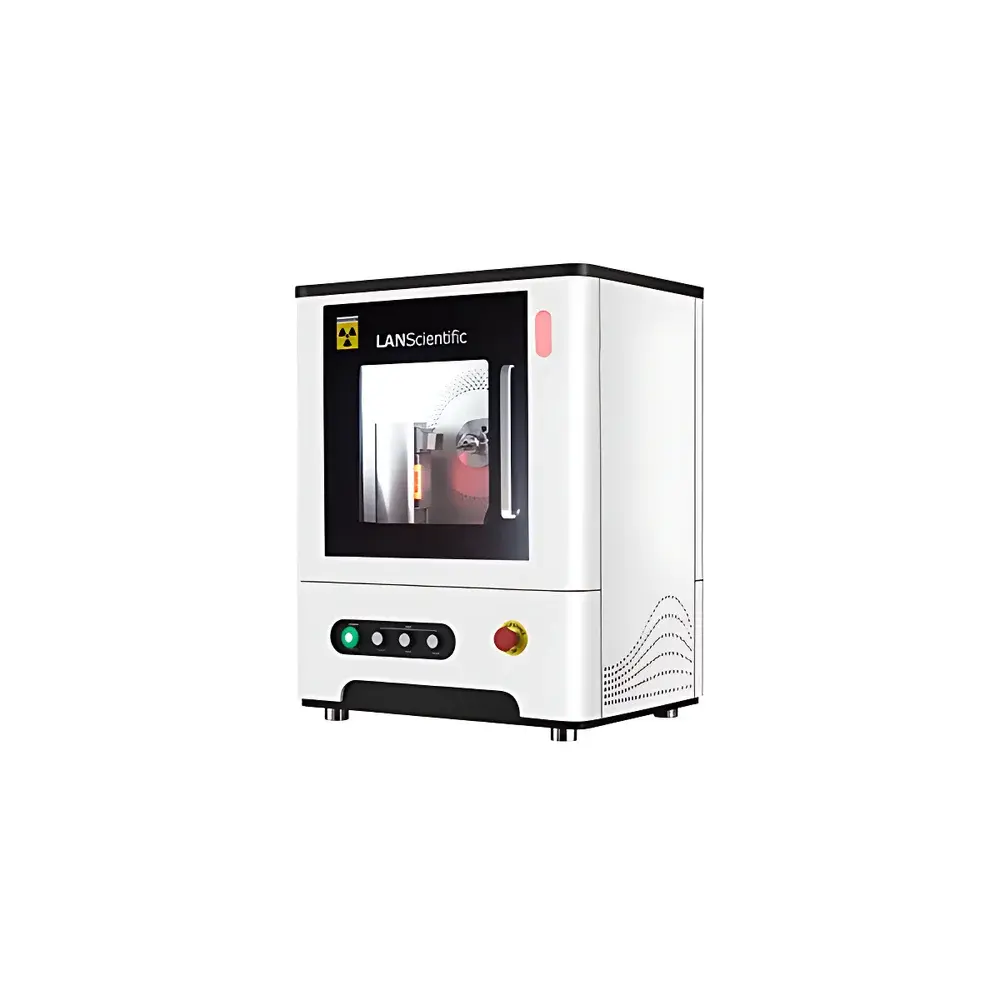
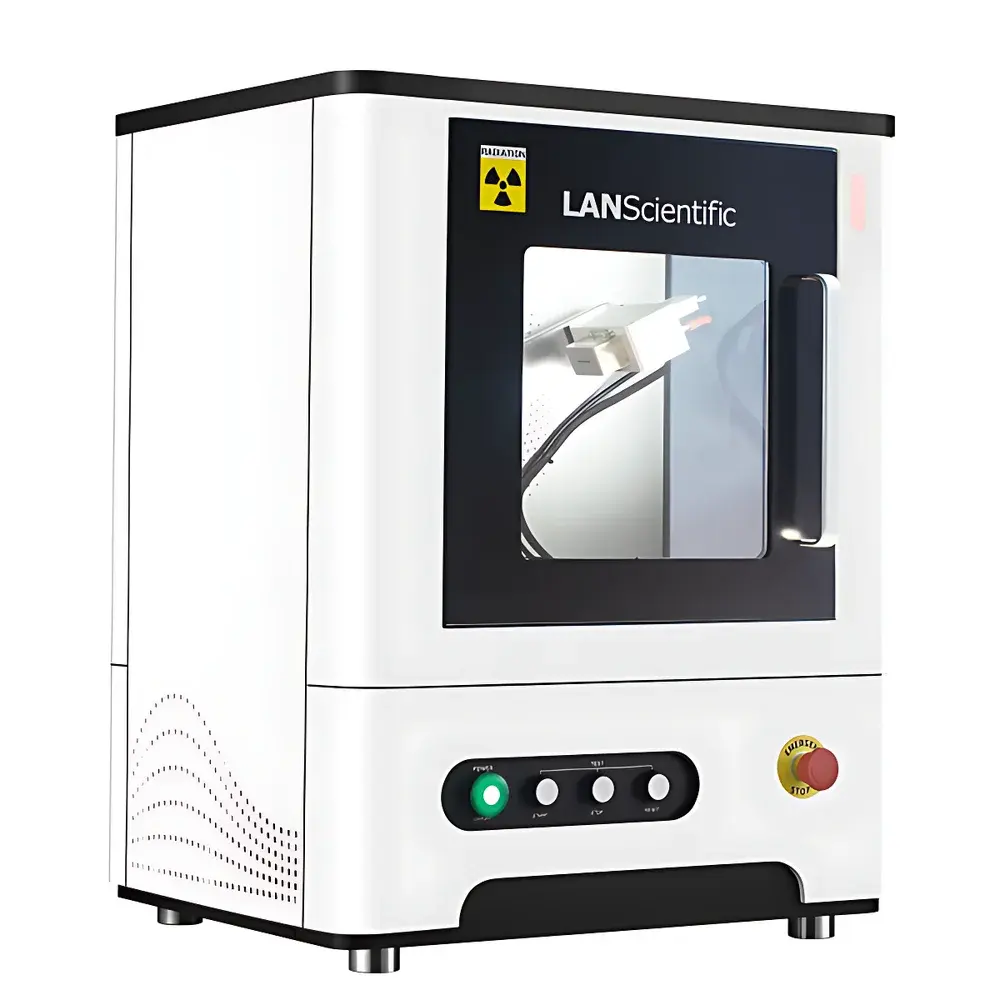
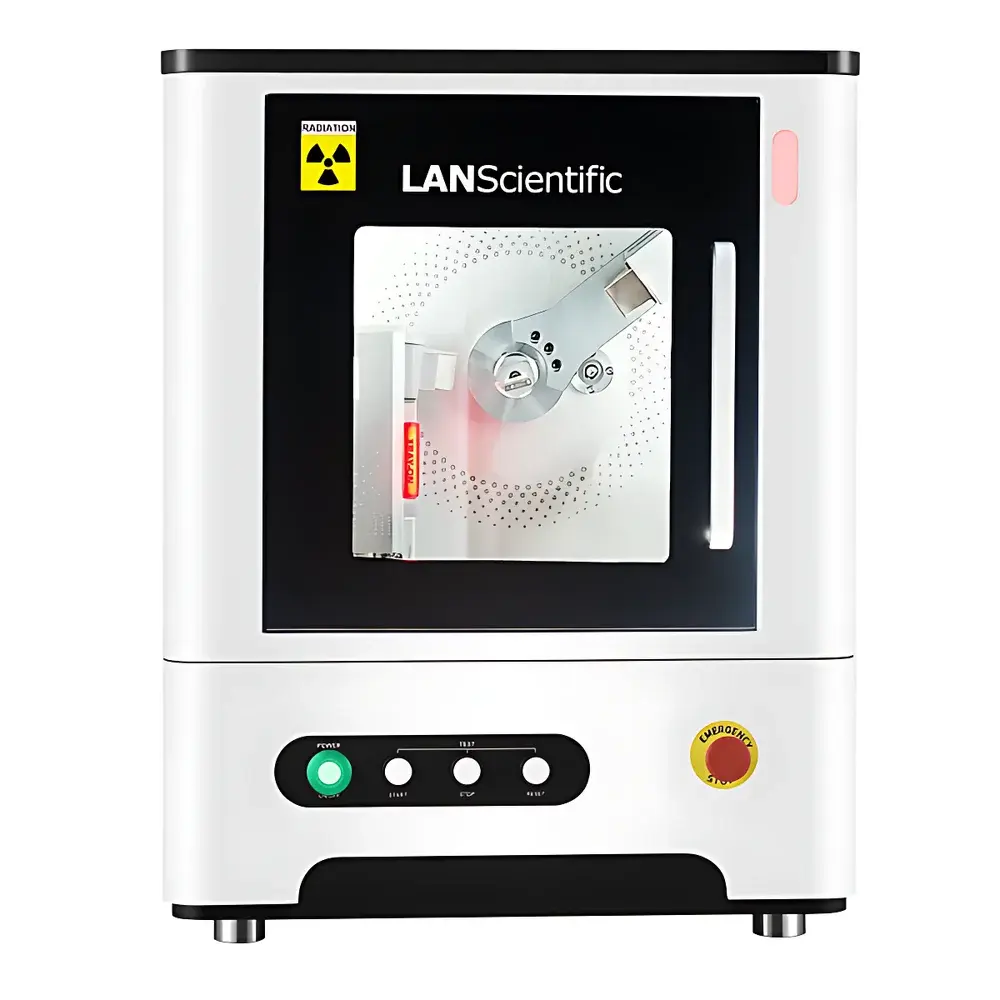
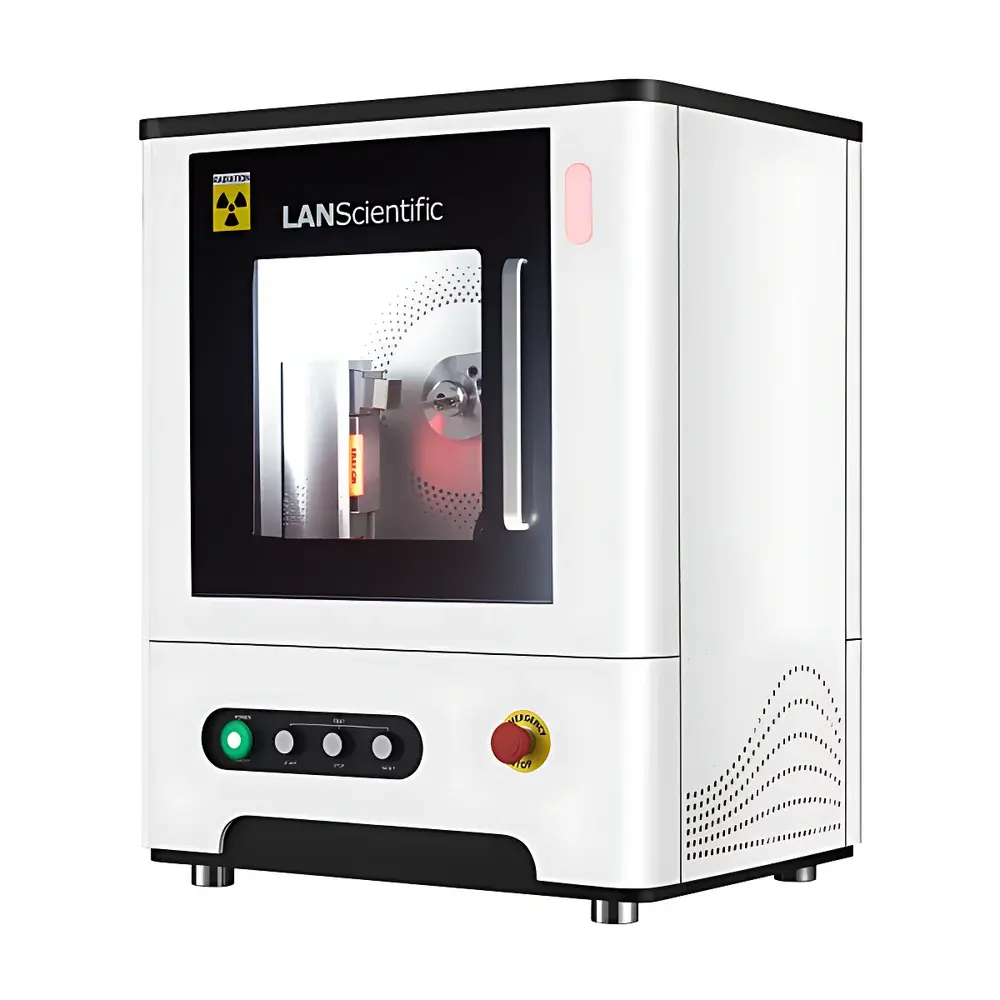
LANScientific FRINGE CLASS Benchtop Powder X-ray Diffractometer for Titanium Dioxide (TiO₂) Analysis
| Brand | LANScientific |
|---|---|
| Origin | Jiangsu, China |
| Manufacturer Type | Direct Manufacturer |
| Instrument Type | Powder X-ray Diffractometer |
| Model | FRINGE CLASS |
| Power Supply | As specified in technical documentation |
| Detector | Proportional Counter (≥500 kcps count rate) |
| Geometry | Bragg–Brentano θ–2θ reflection mode |
| Cooling System | Integrated water recirculation cooling |
| Compliance | CE-marked, compliant with IEC 61000-6-3 (EMC) and IEC 61000-6-4 (emission standards) |
Overview
The LANScientific FRINGE CLASS is a compact, benchtop powder X-ray diffractometer engineered for high-fidelity phase identification, quantitative phase analysis (QPA), crystallinity assessment, and lattice parameter refinement of solid-state materials. It operates on the Bragg–Brentano θ–2θ reflection geometry, where monochromatic Cu Kα radiation (λ = 1.5418 Å) is collimated via integrated Soller slits and incident upon a stationary or rotating sample stage at the goniometer center. When the incident angle satisfies Bragg’s law (nλ = 2d sinθ), constructive interference generates diffraction peaks detected by a high-throughput proportional counter. The system delivers reproducible angular resolution better than 0.02° 2θ (FWHM), enabling robust discrimination of closely spaced reflections—critical for distinguishing anatase, rutile, and brookite polymorphs in titanium dioxide (TiO₂) pigment characterization.
Key Features
- Patented single-axis θ–2θ coupled goniometer: Eliminates mechanical backlash and reduces alignment drift; achieves angular repeatability ≤ ±0.01° 2θ over extended operation.
- Integrated closed-loop water recirculation cooling: Maintains X-ray tube anode temperature within ±1°C without external chiller dependency; real-time monitoring of coolant temperature, flow rate, and velocity via embedded sensor interface.
- Fixed-geometry Soller slit assembly: No moving or user-adjustable components—enhances long-term mechanical stability and enables vibration-tolerant deployment, including mobile laboratory platforms (e.g., vehicle-mounted analytical units).
- High-efficiency proportional counter detector: ≥500 kcps maximum count rate with energy discrimination capability; optimized signal-to-noise ratio for low-intensity reflections from trace phases or thin films.
- Interlocked safety architecture: Motorized sample chamber door integrates with beam shutter and high-voltage interlock; automatic X-ray tube shutdown occurs if door opens during acquisition. Visual and software-based status indicators confirm full enclosure integrity prior to exposure.
Sample Compatibility & Compliance
The FRINGE CLASS accommodates powdered specimens (loose or pelletized), flat-surface bulk solids, and thin-film coatings (≥10 nm thickness). Sample holders support standard 25 mm Ø or 32 mm Ø aluminum or silicon zero-background plates. All hardware and firmware comply with international radiation safety directives (IEC 61010-1, IEC 62471), electromagnetic compatibility standards (IEC 61000-6-3/6-4), and are designed for GLP/GMP-aligned environments. Data acquisition workflows support audit trails and electronic signatures per FDA 21 CFR Part 11 when deployed with validated CrystalX software configurations.
Software & Data Management
CrystalX software provides fully automated data acquisition, background subtraction, peak search, and Rietveld-based quantitative phase analysis (QPA) using ICDD PDF-4+ database integration. Post-acquisition, users select “Start Measurement” to initiate sequence-controlled scanning; software auto-calibrates intensity normalization, applies Kα₂ stripping, and outputs phase-weighted mass fractions with uncertainty estimates derived from counting statistics. Raw .raw and processed .csv/.xy files are exportable; project metadata (operator ID, timestamp, instrument parameters, calibration history) is embedded and non-erasable. Version-controlled software updates follow ISO/IEC 17025 traceability requirements for method validation.
Applications
This instrument serves routine and research-grade applications across regulated and academic sectors: TiO₂ pigment polymorph quantification (rutile/anatase ratio) per ASTM D2818 and ISO 591-2; crystallinity index determination in pharmaceutical excipients (USP ); phase purity verification of battery cathode materials (LiCoO₂, NMC); mineralogical profiling in geological core samples (QEMSCAN®-compatible output); residual stress evaluation in sintered ceramics; and catalyst crystallite size estimation via Scherrer analysis. Educational labs utilize its intuitive interface for undergraduate XRD pedagogy aligned with ACS and RSC curriculum standards.
FAQ
Is the FRINGE CLASS suitable for regulatory submissions in pharmaceutical manufacturing?
Yes—when operated under validated CrystalX software with 21 CFR Part 11-compliant configuration (audit trail, role-based access, electronic signature), it meets data integrity requirements for QC release testing.
Can it analyze hydrated or air-sensitive samples?
No—sample chamber is ambient-air compatible only; optional inert-gas purge kit (N₂ or He) is available as an accessory for moisture-sensitive specimens.
What maintenance is required for the X-ray tube?
Annual anode surface inspection and vacuum integrity verification are recommended; tube lifetime exceeds 5,000 operating hours under nominal power conditions.
Does it support external database linking beyond ICDD?
Yes—CrystalX supports user-defined crystallographic databases in CIF format and permits custom lattice constraint inputs for unknown phase indexing.
Is remote diagnostics supported?
Yes—secure SSH-enabled remote access allows manufacturer-certified engineers to perform firmware diagnostics and calibration verification without on-site visits.





