
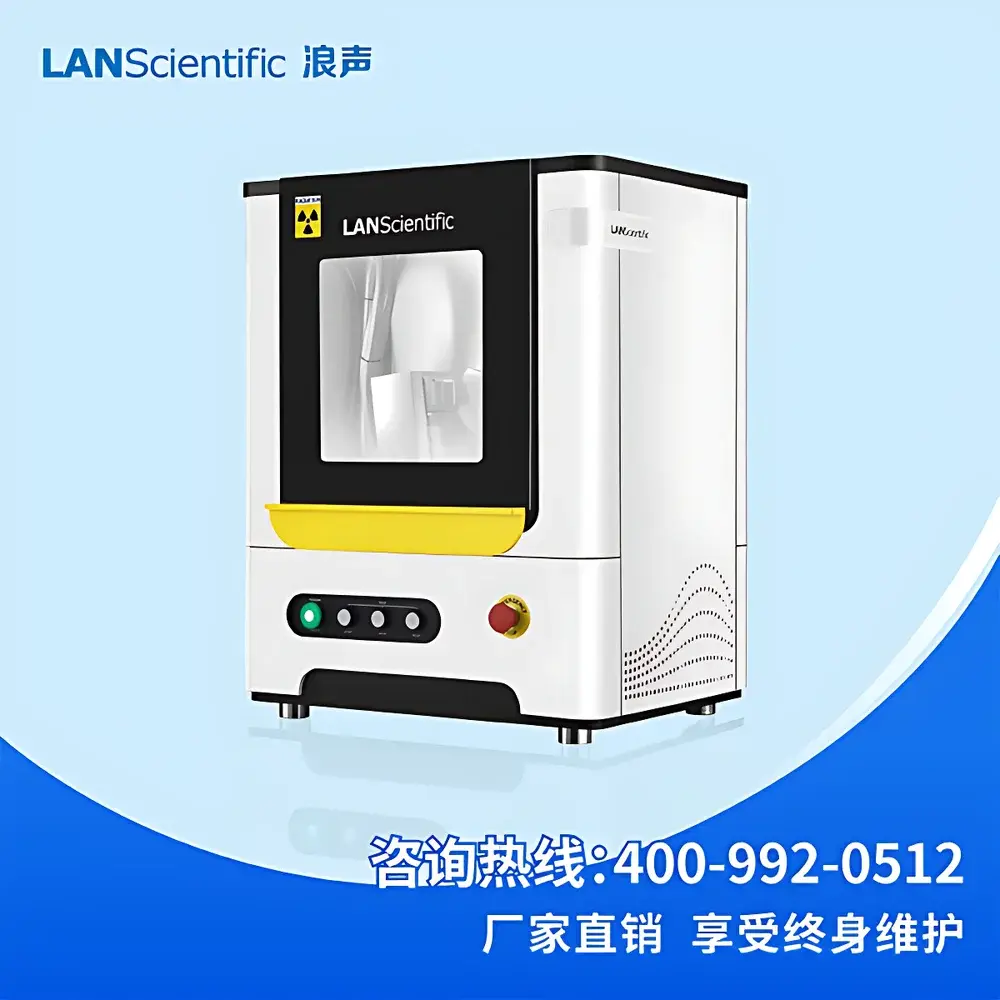
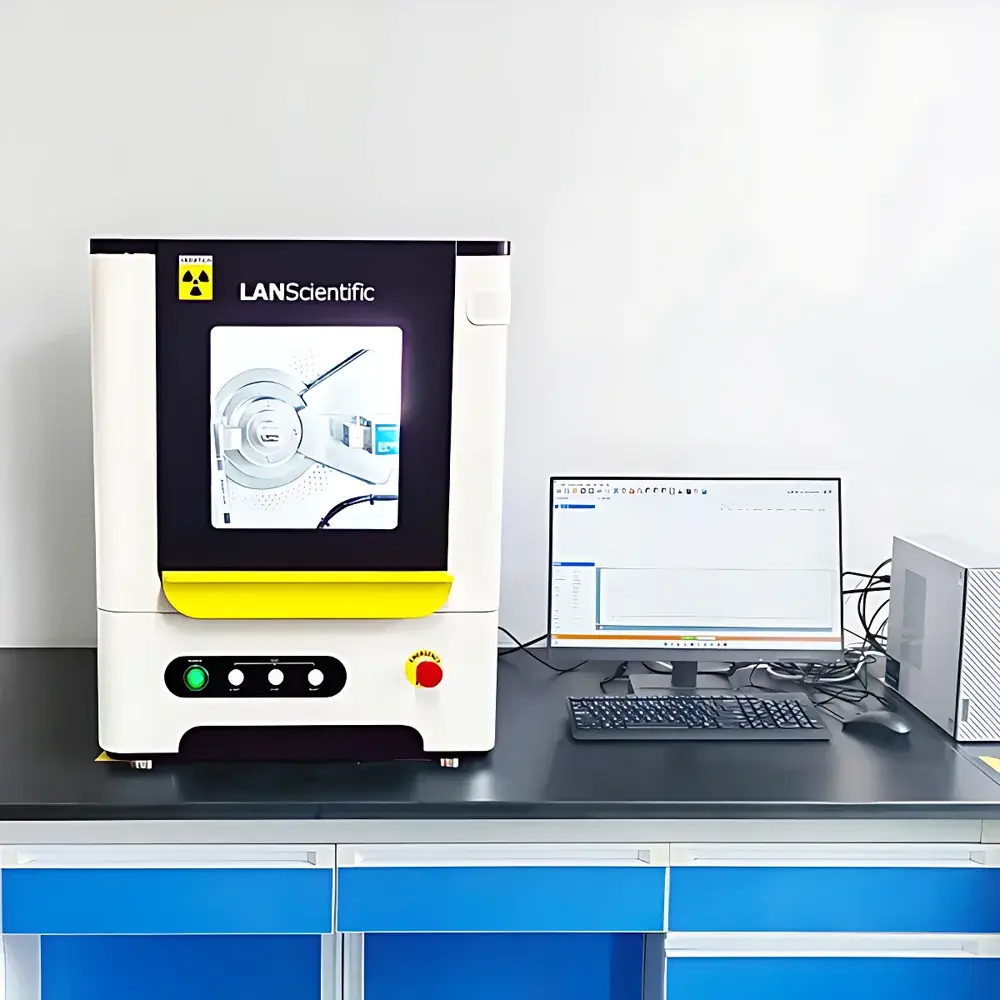
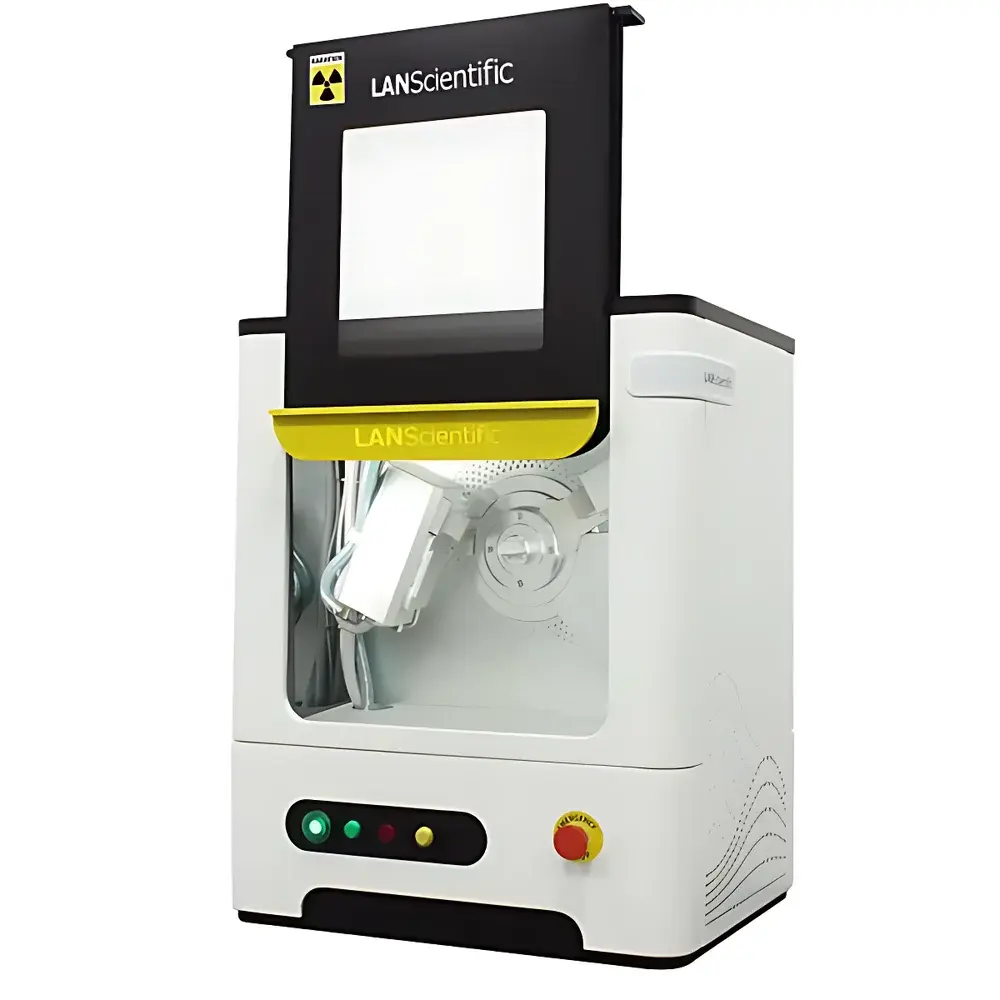
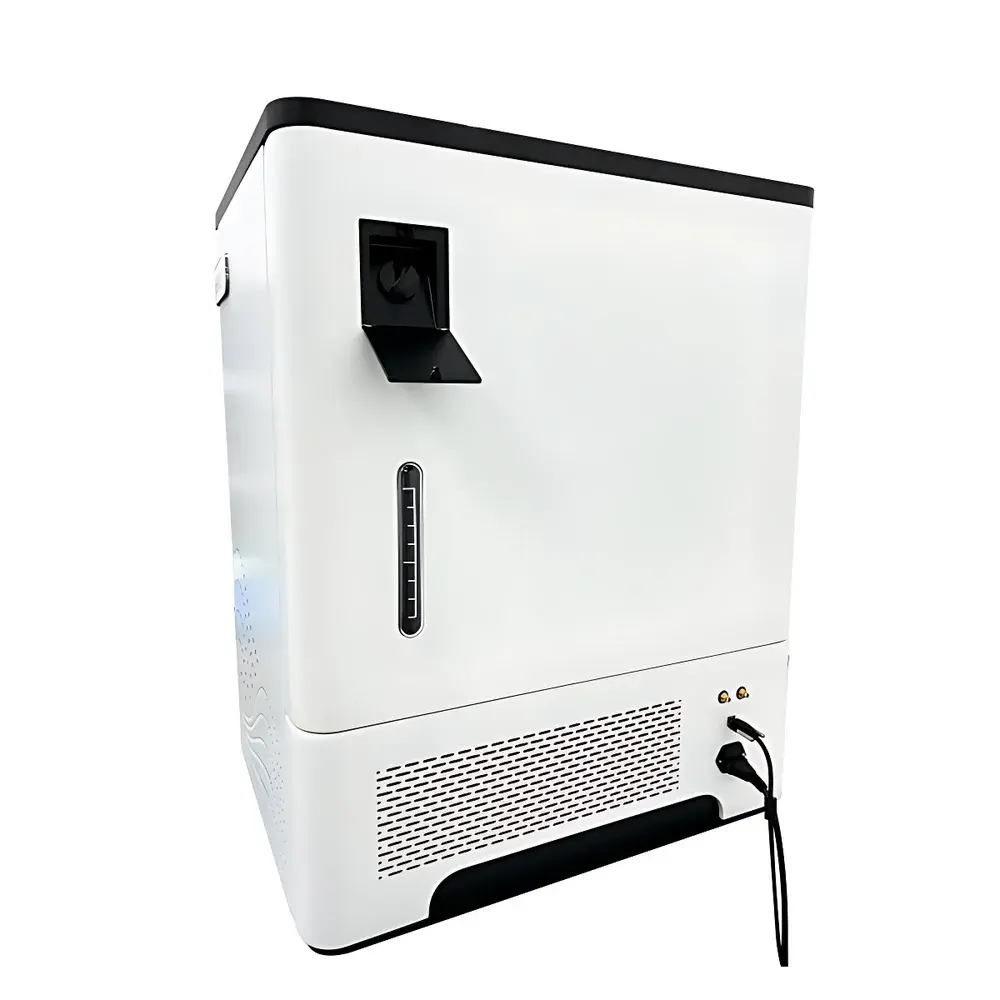
LANScientific FRINGE EV Desktop Powder X-ray Diffractometer
| Brand | LANScientific |
|---|---|
| Origin | Jiangsu, China |
| Manufacturer Type | Manufacturer |
| Instrument Type | Powder X-ray Diffractometer |
| Geometry | Bragg–Brentano θ–2θ reflection |
| Power Rating | kW-class (rated for continuous operation) |
| Detector | Digital Pulse Processing Counter (DPPC), ≥1×10⁷ counts per second (CPS) |
| Optical Configuration | Integrated Soller slits, fixed divergence slit, anti-scatter slit, receiving slit |
| Sample Stage | Motorized goniometer with precision angular encoder |
| Safety Compliance | Interlocked sample chamber, automatic beam shutter activation upon door opening, real-time chamber status feedback on GUI |
| Software Platform | CrystalX — automated phase identification, quantitative Rietveld refinement, crystallinity index calculation, PDF-4+ database integration |
| Regulatory Alignment | Designed to support GLP-compliant workflows |
Overview
The LANScientific FRINGE EV is a compact, high-performance desktop powder X-ray diffractometer engineered for rigorous materials characterization in research, quality control, and industrial laboratories. It operates on the Bragg–Brentano θ–2θ reflection geometry, where monochromatic Cu Kα radiation (λ = 1.5418 Å) is directed onto a stationary or rotating sample stage positioned at the center of a precision goniometer. When incident X-rays satisfy Bragg’s law (nλ = 2d sinθ), constructive interference occurs at discrete diffraction angles, generating intensity peaks that encode interplanar spacings (d-values) and crystallographic symmetry. The system employs a fixed-optics path—comprising integrated Soller slits, a defined divergence slit, anti-scatter collimation, and a receiving slit—to ensure angular resolution stability and minimize parasitic scattering. Its kW-class sealed-tube X-ray source delivers high photon flux without requiring water cooling, enabling robust data acquisition across diverse sample types while maintaining thermal and mechanical stability over extended duty cycles.
Key Features
- Compact desktop footprint with air-spring assisted large-window lift door—optimized for space-constrained lab environments including mobile and field-deployable platforms.
- KW-class X-ray source providing high-intensity output suitable for rapid data collection, low-concentration phase detection, and time-resolved measurements.
- Digital Pulse Processing Counter (DPPC) detector with ≥1×10⁷ CPS throughput—enabling high-speed, low-noise diffraction data acquisition without secondary monochromators; simultaneously records energy-dispersive spectral signatures for elemental correlation.
- Fixed, maintenance-free optical train: integrated Soller slits eliminate moving alignment components, enhancing long-term reproducibility and reducing recalibration frequency.
- Full hardware interlocking: motorized shutter activation synchronized with sample chamber door position; real-time GUI status indicators confirm enclosure integrity prior to exposure.
- Modular goniometer architecture compatible with optional accessories—including heating/cooling stages, humidity cells, and thin-film reflectivity attachments—for expanded experimental capability.
Sample Compatibility & Compliance
The FRINGE EV accommodates standard powder specimens (loaded in zero-background silicon or quartz holders), solid blocks, pressed pellets, and thin films up to 25 mm in diameter. Its low-divergence beam path ensures minimal preferred orientation effects in anisotropic samples. The instrument meets IEC 61000-6-3 (EMC) and IEC 61000-6-4 emission standards. Mechanical design adheres to ISO 14121-1 for risk assessment of machinery safety. While not certified as medical device hardware, its operational parameters and software architecture support compliance with Good Laboratory Practice (GLP) and current Good Manufacturing Practice (cGMP) documentation requirements when configured with CrystalX’s audit-trail-enabled mode and role-based user authentication.
Software & Data Management
CrystalX software provides a unified interface for instrument control, real-time data visualization, and advanced analysis. Core functions include: automatic peak search and d-spacing calibration using NIST SRM 640e; qualitative phase matching against the ICDD PDF-4+ database (2023 edition); quantitative phase analysis via Rietveld refinement (using GSAS-II engine integration); crystallinity index estimation based on amorphous halo subtraction; and lattice parameter optimization. All processing steps are logged with timestamped metadata, operator ID, and parameter history—fully traceable for regulatory review. Export options include CIF, XYE, CSV, and XML formats compatible with third-party crystallography tools (e.g., TOPAS, FullProf). Remote monitoring and scheduled batch runs are supported via secure HTTPS API endpoints.
Applications
The FRINGE EV serves analytical needs across multiple sectors: mineralogical identification and quantification in cement, ceramics, and geological survey labs; polymorph screening and batch consistency verification in pharmaceutical development; residual stress and texture analysis in sintered metal components; crystallinity assessment of polymer blends and nanocomposites; and phase evolution studies during in situ thermal treatment. Its portability and vibration-tolerant construction make it suitable for installation in transportable labs, pilot plants, and university teaching facilities where benchtop space and infrastructure limitations preclude floor-standing systems.
FAQ
Is the FRINGE EV compliant with FDA 21 CFR Part 11 for electronic records?
Yes—when deployed with CrystalX’s validated configuration (including electronic signatures, audit trails, and permission-controlled access), the system supports Part 11 compliance for regulated environments.
Can the instrument perform in situ temperature-resolved XRD?
It supports external furnace integration via standardized flange interfaces and temperature feedback protocols; full in situ capability requires optional HT-stage add-on.
What is the minimum detectable phase fraction in quantitative Rietveld analysis?
Detection limit depends on sample matrix and data statistics; typical lower bound is ~0.5 wt% for well-crystallized phases with strong diffraction cross-sections under optimized acquisition conditions.
Does the DPPC detector require liquid nitrogen cooling?
No—the DPPC is a room-temperature solid-state detector with active pulse shaping electronics; no cryogenic support is needed.
Is remote operation supported over local network or VPN?
Yes—CrystalX includes secure web-based remote control and live diffraction image streaming via TLS-encrypted connection.




