
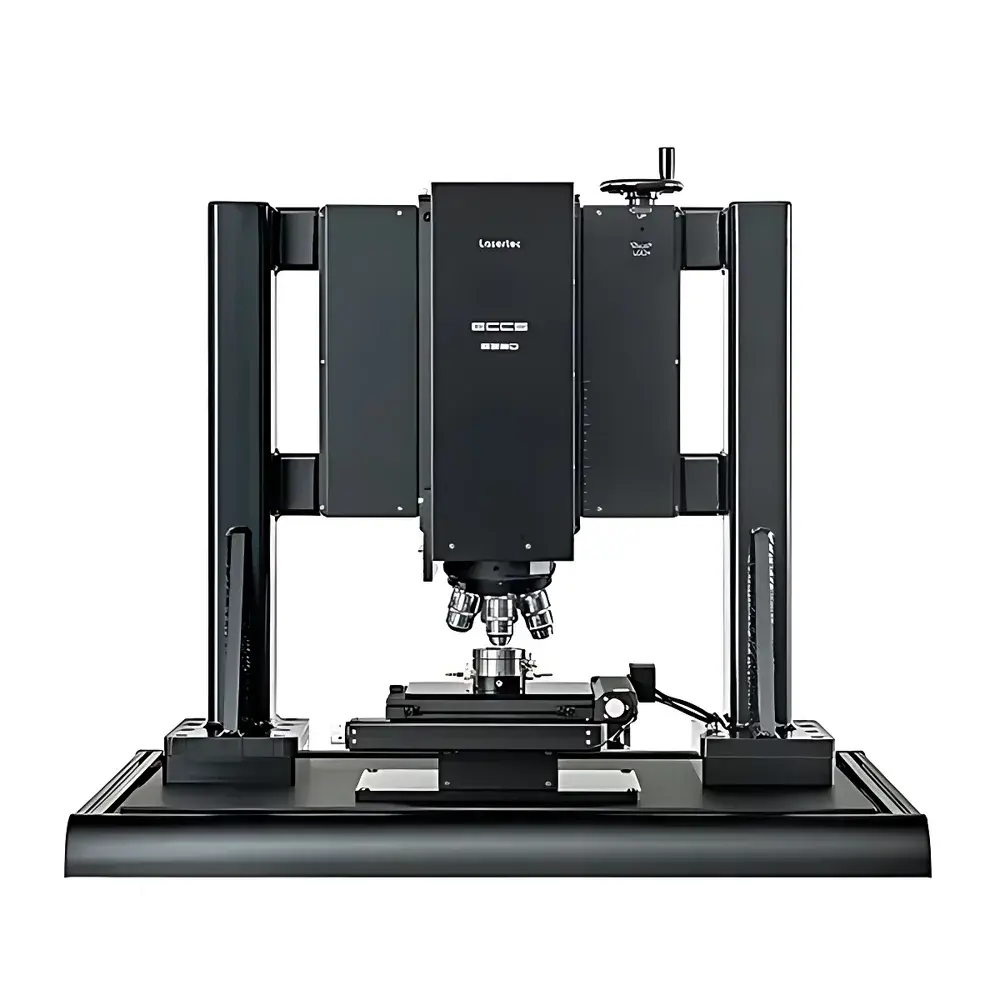
Lasertec ECCS B320 Electrochemical Reaction Visualizing Confocal Microscope
| Brand | Lasertec |
|---|---|
| Origin | Japan |
| Model | ECCS B320 |
| Instrument Type | Point-Scanning Confocal Microscope |
| Light Source | Xenon Lamp + White-Light Laser Source |
| Detector | High-Sensitivity Photomultiplier Detector |
| Scanning Module | Integrated Scanner-Microscope Architecture |
| Scanning Mode | XYZ Triaxial Scanning |
| Objective Lenses | 10× to 100× (Selectable) |
| Software & Workstation | Operando Imaging Suite |
Overview
The Lasertec ECCS B320 Electrochemical Reaction Visualizing Confocal Microscope is a purpose-built, operando-capable point-scanning confocal imaging system engineered for in situ and real-time observation of electrochemical processes within battery electrodes during galvanostatic or potentiostatic operation. Leveraging confocal optical sectioning principles—where only light originating from the focal plane is transmitted through a spatial pinhole while out-of-focus fluorescence or reflection is rejected—the ECCS B320 achieves high axial resolution and superior signal-to-noise ratio in reflective-mode imaging. Unlike conventional widefield microscopes, its optical architecture isolates signals from active electrode surfaces (e.g., graphite anode particles or NMC cathode layers), effectively suppressing interference from transparent current collectors, separator membranes, or liquid/gel electrolytes. This enables quantitative morphological and chromatic analysis of electrochemical heterogeneity across electrode thickness with sub-micrometer lateral resolution and nanometer-scale depth discrimination under operational conditions.
Key Features
- Operando-compatible optical design integrated with electrochemical test fixtures for simultaneous imaging and electrochemical measurement
- Dual illumination capability: broadband xenon lamp for colorimetric analysis and tunable white-light laser source for enhanced contrast in reflective mode
- XYZ triaxial scanning module co-engineered with inverted microscope body for precise volumetric reconstruction of electrode cross-sections
- Modular electrochemical cell holders—including coin-cell, stacked, wound, pouch, and all-solid-state configurations—with optical access ports and thermal management interfaces
- High-sensitivity photomultiplier tube (PMT) detectors optimized for low-light reflectance imaging of electrochemically active surfaces
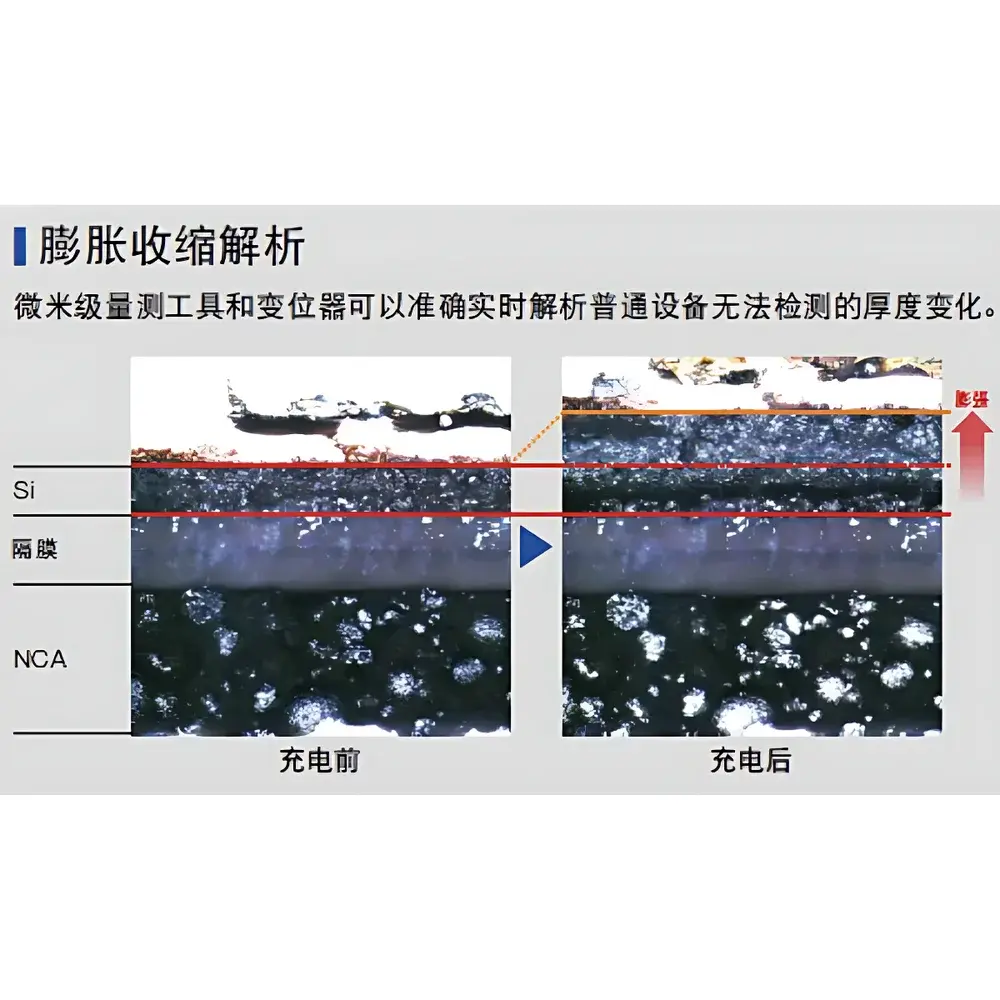
- Real-time line-scan imaging functionality for dynamic quantification of electrode swelling/shrinkage along user-defined axes
- Integrated surface topography and contact potential difference (CPD) mapping via optional Kelvin probe modules
Sample Compatibility & Compliance
The ECCS B320 supports a broad range of electrochemical configurations: half-cells (Li-metal reference), full-cells (NMC/graphite, LFP/graphite), sodium-ion cells, solid-state batteries (polymer, sulfide, oxide electrolytes), lithium-metal anodes, and metal–air systems. Its mechanical and optical interface complies with standard ISO/IEC 17025 laboratory infrastructure requirements for instrument traceability. When operated with validated protocols and calibrated reference samples, data generated by the ECCS B320 meets analytical rigor expectations for GLP-compliant R&D environments. The system’s hardware architecture and Operando software support audit trails, user access control, and electronic signature capabilities aligned with FDA 21 CFR Part 11 readiness for regulated battery development workflows.
Software & Data Management
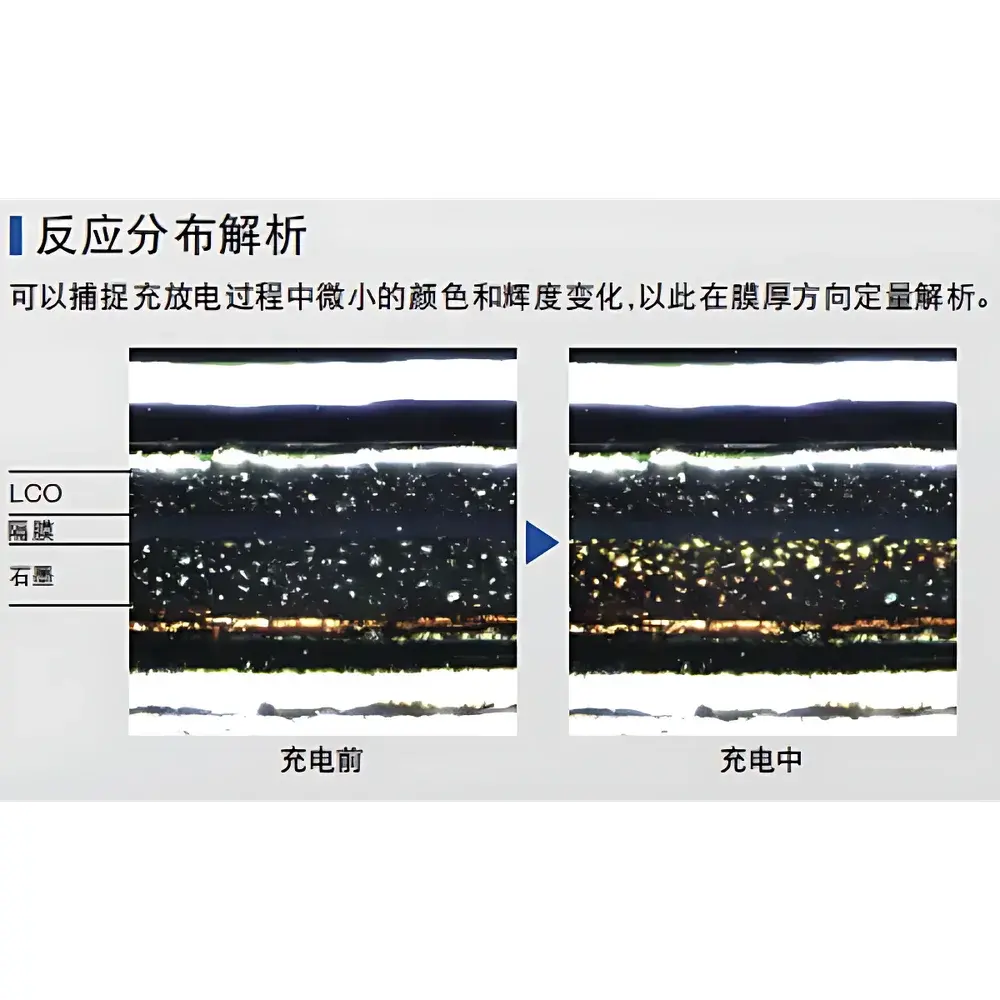
The proprietary Operando Imaging Suite provides synchronized acquisition of time-resolved confocal image stacks, voltage/current logs, and thermal metadata. It includes automated chromatic segmentation algorithms trained on known lithiation/delithiation color transitions in graphite (gray → blue → red → gold), enabling pixel-wise state-of-charge (SOC) mapping. Brightness-based reaction distribution analysis is applied to cathode layers where hue shifts are minimal. Line-scan time-series generation allows quantitative swelling kinetics extraction with ±50 nm repeatability across >1000 frames. All raw image data (TIFF, LSM), processed maps (CSV, HDF5), and metadata are stored with embedded timestamps, instrument configuration logs, and electrochemical parameter sets—ensuring full experimental reproducibility and FAIR (Findable, Accessible, Interoperable, Reusable) data principles.
Applications
- Quantitative operando mapping of Li-ion intercalation gradients across graphite anode thickness during variable C-rate cycling
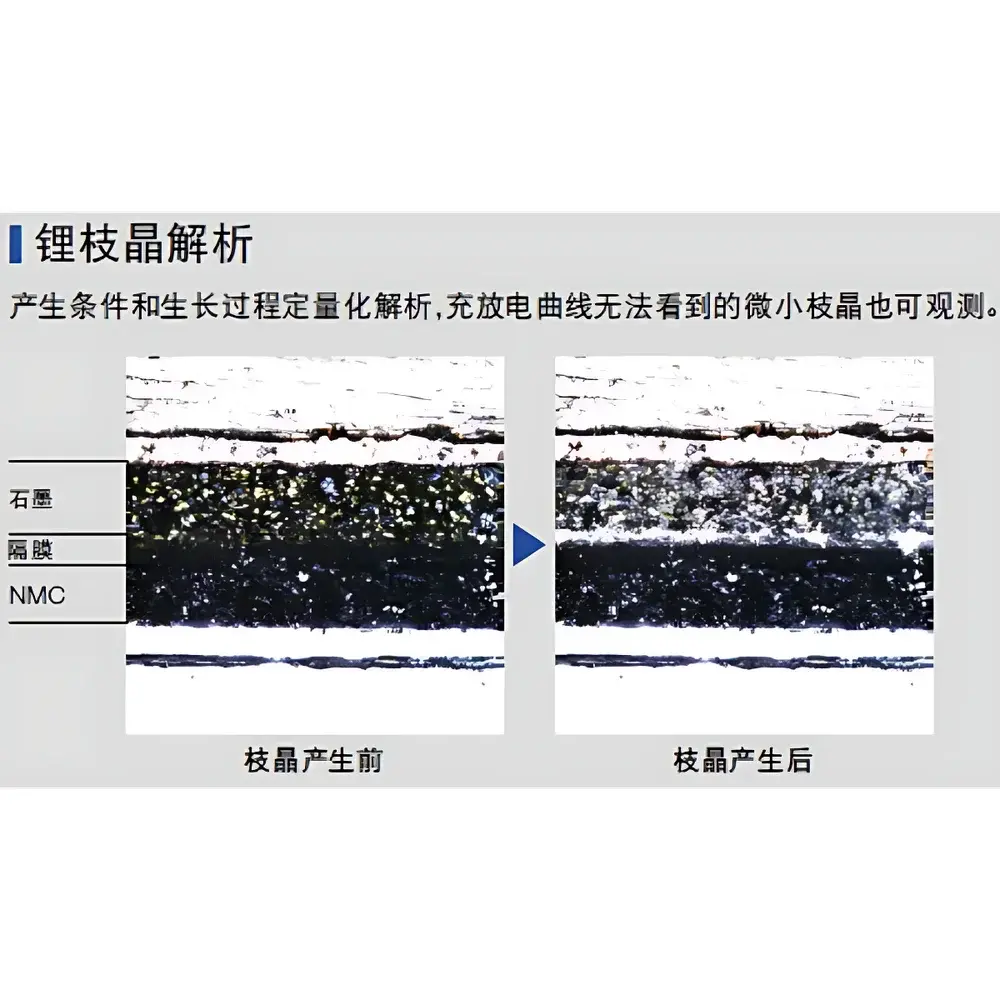
- Visualizing and measuring dendritic Li nucleation onset, growth velocity, and spatial localization relative to SEI morphology
- Correlating local electrode expansion/contraction dynamics with capacity fade mechanisms in silicon-blended anodes
- Evaluating separator coating uniformity (e.g., Al₂O₃, SiO₂) and its impact on localized current density distribution
- Assessing binder integrity loss and conductive additive (CNT, graphene) dispersion degradation after extended cycling
- Identifying gas evolution sites and propagation pathways in liquid electrolyte systems via refractive index perturbation tracking
- Thermal-gradient-dependent reaction heterogeneity analysis using integrated -30 °C to +80 °C environmental chamber
FAQ
Can the ECCS B320 be used for both liquid and solid-state battery configurations?
Yes—the system accommodates custom-designed optical cells for liquid electrolytes, polymer electrolytes, and inorganic solid electrolytes, provided optical access and mechanical stability are maintained.
Is the Operando software compatible with third-party potentiostats?
Yes—it supports standard communication protocols (TCP/IP, RS-232) for synchronization with Gamry, BioLogic, and Metrohm Autolab systems.
Does the system provide quantitative thickness measurement accuracy?
Within calibrated conditions, axial resolution enables ±0.1 µm precision in layer-thickness change detection over 100 µm fields of view.
How is color calibration performed for SOC mapping?
Calibration uses reference electrodes cycled under controlled conditions with ex situ XRD validation; a multi-point hue-intensity lookup table is generated per material system.
Can the ECCS B320 perform spectral reflectance analysis?
While not a dedicated spectrometer, the white-light source combined with bandpass filters permits narrowband reflectance profiling at up to 12 discrete wavelengths.





