
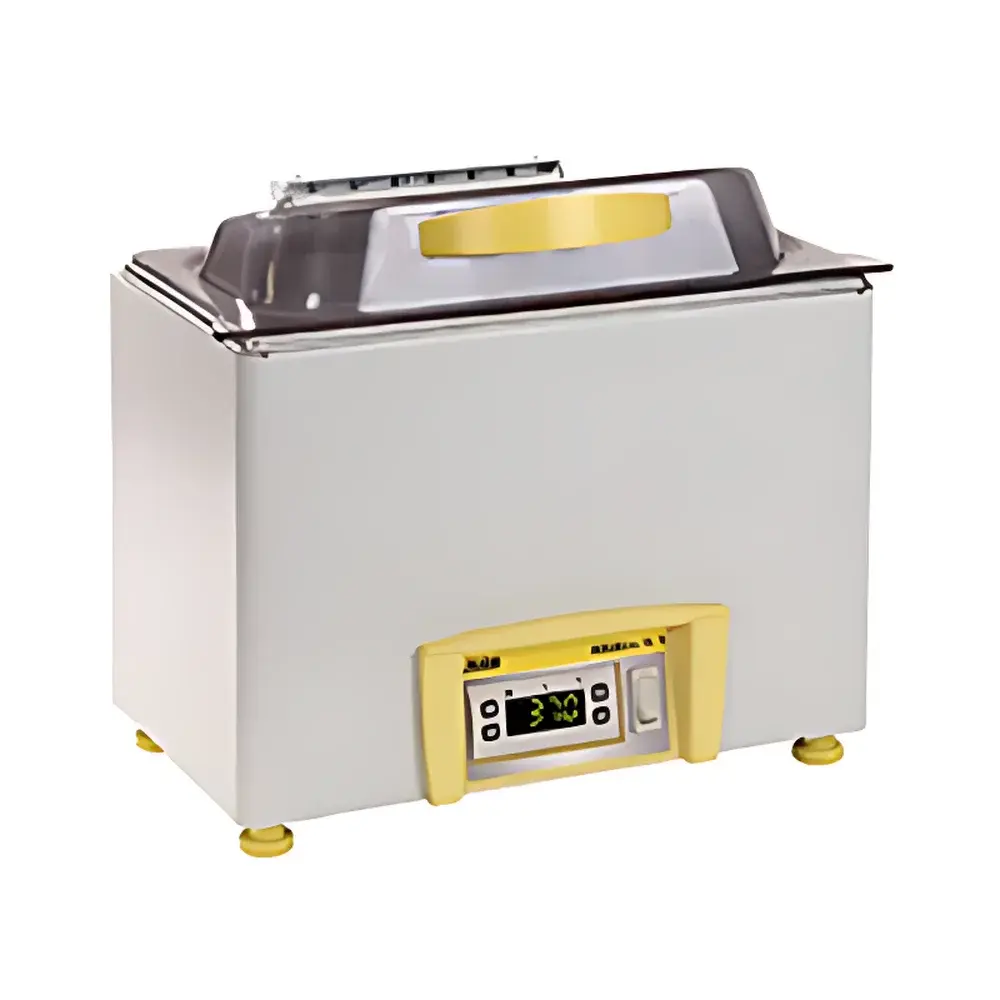
LAUDA Aqualine Series Circulating Water Bath
| Brand | LAUDA |
|---|---|
| Origin | Germany |
| Model | Aqualine |
| Instrument Type | Circulating Constant-Temperature Bath |
| Circulation Mode | Internal & External |
| Temperature Control | Heating & Cooling |
| Bath Volume Range | 1.7 L to 25.2 L |
| Temperature Range | 25 °C to 95 °C |
| Temperature Stability | ±0.2 K |
| Construction | Seamless Deep-Drawn Stainless Steel |
| Heating Element | Bottom-Mounted Surface Heater |
| Safety Features | Dry-run Protection (Min. Liquid Level: 20 mm), Over-Temperature Alarm |
| Display | LED Digital Interface |
| Lid Design | Hinged Stainless Steel Roof Lid with Condensate-Prevention Geometry |
| Compliance | Designed for GLP-compliant laboratory environments |
Overview
The LAUDA Aqualine Series Circulating Water Bath is a precision-engineered, compact temperature control platform designed for routine and mission-critical applications in life science, pharmaceutical, and analytical laboratories. Operating on the principle of forced convection via an integrated circulation pump, the Aqualine maintains highly stable thermal conditions across its stainless-steel bath chamber through bottom-mounted surface heating and optional Peltier-based cooling (depending on model configuration). Its operational range spans from 25 °C to 95 °C — optimized for biological sample conditioning, enzyme incubation, reagent equilibration, and pre-analytical thermal stabilization prior to spectroscopic or chromatographic analysis. Engineered for reliability over extended duty cycles, the system features dry-run protection activated at a minimum working fluid level of just 20 mm, eliminating risk of heater damage during low-volume operations.
Key Features
- Seamless deep-drawn stainless-steel bath vessel — no internal welds or crevices, enabling full sterilizability and compliance with hygiene-critical protocols (e.g., ISO 13485, EU GMP Annex 1)
- Bottom-mounted planar heating element ensures uniform thermal distribution without localized hot spots, delivering ±0.2 K temperature stability across the entire bath volume
- Hinged roof-style stainless-steel lid prevents condensate drip into samples while maintaining thermal integrity; integrated lid support arm eliminates manual handling hazards
- Inward-recessed control panel with high-contrast LED display resists liquid ingress and simplifies parameter verification under ambient lab lighting
- Internal/external circulation capability enables connection to external jackets, reactors, or analytical instrumentation requiring precise thermal coupling
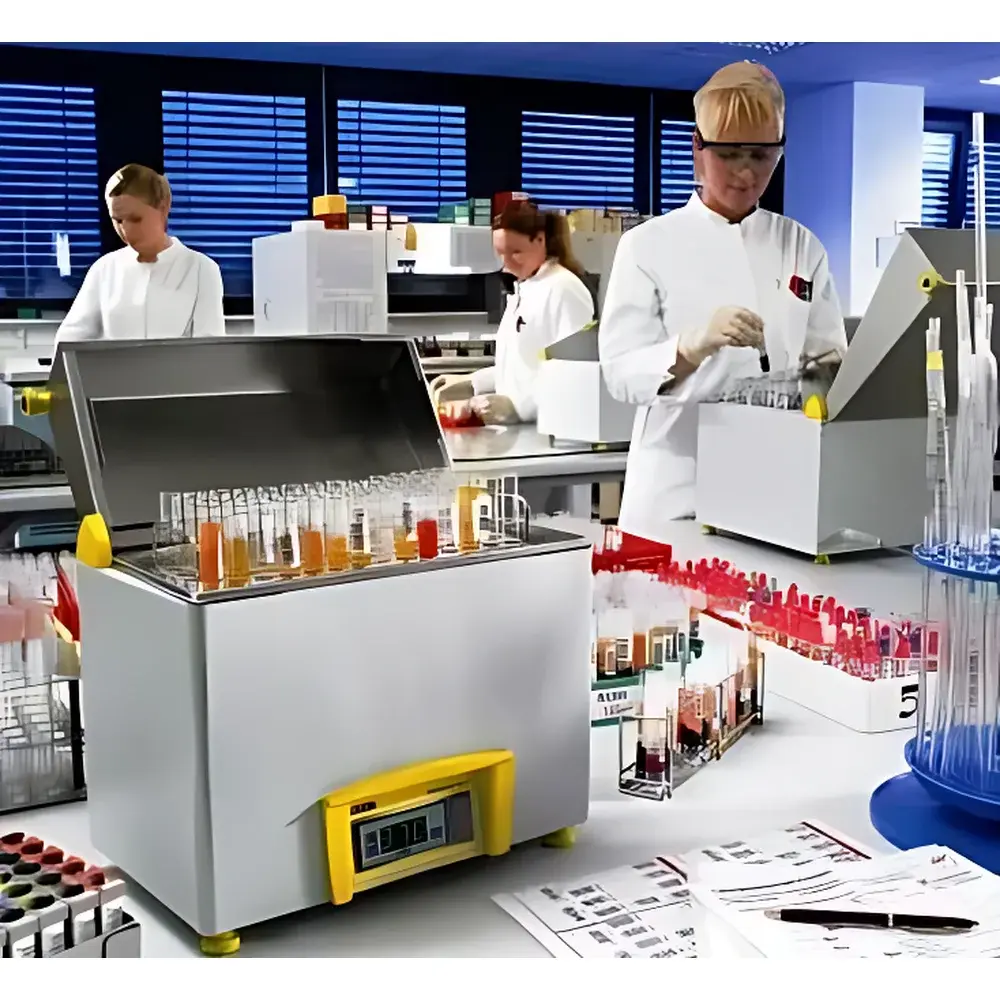
- Five standardized bath volumes (1.7 L, 4.2 L, 6.2 L, 12.2 L, and 25.2 L) accommodate diverse throughput requirements — from single Eppendorf tubes to multi-well plate arrays (up to 91 standard test tubes per bath)
Sample Compatibility & Compliance
The Aqualine series accommodates a broad spectrum of sample formats including microcentrifuge tubes, glass vials, cuvettes, Petri dishes, and immersion-cooled probes. Its corrosion-resistant 316 stainless-steel construction is compatible with aqueous buffers, saline solutions, and mild organic co-solvents commonly used in bioprocessing and assay development. All models are CE-marked and conform to IEC 61010-1 for electrical safety in laboratory equipment. The design supports traceable calibration workflows aligned with ISO/IEC 17025 requirements, and when paired with LAUDA’s optional validation documentation package, facilitates qualification under GxP frameworks (including GLP and GDP). Dry-run protection, over-temperature cutoff, and automatic alarm logging meet essential risk-mitigation criteria outlined in FDA Guidance for Industry: Process Validation.
Software & Data Management
While the base Aqualine operates via intuitive front-panel controls, optional RS232/RS485 interfaces enable integration into centralized lab management systems. When connected to LAUDA’s WinTherm software (or third-party SCADA platforms compliant with Modbus RTU), users can log temperature profiles, export timestamped datasets in CSV format, and configure event-triggered alerts. Audit trail functionality — including user login records, parameter change history, and alarm acknowledgments — satisfies data integrity requirements under 21 CFR Part 11 when deployed with appropriate electronic signature controls and system access restrictions.
Applications
- Precise thermal equilibration of biological reagents prior to ELISA, PCR setup, or cell culture media preparation
- Stabilization of optical components and spectrophotometer cuvettes during absorbance or fluorescence measurements
- Controlled thawing of cryopreserved samples in clinical diagnostics and biobanking workflows
- Temperature-dependent solubility studies and dissolution testing in early-stage pharmaceutical development
- Calibration reference baths for thermistor probes, RTDs, and digital thermometers in metrology labs
- Continuous thermal conditioning of inline sensors in process analytical technology (PAT) deployments
FAQ
What is the minimum recommended fill level for safe operation?
The bath requires only 20 mm of working fluid depth to activate dry-run protection — sufficient for small-volume immersion applications without compromising heater integrity.
Can the Aqualine be used with water-glycol mixtures or other heat transfer fluids?
Yes, provided fluid viscosity remains below 20 mPa·s at operating temperature and pH is maintained between 5.5 and 8.5 to prevent corrosion of stainless-steel components.
Is external circulation mandatory for all applications?
No — internal circulation alone suffices for most static bath applications; external loop capability is reserved for specialized thermal coupling needs such as jacketed reactor control or calorimeter calibration.
How frequently should temperature calibration be performed?
Per ISO/IEC 17025, initial verification is required upon installation; subsequent calibrations should follow a risk-based schedule — typically every 6–12 months depending on usage intensity and criticality of application.
Does the Aqualine support remote monitoring via Ethernet or Wi-Fi?
Standard models feature serial communication only; Ethernet/Wi-Fi connectivity requires integration with LAUDA’s optional TCU Gateway module and firmware version 3.2 or higher.



